Chapter 48
Sugar and Postage
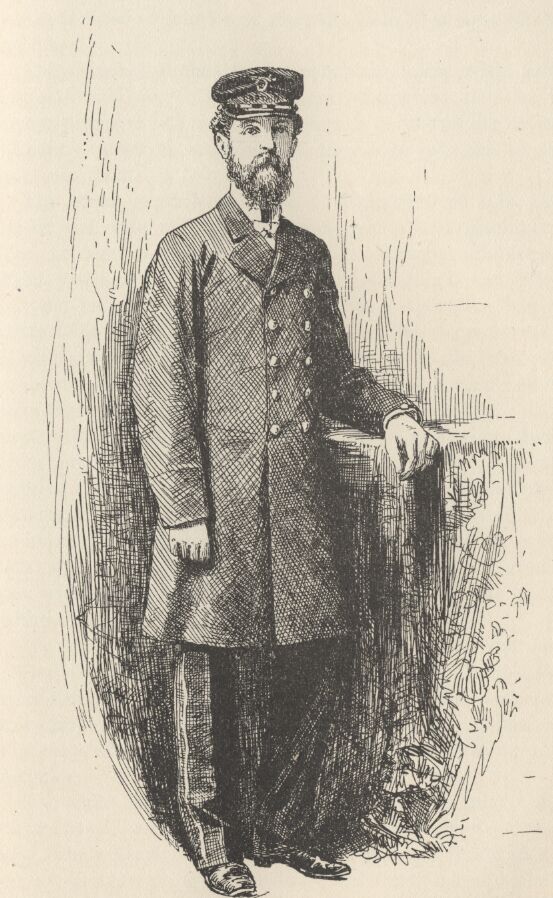
ONE day, on the street, I encountered the man whom, of all men, I most wished to see—Horace Bixby; formerly pilot under me—or rather, over me—now captain of the great steamer 'City of Baton Rouge,' the latest and swiftest addition to the Anchor Line. The same slender figure, the same tight curls, the same springy step, the same alertness, the same decision of eye and answering decision of hand, the same erect military bearing; not an inch gained or lost in girth, not an ounce gained or lost in weight, not a hair turned. It is a curious thing, to leave a man thirty-five years old, and come back at the end of twenty-one years and find him still only thirty-five. I have not had an experience of this kind before, I believe. There were some crow's-feet, but they counted for next to nothing, since they were inconspicuous.
One day, I met the man I most wanted to see, out of all men, on the street. It was Horace Bixby, once a pilot under me, or rather, over me. He was now captain of the great steamer 'City of Baton Rouge,' the newest and fastest addition to the Anchor Line. He had the same slender figure, tight curls, springy step, and alertness. His eyes were as decisive as ever, and his hands responded just as decisively. He had the same upright military bearing. He had not gained or lost an inch around the middle or an ounce in weight. Not a hair had changed. It is a curious thing to leave a man at thirty-five and return twenty-one years later to find him still only thirty-five. I do not believe I have ever had an experience like that before. He had some crow's-feet, but they hardly counted, since they were barely noticeable.
His boat was just in. I had been waiting several days for her, purposing to return to St. Louis in her. The captain and I joined a party of ladies and gentlemen, guests of Major Wood, and went down the river fifty-four miles, in a swift tug, to ex-Governor Warmouth's sugar plantation. Strung along below the city, were a number of decayed, ram-shackly, superannuated old steamboats, not one of which had I ever seen before. They had all been built, and worn out, and thrown aside, since I was here last. This gives one a realizing sense of the frailness of a Mississippi boat and the briefness of its life.
His boat had just arrived. I had been waiting several days for it, planning to take it back to St. Louis. The captain and I joined a group of ladies and gentlemen who were guests of Major Wood. We traveled fifty-four miles downriver in a fast tugboat to ex-Governor Warmouth's sugar plantation. Below the city, a number of worn-out, rickety old steamboats were strung along the river. I had never seen a single one of them before. All of them had been built, worn out, and thrown aside since my last visit. It really brings home how fragile a Mississippi boat is and how short its life can be.
Six miles below town a fat and battered brick chimney, sticking above the magnolias and live-oaks, was pointed out as the monument erected by an appreciative nation to celebrate the battle of New Orleans—Jackson's victory over the British, January 8, 1815. The war had ended, the two nations were at peace, but the news had not yet reached New Orleans. If we had had the cable telegraph in those days, this blood would not have been spilt, those lives would not have been wasted; and better still, Jackson would probably never have been president. We have gotten over the harms done us by the war of 1812, but not over some of those done us by Jackson's presidency.
Six miles below town, someone pointed out a fat, battered brick chimney sticking up above the magnolias and live oaks. It was the monument an appreciative nation had built to celebrate the Battle of New Orleans. There, on January 8, 1815, Jackson defeated the British. The war had ended, and the two nations were at peace, but the news had not yet reached New Orleans. If we had had a telegraph cable in those days, this blood would not have been spilled, and those lives would not have been wasted. Better still, Jackson would probably never have been president. We have recovered from the harm the War of 1812 did us, but not from some of the harm Jackson's presidency did us.
The Warmouth plantation covers a vast deal of ground, and the hospitality of the Warmouth mansion is graduated to the same large scale. We saw steam-plows at work, here, for the first time. The traction engine travels about on its own wheels, till it reaches the required spot; then it stands still and by means of a wire rope pulls the huge plow toward itself two or three hundred yards across the field, between the rows of cane. The thing cuts down into the black mold a foot and a half deep. The plow looks like a fore-and-aft brace of a Hudson river steamer, inverted. When the negro steersman sits on one end of it, that end tilts down near the ground, while the other sticks up high in air. This great see-saw goes rolling and pitching like a ship at sea, and it is not every circus rider that could stay on it.
The Warmouth plantation covers a vast area, and the hospitality at the Warmouth mansion is just as generous. Here we saw steam plows at work for the first time. The traction engine travels on its own wheels until it reaches the right spot. Then it stops and uses a wire rope to pull the huge plow toward it. The plow travels two or three hundred yards across the field, between the rows of cane. It cuts a foot and a half deep into the black soil. The plow looks like an upside-down lengthwise brace from a Hudson river steamer. When the Black steersman sits on one end, that end tilts down near the ground. The other end sticks up high in the air. This great seesaw rolls and pitches like a ship at sea. Not every circus rider could stay on it.
The plantation contains two thousand six hundred acres; six hundred and fifty are in cane; and there is a fruitful orange grove of five thousand trees. The cane is cultivated after a modern and intricate scientific fashion, too elaborate and complex for me to attempt to describe; but it lost $40,000 last year. I forget the other details. However, this year's crop will reach ten or twelve hundred tons of sugar, consequently last year's loss will not matter. These troublesome and expensive scientific methods achieve a yield of a ton and a half and from that to two tons, to the acre; which is three or four times what the yield of an acre was in my time.
The plantation covers 2,600 acres. Sugarcane grows on 650 of them, and a productive orange grove has 5,000 trees. The cane is grown using modern scientific methods, too elaborate and complicated for me to describe. But the operation lost $40,000 last year. I forget the other details. However, this year’s crop will produce 1,000 to 1,200 tons of sugar, so last year’s loss won’t matter. These troublesome and expensive scientific methods produce one and a half to two tons of sugar per acre. That is three or four times the yield per acre in my time.
The drainage-ditches were everywhere alive with little crabs—'fiddlers.' One saw them scampering sidewise in every direction whenever they heard a disturbing noise. Expensive pests, these crabs; for they bore into the levees, and ruin them.
The drainage ditches were full of little crabs called 'fiddlers.' Whenever they heard a disturbing noise, they scurried sideways in every direction. These crabs were costly pests because they burrowed into the levees and ruined them.
The great sugar-house was a wilderness of tubs and tanks and vats and filters, pumps, pipes, and machinery. The process of making sugar is exceedingly interesting. First, you heave your cane into the centrifugals and grind out the juice; then run it through the evaporating pan to extract the fiber; then through the bone-filter to remove the alcohol; then through the clarifying tanks to discharge the molasses; then through the granulating pipe to condense it; then through the vacuum pan to extract the vacuum. It is now ready for market. I have jotted these particulars down from memory. The thing looks simple and easy. Do not deceive yourself. To make sugar is really one of the most difficult things in the world. And to make it right, is next to impossible. If you will examine your own supply every now and then for a term of years, and tabulate the result, you will find that not two men in twenty can make sugar without getting sand into it.
The great sugar house was a maze of tubs, tanks, vats, filters, pumps, pipes, and machinery. The process of making sugar is extremely interesting. First, you toss the cane into the centrifugals and grind out the juice. Then you run the juice through the evaporating pan to remove the fiber. Next, it goes through the bone filter to remove the alcohol. Then it goes through the clarifying tanks to remove the molasses. After that, it goes through the granulating pipe to condense it. Finally, it goes through the vacuum pan to extract the vacuum. The sugar is now ready for market. I’ve written down these details from memory. The process looks simple and easy. Don’t be fooled. Making sugar is really one of the hardest things in the world. And making it right is nearly impossible. If you examine your own supply now and then over a period of years and record the results, you’ll find something surprising. Not two men in twenty can make sugar without getting sand in it.
We could have gone down to the mouth of the river and visited Captain Eads' great work, the 'jetties,' where the river has been compressed between walls, and thus deepened to twenty-six feet; but it was voted useless to go, since at this stage of the water everything would be covered up and invisible.
We could have gone down to the mouth of the river to see Captain Eads' great work, the 'jetties.' There, the river has been squeezed between walls, deepening the water to twenty-six feet. But we decided there was no point in going. At the current water level, everything would be covered up and invisible.
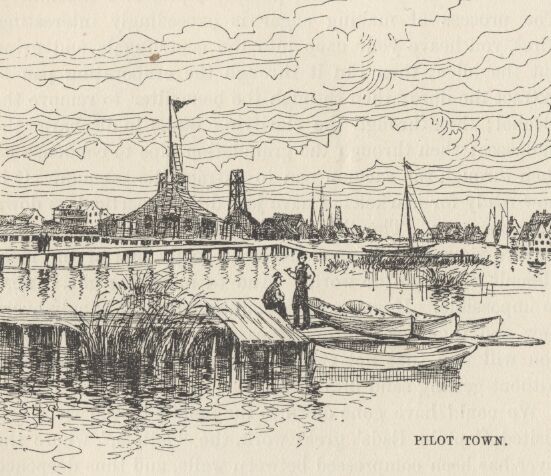
We could have visited that ancient and singular burg, 'Pilot-town,' which stands on stilts in the water—so they say; where nearly all communication is by skiff and canoe, even to the attending of weddings and funerals; and where the littlest boys and girls are as handy with the oar as unamphibious children are with the velocipede.
We could have visited the ancient and unusual town of 'Pilot-town.' They say it stands on stilts in the water. Nearly all travel there is by skiff or canoe, even to weddings and funerals. The smallest boys and girls are as skilled with an oar as land-bound children are with a bicycle.
We could have done a number of other things; but on account of limited time, we went back home. The sail up the breezy and sparkling river was a charming experience, and would have been satisfyingly sentimental and romantic but for the interruptions of the tug's pet parrot, whose tireless comments upon the scenery and the guests were always this-worldly, and often profane. He had also a superabundance of the discordant, ear-splitting, metallic laugh common to his breed—a machine-made laugh, a Frankenstein laugh, with the soul left out of it. He applied it to every sentimental remark, and to every pathetic song. He cackled it out with hideous energy after 'Home again, home again from a foreign shore,' and said he 'wouldn't give a damn for a tug-load of such rot.' Romance and sentiment cannot long survive this sort of discouragement; so the singing and talking presently ceased; which so delighted the parrot that he cursed himself hoarse for joy.
We could have done several other things, but we were short on time, so we went home. The sail up the breezy, sparkling river was delightful. It would have been satisfyingly sentimental and romantic if the tug's pet parrot hadn't kept interrupting. His tireless comments on the scenery and the guests were always down-to-earth and often profane. He also had far too much of the harsh, ear-splitting, metallic laugh common to his kind. It was a machine-made laugh, a Frankenstein laugh with no soul. He used it on every sentimental remark and every sad song. After 'Home again, home again from a foreign shore,' he cackled with hideous energy. He said he 'wouldn't give a damn for a tug-load of such rot.' Romance and sentiment cannot survive that kind of discouragement for long, so the singing and talking soon stopped. This delighted the parrot so much that he cursed himself hoarse for joy.
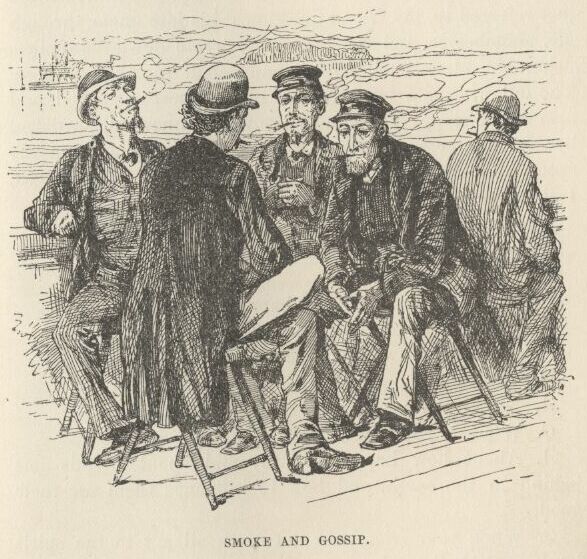
Then the male members of the party moved to the forecastle, to smoke and gossip. There were several old steamboatmen along, and I learned from them a great deal of what had been happening to my former river friends during my long absence. I learned that a pilot whom I used to steer for is become a spiritualist, and for more than fifteen years has been receiving a letter every week from a deceased relative, through a New York spiritualist medium named Manchester—postage graduated by distance: from the local post-office in Paradise to New York, five dollars; from New York to St. Louis, three cents. I remember Mr. Manchester very well. I called on him once, ten years ago, with a couple of friends, one of whom wished to inquire after a deceased uncle. This uncle had lost his life in a peculiarly violent and unusual way, half a dozen years before: a cyclone blew him some three miles and knocked a tree down with him which was four feet through at the butt and sixty-five feet high. He did not survive this triumph. At the seance just referred to, my friend questioned his late uncle, through Mr. Manchester, and the late uncle wrote down his replies, using Mr. Manchester's hand and pencil for that purpose. The following is a fair example of the questions asked, and also of the sloppy twaddle in the way of answers, furnished by Manchester under the pretense that it came from the specter. If this man is not the paltriest fraud that lives, I owe him an apology—
Then the men in the party went to the forecastle to smoke and gossip. Several old steamboatmen were with us. They told me a great deal about what had happened to my old river friends during my long absence. I learned that a pilot I used to steer for had become a spiritualist. For more than fifteen years, he had received a weekly letter from a deceased relative through a New York spiritualist medium named Manchester. Postage varied by distance: from the local post office in Paradise to New York, five dollars. From New York to St. Louis, three cents. I remember Mr. Manchester very well. Ten years ago, I visited him with two friends. One of them wanted to ask about a deceased uncle. About six years earlier, this uncle had died in a particularly violent and unusual way. A cyclone blew him about three miles and used him to knock down a tree. The tree was four feet thick at the base and sixty-five feet tall. He did not survive this triumph. At the séance, my friend questioned his late uncle through Mr. Manchester. The late uncle wrote his replies using Mr. Manchester’s hand and pencil. What follows is a fair example of the questions asked and the sloppy nonsense Manchester supplied as answers, pretending it came from the spirit. If this man is not the pettiest fraud alive, I owe him an apology.
QUESTION. Where are you?
QUESTION: Where are you?
ANSWER. In the spirit world.
ANSWER. In the spirit world.
Q. Are you happy?
Q. Are you happy?
A. Very happy. Perfectly happy.
A. Very happy. Perfectly happy.
Q. How do you amuse yourself?
Q. What do you do for fun?
A. Conversation with friends, and other spirits.
A. Conversation with friends and other spirits.
Q. What else?
Q. What else?
A. Nothing else. Nothing else is necessary.
A. Nothing else. Nothing else is needed.
Q. What do you talk about?
Q. What do you talk about?
A. About how happy we are; and about friends left behind in the earth, and how to influence them for their good.
A. About how happy we are, the friends we left behind on earth, and how to influence them for their own good.
Q. When your friends in the earth all get to the spirit land, what shall you have to talk about then?—nothing but about how happy you all are?
Q. When all your friends on earth get to the spirit land, what will you have to talk about then? Will you talk about nothing but how happy you all are?
No reply. It is explained that spirits will not answer frivolous questions.
No reply. The explanation is that spirits won't answer silly questions.
Q. How is it that spirits that are content to spend an eternity in frivolous employments, and accept it as happiness, are so fastidious about frivolous questions upon the subject?
Q. Why are spirits content to spend eternity on trivial activities and call it happiness? Why are they so particular about trivial questions on the subject?
No reply.
No reply.
Q. Would you like to come back?
Q. Would you like to come back?
A. No.
A. No.
Q. Would you say that under oath?
Q. Would you say that under oath?
A. Yes.
A. Yes.
Q. What do you eat there?
Q. What do you eat there?
A. We do not eat.
A. We do not eat.
Q. What do you drink?
Q. What do you drink?
A. We do not drink.
A. We don't drink.
Q. What do you smoke?
Q. What do you smoke?
A. We do not smoke.
A. We do not smoke.
Q. What do you read?
Q. What do you read?
A. We do not read.
A. We do not read.
Q. Do all the good people go to your place?
Q. Do all the good people go to your place?
A. Yes.
A. Yes.
Q. You know my present way of life. Can you suggest any additions to it, in the way of crime, that will reasonably insure my going to some other place.
Q. You know how I live now. Can you suggest any crimes I could add to my life that would reasonably ensure I go somewhere else?
A. No reply.
A. No reply.
Q. When did you die?
Q. When did you die?
A. I did not die, I passed away.
A. I didn't die, I passed away.
Q. Very well, then, when did you pass away? How long have you been in the spirit land?
Q. All right, then, when did you die? How long have you been in the spirit world?
A. We have no measurements of time here.
A. We don't measure time here.
Q. Though you may be indifferent and uncertain as to dates and times in your present condition and environment, this has nothing to do with your former condition. You had dates then. One of these is what I ask for. You departed on a certain day in a certain year. Is not this true?
Q. You may not care about or be sure of dates and times in your present condition and surroundings. But that has nothing to do with your former condition. You had dates then. I am asking for one of them. You left on a certain day in a certain year. Isn't that true?
A. Yes.
A. Yes.
Q. Then name the day of the month.
Q. Then state the day of the month.
(Much fumbling with pencil, on the part of the medium, accompanied by violent spasmodic jerkings of his head and body, for some little time. Finally, explanation to the effect that spirits often forget dates, such things being without importance to them.)
(The medium fumbles with his pencil for a while, violently jerking his head and body in spasms. Finally, he explains that spirits often forget dates because dates are unimportant to them.)
Q. Then this one has actually forgotten the date of its translation to the spirit land?
Q. So this one has actually forgotten the date it passed into the spirit world?
This was granted to be the case.
This was admitted to be true.
Q. This is very curious. Well, then, what year was it?
Q. This is very curious. So, what year was it?
(More fumbling, jerking, idiotic spasms, on the part of the medium. Finally, explanation to the effect that the spirit has forgotten the year.)
(The medium fumbles, jerks, and has more idiotic spasms. Finally, the medium explains that the spirit has forgotten the year.)
Q. This is indeed stupendous. Let me put one more question, one last question, to you, before we part to meet no more;—for even if I fail to avoid your asylum, a meeting there will go for nothing as a meeting, since by that time you will easily have forgotten me and my name: did you die a natural death, or were you cut off by a catastrophe?
Q. This is truly amazing. Let me ask you one more question, one last question, before we part and never meet again. Even if I end up in your asylum, meeting there will hardly count. By then, you will easily have forgotten me and my name. Did you die a natural death, or were you killed in a catastrophe?
A. (After long hesitation and many throes and spasms.) Natural death.
A. (After hesitating for a long time, with many struggles and spasms.) Natural death.
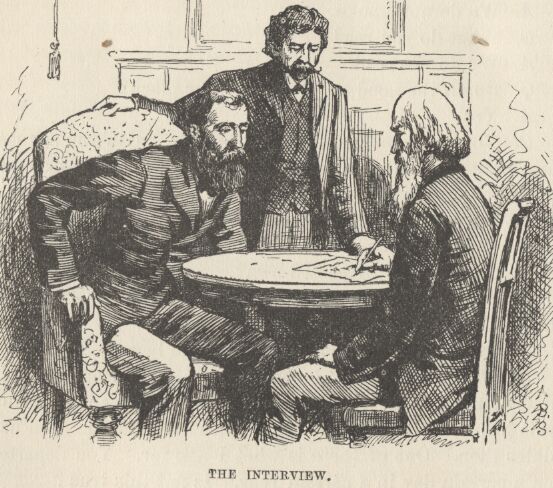
This ended the interview. My friend told the medium that when his relative was in this poor world, he was endowed with an extraordinary intellect and an absolutely defectless memory, and it seemed a great pity that he had not been allowed to keep some shred of these for his amusement in the realms of everlasting contentment, and for the amazement and admiration of the rest of the population there.
That ended the interview. My friend told the medium that his relative had possessed an extraordinary intellect and a flawless memory while in this poor world. It seemed a great pity that he had not been allowed to keep even a shred of either. He could have amused himself with them in the realms of everlasting contentment, and amazed and impressed everyone else there.
This man had plenty of clients—has plenty yet. He receives letters from spirits located in every part of the spirit world, and delivers them all over this country through the United States mail. These letters are filled with advice—advice from 'spirits' who don't know as much as a tadpole—and this advice is religiously followed by the receivers. One of these clients was a man whom the spirits (if one may thus plurally describe the ingenious Manchester) were teaching how to contrive an improved railway car-wheel. It is coarse employment for a spirit, but it is higher and wholesomer activity than talking for ever about 'how happy we are.'
This man had plenty of clients and still does. He receives letters from spirits in every part of the spirit world. He delivers them throughout this country through the United States mail. The letters are full of advice from 'spirits' who know less than a tadpole. The people who receive the letters follow this advice religiously. One client was a man whom the spirits were teaching to design an improved railway car wheel. That is, if one may use the plural to describe the ingenious Manchester. Designing a wheel is a crude job for a spirit. But it is a higher and healthier activity than talking forever about 'how happy we are.'