Chapter 47
Uncle Remus and Mr. Cable
MR. JOEL CHANDLER HARRIS ('Uncle Remus') was to arrive from Atlanta at seven o'clock Sunday morning; so we got up and received him. We were able to detect him among the crowd of arrivals at the hotel-counter by his correspondence with a description of him which had been furnished us from a trustworthy source. He was said to be undersized, red-haired, and somewhat freckled. He was the only man in the party whose outside tallied with this bill of particulars. He was said to be very shy. He is a shy man. Of this there is no doubt. It may not show on the surface, but the shyness is there. After days of intimacy one wonders to see that it is still in about as strong force as ever. There is a fine and beautiful nature hidden behind it, as all know who have read the Uncle Remus book; and a fine genius, too, as all know by the same sign. I seem to be talking quite freely about this neighbor; but in talking to the public I am but talking to his personal friends, and these things are permissible among friends.
MR. JOEL CHANDLER HARRIS ('Uncle Remus') was due to arrive from Atlanta at seven o'clock Sunday morning. So we got up to welcome him. We spotted him among the arrivals at the hotel counter because he matched a description from a trustworthy source. We had been told he was short, red-haired, and somewhat freckled. He was the only man in the group who fit that description. We had also been told he was very shy. He is a shy man. There is no doubt about it. His shyness may not show on the surface, but it is there. Even after days of close companionship, one is surprised to find his shyness still almost as strong as ever. Behind his shyness is a fine and beautiful nature, as all who have read the Uncle Remus book know. There is a fine genius there, too, as all who have read the book also know. I seem to be talking quite freely about this neighbor. But when I speak to the public, I am only speaking to his personal friends. And friends may say such things among themselves.
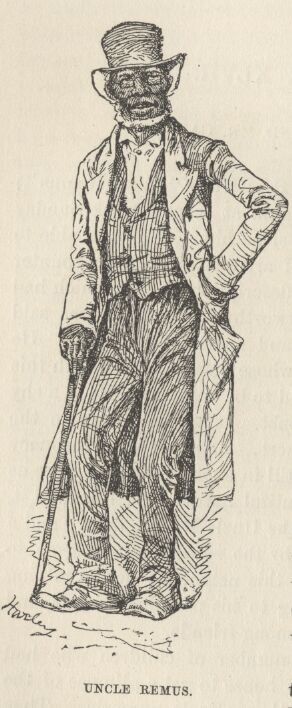
He deeply disappointed a number of children who had flocked eagerly to Mr. Cable's house to get a glimpse of the illustrious sage and oracle of the nation's nurseries. They said—
He deeply disappointed a number of children who had eagerly gathered at Mr. Cable's house. They had come to glimpse the famous wise man and authority of the nation's nurseries. They said:
'Why, he 's white!'
'Why, he's white!'
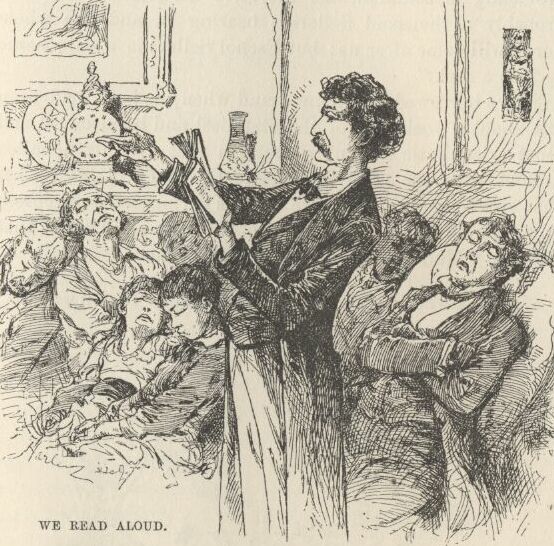
They were grieved about it. So, to console them, the book was brought, that they might hear Uncle Remus's Tar-Baby story from the lips of Uncle Remus himself—or what, in their outraged eyes, was left of him. But it turned out that he had never read aloud to people, and was too shy to venture the attempt now. Mr. Cable and I read from books of ours, to show him what an easy trick it was; but his immortal shyness was proof against even this sagacious strategy, so we had to read about Brer Rabbit ourselves.
They were upset about it. So, to console them, the book was brought. They could hear Uncle Remus's Tar-Baby story from Uncle Remus himself, or from what was left of him in their outraged eyes. But it turned out that he had never read aloud to people. He was too shy to try it now. Mr. Cable and I read from our own books to show him how easy it was. But his immortal shyness resisted even this clever strategy, so we had to read about Brer Rabbit ourselves.
Mr. Harris ought to be able to read the negro dialect better than anybody else, for in the matter of writing it he is the only master the country has produced. Mr. Cable is the only master in the writing of French dialects that the country has produced; and he reads them in perfection. It was a great treat to hear him read about Jean-ah Poquelin, and about Innerarity and his famous 'pigshoo' representing 'Louisihanna rif-fusing to Hanter the Union,' along with passages of nicely-shaded German dialect from a novel which was still in manuscript.
Mr. Harris should be able to read Black dialect better than anyone else. After all, he is the only master of writing it that the country has produced. Mr. Cable is the only master of writing French dialects that the country has produced. He reads those dialects perfectly. It was a great treat to hear him read about Jean-ah Poquelin, and about Innerarity and his famous 'pigshoo' representing 'Louisihanna rif-fusing to Hanter the Union.' It was also a treat to hear him read passages of finely nuanced German dialect from a novel still in manuscript.
It came out in conversation, that in two different instances Mr. Cable got into grotesque trouble by using, in his books, next-to-impossible French names which nevertheless happened to be borne by living and sensitive citizens of New Orleans. His names were either inventions or were borrowed from the ancient and obsolete past, I do not now remember which; but at any rate living bearers of them turned up, and were a good deal hurt at having attention directed to themselves and their affairs in so excessively public a manner.
In conversation, I learned that Mr. Cable had gotten into ridiculous trouble twice because of French names he used in his books. The names were so unlikely that they seemed almost impossible. Yet they belonged to real, sensitive citizens of New Orleans. I no longer remember whether he invented the names or borrowed them from the distant, forgotten past. But in any case, living people with those names turned up. They were deeply hurt that attention had been drawn to them and their affairs so publicly.
Mr. Warner and I had an experience of the same sort when we wrote the book called 'The Gilded Age.' There is a character in it called 'Sellers.' I do not remember what his first name was, in the beginning; but anyway, Mr. Warner did not like it, and wanted it improved. He asked me if I was able to imagine a person named 'Eschol Sellers.' Of course I said I could not, without stimulants. He said that away out West, once, he had met, and contemplated, and actually shaken hands with a man bearing that impossible name—'Eschol Sellers.' He added—
Mr. Warner and I had a similar experience when we wrote the book called 'The Gilded Age.' One of its characters is called 'Sellers.' I do not remember what his first name was at first. But Mr. Warner did not like it and wanted a better one. He asked me if I could imagine a person named 'Eschol Sellers.' Of course, I said I could not, without stimulants. He said that once, far out West, he had met a man with that impossible name, 'Eschol Sellers.' He had studied the man and actually shaken hands with him. He added:
'It was twenty years ago; his name has probably carried him off before this; and if it hasn't, he will never see the book anyhow. We will confiscate his name. The name you are using is common, and therefore dangerous; there are probably a thousand Sellerses bearing it, and the whole horde will come after us; but Eschol Sellers is a safe name—it is a rock.'
'That was twenty years ago. His name has probably killed him by now. And if it hasn't, he will never see the book anyway. We will take his name. The name you are using is common, and therefore dangerous. There are probably a thousand Sellerses with that name, and the whole horde will come after us. But Eschol Sellers is a safe name. It is a rock.'
So we borrowed that name; and when the book had been out about a week, one of the stateliest and handsomest and most aristocratic looking white men that ever lived, called around, with the most formidable libel suit in his pocket that ever—well, in brief, we got his permission to suppress an edition of ten million {footnote [Figures taken from memory, and probably incorrect. Think it was more.]} copies of the book and change that name to 'Mulberry Sellers' in future editions.
So we borrowed that name. About a week after the book came out, a man came to see us. He was one of the most stately, handsome, and aristocratic-looking white men who ever lived. He had in his pocket the most formidable libel suit that ever, well, in short, we got his permission to suppress an edition of ten million {footnote [Figures taken from memory, and probably incorrect. I think it was more.]} copies of the book and change the name to 'Mulberry Sellers' in future editions.