Chapter 44
City Sights
THE old French part of New Orleans—anciently the Spanish part—bears no resemblance to the American end of the city: the American end which lies beyond the intervening brick business-center. The houses are massed in blocks; are austerely plain and dignified; uniform of pattern, with here and there a departure from it with pleasant effect; all are plastered on the outside, and nearly all have long, iron-railed verandas running along the several stories. Their chief beauty is the deep, warm, varicolored stain with which time and the weather have enriched the plaster. It harmonizes with all the surroundings, and has as natural a look of belonging there as has the flush upon sunset clouds. This charming decoration cannot be successfully imitated; neither is it to be found elsewhere in America.
The old French part of New Orleans, once the Spanish part, looks nothing like the American end of the city. The American end lies beyond the brick business district between the two. The houses in the old French part stand close together in blocks. They are starkly plain and dignified, with a uniform design. Here and there, a house departs from the pattern, with a pleasing effect. All have plastered exteriors, and nearly all have long verandas with iron railings along their several stories. Their greatest beauty is the deep, warm, multicolored stain that time and weather have given the plaster. The stain harmonizes with everything around it. It looks as natural there as the blush of sunset clouds. This charming decoration cannot be successfully imitated, nor can it be found elsewhere in America.
The iron railings are a specialty, also. The pattern is often exceedingly light and dainty, and airy and graceful—with a large cipher or monogram in the center, a delicate cobweb of baffling, intricate forms, wrought in steel. The ancient railings are hand-made, and are now comparatively rare and proportionately valuable. They are become bric-a-brac.
The iron railings are another specialty. Their patterns are often exceptionally light, delicate, airy, and graceful. A large cipher or monogram sits in the center, a delicate cobweb of bewilderingly intricate shapes worked in steel. The old railings are handmade. They are now relatively rare and valuable in proportion to their rarity. They have become bric-a-brac.
The party had the privilege of idling through this ancient quarter of New Orleans with the South's finest literary genius, the author of 'the Grandissimes.' In him the South has found a masterly delineator of its interior life and its history. In truth, I find by experience, that the untrained eye and vacant mind can inspect it, and learn of it, and judge of it, more clearly and profitably in his books than by personal contact with it.
Our party had the privilege of wandering through this old quarter of New Orleans with the South's finest literary genius, the author of 'the Grandissimes.' He is a master at portraying the South's inner life and history. Indeed, I have found that an untrained eye and an empty mind can see, learn about, and judge the South more clearly and profitably through his books than through direct experience.
With Mr. Cable along to see for you, and describe and explain and illuminate, a jog through that old quarter is a vivid pleasure. And you have a vivid sense as of unseen or dimly seen things—vivid, and yet fitful and darkling; you glimpse salient features, but lose the fine shades or catch them imperfectly through the vision of the imagination: a case, as it were, of ignorant near-sighted stranger traversing the rim of wide vague horizons of Alps with an inspired and enlightened long-sighted native.
With Mr. Cable along to see for you, describe, explain, and shed light on everything, a trip through that old quarter is a vivid pleasure. You have a vivid sense of things unseen or only dimly seen, though the sense is uncertain and shadowy. You glimpse the main features, but miss the fine shades or catch them imperfectly through your imagination. It is like an ignorant, nearsighted stranger traveling along the edge of the vast, hazy Alpine horizons with an inspired, knowledgeable, long-sighted native.
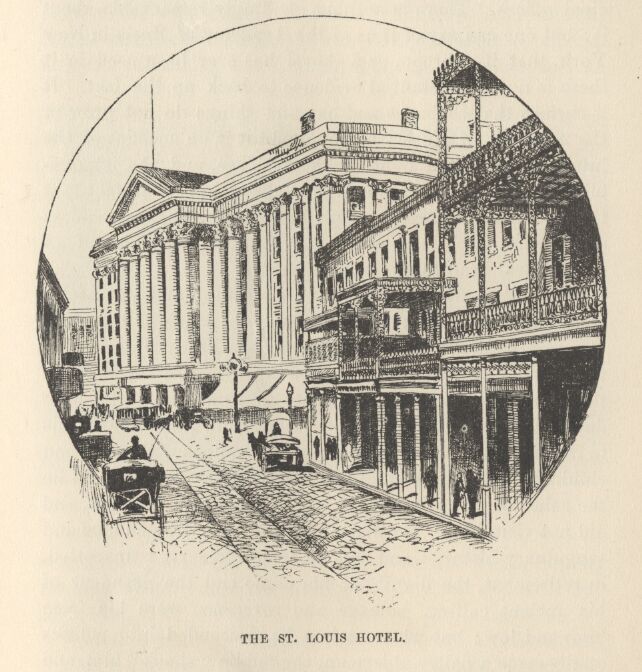
We visited the old St. Louis Hotel, now occupied by municipal offices. There is nothing strikingly remarkable about it; but one can say of it as of the Academy of Music in New York, that if a broom or a shovel has ever been used in it there is no circumstantial evidence to back up the fact. It is curious that cabbages and hay and things do not grow in the Academy of Music; but no doubt it is on account of the interruption of the light by the benches, and the impossibility of hoeing the crop except in the aisles. The fact that the ushers grow their buttonhole-bouquets on the premises shows what might be done if they had the right kind of an agricultural head to the establishment.
We visited the old St. Louis Hotel, which now houses municipal offices. There is nothing especially remarkable about the building. But, as with the Academy of Music in New York, there is no evidence that anyone has ever used a broom or shovel there. It is strange that cabbages, hay, and other things do not grow in the Academy of Music. But no doubt the benches block the light, and the crop could only be hoed in the aisles. The ushers grow their buttonhole bouquets on the premises. That shows what might be possible if the establishment had the right kind of agricultural leadership.
We visited also the venerable Cathedral, and the pretty square in front of it; the one dim with religious light, the other brilliant with the worldly sort, and lovely with orange-trees and blossomy shrubs; then we drove in the hot sun through the wilderness of houses and out on to the wide dead level beyond, where the villas are, and the water wheels to drain the town, and the commons populous with cows and children; passing by an old cemetery where we were told lie the ashes of an early pirate; but we took him on trust, and did not visit him. He was a pirate with a tremendous and sanguinary history; and as long as he preserved unspotted, in retirement, the dignity of his name and the grandeur of his ancient calling, homage and reverence were his from high and low; but when at last he descended into politics and became a paltry alderman, the public 'shook' him, and turned aside and wept. When he died, they set up a monument over him; and little by little he has come into respect again; but it is respect for the pirate, not the alderman. To-day the loyal and generous remember only what he was, and charitably forget what he became.
We also visited the venerable Cathedral and the pretty square in front of it. The Cathedral was dim with religious light. The square was bright with the worldly kind and lovely with orange trees and flowering shrubs. Then we drove in the hot sun through a wilderness of houses and onto the wide, flat land beyond. There we saw villas, water wheels for draining the town, and common land crowded with cows and children. We passed an old cemetery where, we were told, the ashes of an early pirate lay. But we took their word for it and did not visit him. The pirate had a grand and bloody history. In retirement, he kept the dignity of his name and the grandeur of his old calling spotless. As long as he did, people high and low honored and revered him. But at last he sank into politics and became a petty alderman. The public 'shook' him, turned away, and wept. When he died, they put up a monument over him. Little by little, he has regained their respect. But their respect is for the pirate, not the alderman. Today, the loyal and generous remember only what he was and charitably forget what he became.
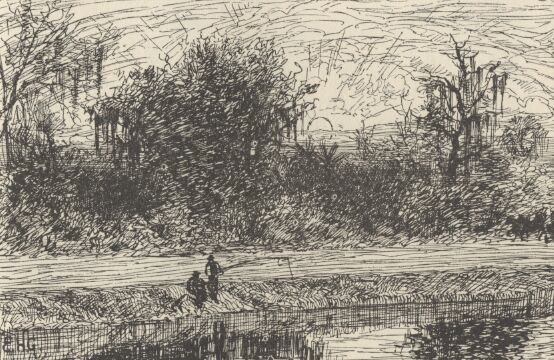
Thence, we drove a few miles across a swamp, along a raised shell road, with a canal on one hand and a dense wood on the other; and here and there, in the distance, a ragged and angular-limbed and moss-bearded cypress, top standing out, clear cut against the sky, and as quaint of form as the apple-trees in Japanese pictures—such was our course and the surroundings of it. There was an occasional alligator swimming comfortably along in the canal, and an occasional picturesque colored person on the bank, flinging his statue-rigid reflection upon the still water and watching for a bite.
From there, we drove a few miles across a swamp on a raised road made of shells. A canal ran along one side, and a dense wood stood on the other. Here and there in the distance, a cypress top stood sharply outlined against the sky. Its ragged, angular limbs were draped with moss, and its shape was as quaint as the apple trees in Japanese pictures. Occasionally, an alligator swam comfortably along the canal. Now and then, a picturesque Black person stood on the bank, fishing. His reflection fell on the still water, as motionless as a statue.
And by-and-bye we reached the West End, a collection of hotels of the usual light summer-resort pattern, with broad verandas all around, and the waves of the wide and blue Lake Pontchartrain lapping the thresholds. We had dinner on a ground-veranda over the water—the chief dish the renowned fish called the pompano, delicious as the less criminal forms of sin.
Soon we reached the West End, a group of hotels built in the usual airy summer resort style. Broad verandas surrounded them, and the waves of the wide, blue Lake Pontchartrain lapped at their doorsteps. We had dinner on a ground-floor veranda over the water. The main dish was the famous fish called pompano, as delicious as the less criminal forms of sin.
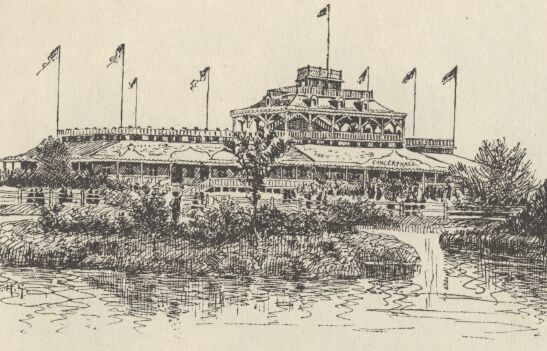
Thousands of people come by rail and carriage to West End and to Spanish Fort every evening, and dine, listen to the bands, take strolls in the open air under the electric lights, go sailing on the lake, and entertain themselves in various and sundry other ways.
Every evening, thousands of people travel by train and carriage to West End and Spanish Fort. They dine, listen to the bands, stroll outdoors under the electric lights, sail on the lake, and enjoy themselves in many other ways.
We had opportunities on other days and in other places to test the pompano. Notably, at an editorial dinner at one of the clubs in the city. He was in his last possible perfection there, and justified his fame. In his suite was a tall pyramid of scarlet cray-fish—large ones; as large as one's thumb—delicate, palatable, appetizing. Also deviled whitebait; also shrimps of choice quality; and a platter of small soft-shell crabs of a most superior breed. The other dishes were what one might get at Delmonico's, or Buckingham Palace; those I have spoken of can be had in similar perfection in New Orleans only, I suppose.
We had other chances to try pompano on other days and in other places. One was at an editorial dinner at a city club. The pompano was as perfect as it could possibly be there, and it lived up to its fame. Alongside it was a tall pyramid of bright red crayfish, as large as a thumb, delicate, tasty, and appetizing. There were also deviled whitebait, excellent shrimp, and a platter of small, exceptionally fine soft-shell crabs. The other dishes were ones you might get at Delmonico's or Buckingham Palace. But I suppose the dishes I have mentioned can be found just as perfect only in New Orleans.
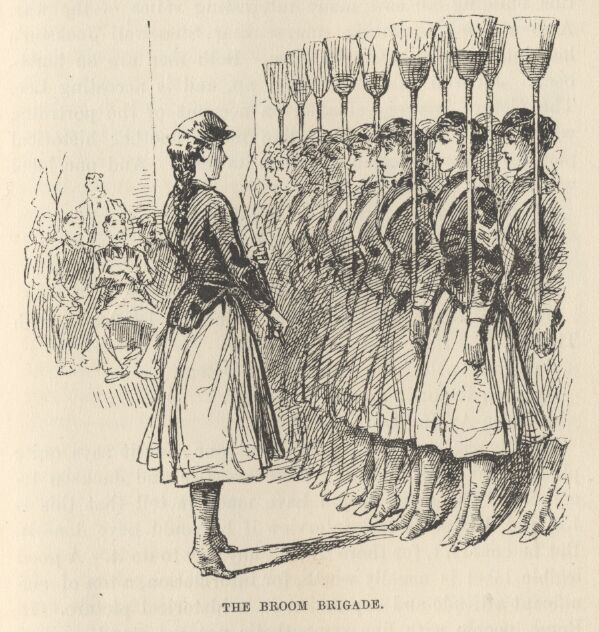
In the West and South they have a new institution—the Broom Brigade. It is composed of young ladies who dress in a uniform costume, and go through the infantry drill, with broom in place of musket. It is a very pretty sight, on private view. When they perform on the stage of a theater, in the blaze of colored fires, it must be a fine and fascinating spectacle. I saw them go through their complex manual with grace, spirit, and admirable precision. I saw them do everything which a human being can possibly do with a broom, except sweep. I did not see them sweep. But I know they could learn. What they have already learned proves that. And if they ever should learn, and should go on the war-path down Tchoupitoulas or some of those other streets around there, those thoroughfares would bear a greatly improved aspect in a very few minutes. But the girls themselves wouldn't; so nothing would be really gained, after all.
In the West and South, they have a new institution called the Broom Brigade. It is made up of young women who wear uniforms and perform infantry drills, using brooms instead of muskets. It is a very pretty sight in a private performance. On a theater stage, lit by colored flames, it must be a splendid and fascinating spectacle. I saw them perform their complicated drill with grace, spirit, and admirable precision. I saw them do everything a human being can possibly do with a broom, except sweep. I did not see them sweep. But I know they could learn. What they have already learned proves that. And if they ever learned to sweep, they might go on the warpath down Tchoupitoulas or some other nearby street. Those streets would look much better within a few minutes. But the girls themselves would not, so nothing would really be gained after all.
The drill was in the Washington Artillery building. In this building we saw many interesting relics of the war. Also a fine oil-painting representing Stonewall Jackson's last interview with General Lee. Both men are on horseback. Jackson has just ridden up, and is accosting Lee. The picture is very valuable, on account of the portraits, which are authentic. But, like many another historical picture, it means nothing without its label. And one label will fit it as well as another—
The drill was held in the Washington Artillery building. There we saw many interesting relics of the war. We also saw a fine oil painting showing Stonewall Jackson's last meeting with General Lee. Both men are on horseback. Jackson has just ridden up and is speaking to Lee. The painting is very valuable because the portraits are authentic. But like many historical paintings, it means nothing without a label. And one label would fit it as well as another:
First Interview between Lee and Jackson.
The First Meeting Between Lee and Jackson.
Last Interview between Lee and Jackson.
The Last Meeting between Lee and Jackson.
Jackson Introducing Himself to Lee.
Jackson Introduces Himself to Lee.
Jackson Accepting Lee's Invitation to Dinner.
Jackson Accepts Lee's Invitation to Dinner.
Jackson Declining Lee's Invitation to Dinner—with Thanks.
Jackson Declines Lee's Invitation to Dinner, with Thanks.
Jackson Apologizing for a Heavy Defeat.
Jackson Apologizing for a Crushing Defeat.
Jackson Reporting a Great Victory.
Jackson Reports a Great Victory.
Jackson Asking Lee for a Match.
Jackson Asking Lee for a Match.
It tells one story, and a sufficient one; for it says quite plainly and satisfactorily, 'Here are Lee and Jackson together.' The artist would have made it tell that this is Lee and Jackson's last interview if he could have done it. But he couldn't, for there wasn't any way to do it. A good legible label is usually worth, for information, a ton of significant attitude and expression in a historical picture. In Rome, people with fine sympathetic natures stand up and weep in front of the celebrated 'Beatrice Cenci the Day before her Execution.' It shows what a label can do. If they did not know the picture, they would inspect it unmoved, and say, 'Young girl with hay fever; young girl with her head in a bag.'
It tells one story, and that is enough. It says plainly and satisfactorily, 'Here are Lee and Jackson together.' The artist would have shown that this was Lee and Jackson's last interview if he could have. But he couldn't, because there was no way to show it. In a historical picture, a clear, readable label usually tells you more than a ton of meaningful poses and expressions. In Rome, people with sensitive, sympathetic natures stand and weep before the famous 'Beatrice Cenci the Day before her Execution.' This shows what a label can do. If they did not know the painting, they would look at it without emotion and say, 'Young girl with hay fever; young girl with her head in a bag.'
I found the half-forgotten Southern intonations and elisions as pleasing to my ear as they had formerly been. A Southerner talks music. At least it is music to me, but then I was born in the South. The educated Southerner has no use for an r, except at the beginning of a word. He says 'honah,' and 'dinnah,' and 'Gove'nuh,' and 'befo' the waw,' and so on. The words may lack charm to the eye, in print, but they have it to the ear. When did the r disappear from Southern speech, and how did it come to disappear? The custom of dropping it was not borrowed from the North, nor inherited from England. Many Southerners—most Southerners—put a y into occasional words that begin with the k sound. For instance, they say Mr. K'yahtah (Carter) and speak of playing k'yahds or of riding in the k'yahs. And they have the pleasant custom—long ago fallen into decay in the North—of frequently employing the respectful 'Sir.' Instead of the curt Yes, and the abrupt No, they say 'Yes, Suh', 'No, Suh.'
I found the half-forgotten Southern accents and dropped sounds as pleasing to my ear as ever. A Southerner speaks music. At least it sounds like music to me, but then I was born in the South. An educated Southerner has no use for an r except at the beginning of a word. He says 'honah,' and 'dinnah,' and 'Gove'nuh,' and 'befo' the waw,' and so on. The words may not look charming in print, but they sound charming. When did the r disappear from Southern speech, and how did that happen? Southerners did not borrow the custom of dropping it from the North or inherit it from England. Many Southerners, most Southerners, add a y to certain words that begin with a k sound. For example, they say Mr. K'yahtah (Carter) and speak of playing k'yahds or riding in the k'yahs. They also have a pleasant custom that has long since faded in the North. They often use the respectful 'Sir.' Instead of the curt Yes and the abrupt No, they say 'Yes, Suh', 'No, Suh.'
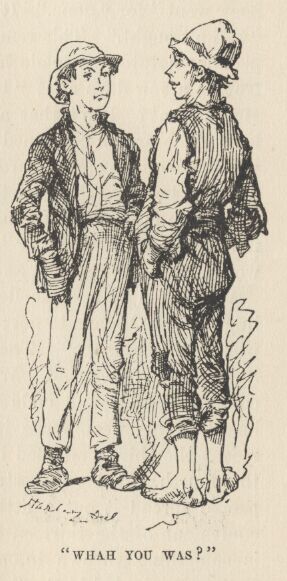
But there are some infelicities. Such as 'like' for 'as,' and the addition of an 'at' where it isn't needed. I heard an educated gentleman say, 'Like the flag-officer did.' His cook or his butler would have said, 'Like the flag-officer done.' You hear gentlemen say, 'Where have you been at?' And here is the aggravated form—heard a ragged street Arab say it to a comrade: 'I was a-ask'n' Tom whah you was a-sett'n' at.' The very elect carelessly say 'will' when they mean 'shall'; and many of them say, 'I didn't go to do it,' meaning 'I didn't mean to do it.' The Northern word 'guess'—imported from England, where it used to be common, and now regarded by satirical Englishmen as a Yankee original—is but little used among Southerners. They say 'reckon.' They haven't any 'doesn't' in their language; they say 'don't' instead. The unpolished often use 'went' for 'gone.' It is nearly as bad as the Northern 'hadn't ought.' This reminds me that a remark of a very peculiar nature was made here in my neighborhood (in the North) a few days ago: 'He hadn't ought to have went.' How is that? Isn't that a good deal of a triumph? One knows the orders combined in this half-breed's architecture without inquiring: one parent Northern, the other Southern. To-day I heard a schoolmistress ask, 'Where is John gone?' This form is so common—so nearly universal, in fact—that if she had used 'whither' instead of 'where,' I think it would have sounded like an affectation.
But there are some awkward expressions. People use 'like' for 'as,' for example, and add 'at' where it isn't needed. I heard an educated gentleman say, 'Like the flag-officer did.' His cook or butler would have said, 'Like the flag-officer done.' You hear gentlemen say, 'Where have you been at?' And here is a worse version. I heard a ragged street boy say to a companion, 'I was a-ask'n' Tom whah you was a-sett'n' at.' Even the most distinguished people carelessly say 'will' when they mean 'shall.' Many of them say, 'I didn't go to do it,' meaning 'I didn't mean to do it.' The Northern word 'guess' is rarely used among Southerners. It was imported from England, where it used to be common. Now satirical Englishmen regard it as an original Yankee expression. Southerners say 'reckon.' They don't have 'doesn't' in their language. They say 'don't' instead. Uneducated people often use 'went' for 'gone.' It is nearly as bad as the Northern 'hadn't ought.' This reminds me of a very peculiar remark made here in my neighborhood in the North a few days ago: 'He hadn't ought to have went.' How is that? Isn't that quite a triumph? One can tell the mixed ancestry of this hybrid expression without asking. One parent was Northern, the other Southern. Today I heard a schoolteacher ask, 'Where is John gone?' This form is so common, almost universal, in fact, that 'whither' would have sounded affected instead of 'where,' I think.
We picked up one excellent word—a word worth traveling to New Orleans to get; a nice limber, expressive, handy word—'lagniappe.' They pronounce it lanny-yap. It is Spanish—so they said. We discovered it at the head of a column of odds and ends in the Picayune, the first day; heard twenty people use it the second; inquired what it meant the third; adopted it and got facility in swinging it the fourth. It has a restricted meaning, but I think the people spread it out a little when they choose. It is the equivalent of the thirteenth roll in a 'baker's dozen.' It is something thrown in, gratis, for good measure. The custom originated in the Spanish quarter of the city. When a child or a servant buys something in a shop—or even the mayor or the governor, for aught I know—he finishes the operation by saying—
We picked up one excellent word, a word worth traveling to New Orleans to get. It is a wonderfully flexible, expressive, handy word: 'lagniappe.' They pronounce it lanny-yap. They said it was Spanish. On the first day, we found it at the top of a column of odds and ends in the Picayune. On the second, we heard twenty people use it. On the third, we asked what it meant. On the fourth, we adopted it and got the hang of using it. The word has a limited meaning, but I think people stretch it a little when they choose. It is the equivalent of the thirteenth roll in a 'baker's dozen.' It is something thrown in for free, for good measure. The custom began in the Spanish quarter of the city. When a child or a servant buys something in a shop, he finishes by saying: for all I know, even the mayor or the governor does the same.
'Give me something for lagniappe.'
'Give me a little something extra.'
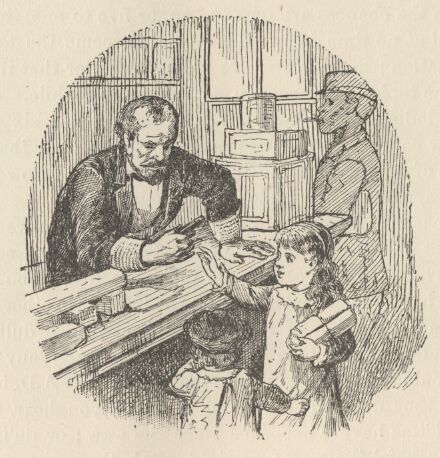
The shopman always responds; gives the child a bit of licorice-root, gives the servant a cheap cigar or a spool of thread, gives the governor—I don't know what he gives the governor; support, likely.
The shopkeeper always responds. He gives the child a bit of licorice root and the servant a cheap cigar or a spool of thread. I don't know what he gives the governor. Probably support.
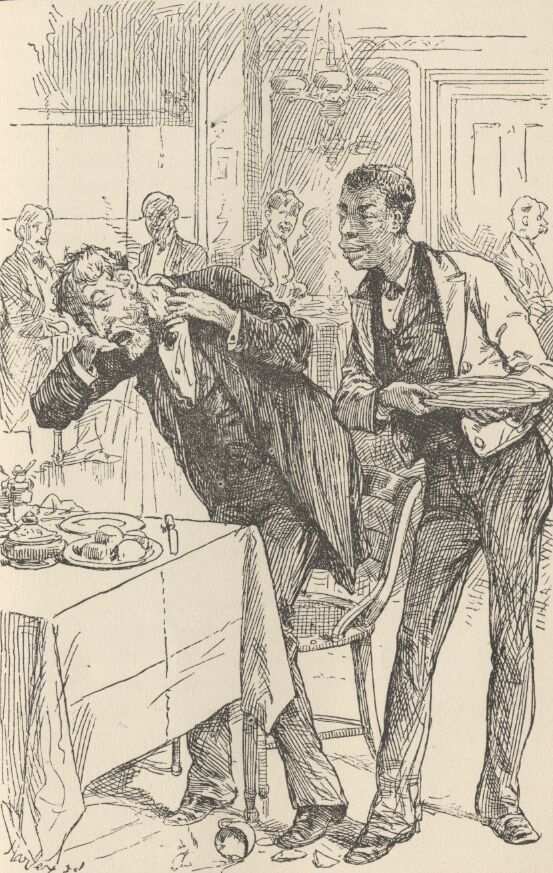
When you are invited to drink, and this does occur now and then in New Orleans—and you say, 'What, again?—no, I've had enough;' the other party says, 'But just this one time more—this is for lagniappe.' When the beau perceives that he is stacking his compliments a trifle too high, and sees by the young lady's countenance that the edifice would have been better with the top compliment left off, he puts his 'I beg pardon—no harm intended,' into the briefer form of 'Oh, that's for lagniappe.' If the waiter in the restaurant stumbles and spills a gill of coffee down the back of your neck, he says 'For lagniappe, sah,' and gets you another cup without extra charge.
When someone invites you for a drink, and this does happen now and then in New Orleans, you may refuse. You say, 'What, again? No, I've had enough.' The other person says, 'But just one more time. This is for lagniappe.' When a man realizes he has piled on the compliments a little too high, he looks at the young woman's face. He sees that the pile would have been better without the last compliment. So, instead of saying, 'I beg your pardon, I meant no harm,' he puts it more briefly: 'Oh, that's for lagniappe.' If a restaurant waiter stumbles and spills a gill of coffee down the back of your neck, he says, 'For lagniappe, sah,' and brings you another cup at no extra charge.