Chapter 4
The Boys' Ambition
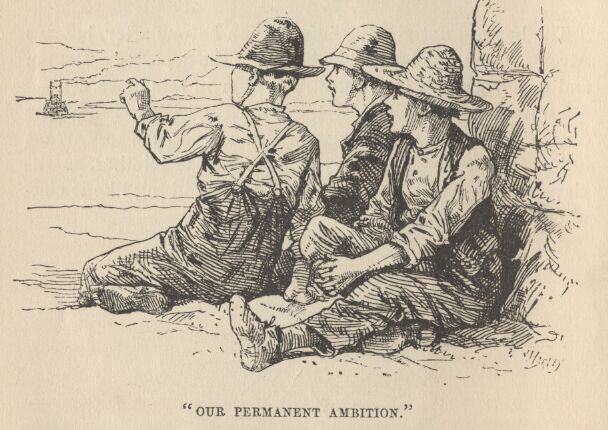
WHEN I was a boy, there was but one permanent ambition among my comrades in our village {footnote [1. Hannibal, Missouri]} on the west bank of the Mississippi River. That was, to be a steamboatman. We had transient ambitions of other sorts, but they were only transient. When a circus came and went, it left us all burning to become clowns; the first negro minstrel show that came to our section left us all suffering to try that kind of life; now and then we had a hope that if we lived and were good, God would permit us to be pirates. These ambitions faded out, each in its turn; but the ambition to be a steamboatman always remained.
When I was a boy, my friends in our village {footnote [1. Hannibal, Missouri]} on the Mississippi River’s west bank shared one lasting ambition. We all wanted to work on a steamboat. We had other ambitions, but they never lasted. When a circus came and went, it left us all eager to become clowns. The first Black minstrel show to come to our area left us all aching to try that life. Now and then, we hoped that if we lived and were good, God would let us become pirates. These ambitions faded, one by one, but the ambition to work on a steamboat always remained.
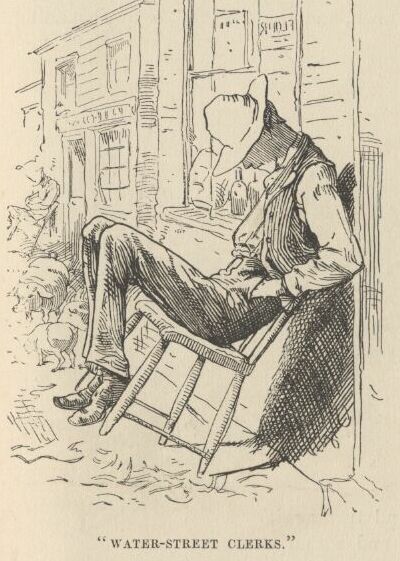
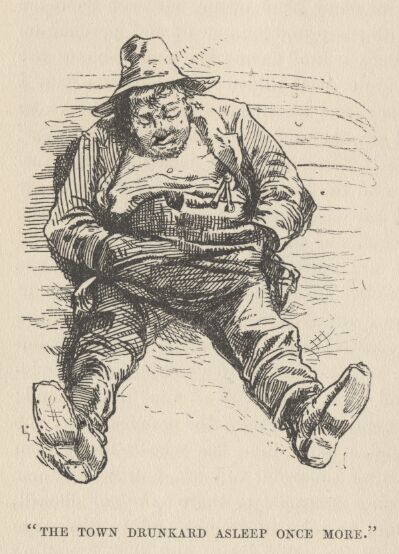
Once a day a cheap, gaudy packet arrived upward from St. Louis, and another downward from Keokuk. Before these events, the day was glorious with expectancy; after them, the day was a dead and empty thing. Not only the boys, but the whole village, felt this. After all these years I can picture that old time to myself now, just as it was then: the white town drowsing in the sunshine of a summer's morning; the streets empty, or pretty nearly so; one or two clerks sitting in front of the Water Street stores, with their splint-bottomed chairs tilted back against the wall, chins on breasts, hats slouched over their faces, asleep—with shingle-shavings enough around to show what broke them down; a sow and a litter of pigs loafing along the sidewalk, doing a good business in watermelon rinds and seeds; two or three lonely little freight piles scattered about the 'levee;' a pile of 'skids' on the slope of the stone-paved wharf, and the fragrant town drunkard asleep in the shadow of them; two or three wood flats at the head of the wharf, but nobody to listen to the peaceful lapping of the wavelets against them; the great Mississippi, the majestic, the magnificent Mississippi, rolling its mile-wide tide along, shining in the sun; the dense forest away on the other side; the 'point' above the town, and the 'point' below, bounding the river-glimpse and turning it into a sort of sea, and withal a very still and brilliant and lonely one. Presently a film of dark smoke appears above one of those remote 'points;' instantly a negro drayman, famous for his quick eye and prodigious voice, lifts up the cry, 'S-t-e-a-m-boat a-comin'!' and the scene changes! The town drunkard stirs, the clerks wake up, a furious clatter of drays follows, every house and store pours out a human contribution, and all in a twinkling the dead town is alive and moving.
Once a day, a cheap, flashy packet boat arrived upriver from St. Louis, and another came downriver from Keokuk. Before they arrived, the day was glorious with anticipation. Afterward, it was dead and empty. The whole village felt this, not just the boys. Even after all these years, I can still picture that time just as it was. The white town was dozing in the sunshine on a summer morning. The streets were empty, or nearly so. One or two clerks sat outside the Water Street stores, asleep. Their chairs, with seats made of wooden strips, were tilted back against the wall. Their chins rested on their chests, and their hats drooped over their faces. The wood shavings scattered around them showed what had worn them out. A sow and her litter of pigs wandered along the sidewalk, making a fine meal of watermelon rinds and seeds. Two or three lonely little piles of freight lay scattered about the "levee." A pile of "skids," the wooden beams used for moving cargo, lay on the slope of the stone-paved wharf. The fragrant town drunk was asleep in their shadow. Two or three flatboats carrying wood sat at the head of the wharf. But nobody was there to listen to the gentle lapping of the little waves against them. The great Mississippi, the majestic, magnificent Mississippi, rolled its mile-wide tide along, shining in the sun. Dense forest stretched away on the other side. The "point" above town and the "point" below it framed the view of the river, turning it into a kind of sea. It was a very still, brilliant, and lonely sea. Soon a thin cloud of dark smoke appeared above one of those distant "points." At once, a Black drayman, famous for his sharp eyes and enormous voice, called out, "S-t-e-a-m-boat a-comin'!" And the scene changed! The town drunk stirred, the clerks woke up, and a furious clatter of drays followed. Every house and store sent people pouring out. In a flash, the dead town was alive and moving.
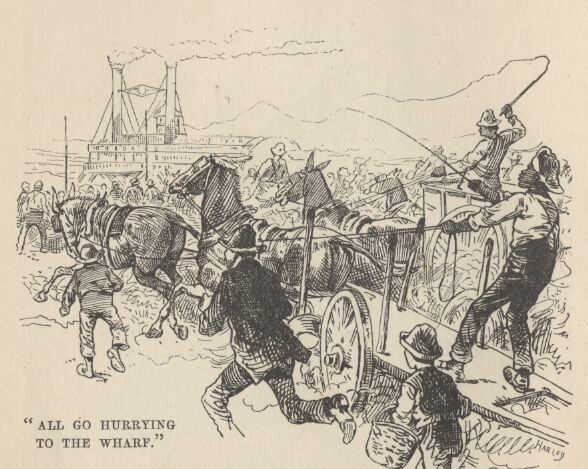
Drays, carts, men, boys, all go hurrying from many quarters to a common center, the wharf. Assembled there, the people fasten their eyes upon the coming boat as upon a wonder they are seeing for the first time. And the boat is rather a handsome sight, too. She is long and sharp and trim and pretty; she has two tall, fancy-topped chimneys, with a gilded device of some kind swung between them; a fanciful pilot-house, a glass and 'gingerbread', perched on top of the 'texas' deck behind them; the paddle-boxes are gorgeous with a picture or with gilded rays above the boat's name; the boiler deck, the hurricane deck, and the texas deck are fenced and ornamented with clean white railings; there is a flag gallantly flying from the jack-staff; the furnace doors are open and the fires glaring bravely; the upper decks are black with passengers; the captain stands by the big bell, calm, imposing, the envy of all; great volumes of the blackest smoke are rolling and tumbling out of the chimneys—a husbanded grandeur created with a bit of pitch pine just before arriving at a town; the crew are grouped on the forecastle; the broad stage is run far out over the port bow, and an envied deckhand stands picturesquely on the end of it with a coil of rope in his hand; the pent steam is screaming through the gauge-cocks, the captain lifts his hand, a bell rings, the wheels stop; then they turn back, churning the water to foam, and the steamer is at rest. Then such a scramble as there is to get aboard, and to get ashore, and to take in freight and to discharge freight, all at one and the same time; and such a yelling and cursing as the mates facilitate it all with! Ten minutes later the steamer is under way again, with no flag on the jack-staff and no black smoke issuing from the chimneys. After ten more minutes the town is dead again, and the town drunkard asleep by the skids once more.
Wagons, carts, men, and boys all hurry from many directions toward one place, the wharf. Once there, the people stare at the approaching boat as if seeing such a wonder for the first time. And the boat is quite a handsome sight. She is long, sleek, neat, and pretty. She has two tall chimneys with fancy tops, and some kind of gilded ornament hangs between them. Behind the chimneys, a fanciful pilot house of glass and 'gingerbread' sits atop the 'texas' deck. The paddle wheel housings are splendidly decorated with pictures or gilded rays above the boat's name. Clean white railings line and decorate the boiler deck, the hurricane deck, and the texas deck. A flag flies proudly from the jack-staff. The furnace doors are open, and the fires blaze brightly. The upper decks are black with passengers. The captain stands by the big bell, calm and imposing, the envy of everyone. Great clouds of the blackest smoke roll and tumble from the chimneys. The crew has saved up this display by adding some pitch pine to the fire just before reaching town. The crew members gather on the forecastle. A broad gangplank extends far out over the left side of the bow. An envied deckhand poses at its end with a coil of rope in his hand. Trapped steam screams through the gauge-cocks. The captain raises his hand, a bell rings, and the wheels stop. Then the wheels turn backward, churning the water into foam, and the steamer comes to rest. Then what a scramble begins! People rush aboard and ashore while freight is loaded and unloaded, all at the same time. And how the mates yell and curse to keep it all moving! Ten minutes later, the steamer is on its way again. No flag flies from the jack-staff, and no black smoke pours from the chimneys. Ten minutes after that, the town is dead again, and the town drunkard is asleep by the loading skids once more.
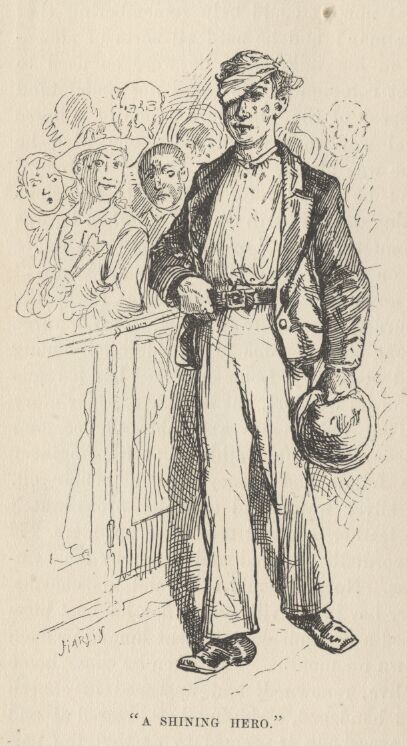
My father was a justice of the peace, and I supposed he possessed the power of life and death over all men and could hang anybody that offended him. This was distinction enough for me as a general thing; but the desire to be a steamboatman kept intruding, nevertheless. I first wanted to be a cabin-boy, so that I could come out with a white apron on and shake a tablecloth over the side, where all my old comrades could see me; later I thought I would rather be the deckhand who stood on the end of the stage-plank with the coil of rope in his hand, because he was particularly conspicuous. But these were only day-dreams,—they were too heavenly to be contemplated as real possibilities. By and by one of our boys went away. He was not heard of for a long time. At last he turned up as apprentice engineer or 'striker' on a steamboat. This thing shook the bottom out of all my Sunday-school teachings. That boy had been notoriously worldly, and I just the reverse; yet he was exalted to this eminence, and I left in obscurity and misery. There was nothing generous about this fellow in his greatness. He would always manage to have a rusty bolt to scrub while his boat tarried at our town, and he would sit on the inside guard and scrub it, where we could all see him and envy him and loathe him. And whenever his boat was laid up he would come home and swell around the town in his blackest and greasiest clothes, so that nobody could help remembering that he was a steamboatman; and he used all sorts of steamboat technicalities in his talk, as if he were so used to them that he forgot common people could not understand them. He would speak of the 'labboard' side of a horse in an easy, natural way that would make one wish he was dead. And he was always talking about 'St. Looy' like an old citizen; he would refer casually to occasions when he 'was coming down Fourth Street,' or when he was 'passing by the Planter's House,' or when there was a fire and he took a turn on the brakes of 'the old Big Missouri;' and then he would go on and lie about how many towns the size of ours were burned down there that day. Two or three of the boys had long been persons of consideration among us because they had been to St. Louis once and had a vague general knowledge of its wonders, but the day of their glory was over now. They lapsed into a humble silence, and learned to disappear when the ruthless 'cub'-engineer approached. This fellow had money, too, and hair oil. Also an ignorant silver watch and a showy brass watch chain. He wore a leather belt and used no suspenders. If ever a youth was cordially admired and hated by his comrades, this one was. No girl could withstand his charms. He 'cut out' every boy in the village. When his boat blew up at last, it diffused a tranquil contentment among us such as we had not known for months. But when he came home the next week, alive, renowned, and appeared in church all battered up and bandaged, a shining hero, stared at and wondered over by everybody, it seemed to us that the partiality of Providence for an undeserving reptile had reached a point where it was open to criticism.
My father was a justice of the peace. I supposed he had the power of life and death over all men and could hang anyone who offended him. Usually, that was distinction enough for me. But I still kept wanting to be a steamboatman. At first, I wanted to be a cabin-boy. I could come out wearing a white apron and shake a tablecloth over the side, where all my old friends could see me. Later, I thought I would rather be the deckhand who stood at the end of the gangplank, holding a coil of rope. He was especially easy to see. But these were only daydreams. They were too heavenly to imagine as real possibilities. Eventually, one of our boys went away. We heard nothing of him for a long time. At last, he turned up as an apprentice engineer, or 'striker,' on a steamboat. This shook the foundations of everything I had learned in Sunday school. That boy was known for being worldly, and I was just the opposite. Yet he had been raised to this great position, while I was left in obscurity and misery. The fellow was not at all generous in his greatness. Whenever his boat stopped at our town, he always managed to find a rusty bolt to scrub. He would sit on the inner edge of the deck and scrub it, where we could all see, envy, and loathe him. And whenever his boat was out of service, he would come home and swagger around town in his blackest, greasiest clothes. Nobody could help remembering that he was a steamboatman. He also used all kinds of steamboat terms in conversation. He acted as if he were so used to them that he forgot ordinary people could not understand them. He would casually refer to the 'labboard' side of a horse, in a way that made you wish he were dead. He was always talking about 'St. Looy' as if he had lived there for years. He would casually mention times when he 'was coming down Fourth Street' or 'passing by the Planter's House.' Or he would mention a fire and how he had helped pump water with 'the old Big Missouri.' Then he would go on and lie about how many towns the size of ours had burned down there that day. Two or three boys had long been important among us because they had been to St. Louis once. They had a vague general knowledge of its wonders. But their days of glory were over now. They fell into humble silence and learned to disappear when the ruthless 'cub'-engineer approached. This fellow had money, too, and hair oil. He also had a cheap silver watch and a showy brass watch chain. He wore a leather belt and no suspenders. If ever a boy was warmly admired and hated by his friends, this one was. No girl could resist his charms. He 'cut out' every boy in the village. When his boat finally blew up, it spread a peaceful contentment among us that we had not known for months. But the next week he came home alive and famous. He appeared in church, battered and bandaged, a shining hero whom everyone stared at and wondered over. It seemed to us that Providence had shown such favoritism to an undeserving reptile that it was open to criticism.
This creature's career could produce but one result, and it speedily followed. Boy after boy managed to get on the river. The minister's son became an engineer. The doctor's and the post-master's sons became 'mud clerks;' the wholesale liquor dealer's son became a barkeeper on a boat; four sons of the chief merchant, and two sons of the county judge, became pilots. Pilot was the grandest position of all. The pilot, even in those days of trivial wages, had a princely salary—from a hundred and fifty to two hundred and fifty dollars a month, and no board to pay. Two months of his wages would pay a preacher's salary for a year. Now some of us were left disconsolate. We could not get on the river—at least our parents would not let us.
This fellow's career could have only one result, and it came quickly. Boy after boy found a way to work on the river. The minister's son became an engineer. The doctor's and the postmaster's sons became 'mud clerks.' The wholesale liquor dealer's son became a barkeeper on a boat. Four sons of the chief merchant and two sons of the county judge became pilots. Pilot was the grandest position of all. Even in those days of low wages, a pilot earned a princely salary. He made $150 to $250 a month and paid nothing for room and board. Two months of his wages would pay a preacher's salary for a year. Some of us were left heartbroken. We couldn't get on the river, or at least our parents wouldn't let us.
So by and by I ran away. I said I never would come home again till I was a pilot and could come in glory. But somehow I could not manage it. I went meekly aboard a few of the boats that lay packed together like sardines at the long St. Louis wharf, and very humbly inquired for the pilots, but got only a cold shoulder and short words from mates and clerks. I had to make the best of this sort of treatment for the time being, but I had comforting daydreams of a future when I should be a great and honored pilot, with plenty of money, and could kill some of these mates and clerks and pay for them.
So, after a while, I ran away. I said I would never come home again until I was a pilot and could return in glory. But somehow I could not manage it. I timidly boarded a few of the boats packed together like sardines at the long St. Louis wharf. I very humbly asked for the pilots, but the mates and clerks gave me only cold shoulders and curt answers. For the time being, I had to make the best of this treatment. But I comforted myself with daydreams of a future when I would be a great and honored pilot with plenty of money. Then I could kill some of these mates and clerks and pay for them.