Chapter 39
Manufacturing and Criminals
WHERE the river, in the Vicksburg region, used to be corkscrewed, it is now comparatively straight—made so by cut-off; a former distance of seventy miles is reduced to thirty-five. It is a change which threw Vicksburg's neighbor, Delta, Louisiana, out into the country and ended its career as a river town. Its whole river-frontage is now occupied by a vast sand-bar, thickly covered with young trees—a growth which will magnify itself into a dense forest by-and-bye, and completely hide the exiled town.
The river near Vicksburg used to twist like a corkscrew, but a cutoff has made it comparatively straight. A stretch that was once seventy miles long is now thirty-five miles long. The change left Vicksburg’s neighbor, Delta, Louisiana, stranded in the country and ended its life as a river town. A vast sandbar now covers its entire riverfront and is thick with young trees. Before long, the trees will grow into a dense forest and completely hide the exiled town.
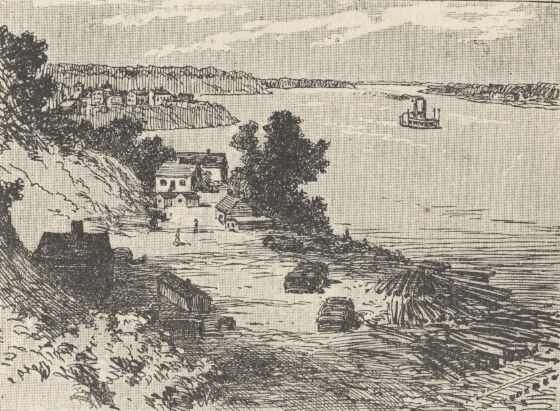
In due time we passed Grand Gulf and Rodney, of war fame, and reached Natchez, the last of the beautiful hill-cities—for Baton Rouge, yet to come, is not on a hill, but only on high ground. Famous Natchez-under-the-hill has not changed notably in twenty years; in outward aspect—judging by the descriptions of the ancient procession of foreign tourists—it has not changed in sixty; for it is still small, straggling, and shabby. It had a desperate reputation, morally, in the old keel-boating and early steamboating times—plenty of drinking, carousing, fisticuffing, and killing there, among the riff-raff of the river, in those days. But Natchez-on-top-of-the-hill is attractive; has always been attractive. Even Mrs. Trollope (1827) had to confess its charms:
In time, we passed Grand Gulf and Rodney, both famous for their roles in the war. Then we reached Natchez, the last of the beautiful hill cities. Baton Rouge, still ahead of us, is not on a hill, but only on high ground. Famous Natchez-under-the-hill has not changed much in twenty years. Judging by the descriptions of the long succession of foreign tourists, its appearance has not changed in sixty years. It is still small, scattered, and shabby. In the old days of keelboats and early steamboats, it had a terrible moral reputation. There was plenty of drinking, carousing, fistfighting, and killing among the river’s riffraff in those days. But Natchez-on-top-of-the-hill is attractive and always has been. Even Mrs. Trollope (1827) had to admit its charms:
'At one or two points the wearisome level line is relieved by bluffs, as they call the short intervals of high ground. The town of Natchez is beautifully situated on one of those high spots. The contrast that its bright green hill forms with the dismal line of black forest that stretches on every side, the abundant growth of the pawpaw, palmetto and orange, the copious variety of sweet-scented flowers that flourish there, all make it appear like an oasis in the desert. Natchez is the furthest point to the north at which oranges ripen in the open air, or endure the winter without shelter. With the exception of this sweet spot, I thought all the little towns and villages we passed wretched-looking in the extreme.'
'At one or two points, bluffs break up the tiresome, level landscape. That is what they call the short stretches of high ground. The town of Natchez is beautifully situated on one of these high spots. Its bright green hill stands out against the bleak line of black forest stretching in every direction. Pawpaw, palmetto, and orange trees grow there in abundance, along with a great variety of sweet-smelling flowers. All this makes Natchez look like an oasis in the desert. Natchez is the northernmost place where oranges ripen outdoors or survive the winter without shelter. Except for this lovely spot, I thought all the little towns and villages we passed looked utterly miserable.'
Natchez, like her near and far river neighbors, has railways now, and is adding to them—pushing them hither and thither into all rich outlying regions that are naturally tributary to her. And like Vicksburg and New Orleans, she has her ice-factory: she makes thirty tons of ice a day. In Vicksburg and Natchez, in my time, ice was jewelry; none but the rich could wear it. But anybody and everybody can have it now. I visited one of the ice-factories in New Orleans, to see what the polar regions might look like when lugged into the edge of the tropics. But there was nothing striking in the aspect of the place. It was merely a spacious house, with some innocent steam machinery in one end of it and some big porcelain pipes running here and there. No, not porcelain—they merely seemed to be; they were iron, but the ammonia which was being breathed through them had coated them to the thickness of your hand with solid milk-white ice. It ought to have melted; for one did not require winter clothing in that atmosphere: but it did not melt; the inside of the pipe was too cold.
Natchez, like its river neighbors near and far, has railways now and is adding more. The city is extending them in every direction into all the rich outlying regions that naturally depend on it. And like Vicksburg and New Orleans, Natchez has an ice factory. It makes thirty tons of ice a day. In my day, ice was jewelry in Vicksburg and Natchez. Only the rich could wear it. But now anyone and everyone can have it. I visited an ice factory in New Orleans to see what the polar regions might look like at the edge of the tropics. But there was nothing striking about the place. It was simply a large building, with some harmless-looking steam machinery at one end and big porcelain pipes running here and there. No, not porcelain. The pipes only looked like porcelain. They were iron, but the ammonia flowing through them had coated them with solid, milky-white ice as thick as your hand. The ice should have melted, because the air inside the building was not cold enough to require winter clothing. But it did not melt. The inside of the pipes was too cold.
Sunk into the floor were numberless tin boxes, a foot square and two feet long, and open at the top end. These were full of clear water; and around each box, salt and other proper stuff was packed; also, the ammonia gases were applied to the water in some way which will always remain a secret to me, because I was not able to understand the process. While the water in the boxes gradually froze, men gave it a stir or two with a stick occasionally—to liberate the air-bubbles, I think. Other men were continually lifting out boxes whose contents had become hard frozen. They gave the box a single dip into a vat of boiling water, to melt the block of ice free from its tin coffin, then they shot the block out upon a platform car, and it was ready for market. These big blocks were hard, solid, and crystal-clear. In certain of them, big bouquets of fresh and brilliant tropical flowers had been frozen-in; in others, beautiful silken-clad French dolls, and other pretty objects. These blocks were to be set on end in a platter, in the center of dinner-tables, to cool the tropical air; and also to be ornamental, for the flowers and things imprisoned in them could be seen as through plate glass. I was told that this factory could retail its ice, by wagon, throughout New Orleans, in the humblest dwelling-house quantities, at six or seven dollars a ton, and make a sufficient profit. This being the case, there is business for ice-factories in the North; for we get ice on no such terms there, if one take less than three hundred and fifty pounds at a delivery.
Countless tin boxes were set into the floor. Each was a foot square, two feet long, and open at the top. They were full of clear water, and salt and other suitable materials were packed around them. Ammonia gases were also applied to the water somehow. The method will always remain a secret to me because I could not understand it. As the water gradually froze, men occasionally stirred it once or twice with a stick, I think to release the air bubbles. Other men were constantly lifting out boxes whose contents had frozen solid. They dipped each box once into a vat of boiling water. This freed the block of ice from its tin coffin. Then they slid the block onto a platform cart, and it was ready for market. These large blocks were hard, solid, and crystal clear. Some had large bouquets of fresh, brilliant tropical flowers frozen inside them. Others held beautiful French dolls dressed in silk and other pretty objects. The blocks were to be stood upright on platters in the center of dinner tables to cool the tropical air. They were also meant as decorations. The flowers and other things trapped inside could be seen as clearly as through plate glass. I was told that the factory could deliver ice by wagon throughout New Orleans, even in small quantities to the humblest homes. It could charge six or seven dollars a ton and still make a sufficient profit. If that is so, there is a market for ice factories in the North. We cannot get ice there on anything like those terms if we take less than 350 pounds per delivery.
The Rosalie Yarn Mill, of Natchez, has a capacity of 6,000 spindles and 160 looms, and employs 100 hands. The Natchez Cotton Mills Company began operations four years ago in a two-story building of 50 x 190 feet, with 4,000 spindles and 128 looms; capital $105,000, all subscribed in the town. Two years later, the same stockholders increased their capital to $225,000; added a third story to the mill, increased its length to 317 feet; added machinery to increase the capacity to 10,300 spindles and 304 looms. The company now employ 250 operatives, many of whom are citizens of Natchez. 'The mill works 5,000 bales of cotton annually and manufactures the best standard quality of brown shirtings and sheetings and drills, turning out 5,000,000 yards of these goods per year.'{footnote [New Orleans Times-Democrat, 26 Aug, 1882.]} A close corporation—stock held at $5,000 per share, but none in the market.
The Rosalie Yarn Mill in Natchez has a capacity of 6,000 spindles and 160 looms. It employs 100 workers. The Natchez Cotton Mills Company began operating four years ago in a two-story building measuring 50 by 190 feet. The mill had 4,000 spindles and 128 looms. Its capital was $105,000, all raised in the town. Two years later, the same shareholders increased the capital to $225,000. They added a third story to the mill and extended it to 317 feet. They also added machinery, increasing its capacity to 10,300 spindles and 304 looms. The company now employs 250 workers, many of whom are citizens of Natchez. 'The mill processes 5,000 bales of cotton each year. It makes the best standard quality of brown shirtings, sheetings, and drills, producing 5,000,000 yards a year.'{footnote [New Orleans Times-Democrat, 26 Aug, 1882.]} The company is closely held. Its stock is valued at $5,000 per share, but none is on the market.
The changes in the Mississippi River are great and strange, yet were to be expected; but I was not expecting to live to see Natchez and these other river towns become manufacturing strongholds and railway centers.
The changes in the Mississippi River are great and strange, yet they were to be expected. But I did not expect to live to see Natchez and these other river towns become major manufacturing and railway centers.
Speaking of manufactures reminds me of a talk upon that topic which I heard—which I overheard—on board the Cincinnati boat. I awoke out of a fretted sleep, with a dull confusion of voices in my ears. I listened—two men were talking; subject, apparently, the great inundation. I looked out through the open transom. The two men were eating a late breakfast; sitting opposite each other; nobody else around. They closed up the inundation with a few words—having used it, evidently, as a mere ice-breaker and acquaintanceship-breeder—then they dropped into business. It soon transpired that they were drummers—one belonging in Cincinnati, the other in New Orleans. Brisk men, energetic of movement and speech; the dollar their god, how to get it their religion.
Speaking of manufacturing reminds me of a conversation on the subject aboard the Cincinnati boat. I heard it, or rather, overheard it. I woke from a restless sleep with a dull murmur of voices in my ears. I listened. Two men were talking, apparently about the great flood. I looked out through the open transom. The men were eating a late breakfast, sitting across from each other. No one else was around. They finished discussing the flood in a few words. Evidently, they had used it merely to break the ice and get acquainted. Then they turned to business. It soon became clear that they were traveling salesmen. One was from Cincinnati, the other from New Orleans. They were brisk men, energetic in movement and speech. The dollar was their god, and how to get it was their religion.
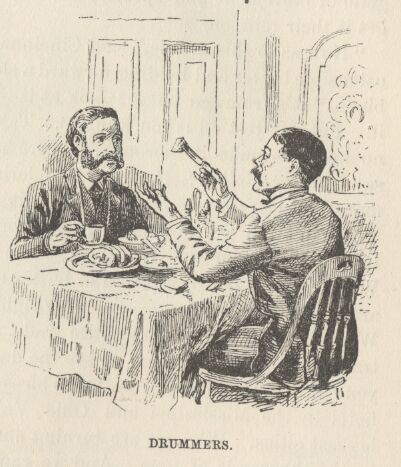
'Now as to this article,' said Cincinnati, slashing into the ostensible butter and holding forward a slab of it on his knife-blade, 'it's from our house; look at it—smell of it—taste it. Put any test on it you want to. Take your own time—no hurry—make it thorough. There now—what do you say? butter, ain't it. Not by a thundering sight—it's oleomargarine! Yes, sir, that's what it is—oleomargarine. You can't tell it from butter; by George, an expert can't. It's from our house. We supply most of the boats in the West; there's hardly a pound of butter on one of them. We are crawling right along—jumping right along is the word. We are going to have that entire trade. Yes, and the hotel trade, too. You are going to see the day, pretty soon, when you can't find an ounce of butter to bless yourself with, in any hotel in the Mississippi and Ohio Valleys, outside of the biggest cities. Why, we are turning out oleomargarine now by the thousands of tons. And we can sell it so dirt-cheap that the whole country has got to take it—can't get around it you see. Butter don't stand any show—there ain't any chance for competition. Butter's had its day—and from this out, butter goes to the wall. There's more money in oleomargarine than—why, you can't imagine the business we do. I've stopped in every town from Cincinnati to Natchez; and I've sent home big orders from every one of them.'
'Now, about this stuff,' said Cincinnati, cutting into the supposed butter and holding out a slab on his knife. 'It's from our company. Look at it, smell it, taste it. Put it through any test you want. Take your time. There's no hurry. Be thorough. There now, what do you say? It's butter, isn't it? Not by a long shot. It's oleomargarine! Yes, sir, that's what it is, oleomargarine. You can't tell it from butter. By George, an expert can't. It's from our company. We supply most of the boats in the West. There's hardly a pound of butter on any of them. We're moving right along. Jumping right along is the word. We're going to have that entire trade. Yes, and the hotel trade, too. 'Pretty soon, you won't be able to find a single ounce of butter in any hotel in the Mississippi and Ohio Valleys, except in the biggest cities. Why, we're producing thousands of tons of oleomargarine now. And we can sell it so dirt cheap that the whole country has to take it. There's no getting around it, you see. Butter doesn't stand a chance. There's no way it can compete. Butter's had its day. From now on, butter is finished. There's more money in oleomargarine than, why, you can't imagine how much business we do. I've stopped in every town from Cincinnati to Natchez, and I've sent big orders home from every one of them.'
And so-forth and so-on, for ten minutes longer, in the same fervid strain. Then New Orleans piped up and said—
And so on and so on, in the same passionate style, for another ten minutes. Then New Orleans spoke up and said:
Yes, it's a first-rate imitation, that's a certainty; but it ain't the only one around that's first-rate. For instance, they make olive-oil out of cotton-seed oil, nowadays, so that you can't tell them apart.'
Yes, it's definitely a first-rate imitation, but it isn't the only first-rate imitation around. For example, these days they make olive oil from cottonseed oil, so you can't tell them apart.'
'Yes, that's so,' responded Cincinnati, 'and it was a tip-top business for a while. They sent it over and brought it back from France and Italy, with the United States custom-house mark on it to indorse it for genuine, and there was no end of cash in it; but France and Italy broke up the game—of course they naturally would. Cracked on such a rattling impost that cotton-seed olive-oil couldn't stand the raise; had to hang up and quit.'
'Yes, that's right,' Cincinnati replied, 'and it was a first-rate business for a while. They shipped it to France and Italy and brought it back. The United States customs mark certified it as genuine, and there was no end of money in it. But France and Italy put a stop to the scheme. Of course they would. They slapped on such a high tariff that cottonseed olive oil couldn't bear the increase. The business had to shut down.'
'Oh, it did, did it? You wait here a minute.'
'Oh, it did, did it? Wait here a minute.'
Goes to his state-room, brings back a couple of long bottles, and takes out the corks—says:
He goes to his stateroom, brings back two long bottles, and pulls out the corks. He says:
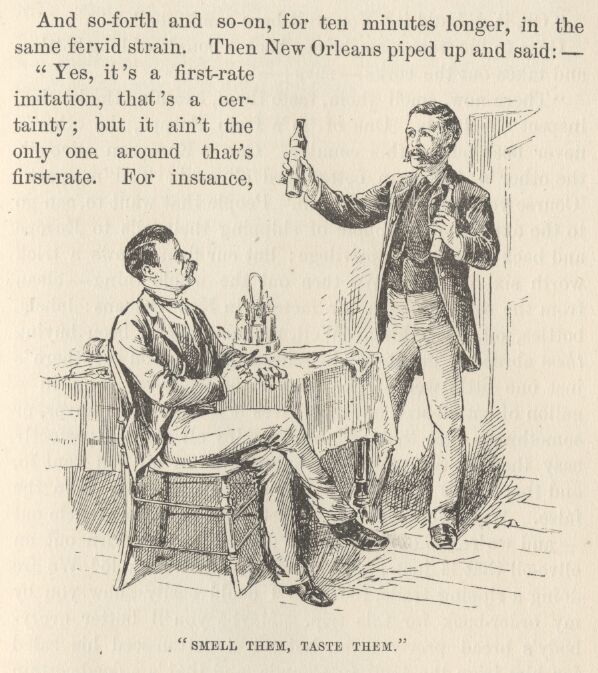
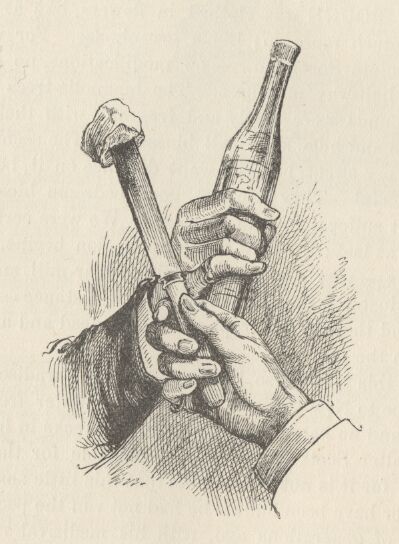
'There now, smell them, taste them, examine the bottles, inspect the labels. One of 'm's from Europe, the other's never been out of this country. One's European olive-oil, the other's American cotton-seed olive-oil. Tell 'm apart? 'Course you can't. Nobody can. People that want to, can go to the expense and trouble of shipping their oils to Europe and back—it's their privilege; but our firm knows a trick worth six of that. We turn out the whole thing—clean from the word go—in our factory in New Orleans: labels, bottles, oil, everything. Well, no, not labels: been buying them abroad—get them dirt-cheap there. You see, there's just one little wee speck, essence, or whatever it is, in a gallon of cotton-seed oil, that give it a smell, or a flavor, or something—get that out, and you're all right—perfectly easy then to turn the oil into any kind of oil you want to, and there ain't anybody that can detect the true from the false. Well, we know how to get that one little particle out—and we're the only firm that does. And we turn out an olive-oil that is just simply perfect—undetectable! We are doing a ripping trade, too—as I could easily show you by my order-book for this trip. Maybe you'll butter everybody's bread pretty soon, but we'll cotton-seed his salad for him from the Gulf to Canada, and that's a dead-certain thing.'
'There now, smell them, taste them, examine the bottles, inspect the labels. One comes from Europe, the other has never left this country. One is European olive oil, the other is American cottonseed olive oil. Can you tell them apart? Of course you can't. Nobody can. People who want to can go to the trouble and expense of shipping their oils to Europe and back. That's their privilege, but our firm knows a trick six times better. We make the whole thing, from start to finish, in our New Orleans factory: labels, bottles, oil, everything. Well, no, not the labels. We've been buying them abroad, where they're dirt cheap. You see, there's just one tiny speck, essence, or whatever it is, in a gallon of cottonseed oil. It gives the oil a smell, or a flavor, or something. Get that out, and you're all set. Then it's perfectly easy to turn the oil into any kind of oil you want. And nobody can tell the real thing from the fake. Well, we know how to remove that one little particle, and we're the only firm that does. We turn out an olive oil that's simply perfect. Nobody can tell the difference! We're doing a booming trade, too, as I could easily show you from my order book for this trip. Maybe you'll butter everybody's bread pretty soon, but we'll cottonseed their salads from the Gulf to Canada. That's a dead certainty.'
Cincinnati glowed and flashed with admiration. The two scoundrels exchanged business-cards, and rose. As they left the table, Cincinnati said—
Cincinnati glowed and flashed with admiration. The two scoundrels exchanged business cards and stood up. As they left the table, Cincinnati said:
'But you have to have custom-house marks, don't you? How do you manage that?'
'But you have to have customs marks, don't you? How do you get them?'
I did not catch the answer.
I didn't hear the answer.
We passed Port Hudson, scene of two of the most terrific episodes of the war—the night-battle there between Farragut's fleet and the Confederate land batteries, April 14th, 1863; and the memorable land battle, two months later, which lasted eight hours—eight hours of exceptionally fierce and stubborn fighting—and ended, finally, in the repulse of the Union forces with great slaughter.
We passed Port Hudson, the scene of two of the most terrifying episodes of the war. On April 14, 1863, Farragut's fleet fought the Confederate land batteries there at night. Two months later came the memorable land battle. It lasted eight hours, eight hours of exceptionally fierce and stubborn fighting. In the end, the Union forces were driven back with great slaughter.