Chapter 32
Disposing of a Bonanza
'SUCH was Ritter's narrative,' said I to my two friends. There was a profound and impressive silence, which lasted a considerable time; then both men broke into a fusillade of exciting and admiring ejaculations over the strange incidents of the tale; and this, along with a rattling fire of questions, was kept up until all hands were about out of breath. Then my friends began to cool down, and draw off, under shelter of occasional volleys, into silence and abysmal reverie. For ten minutes now, there was stillness. Then Rogers said dreamily—
'That was Ritter's story,' I said to my two friends. A deep, impressive silence followed and lasted quite a while. Then both men burst into a barrage of excited, admiring exclamations about the strange events in the story. They also fired questions at me until we were all nearly out of breath. Then my friends began to calm down and, with occasional bursts of comment, retreated into silence and deep thought. For ten minutes, all was quiet. Then Rogers said dreamily:
'Ten thousand dollars.'
'Ten thousand dollars.'
Adding, after a considerable pause—
Adding, after a long pause:
'Ten thousand. It is a heap of money.'
'Ten thousand. That's a lot of money.'
Presently the poet inquired—
Soon, the poet asked:
'Are you going to send it to him right away?'
'Are you going to send it to him right away?'
'Yes,' I said. 'It is a queer question.'
'Yes,' I said. 'It is a strange question.'
No reply. After a little, Rogers asked, hesitatingly:
No reply. After a while, Rogers asked hesitantly:
'All of it?—That is—I mean—'
'All of it? That is, I mean...'
'Certainly, all of it.'
'Of course, all of it.'
I was going to say more, but stopped—was stopped by a train of thought which started up in me. Thompson spoke, but my mind was absent, and I did not catch what he said. But I heard Rogers answer—
I was going to say more, but I stopped. A train of thought had interrupted me. Thompson spoke, but my mind was elsewhere, and I didn't catch what he said. But I heard Rogers answer:
'Yes, it seems so to me. It ought to be quite sufficient; for I don't see that he has done anything.'
'Yes, it seems that way to me. It should be enough, because I don't see that he has done anything.'
Presently the poet said—
Soon the poet said:
'When you come to look at it, it is more than sufficient. Just look at it—five thousand dollars! Why, he couldn't spend it in a lifetime! And it would injure him, too; perhaps ruin him—you want to look at that. In a little while he would throw his last away, shut up his shop, maybe take to drinking, maltreat his motherless children, drift into other evil courses, go steadily from bad to worse—'
'When you think about it, it is more than enough. Just look at it, five thousand dollars! Why, he couldn't spend it in a lifetime! And it would harm him, too. It might even ruin him. You have to consider that. Before long, he would throw away his shoemaker's last and close his shop. He might start drinking, mistreat his motherless children, and drift into other bad habits. He would go steadily from bad to worse...'
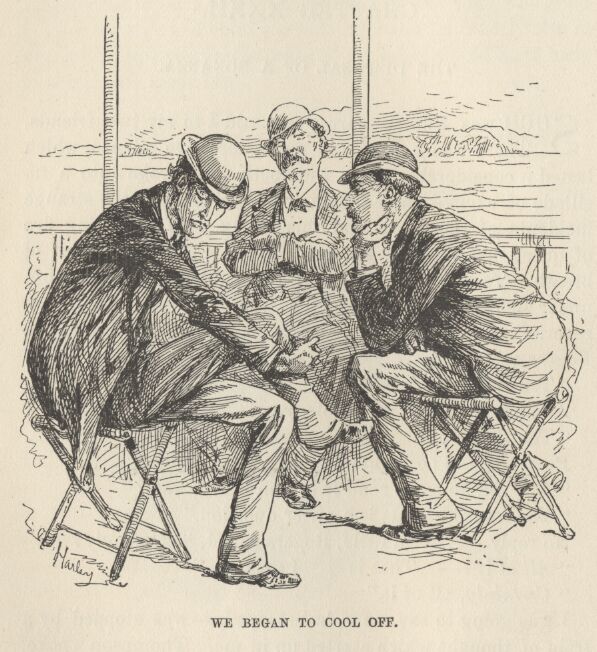
'Yes, that's it,' interrupted Rogers, fervently, 'I've seen it a hundred times—yes, more than a hundred. You put money into the hands of a man like that, if you want to destroy him, that's all; just put money into his hands, it's all you've got to do; and if it don't pull him down, and take all the usefulness out of him, and all the self-respect and everything, then I don't know human nature—ain't that so, Thompson? And even if we were to give him a third of it; why, in less than six months—'
'Yes, that's it,' Rogers interrupted passionately. 'I've seen it a hundred times, yes, more than a hundred. If you want to destroy a man like that, just put money in his hands. That's all you have to do. If the money doesn't bring him down and strip him of all his usefulness, all his self-respect, and everything else, then I don't know human nature. Isn't that right, Thompson? And even if we gave him a third of it, why, in less than six months...'
'Less than six weeks, you'd better say!' said I, warming up and breaking in. 'Unless he had that three thousand dollars in safe hands where he couldn't touch it, he would no more last you six weeks than—'
'Less than six weeks, you mean!' I said, getting worked up and interrupting. 'Unless he had that three thousand dollars safely out of his reach, he wouldn't last you six weeks any more than...'
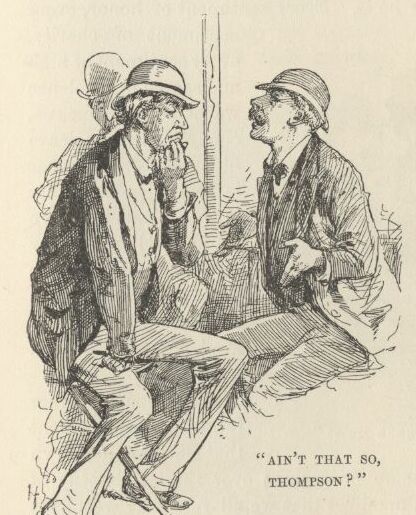
'Of course he wouldn't,' said Thompson; 'I've edited books for that kind of people; and the moment they get their hands on the royalty—maybe it's three thousand, maybe it's two thousand—'
'Of course he wouldn't,' said Thompson. 'I've edited books for that kind of people. And the moment they get their hands on the royalties, maybe it's three thousand, maybe it's two thousand...'
'What business has that shoemaker with two thousand dollars, I should like to know?' broke in Rogers, earnestly. 'A man perhaps perfectly contented now, there in Mannheim, surrounded by his own class, eating his bread with the appetite which laborious industry alone can give, enjoying his humble life, honest, upright, pure in heart; and blest!—yes, I say blest! blest above all the myriads that go in silk attire and walk the empty artificial round of social folly—but just you put that temptation before him once! just you lay fifteen hundred dollars before a man like that, and say—'
'What does that shoemaker need two thousand dollars for, I would like to know?' Rogers broke in earnestly. 'Perhaps he is perfectly content now, there in Mannheim, surrounded by people of his own class. He eats his bread with the appetite that only hard work can give. He enjoys his humble life, honest, upright, pure in heart, and blessed! Yes, I say blessed! Blessed above all the countless people who wear silk and go through the empty, artificial routines of social folly. But just put that temptation before him once! Just lay fifteen hundred dollars before a man like that and say...'
'Fifteen hundred devils!' cried I, 'five hundred would rot his principles, paralyze his industry, drag him to the rumshop, thence to the gutter, thence to the almshouse, thence to ——'
'Fifteen hundred devils!' I cried. 'Five hundred would corrupt his principles and destroy his work ethic. They would drag him to the bar, then to the gutter, then to the poorhouse, then to...'
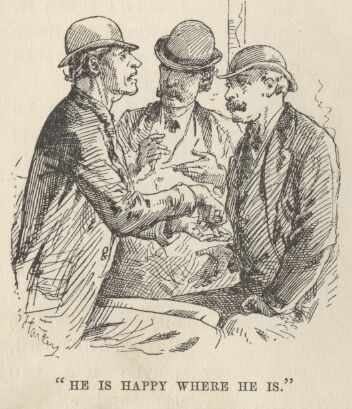
'Why put upon ourselves this crime, gentlemen?' interrupted the poet earnestly and appealingly. 'He is happy where he is, and as he is. Every sentiment of honor, every sentiment of charity, every sentiment of high and sacred benevolence warns us, beseeches us, commands us to leave him undisturbed. That is real friendship, that is true friendship. We could follow other courses that would be more showy; but none that would be so truly kind and wise, depend upon it.'
'Why commit this crime, gentlemen?' the poet interrupted, speaking earnestly and pleadingly. 'He is happy where he is and as he is. Every feeling of honor, charity, and high and sacred goodwill warns us, begs us, and commands us to leave him undisturbed. Leaving him alone is real friendship, true friendship. We could choose more showy actions. But you can be sure none would be as kind and wise.'
After some further talk, it became evident that each of us, down in his heart, felt some misgivings over this settlement of the matter. It was manifest that we all felt that we ought to send the poor shoemaker something. There was long and thoughtful discussion of this point; and we finally decided to send him a chromo.
After some more talk, it became clear that each of us had private doubts about how we had settled the matter. We all felt we ought to send the poor shoemaker something. We discussed this at length and gave it careful thought. Finally, we decided to send him a chromo.
Well, now that everything seemed to be arranged satisfactorily to everybody concerned, a new trouble broke out: it transpired that these two men were expecting to share equally in the money with me. That was not my idea. I said that if they got half of it between them they might consider themselves lucky. Rogers said—
Well, just when everything seemed settled to everyone's satisfaction, a new problem came up. It turned out that the two men expected to split the money equally with me. That wasn't what I had in mind. I said that if they got half the money between them, they could consider themselves lucky. Rogers said:
'Who would have had any if it hadn't been for me? I flung out the first hint—but for that it would all have gone to the shoemaker.'
'Who would have had any if it hadn't been for me? I gave the first hint. Without that, it would all have gone to the shoemaker.'
Thompson said that he was thinking of the thing himself at the very moment that Rogers had originally spoken.
Thompson said he had been thinking about the same thing at the very moment Rogers first spoke.
I retorted that the idea would have occurred to me plenty soon enough, and without anybody's help. I was slow about thinking, maybe, but I was sure.
I shot back that I would have thought of the idea soon enough, without anyone's help. Maybe I was slow to think, but I was sure.
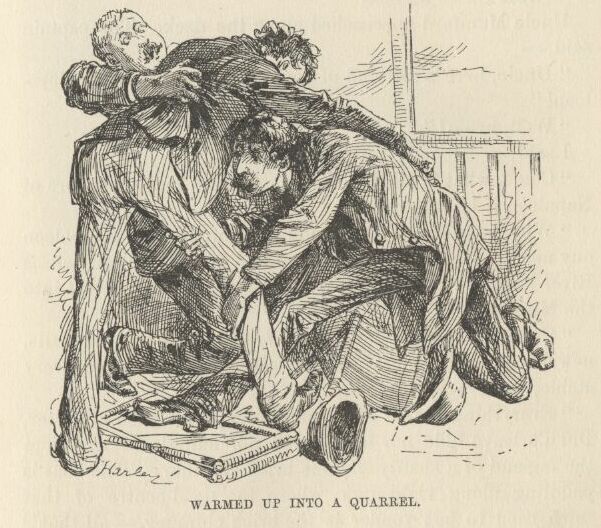
This matter warmed up into a quarrel; then into a fight; and each man got pretty badly battered. As soon as I had got myself mended up after a fashion, I ascended to the hurricane deck in a pretty sour humor. I found Captain McCord there, and said, as pleasantly as my humor would permit—
The dispute heated up into an argument, then a fight. Both men were pretty badly battered. As soon as I had patched myself up as best I could, I went up to the hurricane deck in a pretty sour mood. I found Captain McCord there and spoke as pleasantly as my mood would allow:
'I have come to say good-bye, captain. I wish to go ashore at Napoleon.'
'I came to say goodbye, captain. I want to go ashore at Napoleon.'
'Go ashore where?'
'Go ashore where?'
'Napoleon.'
'Napoleon.'
The captain laughed; but seeing that I was not in a jovial mood, stopped that and said—
The captain laughed, but when he saw I wasn't in a cheerful mood, he stopped laughing and said:
'But are you serious?'
'But are you serious?'
'Serious? I certainly am.'
'Serious? I certainly am.'
The captain glanced up at the pilot-house and said—
The captain glanced up at the pilothouse and said:
'He wants to get off at Napoleon!'
'He wants to get off at Napoleon!'
'Napoleon?'
'Napoleon?'
'That's what he says.'
'That's what he says.'
'Great Caesar's ghost!'
'Great Caesar's ghost!'
Uncle Mumford approached along the deck. The captain said—
Uncle Mumford walked toward them along the deck. The captain said:
'Uncle, here's a friend of yours wants to get off at Napoleon!'
'Uncle, here's a friend of yours who wants to get off at Napoleon!'
'Well, by —?'
'Well, by...?'
I said—
I said:
'Come, what is all this about? Can't a man go ashore at Napoleon if he wants to?'
'Come on, what is all this about? Can't a man go ashore at Napoleon if he wants to?'
'Why, hang it, don't you know? There isn't any Napoleon any more. Hasn't been for years and years. The Arkansas River burst through it, tore it all to rags, and emptied it into the Mississippi!'
'Why, darn it, don't you know? There isn't any Napoleon anymore. There hasn't been for years and years. The Arkansas River burst through Napoleon, tore it all to pieces, and emptied it into the Mississippi!'
'Carried the whole town away?-banks, churches, jails, newspaper-offices, court-house, theater, fire department, livery stable everything ?'
'Carried the whole town away? Banks, churches, jails, newspaper offices, courthouse, theater, fire department, livery stable, everything?'
'Everything. just a fifteen-minute job.' or such a matter. Didn't leave hide nor hair, shred nor shingle of it, except the fag-end of a shanty and one brick chimney. This boat is paddling along right now, where the dead-center of that town used to be; yonder is the brick chimney-all that's left of Napoleon. These dense woods on the right used to be a mile back of the town. Take a look behind you—up-stream—now you begin to recognize this country, don't you?'
'Everything. Just a fifteen-minute job, or thereabouts.' Nothing was left except the remains of a shack and one brick chimney. This boat is sailing right now where the very center of that town used to be. There's the brick chimney, all that's left of Napoleon. These dense woods on the right used to be a mile behind the town. Take a look behind you, upstream. Now you're beginning to recognize this country, aren't you?'
'Yes, I do recognize it now. It is the most wonderful thing I ever heard of; by a long shot the most wonderful—and unexpected.'
'Yes, I recognize it now. It is the most wonderful thing I have ever heard of. It is by far the most wonderful and unexpected.'
Mr. Thompson and Mr. Rogers had arrived, meantime, with satchels and umbrellas, and had silently listened to the captain's news. Thompson put a half-dollar in my hand and said softly—
Meanwhile, Mr. Thompson and Mr. Rogers had arrived with bags and umbrellas. They listened silently to the captain's news. Thompson put a half-dollar in my hand and said softly:
'For my share of the chromo.'
'For my share of the color print.'
Rogers followed suit.
Rogers did the same.
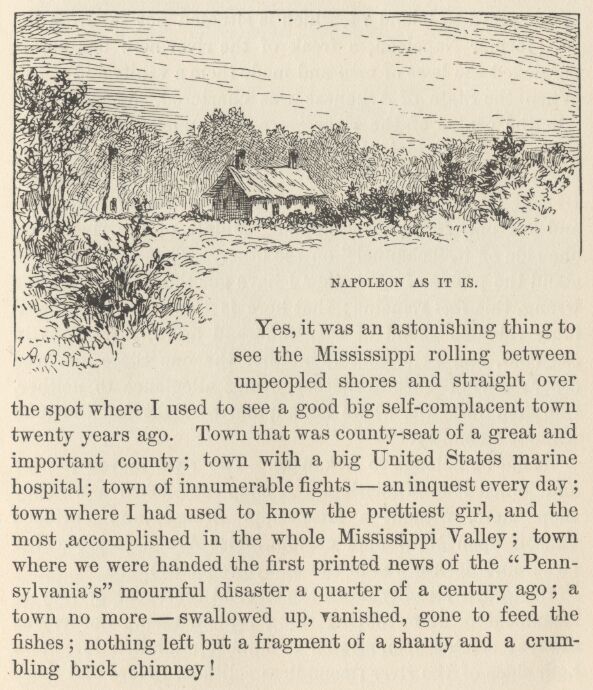
Yes, it was an astonishing thing to see the Mississippi rolling between unpeopled shores and straight over the spot where I used to see a good big self-complacent town twenty years ago. Town that was county-seat of a great and important county; town with a big United States marine hospital; town of innumerable fights—an inquest every day; town where I had used to know the prettiest girl, and the most accomplished in the whole Mississippi Valley; town where we were handed the first printed news of the 'Pennsylvania's' mournful disaster a quarter of a century ago; a town no more—swallowed up, vanished, gone to feed the fishes; nothing left but a fragment of a shanty and a crumbling brick chimney!
Yes, it was astonishing to see the Mississippi flowing between empty shores, right over the place where a large, self-satisfied town had stood twenty years earlier. The town had been the county seat of a large and important county. It had a large United States marine hospital. There had been countless fights, with an inquest every day. There I had known the prettiest and most accomplished girl in the whole Mississippi Valley. There, a quarter of a century earlier, we had received the first printed news of the 'Pennsylvania's' tragic disaster. Now the town was no more. It had been swallowed up, vanished, gone to feed the fish. Nothing remained but part of a shack and a crumbling brick chimney!