Chapter 33
Refreshments and Ethics
IN regard to Island 74, which is situated not far from the former Napoleon, a freak of the river here has sorely perplexed the laws of men and made them a vanity and a jest. When the State of Arkansas was chartered, she controlled 'to the center of the river'—a most unstable line. The State of Mississippi claimed 'to the channel'—another shifty and unstable line. No. 74 belonged to Arkansas. By and by a cut-off threw this big island out of Arkansas, and yet not within Mississippi. 'Middle of the river' on one side of it, 'channel' on the other. That is as I understand the problem. Whether I have got the details right or wrong, this fact remains: that here is this big and exceedingly valuable island of four thousand acres, thrust out in the cold, and belonging to neither the one State nor the other; paying taxes to neither, owing allegiance to neither. One man owns the whole island, and of right is 'the man without a country.'
Island 74 lies not far from the former town of Napoleon. A strange change in the river has thoroughly confused human laws here, making them seem pointless and absurd. When Arkansas was chartered, its jurisdiction extended 'to the center of the river', a very unstable boundary. Mississippi claimed land 'to the channel', another shifting and unstable boundary. No. 74 belonged to Arkansas. Eventually, a cutoff left this big island outside Arkansas, but not within Mississippi. The 'middle of the river' was on one side of the island, the 'channel' on the other. That is how I understand the problem. Whether I have the details right or wrong, this fact remains: this big and extremely valuable island covers four thousand acres. Yet it has been left out in the cold, belonging to neither state. It pays taxes to neither and owes allegiance to neither. One man owns the whole island, and he is rightly 'the man without a country.'
Island 92 belongs to Arkansas. The river moved it over and joined it to Mississippi. A chap established a whiskey shop there, without a Mississippi license, and enriched himself upon Mississippi custom under Arkansas protection (where no license was in those days required).
Island 92 belongs to Arkansas. The river moved the island over and joined it to Mississippi. A man opened a whiskey shop there without a Mississippi license. He grew rich serving Mississippi customers under Arkansas protection. In those days, Arkansas did not require a license.
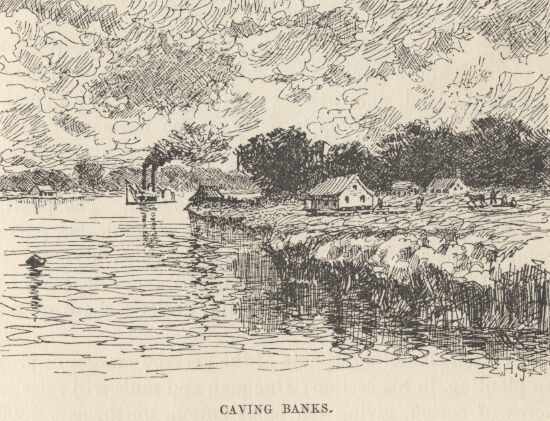
We glided steadily down the river in the usual privacy—steamboat or other moving thing seldom seen. Scenery as always: stretch upon stretch of almost unbroken forest, on both sides of the river; soundless solitude. Here and there a cabin or two, standing in small openings on the gray and grassless banks—cabins which had formerly stood a quarter or half-mile farther to the front, and gradually been pulled farther and farther back as the shores caved in. As at Pilcher's Point, for instance, where the cabins had been moved back three hundred yards in three months, so we were told; but the caving banks had already caught up with them, and they were being conveyed rearward once more.
We glided steadily down the river in the usual privacy. We seldom saw a steamboat or anything else moving. The scenery was the same as always: almost unbroken stretches of forest on both sides of the river. Everything was silent and solitary. Here and there, a cabin or two stood in small clearings on the gray, grassless banks. The cabins had once stood a quarter or half mile closer to the river. As the banks caved in, the cabins had gradually been moved farther and farther back. At Pilcher's Point, for instance, we were told that the cabins had been moved back three hundred yards in three months. But the crumbling banks had already caught up with the cabins, and they were being moved back again.
Napoleon had but small opinion of Greenville, Mississippi, in the old times; but behold, Napoleon is gone to the cat-fishes, and here is Greenville full of life and activity, and making a considerable flourish in the Valley; having three thousand inhabitants, it is said, and doing a gross trade of $2,500,000 annually. A growing town.
Napoleon had a low opinion of Greenville, Mississippi, in the old days. But look, Napoleon has gone to the catfish, while Greenville is alive and busy, flourishing in the Valley. It reportedly has three thousand residents and does $2,500,000 in gross trade each year. A growing town.
There was much talk on the boat about the Calhoun Land Company, an enterprise which is expected to work wholesome results. Colonel Calhoun, a grandson of the statesman, went to Boston and formed a syndicate which purchased a large tract of land on the river, in Chicot County, Arkansas—some ten thousand acres—for cotton-growing. The purpose is to work on a cash basis: buy at first hands, and handle their own product; supply their negro laborers with provisions and necessaries at a trifling profit, say 8 or 10 per cent.; furnish them comfortable quarters, etc., and encourage them to save money and remain on the place. If this proves a financial success, as seems quite certain, they propose to establish a banking-house in Greenville, and lend money at an unburdensome rate of interest—6 per cent. is spoken of.
There was much talk on the boat about the Calhoun Land Company, a business expected to do some good. Colonel Calhoun, a grandson of the statesman, went to Boston and formed a group of investors. The group bought about ten thousand acres of riverfront land in Chicot County, Arkansas, to grow cotton. They plan to operate on a cash basis, buy directly from suppliers, and handle their own crops. They will supply their Black laborers with food and necessities at a small profit, say 8 or 10 percent. They will also provide comfortable housing and encourage the laborers to save money and stay on the land. If the venture succeeds financially, as seems quite certain, they plan to open a bank in Greenville. The bank would lend money at an affordable interest rate. A rate of 6 percent has been mentioned.
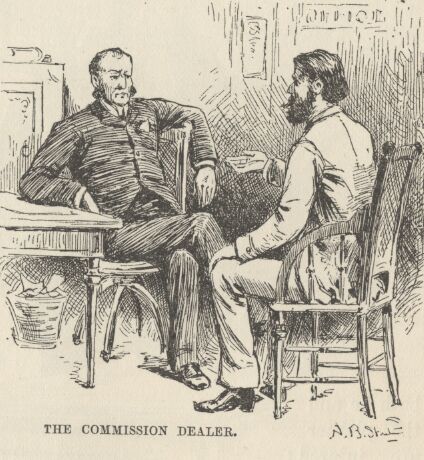
The trouble heretofore has been—I am quoting remarks of planters and steamboatmen—that the planters, although owning the land, were without cash capital; had to hypothecate both land and crop to carry on the business. Consequently, the commission dealer who furnishes the money takes some risk and demands big interest—usually 10 per cent., and 2{half} per cent. for negotiating the loan. The planter has also to buy his supplies through the same dealer, paying commissions and profits. Then when he ships his crop, the dealer adds his commissions, insurance, etc. So, taking it by and large, and first and last, the dealer's share of that crop is about 25 per cent.'{footnote ['But what can the State do where the people are under subjection to rates of interest ranging from 18 to 30 per cent., and are also under the necessity of purchasing their crops in advance even of planting, at these rates, for the privilege of purchasing all their supplies at 100 per cent. profit?'—Edward Atkinson.]}
Until now, the problem has been this, according to planters and steamboatmen: although the planters owned their land, they had no cash capital. They had to pledge both their land and their crops as security to keep the business going. As a result, the commission dealer who lends the money takes some risk and demands high interest. The usual rate is 10 percent, plus 2½ percent for arranging the loan. The planter also has to buy supplies through the same dealer, paying commissions and profits. Then, when the planter ships the crop, the dealer adds commissions, insurance, and other charges. All told, the dealer's share of the crop is about 25 percent.'{footnote ['But what can the State do when its people are subject to interest rates ranging from 18 to 30 percent? They must also buy their crops in advance, even before planting, at these rates. In return, they get the privilege of buying all their supplies at a 100 percent profit for the seller.' (Edward Atkinson)]}
A cotton-planter's estimate of the average margin of profit on planting, in his section: One man and mule will raise ten acres of cotton, giving ten bales cotton, worth, say, $500; cost of producing, say $350; net profit, $150, or $15 per acre. There is also a profit now from the cotton-seed, which formerly had little value—none where much transportation was necessary. In sixteen hundred pounds crude cotton four hundred are lint, worth, say, ten cents a pound; and twelve hundred pounds of seed, worth $12 or $13 per ton. Maybe in future even the stems will not be thrown away. Mr. Edward Atkinson says that for each bale of cotton there are fifteen hundred pounds of stems, and that these are very rich in phosphate of lime and potash; that when ground and mixed with ensilage or cotton-seed meal (which is too rich for use as fodder in large quantities), the stem mixture makes a superior food, rich in all the elements needed for the production of milk, meat, and bone. Heretofore the stems have been considered a nuisance.
A cotton planter estimated the average profit from planting in his area as follows: One man and a mule can grow ten acres of cotton, producing ten bales worth about $500. Production costs about $350, leaving a net profit of $150, or $15 per acre. There is now also a profit from cottonseed. Cottonseed once had little value, and none at all where it had to be transported far. Of sixteen hundred pounds of raw cotton, four hundred pounds are lint, worth about ten cents a pound. The other twelve hundred pounds are seed, worth $12 or $13 per ton. Maybe in the future even the stems will not be thrown away. Mr. Edward Atkinson says that each bale of cotton produces fifteen hundred pounds of stems. He says the stems are very rich in phosphate of lime and potash. Ground and mixed with ensilage or cottonseed meal, the stems make a superior animal feed. Cottonseed meal itself is too rich to use as fodder in large quantities. The stem mixture is rich in all the elements needed to produce milk, meat, and bone. Until now, the stems have been considered a nuisance.
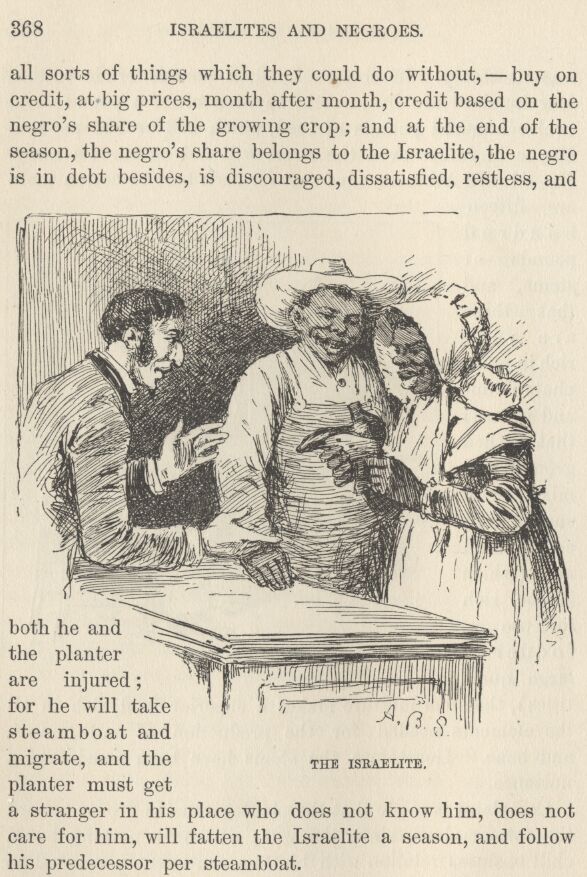
Complaint is made that the planter remains grouty toward the former slave, since the war; will have nothing but a chill business relation with him, no sentiment permitted to intrude, will not keep a 'store' himself, and supply the negro's wants and thus protect the negro's pocket and make him able and willing to stay on the place and an advantage to him to do it, but lets that privilege to some thrifty Israelite, who encourages the thoughtless negro and wife to buy all sorts of things which they could do without—buy on credit, at big prices, month after month, credit based on the negro's share of the growing crop; and at the end of the season, the negro's share belongs to the Israelite,' the negro is in debt besides, is discouraged, dissatisfied, restless, and both he and the planter are injured; for he will take steamboat and migrate, and the planter must get a stranger in his place who does not know him, does not care for him, will fatten the Israelite a season, and follow his predecessor per steamboat.
People complain that, since the war, the planter remains bad-tempered toward the formerly enslaved worker. He maintains only a cold business relationship with him and allows no sentiment to enter into it. He refuses to keep a 'store' himself and supply the Black worker's needs. That would protect the worker's pocket and make him able and willing to stay on the plantation. It would also make staying an advantage to him. Instead, the planter rents that privilege to some thrifty Jew. The merchant encourages the thoughtless Black worker and his wife to buy all sorts of things they could do without. Month after month, they buy on credit at high prices, borrowing against the worker's share of the growing crop. At the end of the season, the worker's share belongs to the Jew, and the worker is still in debt. He is discouraged, dissatisfied, and restless, and both he and the planter suffer. The worker takes a steamboat and moves away, and the planter must replace him with a stranger. The stranger does not know the planter or care for him. He will enrich the Jew for one season, then follow his predecessor by steamboat.
It is hoped that the Calhoun Company will show, by its humane and protective treatment of its laborers, that its method is the most profitable for both planter and negro; and it is believed that a general adoption of that method will then follow.
It is hoped that the Calhoun Company will treat its workers humanely and protect them. This treatment, it is hoped, will show that the company’s method is the most profitable for both planters and Black workers. It is believed that the method will then be widely adopted.
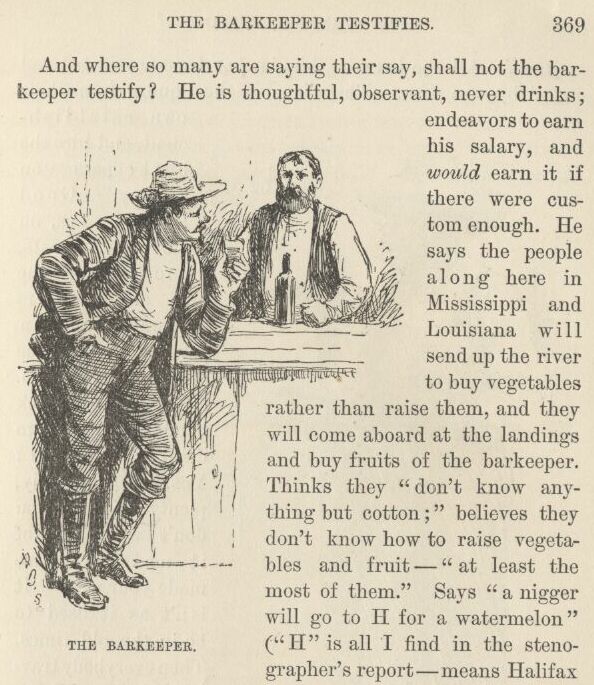
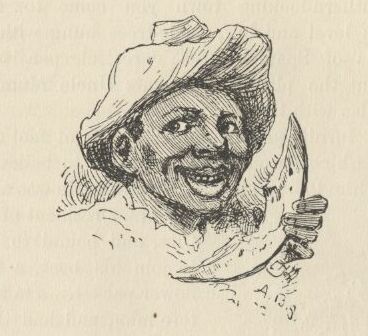
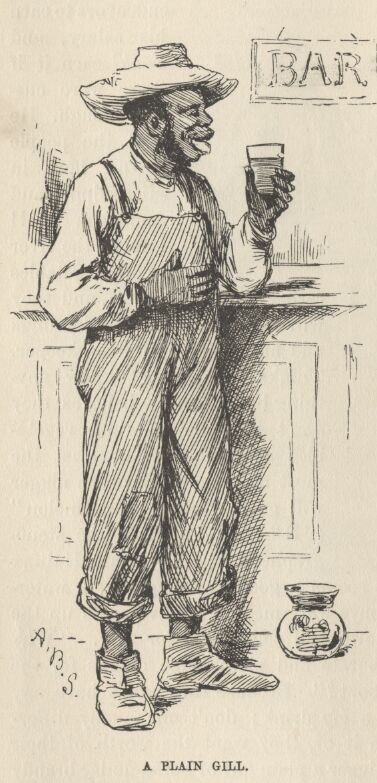
And where so many are saying their say, shall not the barkeeper testify? He is thoughtful, observant, never drinks; endeavors to earn his salary, and would earn it if there were custom enough. He says the people along here in Mississippi and Louisiana will send up the river to buy vegetables rather than raise them, and they will come aboard at the landings and buy fruits of the barkeeper. Thinks they 'don't know anything but cotton;' believes they don't know how to raise vegetables and fruit—'at least the most of them.' Says 'a nigger will go to H for a watermelon' ('H' is all I find in the stenographer's report—means Halifax probably, though that seems a good way to go for a watermelon). Barkeeper buys watermelons for five cents up the river, brings them down and sells them for fifty. 'Why does he mix such elaborate and picturesque drinks for the nigger hands on the boat?' Because they won't have any other. 'They want a big drink; don't make any difference what you make it of, they want the worth of their money. You give a nigger a plain gill of half-a-dollar brandy for five cents—will he touch it? No. Ain't size enough to it. But you put up a pint of all kinds of worthless rubbish, and heave in some red stuff to make it beautiful—red's the main thing—and he wouldn't put down that glass to go to a circus.'
With so many people having their say, shouldn’t the barkeeper testify too? He is thoughtful and observant, and he never drinks. He tries to earn his salary and would earn it if there were enough customers. He says people around here in Mississippi and Louisiana send upriver for vegetables rather than grow their own. They also come aboard at the landings and buy fruit from the barkeeper. He thinks they “don’t know anything but cotton.” He believes they don’t know how to grow vegetables and fruit, “at least most of them.” He says “a nigger will go to H for a watermelon.” (“H” is all I find in the stenographer’s report. It probably means Halifax, though that seems a long way to go for a watermelon.) The barkeeper buys watermelons upriver for five cents, brings them downriver, and sells them for fifty. “Why does he mix such elaborate and colorful drinks for the nigger hands on the boat?” Because they won’t have anything else. “They want a big drink. It doesn’t matter what you make it from, they want their money’s worth. You give a nigger a plain gill of fifty-cent brandy for five cents. Will he touch it? No. It isn’t big enough. But mix up a pint of all kinds of worthless rubbish and throw in some red stuff to make it beautiful. Red’s the main thing. He wouldn’t put down that glass to go to a circus.”
All the bars on this Anchor Line are rented and owned by one firm. They furnish the liquors from their own establishment, and hire the barkeepers 'on salary.' Good liquors? Yes, on some of the boats, where there are the kind of passengers that want it and can pay for it. On the other boats? No. Nobody but the deck hands and firemen to drink it. 'Brandy? Yes, I've got brandy, plenty of it; but you don't want any of it unless you've made your will.' It isn't as it used to be in the old times. Then everybody traveled by steamboat, everybody drank, and everybody treated everybody else. 'Now most everybody goes by railroad, and the rest don't drink.' In the old times the barkeeper owned the bar himself, 'and was gay and smarty and talky and all jeweled up, and was the toniest aristocrat on the boat; used to make $2,000 on a trip. A father who left his son a steamboat bar, left him a fortune. Now he leaves him board and lodging; yes, and washing, if a shirt a trip will do. Yes, indeedy, times are changed. Why, do you know, on the principal line of boats on the Upper Mississippi, they don't have any bar at all! Sounds like poetry, but it's the petrified truth.'
One firm rents and owns all the bars on the Anchor Line boats. The firm supplies liquor from its own business and hires bartenders 'on salary.' Good liquor? Yes, on some boats, where the passengers want it and can pay for it. On the other boats? No. Only the deckhands and firemen drink it. 'Brandy? Yes, I've got brandy, plenty of it. But you don't want any unless you've made your will.' Things aren't as they used to be. Back then, everybody traveled by steamboat, everybody drank, and everybody bought drinks for everybody else. 'Now almost everybody goes by railroad, and the rest don't drink.' In the old days, the bartender owned the bar himself. He 'was lively, smart and talkative, covered in jewelry, and the fanciest aristocrat on the boat. He used to make $2,000 on a trip. A father who left his son a steamboat bar left him a fortune. Now he leaves him room and board. Yes, and laundry too, if one shirt per trip is enough. Yes, indeed, times have changed. Why, do you know, on the main line of boats on the Upper Mississippi, they don't have any bar at all! It sounds like poetry, but it's the rock-solid truth.'