Chapter 31
A Thumbprint and What Happened Next
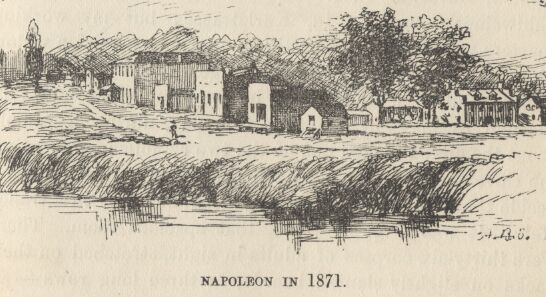
WE were approaching Napoleon, Arkansas. So I began to think about my errand there. Time, noonday; and bright and sunny. This was bad—not best, anyway; for mine was not (preferably) a noonday kind of errand. The more I thought, the more that fact pushed itself upon me—now in one form, now in another. Finally, it took the form of a distinct question: is it good common sense to do the errand in daytime, when, by a little sacrifice of comfort and inclination, you can have night for it, and no inquisitive eyes around. This settled it. Plain question and plain answer make the shortest road out of most perplexities.
We were approaching Napoleon, Arkansas, so I began to think about my errand there. It was noon, bright and sunny. That was bad, or at least not ideal. My errand was not, preferably, the kind to do at noon. The more I thought about it, the more that fact pressed itself on me, now in one form, now in another. Finally, it became a clear question: Is it sensible to do the errand in daylight? With a little sacrifice of comfort and preference, I could do it at night, with no curious eyes around. That settled the matter. A plain question and a plain answer are the shortest way out of most difficulties.
I got my friends into my stateroom, and said I was sorry to create annoyance and disappointment, but that upon reflection it really seemed best that we put our luggage ashore and stop over at Napoleon. Their disapproval was prompt and loud; their language mutinous. Their main argument was one which has always been the first to come to the surface, in such cases, since the beginning of time: 'But you decided and agreed to stick to this boat, etc.; as if, having determined to do an unwise thing, one is thereby bound to go ahead and make two unwise things of it, by carrying out that determination.
I brought my friends into my stateroom and said I was sorry to annoy and disappoint them. But after thinking it over, I felt we should take our luggage ashore and stay in Napoleon. They objected at once, loudly and in mutinous language. Their main argument was the one that has always come up first in such cases, since the beginning of time: 'But you decided and agreed to stay on this boat, etc.' As if deciding to do one unwise thing means you must make it two unwise things by carrying out your decision.
I tried various mollifying tactics upon them, with reasonably good success: under which encouragement, I increased my efforts; and, to show them that I had not created this annoying errand, and was in no way to blame for it, I presently drifted into its history—substantially as follows:
I tried various ways to calm them down, with reasonably good success. Encouraged, I tried even harder. I wanted to show them that I hadn't caused this annoying errand and wasn't to blame for it. So I eventually began telling them how it came about, more or less as follows:
Toward the end of last year, I spent a few months in Munich, Bavaria. In November I was living in Fraulein Dahlweiner's pension, 1a, Karlstrasse; but my working quarters were a mile from there, in the house of a widow who supported herself by taking lodgers. She and her two young children used to drop in every morning and talk German to me—by request. One day, during a ramble about the city, I visited one of the two establishments where the Government keeps and watches corpses until the doctors decide that they are permanently dead, and not in a trance state. It was a grisly place, that spacious room. There were thirty-six corpses of adults in sight, stretched on their backs on slightly slanted boards, in three long rows—all of them with wax-white, rigid faces, and all of them wrapped in white shrouds. Along the sides of the room were deep alcoves, like bay windows; and in each of these lay several marble-visaged babes, utterly hidden and buried under banks of fresh flowers, all but their faces and crossed hands. Around a finger of each of these fifty still forms, both great and small, was a ring; and from the ring a wire led to the ceiling, and thence to a bell in a watch-room yonder, where, day and night, a watchman sits always alert and ready to spring to the aid of any of that pallid company who, waking out of death, shall make a movement—for any, even the slightest, movement will twitch the wire and ring that fearful bell. I imagined myself a death-sentinel drowsing there alone, far in the dragging watches of some wailing, gusty night, and having in a twinkling all my body stricken to quivering jelly by the sudden clamor of that awful summons! So I inquired about this thing; asked what resulted usually? if the watchman died, and the restored corpse came and did what it could to make his last moments easy. But I was rebuked for trying to feed an idle and frivolous curiosity in so solemn and so mournful a place; and went my way with a humbled crest.
Toward the end of last year, I spent a few months in Munich, Bavaria. In November, I was living in Fraulein Dahlweiner's pension at 1a, Karlstrasse. But my workspace was a mile away, in the house of a widow who supported herself by taking in lodgers. At my request, she and her two young children would drop in every morning and speak German to me. One day, while wandering around the city, I visited one of two government facilities that keep and watch corpses. The bodies stay there until doctors decide they are permanently dead, not in a trance. The spacious room was a grisly place. Thirty-six adult corpses lay in sight, on their backs on slightly slanted boards, in three long rows. All had wax-white, rigid faces, and all were wrapped in white shrouds. Along the sides of the room were deep alcoves, like bay windows. In each alcove lay several babies with marble-like faces. They were completely buried under banks of fresh flowers, except for their faces and crossed hands. Each of these fifty still forms, large and small, had a ring around a finger. A wire ran from each ring to the ceiling and then to a bell in a watchroom nearby. There, day and night, a watchman sits alert, ready to spring to the aid of anyone who moves after waking from death. Any movement, even the slightest, will pull the wire and ring that dreadful bell. I imagined myself as the death watchman, dozing there alone during the long hours of a howling, gusty night. Then the sudden clang of that awful summons would turn my whole body to trembling jelly in an instant! So I asked about the bell. What usually happened? Did the watchman die, and did the revived corpse come and do what it could to ease his final moments? But I was scolded for indulging idle, frivolous curiosity in such a solemn, mournful place. I went on my way, suitably humbled.
Next morning I was telling the widow my adventure, when she exclaimed—
The next morning, I was telling the widow about my adventure when she exclaimed:
'Come with me! I have a lodger who shall tell you all you want to know. He has been a night-watchman there.'
'Come with me! I have a lodger who can tell you all you want to know. He has worked there as a night watchman.'
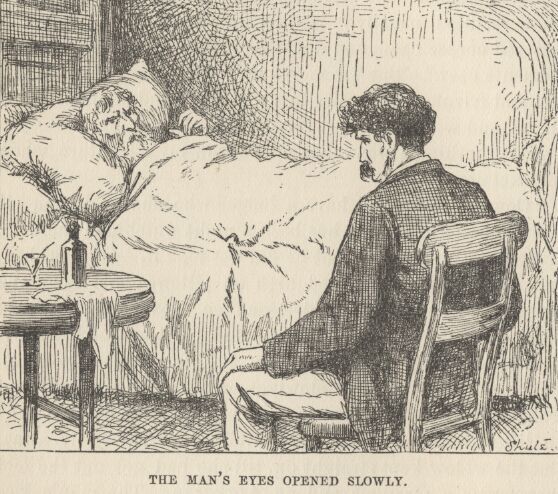
He was a living man, but he did not look it. He was abed, and had his head propped high on pillows; his face was wasted and colorless, his deep-sunken eyes were shut; his hand, lying on his breast, was talon-like, it was so bony and long-fingered. The widow began her introduction of me. The man's eyes opened slowly, and glittered wickedly out from the twilight of their caverns; he frowned a black frown; he lifted his lean hand and waved us peremptorily away. But the widow kept straight on, till she had got out the fact that I was a stranger and an American. The man's face changed at once; brightened, became even eager—and the next moment he and I were alone together.
He was alive, but he did not look it. He lay in bed with his head propped high on pillows. His face was thin and colorless, and his deeply sunken eyes were closed. His hand lay on his chest, so bony and long-fingered that it looked like a talon. The widow began introducing me. The man’s eyes opened slowly and glittered wickedly from their shadowy hollows. He scowled darkly, then lifted his thin hand and waved us away with a commanding gesture. But the widow kept going until she had explained that I was a stranger and an American. His face changed at once. It brightened and became almost eager. The next moment, he and I were alone together.
I opened up in cast-iron German; he responded in quite flexible English; thereafter we gave the German language a permanent rest.
I started in stiff German. He replied in much more flexible English, so we never spoke German again.
This consumptive and I became good friends. I visited him every day, and we talked about everything. At least, about everything but wives and children. Let anybody's wife or anybody's child be mentioned, and three things always followed: the most gracious and loving and tender light glimmered in the man's eyes for a moment; faded out the next, and in its place came that deadly look which had flamed there the first time I ever saw his lids unclose; thirdly, he ceased from speech, there and then for that day; lay silent, abstracted, and absorbed; apparently heard nothing that I said; took no notice of my good-byes, and plainly did not know, by either sight or hearing, when I left the room.
The man with tuberculosis and I became good friends. I visited him every day, and we talked about everything. At least, we talked about everything except wives and children. Whenever anyone mentioned a wife or child, three things always happened. First, a kind, loving, tender light glimmered in his eyes for a moment. Then it faded, and the deadly look returned. It was the same look that had flashed in his eyes when I first saw him open them. Finally, he stopped talking for the rest of the day. He lay silent, lost in thought. He seemed to hear nothing I said and took no notice when I said goodbye. He clearly did not see or hear me leave the room.
When I had been this Karl Ritter's daily and sole intimate during two months, he one day said, abruptly—
After I had spent every day for two months as Karl Ritter's only close companion, he suddenly said:
'I will tell you my story.'
'I’ll tell you my story.'
A DYING MAN S CONFESSION
A DYING MAN'S CONFESSION
Then he went on as follows:—
Then he continued:
I have never given up, until now. But now I have given up. I am going to die. I made up my mind last night that it must be, and very soon, too. You say you are going to revisit your river, by-and-bye, when you find opportunity. Very well; that, together with a certain strange experience which fell to my lot last night, determines me to tell you my history—for you will see Napoleon, Arkansas; and for my sake you will stop there, and do a certain thing for me—a thing which you will willingly undertake after you shall have heard my narrative.
Until now, I have never given up. But now I have. I am going to die. Last night I made up my mind that it had to happen, and very soon. You say you will visit your river again when you have the chance. Very well. That, along with a strange experience I had last night, has convinced me to tell you my story. You will see Napoleon, Arkansas, and for my sake you will stop there and do something for me. You will willingly do it after you hear my story.
Let us shorten the story wherever we can, for it will need it, being long. You already know how I came to go to America, and how I came to settle in that lonely region in the South. But you do not know that I had a wife. My wife was young, beautiful, loving, and oh, so divinely good and blameless and gentle! And our little girl was her mother in miniature. It was the happiest of happy households.
Let’s shorten the story wherever we can, because it’s long and needs shortening. You already know how I came to America and settled in that lonely region of the South. But you don’t know that I had a wife. My wife was young, beautiful, and loving. And oh, she was so wonderfully good, blameless, and gentle! Our little girl was just like her mother in miniature. Ours was the happiest of happy households.
One night—it was toward the close of the war—I woke up out of a sodden lethargy, and found myself bound and gagged, and the air tainted with chloroform! I saw two men in the room, and one was saying to the other, in a hoarse whisper, 'I told her I would, if she made a noise, and as for the child—'
One night, toward the end of the war, I woke from a groggy stupor. I found myself bound and gagged, and the air smelled of chloroform! I saw two men in the room. One said to the other in a hoarse whisper, 'I told her I would, if she made a noise, and as for the child...'
The other man interrupted in a low, half-crying voice—
The other man interrupted in a low voice, almost crying:
'You said we'd only gag them and rob them, not hurt them; or I wouldn't have come.'
'You said we'd only gag them and rob them, not hurt them. Otherwise, I wouldn't have come.'
'Shut up your whining; had to change the plan when they waked up; you done all you could to protect them, now let that satisfy you; come, help rummage.'
'Stop whining. Had to change the plan when they woke up. You did all you could to protect them. Let that satisfy you. Come on, help me search.'
Both men were masked, and wore coarse, ragged 'nigger' clothes; they had a bull's-eye lantern, and by its light I noticed that the gentler robber had no thumb on his right hand. They rummaged around my poor cabin for a moment; the head bandit then said, in his stage whisper—
Both men wore masks and coarse, ragged 'nigger' clothes. They had a bull's-eye lantern, and by its light I noticed that the gentler robber had no right thumb. They rummaged around my poor cabin for a moment. Then the head bandit said in a theatrical whisper:
'It's a waste of time—he shall tell where it's hid. Undo his gag, and revive him up.'
'It's a waste of time. He will tell us where it's hidden. Remove his gag and revive him.'
The other said—
The other said:
'All right—provided no clubbing.'
'All right, as long as there's no clubbing.'
'No clubbing it is, then—provided he keeps still.'
'No clubbing, then, as long as he keeps still.'
They approached me; just then there was a sound outside; a sound of voices and trampling hoofs; the robbers held their breath and listened; the sounds came slowly nearer and nearer; then came a shout—
They came toward me. Just then, there was a sound outside: voices and the pounding of hooves. The robbers held their breath and listened. The sounds slowly came closer and closer. Then came a shout.
'Hello, the house! Show a light, we want water.'
'Hello, anyone in the house! Show a light. We need water.'
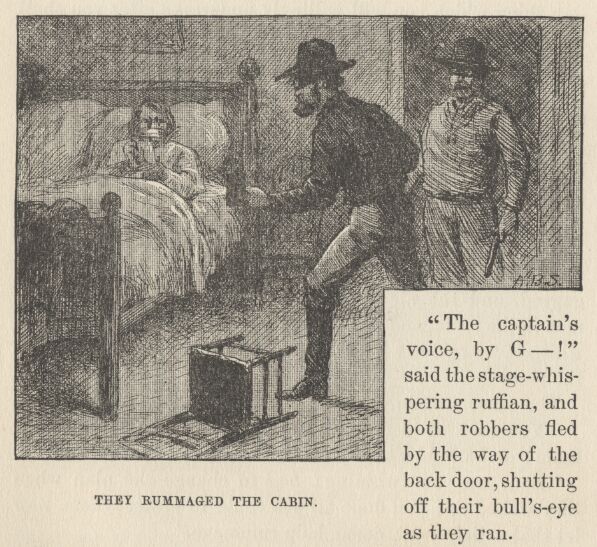
'The captain's voice, by G—!' said the stage-whispering ruffian, and both robbers fled by the way of the back door, shutting off their bull's-eye as they ran.
'The captain's voice, by God!' the ruffian said in a loud whisper. Both robbers fled through the back door, shutting off their lantern as they ran.
The strangers shouted several times more, then rode by—there seemed to be a dozen of the horses—and I heard nothing more.
The strangers shouted several more times, then rode by. There seemed to be a dozen horses. After that, I heard nothing more.
I struggled, but could not free myself from my bonds. I tried to speak, but the gag was effective; I could not make a sound. I listened for my wife's voice and my child's—listened long and intently, but no sound came from the other end of the room where their bed was. This silence became more and more awful, more and more ominous, every moment. Could you have endured an hour of it, do you think? Pity me, then, who had to endure three. Three hours—? it was three ages! Whenever the clock struck, it seemed as if years had gone by since I had heard it last. All this time I was struggling in my bonds; and at last, about dawn, I got myself free, and rose up and stretched my stiff limbs. I was able to distinguish details pretty well. The floor was littered with things thrown there by the robbers during their search for my savings. The first object that caught my particular attention was a document of mine which I had seen the rougher of the two ruffians glance at and then cast away. It had blood on it! I staggered to the other end of the room. Oh, poor unoffending, helpless ones, there they lay, their troubles ended, mine begun!
I struggled, but I could not free myself from my bonds. I tried to speak, but the gag worked. I could not make a sound. I listened for my wife’s voice and my child’s. I listened long and intently, but no sound came from the other end of the room, where their bed was. With every moment, the silence grew more awful, more ominous. Do you think you could have endured an hour of it? Then pity me, for I had to endure three. Three hours? It was three ages! Whenever the clock struck, it seemed as if years had passed since I had last heard it. All that time, I struggled against my bonds. At last, around dawn, I got free. I stood up and stretched my stiff limbs. I could make out the details of the room fairly well. The floor was littered with things the robbers had thrown there while searching for my savings. The first thing to catch my attention was a document of mine. I had seen the rougher of the two robbers glance at it and throw it aside. It had blood on it! I staggered to the other end of the room. Oh, the poor, innocent, helpless ones! There they lay, their troubles ended, mine begun!
Did I appeal to the law—I? Does it quench the pauper's thirst if the King drink for him? Oh, no, no, no—I wanted no impertinent interference of the law. Laws and the gallows could not pay the debt that was owing to me! Let the laws leave the matter in my hands, and have no fears: I would find the debtor and collect the debt. How accomplish this, do you say? How accomplish it, and feel so sure about it, when I had neither seen the robbers' faces, nor heard their natural voices, nor had any idea who they might be? Nevertheless, I was sure—quite sure, quite confident. I had a clue—a clue which you would not have valued—a clue which would not have greatly helped even a detective, since he would lack the secret of how to apply it. I shall come to that, presently—you shall see. Let us go on, now, taking things in their due order. There was one circumstance which gave me a slant in a definite direction to begin with: Those two robbers were manifestly soldiers in tramp disguise; and not new to military service, but old in it—regulars, perhaps; they did not acquire their soldierly attitude, gestures, carriage, in a day, nor a month, nor yet in a year. So I thought, but said nothing. And one of them had said, 'the captain's voice, by G—!'—the one whose life I would have. Two miles away, several regiments were in camp, and two companies of U.S. cavalry. When I learned that Captain Blakely, of Company C had passed our way, that night, with an escort, I said nothing, but in that company I resolved to seek my man. In conversation I studiously and persistently described the robbers as tramps, camp followers; and among this class the people made useless search, none suspecting the soldiers but me.
Did I turn to the law? I? Does a poor man's thirst go away if the King drinks for him? Oh, no, no, no. I wanted no meddling from the law. Laws and the gallows could not repay the debt owed to me! Let the law leave the matter in my hands and have no fear. I would find the debtor and collect the debt. How, you ask? How could I be so sure, when I had not seen the robbers' faces or heard their natural voices? I had no idea who they might be. Even so, I was sure, quite sure, quite confident. I had a clue, though you would not have valued it. The clue would not have helped even a detective much, because he would not know the secret of how to use it. I will come to that soon. You will see. For now, let us take things in order. One circumstance gave me a definite direction to start in. Those two robbers were clearly soldiers disguised as tramps. They were not new to military service, but veterans, perhaps regulars. They had not acquired their military bearing, gestures, and manner of carrying themselves in a day, a month, or even a year. That was what I thought, but I said nothing. And one of them had said, 'the captain's voice, by G—!' He was the one whose life I would have. Several regiments and two companies of U.S. cavalry were camped two miles away. I learned that Captain Blakely, of Company C, had passed our way that night with an escort. I said nothing, but resolved to look for my man in that company. In conversation, I took care to describe the robbers consistently as tramps, camp followers. People searched for them among that class, but found nothing. I was the only one who suspected the soldiers.
Working patiently, by night, in my desolated home, I made a disguise for myself out of various odds and ends of clothing; in the nearest village I bought a pair of blue goggles. By-and-bye, when the military camp broke up, and Company C was ordered a hundred miles north, to Napoleon, I secreted my small hoard of money in my belt, and took my departure in the night. When Company C arrived in Napoleon, I was already there. Yes, I was there, with a new trade—fortune-teller. Not to seem partial, I made friends and told fortunes among all the companies garrisoned there; but I gave Company C the great bulk of my attentions. I made myself limitlessly obliging to these particular men; they could ask me no favor, put upon me no risk, which I would decline. I became the willing butt of their jokes; this perfected my popularity; I became a favorite.
At night, in my deserted home, I patiently made a disguise from odds and ends of clothing. I bought a pair of blue goggles in the nearest village. Eventually, the military camp broke up, and Company C was ordered a hundred miles north to Napoleon. I hid my small savings in my belt and left in the night. When Company C arrived in Napoleon, I was already there. Yes, I was there, with a new trade as a fortune-teller. To avoid seeming partial, I made friends and told fortunes among all the companies stationed there. But I gave Company C most of my attention. I was endlessly helpful to those particular men. I refused no favor they asked and no risk they put on me. I willingly became the butt of their jokes. That made me even more popular, and I became a favorite.
I early found a private who lacked a thumb—what joy it was to me! And when I found that he alone, of all the company, had lost a thumb, my last misgiving vanished; I was sure I was on the right track. This man's name was Kruger, a German. There were nine Germans in the company. I watched, to see who might be his intimates; but he seemed to have no especial intimates. But I was his intimate; and I took care to make the intimacy grow. Sometimes I so hungered for my revenge that I could hardly restrain myself from going on my knees and begging him to point out the man who had murdered my wife and child; but I managed to bridle my tongue. I bided my time, and went on telling fortunes, as opportunity offered.
I soon found a private who was missing a thumb. What joy that brought me! Then I found that he was the only man in the company who had lost a thumb. My last doubt vanished. I was sure I was on the right track. The man’s name was Kruger, and he was German. There were nine Germans in the company. I watched to see who his close friends might be, but he seemed to have none in particular. Still, I became his close friend, and I made sure our friendship grew. Sometimes I was so hungry for revenge that I could hardly stop myself from falling to my knees. I wanted to beg him to point out the man who had murdered my wife and child. But I managed to hold my tongue. I waited for my chance and kept telling fortunes whenever I had the opportunity.
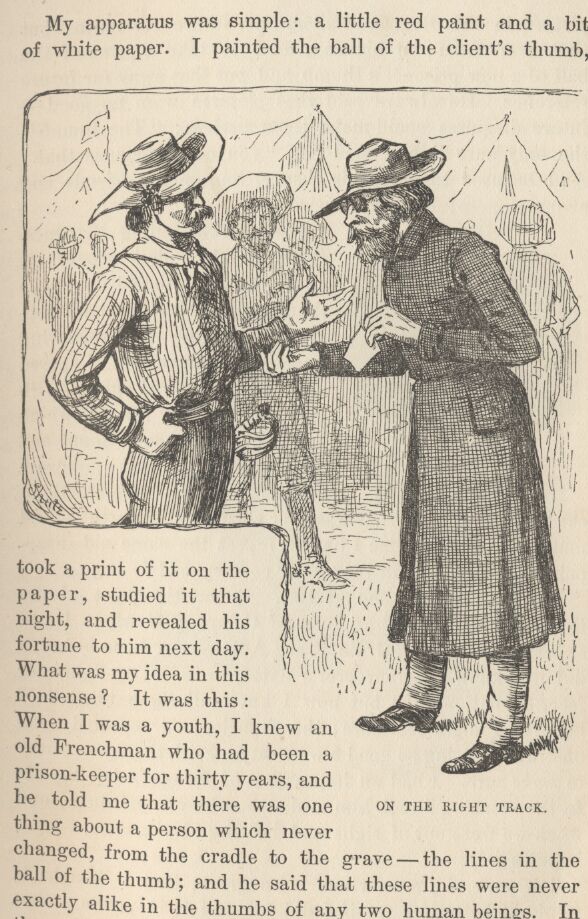
My apparatus was simple: a little red paint and a bit of white paper. I painted the ball of the client's thumb, took a print of it on the paper, studied it that night, and revealed his fortune to him next day. What was my idea in this nonsense? It was this: When I was a youth, I knew an old Frenchman who had been a prison-keeper for thirty years, and he told me that there was one thing about a person which never changed, from the cradle to the grave—the lines in the ball of the thumb; and he said that these lines were never exactly alike in the thumbs of any two human beings. In these days, we photograph the new criminal, and hang his picture in the Rogues' Gallery for future reference; but that Frenchman, in his day, used to take a print of the ball of a new prisoner's thumb and put that away for future reference. He always said that pictures were no good—future disguises could make them useless; 'The thumb's the only sure thing,' said he; 'you can't disguise that.' And he used to prove his theory, too, on my friends and acquaintances; it always succeeded.
My equipment was simple: a little red paint and a piece of white paper. I painted the ball of the client's thumb and took a print of it on the paper. I studied the print that night and told him his fortune the next day. What was my idea behind this nonsense? Here it is: When I was young, I knew an old Frenchman who had been a prison keeper for thirty years. He told me that one thing about a person never changed, from the cradle to the grave: the lines on the ball of the thumb. He also said that no two people's thumb lines were ever exactly alike. These days, we photograph a new criminal and hang his picture in the Rogues' Gallery for future reference. But the Frenchman used to take a print of a new prisoner's thumb and save it for future reference. He always said pictures were no good because disguises could make them useless later. 'The thumb's the only sure thing,' he said. 'You can't disguise that.' He used to prove his theory on my friends and acquaintances, too. It always worked.

I went on telling fortunes. Every night I shut myself in, all alone, and studied the day's thumb-prints with a magnifying-glass. Imagine the devouring eagerness with which I pored over those mazy red spirals, with that document by my side which bore the right-hand thumb-and-finger-marks of that unknown murderer, printed with the dearest blood—to me—that was ever shed on this earth! And many and many a time I had to repeat the same old disappointed remark, 'will they never correspond!'
I went on telling fortunes. Every night I shut myself in alone and studied the day's thumbprints with a magnifying glass. Imagine how hungrily I studied those winding red spirals! Beside me lay the document bearing the unknown murderer's right thumb and fingerprints. They were printed in the blood dearest to me of any ever shed on earth! Again and again, I had to make the same old disappointed remark: 'will they never match!'
But my reward came at last. It was the print of the thumb of the forty-third man of Company C whom I had experimented on—Private Franz Adler. An hour before, I did not know the murderer's name, or voice, or figure, or face, or nationality; but now I knew all these things! I believed I might feel sure; the Frenchman's repeated demonstrations being so good a warranty. Still, there was a way to make sure. I had an impression of Kruger's left thumb. In the morning I took him aside when he was off duty; and when we were out of sight and hearing of witnesses, I said, impressively—
But my reward finally came. It was the thumbprint of the forty-third man from Company C I had tested, Private Franz Adler. An hour earlier, I had not known the murderer’s name, voice, build, face, or nationality. But now I knew all of them! I believed I could be sure, since the Frenchman’s repeated demonstrations gave me good reason to trust the result. Still, there was a way to make sure. I had an impression of Kruger’s left thumb. The next morning, I took him aside when he was off duty. When we were out of sight and hearing of any witnesses, I said in a solemn voice:
'A part of your fortune is so grave, that I thought it would be better for you if I did not tell it in public. You and another man, whose fortune I was studying last night,—Private Adler,—have been murdering a woman and a child! You are being dogged: within five days both of you will be assassinated.'
'Part of your fortune is so serious that I thought it best not to tell you in public. You and another man have been murdering a woman and a child! The other man is Private Adler, whose fortune I was studying last night. You are being followed. Within five days, both of you will be assassinated.'
He dropped on his knees, frightened out of his wits; and for five minutes he kept pouring out the same set of words, like a demented person, and in the same half-crying way which was one of my memories of that murderous night in my cabin—
He fell to his knees, terrified out of his mind. For five minutes, he repeated the same words like a madman, half crying as he spoke. I remembered that same half-crying voice from the murderous night in my cabin.
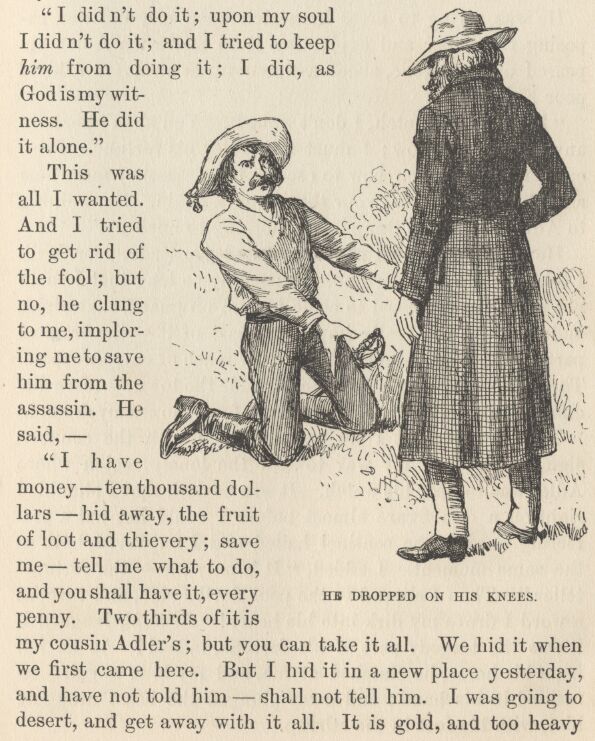
'I didn't do it; upon my soul I didn't do it; and I tried to keep him from doing it; I did, as God is my witness. He did it alone.'
'I didn't do it. I swear I didn't do it. And I tried to stop him from doing it. I did, as God is my witness. He did it alone.'
This was all I wanted. And I tried to get rid of the fool; but no, he clung to me, imploring me to save him from the assassin. He said—
That was all I wanted. I tried to get rid of the fool, but he clung to me. He begged me to save him from the assassin. He said:
'I have money—ten thousand dollars—hid away, the fruit of loot and thievery; save me—tell me what to do, and you shall have it, every penny. Two-thirds of it is my cousin Adler's; but you can take it all. We hid it when we first came here. But I hid it in a new place yesterday, and have not told him—shall not tell him. I was going to desert, and get away with it all. It is gold, and too heavy to carry when one is running and dodging; but a woman who has been gone over the river two days to prepare my way for me is going to follow me with it; and if I got no chance to describe the hiding-place to her I was going to slip my silver watch into her hand, or send it to her, and she would understand. There's a piece of paper in the back of the case, which tells it all. Here, take the watch—tell me what to do!'
'I have ten thousand dollars hidden away, all of it from looting and stealing. Save me, tell me what to do, and you can have every penny. Two-thirds of it belongs to my cousin Adler, but you can take it all. We hid the money when we first came here. But I hid it in a new place yesterday, and I haven't told him. I won't tell him. I was planning to desert and get away with all of it. It's gold, and too heavy to carry while running and dodging. But a woman went across the river two days ago to prepare the way for me. She's going to follow me with the gold. If I had no chance to tell her where it was hidden, I planned to slip my silver watch into her hand or send it to her. She would understand. There's a piece of paper in the back of the watch case that tells it all. Here, take the watch. Tell me what to do!'
He was trying to press his watch upon me, and was exposing the paper and explaining it to me, when Adler appeared on the scene, about a dozen yards away. I said to poor Kruger—
He was trying to persuade me to take his watch, showing me the paper and explaining it, when Adler appeared about a dozen yards away. I said to poor Kruger:
'Put up your watch, I don't want it. You shan't come to any harm. Go, now; I must tell Adler his fortune. Presently I will tell you how to escape the assassin; meantime I shall have to examine your thumbmark again. Say nothing to Adler about this thing—say nothing to anybody.'
'Put your watch away. I don't want it. You won't come to any harm. Go now. I must tell Adler his fortune. Soon I will tell you how to escape the assassin. Meanwhile, I will have to examine your thumbprint again. Don't tell Adler about this. Don't tell anyone.'
He went away filled with fright and gratitude, poor devil. I told Adler a long fortune—purposely so long that I could not finish it; promised to come to him on guard, that night, and tell him the really important part of it—the tragical part of it, I said—so must be out of reach of eavesdroppers. They always kept a picket-watch outside the town—mere discipline and ceremony—no occasion for it, no enemy around.
The poor devil went away full of fear and gratitude. I told Adler a long fortune, deliberately making it so long that I couldn’t finish it. I promised to come to him while he was on guard that night and tell him the really important part. I said it was the tragic part, so we had to be out of earshot of eavesdroppers. They always kept a picket watch outside the town, just for discipline and ceremony. There was no need for it, since there was no enemy around.
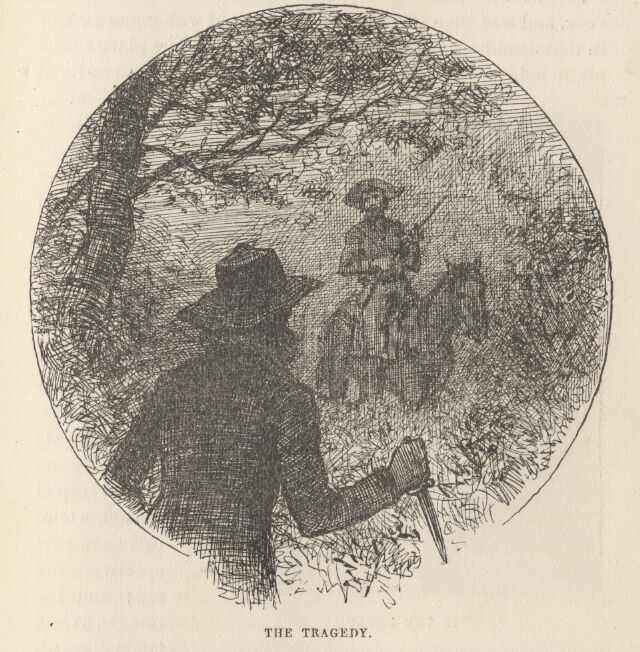
Toward midnight I set out, equipped with the countersign, and picked my way toward the lonely region where Adler was to keep his watch. It was so dark that I stumbled right on a dim figure almost before I could get out a protecting word. The sentinel hailed and I answered, both at the same moment. I added, 'It's only me—the fortune-teller.' Then I slipped to the poor devil's side, and without a word I drove my dirk into his heart! Ya wohl, laughed I, it was the tragedy part of his fortune, indeed! As he fell from his horse, he clutched at me, and my blue goggles remained in his hand; and away plunged the beast dragging him, with his foot in the stirrup.
Near midnight, I set out with the password and made my way toward the lonely place where Adler was standing watch. It was so dark that I almost stumbled into a shadowy figure before I could say the password. The sentry called out, and I answered at the same moment. I added, 'It's only me, the fortune-teller.' Then I slipped to the poor devil's side and, without a word, drove my dagger into his heart! Ya wohl, I laughed, this was the tragic part of his fortune, indeed! As he fell from his horse, he grabbed at me, and my blue goggles stayed in his hand. The horse plunged away, dragging him with his foot caught in the stirrup.
I fled through the woods, and made good my escape, leaving the accusing goggles behind me in that dead man's hand.
I ran through the woods and escaped, leaving the accusing goggles behind in the dead man's hand.
This was fifteen or sixteen years ago. Since then I have wandered aimlessly about the earth, sometimes at work, sometimes idle; sometimes with money, sometimes with none; but always tired of life, and wishing it was done, for my mission here was finished, with the act of that night; and the only pleasure, solace, satisfaction I had, in all those tedious years, was in the daily reflection, 'I have killed him!'
That was fifteen or sixteen years ago. Since then, I have wandered aimlessly around the world, sometimes working, sometimes idle. Sometimes I had money, and sometimes I had none. But I was always tired of life and wished it were over. My mission here had ended with what I did that night. Throughout all those tedious years, my only pleasure, comfort, and satisfaction came from thinking each day, 'I have killed him!'
Four years ago, my health began to fail. I had wandered into Munich, in my purposeless way. Being out of money, I sought work, and got it; did my duty faithfully about a year, and was then given the berth of night watchman yonder in that dead-house which you visited lately. The place suited my mood. I liked it. I liked being with the dead—liked being alone with them. I used to wander among those rigid corpses, and peer into their austere faces, by the hour. The later the time, the more impressive it was; I preferred the late time. Sometimes I turned the lights low: this gave perspective, you see; and the imagination could play; always, the dim receding ranks of the dead inspired one with weird and fascinating fancies. Two years ago—I had been there a year then—I was sitting all alone in the watch-room, one gusty winter's night, chilled, numb, comfortless; drowsing gradually into unconsciousness; the sobbing of the wind and the slamming of distant shutters falling fainter and fainter upon my dulling ear each moment, when sharp and suddenly that dead-bell rang out a blood-curdling alarum over my head! The shock of it nearly paralyzed me; for it was the first time I had ever heard it.
Four years ago, my health began to fail. I had wandered into Munich without any particular purpose. I was out of money, so I looked for work and found it. I did my job faithfully for about a year. Then I was given the position of night watchman at the dead-house you visited recently. The place suited my mood. I liked it. I liked being with the dead. I liked being alone with them. I used to wander among those stiff corpses for hours, peering into their stern faces. The later it was, the more impressive the scene became, so I preferred the late hours. Sometimes I turned the lights low. This gave the scene a sense of depth, you see, and let the imagination play. The dim rows of the dead stretching into the distance always inspired strange and fascinating thoughts. Two years ago, after I had been there a year, I was sitting alone in the watch-room. It was a gusty winter night, and I was cold, numb, and miserable. I was gradually drifting into unconsciousness. The sobbing wind and the slamming of distant shutters grew fainter with each moment as my hearing dulled. Then, suddenly and sharply, the dead-bell rang out a blood-curdling alarm over my head! The shock nearly paralyzed me, for it was the first time I had ever heard the bell.
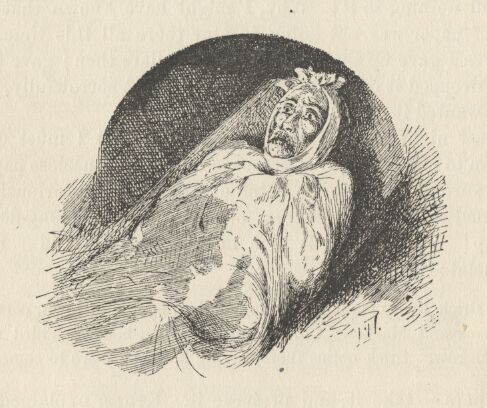
I gathered myself together and flew to the corpse-room. About midway down the outside rank, a shrouded figure was sitting upright, wagging its head slowly from one side to the other—a grisly spectacle! Its side was toward me. I hurried to it and peered into its face. Heavens, it was Adler!
I pulled myself together and rushed to the room where the bodies lay. About halfway down the outer row, a figure wrapped in a shroud was sitting upright. Its head was moving slowly from side to side. It was a gruesome sight! The figure was facing sideways, so I hurried over and peered into its face. My God, it was Adler!
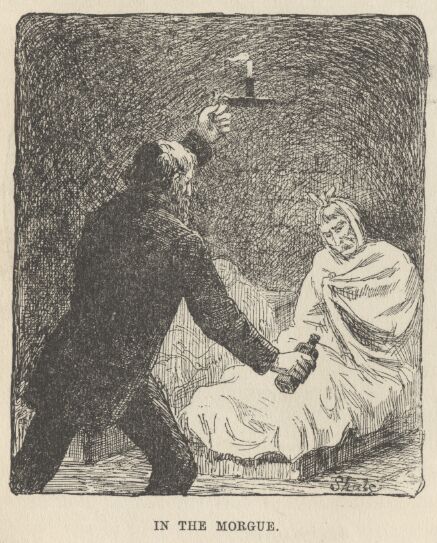
Can you divine what my first thought was? Put into words, it was this: 'It seems, then, you escaped me once: there will be a different result this time!'
Can you guess what my first thought was? In words, it was this: 'So, you escaped me once. Things will turn out differently this time!'
Evidently this creature was suffering unimaginable terrors. Think what it must have been to wake up in the midst of that voiceless hush, and, look out over that grim congregation of the dead! What gratitude shone in his skinny white face when he saw a living form before him! And how the fervency of this mute gratitude was augmented when his eyes fell upon the life-giving cordials which I carried in my hands! Then imagine the horror which came into this pinched face when I put the cordials behind me, and said mockingly—
Clearly, this creature was suffering unimaginable terror. Imagine waking up in that soundless silence and looking out over that grim gathering of the dead! What gratitude shone in his thin, pale face when he saw a living person before him! His silent gratitude grew even stronger when he saw the life-giving drinks I carried in my hands! Then imagine the horror on his gaunt face when I put the drinks behind me and said mockingly:
'Speak up, Franz Adler—call upon these dead. Doubtless they will listen and have pity; but here there is none else that will.'
'Speak up, Franz Adler. Call upon these dead people. Surely they will listen and take pity, but no one else here will.'
He tried to speak, but that part of the shroud which bound his jaws, held firm and would not let him. He tried to lift imploring hands, but they were crossed upon his breast and tied. I said—
He tried to speak, but the shroud bound his jaws and would not let him. He tried to raise his hands in a plea, but they were crossed over his chest and tied. I said:
'Shout, Franz Adler; make the sleepers in the distant streets hear you and bring help. Shout—and lose no time, for there is little to lose. What, you cannot? That is a pity; but it is no matter—it does not always bring help. When you and your cousin murdered a helpless woman and child in a cabin in Arkansas—my wife, it was, and my child!—they shrieked for help, you remember; but it did no good; you remember that it did no good, is it not so? Your teeth chatter—then why cannot you shout? Loosen the bandages with your hands—then you can. Ah, I see—your hands are tied, they cannot aid you. How strangely things repeat themselves, after long years; for my hands were tied, that night, you remember? Yes, tied much as yours are now—how odd that is. I could not pull free. It did not occur to you to untie me; it does not occur to me to untie you. Sh—! there's a late footstep. It is coming this way. Hark, how near it is! One can count the footfalls—one—two—three. There—it is just outside. Now is the time! Shout, man, shout!—it is the one sole chance between you and eternity! Ah, you see you have delayed too long—it is gone by. There—it is dying out. It is gone! Think of it—reflect upon it—you have heard a human footstep for the last time. How curious it must be, to listen to so common a sound as that, and know that one will never hear the fellow to it again.'
'Shout, Franz Adler. Make the people sleeping in the distant streets hear you and bring help. Shout, and waste no time, for there is little time left. What, you cannot? That is a pity, but it does not matter. Shouting does not always bring help. When you and your cousin murdered a helpless woman and child in a cabin in Arkansas, they screamed for help. The woman was my wife, and the child was mine! You remember their screams, but they did no good. You remember that, do you not? Your teeth are chattering, so why cannot you shout? Loosen the bandages with your hands, and then you can. Ah, I see. Your hands are tied, so they cannot help you. How strangely things repeat themselves after many years. For my hands were tied that night, remember? Yes, tied much like yours are now. How odd that is. I could not pull free. It did not occur to you to untie me. It does not occur to me to untie you. Shh! Someone is walking past late at night. The footsteps are coming this way. Listen, they are so close! One can count the footsteps. One, two, three. There, the person is just outside. Now is the time! Shout, man, shout! It is your one and only chance to escape eternity! Ah, you see, you have waited too long. The person has passed by. There, the footsteps are fading. They are gone! Think about it. You have heard a human footstep for the last time. How strange it must be to hear such a common sound and know you will never hear another like it.'
Oh, my friend, the agony in that shrouded face was ecstasy to see! I thought of a new torture, and applied it—assisting myself with a trifle of lying invention—
Oh, my friend, seeing the agony on that hidden face was pure delight! I thought of a new way to torment him and tried it, making up a few lies to help.
'That poor Kruger tried to save my wife and child, and I did him a grateful good turn for it when the time came. I persuaded him to rob you; and I and a woman helped him to desert, and got him away in safety.' A look as of surprise and triumph shone out dimly through the anguish in my victim's face. I was disturbed, disquieted. I said—
‘Poor Kruger tried to save my wife and child. When the time came, I returned the favor out of gratitude. I persuaded him to rob you. A woman and I helped him desert and get away safely.’ A faint look of surprise and triumph appeared through the anguish on my victim’s face. I felt troubled and uneasy. I said:
'What, then—didn't he escape?'
'What, then, didn't he escape?'
A negative shake of the head.
A shake of the head, meaning no.
'No? What happened, then?'
'No? What happened then?'
The satisfaction in the shrouded face was still plainer. The man tried to mumble out some words—could not succeed; tried to express something with his obstructed hands—failed; paused a moment, then feebly tilted his head, in a meaning way, toward the corpse that lay nearest him.
The satisfaction on the shrouded face was even clearer. The man tried to mumble some words, but could not. He tried to express something with his obstructed hands, but failed. He paused for a moment, then weakly tilted his head toward the nearest corpse, as if to convey something.
'Dead?' I asked. 'Failed to escape?—caught in the act and shot?'
'Dead?' I asked. 'Did he fail to escape? Was he caught in the act and shot?'
Negative shake of the head.
A shake of the head to say no.
'How, then?'
'How, then?'
Again the man tried to do something with his hands. I watched closely, but could not guess the intent. I bent over and watched still more intently. He had twisted a thumb around and was weakly punching at his breast with it. 'Ah—stabbed, do you mean?'
Again the man tried to do something with his hands. I watched closely, but I couldn't guess what he meant. I bent over and watched even more closely. He had twisted a thumb around and was weakly punching his chest with it. 'Ah, do you mean you were stabbed?'
Affirmative nod, accompanied by a spectral smile of such peculiar devilishness, that it struck an awakening light through my dull brain, and I cried—
A nod of yes came with a ghostly smile so strangely devilish that it lit up my dull brain. I cried:
'Did I stab him, mistaking him for you?—for that stroke was meant for none but you.'
'Did I stab him because I mistook him for you? Because that stab was meant for you and no one else.'
The affirmative nod of the re-dying rascal was as joyous as his failing strength was able to put into its expression.
The rascal, dying again, nodded yes as joyfully as his failing strength allowed.
'O, miserable, miserable me, to slaughter the pitying soul that, stood a friend to my darlings when they were helpless, and would have saved them if he could! miserable, oh, miserable, miserable me!'
'Oh, miserable, miserable me! I killed the compassionate man who befriended my darlings when they were helpless. He would have saved them if he could! Miserable, oh, miserable, miserable me!'
I fancied I heard the muffled gurgle of a mocking laugh. I took my face out of my hands, and saw my enemy sinking back upon his inclined board.
I thought I heard a muffled, gurgling laugh that seemed to mock me. I lifted my face from my hands and saw my enemy sinking back onto his slanted board.
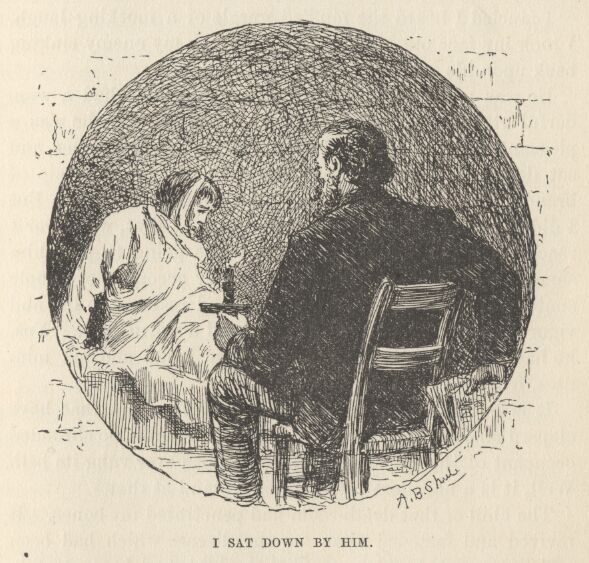
He was a satisfactory long time dying. He had a wonderful vitality, an astonishing constitution. Yes, he was a pleasant long time at it. I got a chair and a newspaper, and sat down by him and read. Occasionally I took a sip of brandy. This was necessary, on account of the cold. But I did it partly because I saw, that along at first, whenever I reached for the bottle, he thought I was going to give him some. I read aloud: mainly imaginary accounts of people snatched from the grave's threshold and restored to life and vigor by a few spoonsful of liquor and a warm bath. Yes, he had a long, hard death of it—three hours and six minutes, from the time he rang his bell.
He took a satisfyingly long time to die. He had remarkable vitality and an astonishingly strong constitution. Yes, he took a pleasantly long time about it. I got a chair and a newspaper, sat down beside him, and read. Now and then I took a sip of brandy. The cold made this necessary. But I also did it partly because, at first, he thought I was going to give him some whenever I reached for the bottle. I read aloud, mostly imaginary accounts of people snatched from the brink of death. A few spoonfuls of liquor and a warm bath had restored them to life and strength. Yes, he had a long, hard death. It took three hours and six minutes from the time he rang his bell.
It is believed that in all these eighteen years that have elapsed since the institution of the corpse-watch, no shrouded occupant of the Bavarian dead-houses has ever rung its bell. Well, it is a harmless belief. Let it stand at that.
People believe that in all eighteen years since the corpse-watch began, no shrouded occupant of a Bavarian dead-house has ever rung its bell. Well, it is a harmless belief. Let it stand at that.
The chill of that death-room had penetrated my bones. It revived and fastened upon me the disease which had been afflicting me, but which, up to that night, had been steadily disappearing. That man murdered my wife and my child; and in three days hence he will have added me to his list. No matter—God! how delicious the memory of it!—I caught him escaping from his grave, and thrust him back into it.
The chill of that death room had seeped into my bones. It brought back the disease that had been afflicting me and tightened its grip on me. Until that night, the disease had been steadily fading. That man murdered my wife and my child. In three days, he will have added me to his list. No matter. God, how delicious the memory! I caught him escaping from his grave and thrust him back into it.
After that night, I was confined to my bed for a week; but as soon as I could get about, I went to the dead-house books and got the number of the house which Adler had died in. A wretched lodging-house, it was. It was my idea that he would naturally have gotten hold of Kruger's effects, being his cousin; and I wanted to get Kruger's watch, if I could. But while I was sick, Adler's things had been sold and scattered, all except a few old letters, and some odds and ends of no value. However, through those letters, I traced out a son of Kruger's, the only relative left. He is a man of thirty now, a shoemaker by trade, and living at No. 14 Konigstrasse, Mannheim—widower, with several small children. Without explaining to him why, I have furnished two-thirds of his support, ever since.
After that night, I was confined to bed for a week. But as soon as I could get around, I checked the morgue records for the address where Adler had died. It was a miserable boardinghouse. I thought Adler would naturally have taken Kruger's belongings, since he was his cousin. I wanted to get Kruger's watch, if I could. But while I was sick, Adler's belongings had been sold and scattered. All that remained were a few old letters and some worthless odds and ends. Through those letters, though, I tracked down Kruger's son, his only surviving relative. He is now thirty, a shoemaker living at No. 14 Konigstrasse, Mannheim. He is a widower with several small children. Ever since then, I have provided two-thirds of his support, without explaining why.
Now, as to that watch—see how strangely things happen! I traced it around and about Germany for more than a year, at considerable cost in money and vexation; and at last I got it. Got it, and was unspeakably glad; opened it, and found nothing in it! Why, I might have known that that bit of paper was not going to stay there all this time. Of course I gave up that ten thousand dollars then; gave it up, and dropped it out of my mind: and most sorrowfully, for I had wanted it for Kruger's son.
Now, about that watch. See how strangely things happen! I tracked it all over Germany for more than a year, spending a lot of money and enduring a lot of frustration. At last I got it. I was unspeakably glad, but when I opened it, I found nothing inside! Why, I might have known that the bit of paper would not stay there all that time. Of course, I gave up on the ten thousand dollars then and put it out of my mind. I was deeply sorry to do so, because I had wanted it for Kruger's son.
Last night, when I consented at last that I must die, I began to make ready. I proceeded to burn all useless papers; and sure enough, from a batch of Adler's, not previously examined with thoroughness, out dropped that long-desired scrap! I recognized it in a moment. Here it is—I will translate it:
Last night, when I finally accepted that I had to die, I began to prepare. I started burning all my useless papers. Sure enough, the scrap I had wanted for so long fell out of a batch of Adler's papers I hadn't examined thoroughly before! I recognized it immediately. Here it is. I will translate it:
'Brick livery stable, stone foundation, middle of town, corner of Orleans and Market. Corner toward Court-house. Third stone, fourth row. Stick notice there, saying how many are to come.'
'Brick livery stable with a stone foundation, in the middle of town, at the corner of Orleans and Market. The corner facing the Court-house. Third stone, fourth row. Stick a notice there saying how many are coming.'
There—take it, and preserve it. Kruger explained that that stone was removable; and that it was in the north wall of the foundation, fourth row from the top, and third stone from the west. The money is secreted behind it. He said the closing sentence was a blind, to mislead in case the paper should fall into wrong hands. It probably performed that office for Adler.
There, take it and keep it safe. Kruger explained that the stone could be removed. It was in the north wall of the foundation, in the fourth row from the top, third stone from the west. The money is hidden behind it. He said the last sentence was a trick, meant to mislead anyone who might get hold of the paper. It probably did just that to Adler.
Now I want to beg that when you make your intended journey down the river, you will hunt out that hidden money, and send it to Adam Kruger, care of the Mannheim address which I have mentioned. It will make a rich man of him, and I shall sleep the sounder in my grave for knowing that I have done what I could for the son of the man who tried to save my wife and child—albeit my hand ignorantly struck him down, whereas the impulse of my heart would have been to shield and serve him.
Now I beg you to find that hidden money when you make your planned journey down the river. Please send it to Adam Kruger, care of the Mannheim address I mentioned. The money will make him a rich man. And I will sleep more soundly in my grave knowing I did what I could for him. He is the son of the man who tried to save my wife and child. Though I unknowingly struck that man down, my heart would have led me to protect and serve him.