Chapter 26
Under Fire
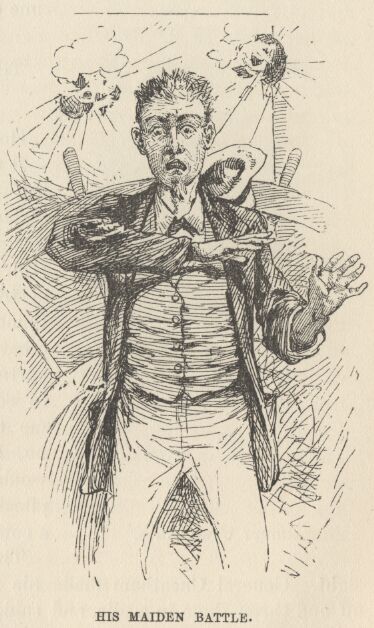
TALK began to run upon the war now, for we were getting down into the upper edge of the former battle-stretch by this time. Columbus was just behind us, so there was a good deal said about the famous battle of Belmont. Several of the boat's officers had seen active service in the Mississippi war-fleet. I gathered that they found themselves sadly out of their element in that kind of business at first, but afterward got accustomed to it, reconciled to it, and more or less at home in it. One of our pilots had his first war experience in the Belmont fight, as a pilot on a boat in the Confederate service. I had often had a curiosity to know how a green hand might feel, in his maiden battle, perched all solitary and alone on high in a pilot house, a target for Tom, Dick and Harry, and nobody at his elbow to shame him from showing the white feather when matters grew hot and perilous around him; so, to me his story was valuable—it filled a gap for me which all histories had left till that time empty.
The talk turned to the war now, because we were reaching the upper edge of the former battle zone. Columbus was just behind us, so there was plenty of talk about the famous battle of Belmont. Several of the boat's officers had seen active service in the Mississippi war fleet. I gathered that they felt sadly out of their element in that kind of work at first. Later, they got used to it, accepted it, and felt more or less at home in it. One of our pilots had his first wartime experience in the battle of Belmont. He was piloting a boat in Confederate service. I had often wondered how a newcomer would feel in his first battle, perched high in a pilot house, all alone. He would be a target for Tom, Dick, and Harry. And when things grew hot and dangerous around him, no one would be at his side to shame him into showing courage. So his story was valuable to me. It filled a gap that all the histories had left empty until then.
THE PILOT'S FIRST BATTLE
The Pilot's First Battle
He said—
He said:
It was the 7th of November. The fight began at seven in the morning. I was on the 'R. H. W. Hill.' Took over a load of troops from Columbus. Came back, and took over a battery of artillery. My partner said he was going to see the fight; wanted me to go along. I said, no, I wasn't anxious, I would look at it from the pilot-house. He said I was a coward, and left.
It was November 7. The fight began at seven in the morning. I was on the 'R. H. W. Hill.' I took a load of troops over from Columbus. Then I came back and took over a battery of artillery. My partner said he was going to watch the fight and wanted me to come along. I said no, I wasn't eager to go. I would watch the fight from the pilot-house. He called me a coward and left.
That fight was an awful sight. General Cheatham made his men strip their coats off and throw them in a pile, and said, 'Now follow me to hell or victory!' I heard him say that from the pilot-house; and then he galloped in, at the head of his troops. Old General Pillow, with his white hair, mounted on a white horse, sailed in, too, leading his troops as lively as a boy. By and by the Federals chased the rebels back, and here they came! tearing along, everybody for himself and Devil take the hindmost! and down under the bank they scrambled, and took shelter. I was sitting with my legs hanging out of the pilot-house window. All at once I noticed a whizzing sound passing my ear. Judged it was a bullet. I didn't stop to think about anything, I just tilted over backwards and landed on the floor, and staid there. The balls came booming around. Three cannon-balls went through the chimney; one ball took off the corner of the pilot-house; shells were screaming and bursting all around. Mighty warm times—I wished I hadn't come.
That fight was an awful sight. General Cheatham made his men take off their coats and throw them in a pile. Then he said, 'Now follow me to hell or victory!' I heard him say it from the pilot-house. Then he galloped into battle at the head of his troops. Old General Pillow rode in too, leading his troops. His hair was white, and he rode a white horse, as lively as a boy. Before long, the Federals chased the rebels back, and here they came! They tore along, every man for himself and the Devil take the hindmost! They scrambled down under the bank and took shelter. I was sitting with my legs hanging out of the pilot-house window. Suddenly, I heard a whizzing sound pass my ear. I figured it was a bullet. I didn't stop to think. I just fell backward, landed on the floor, and stayed there. Cannonballs came booming around me. Three went through the chimney, and one took off the corner of the pilot-house. Shells were screaming and bursting all around. Things were getting mighty hot. I wished I hadn't come.
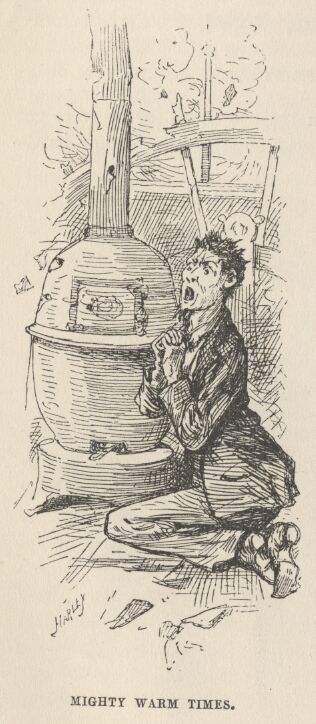
I lay there on the pilot-house floor, while the shots came faster and faster. I crept in behind the big stove, in the middle of the pilot-house. Presently a minie-ball came through the stove, and just grazed my head, and cut my hat. I judged it was time to go away from there. The captain was on the roof with a red-headed major from Memphis—a fine-looking man. I heard him say he wanted to leave here, but 'that pilot is killed.' I crept over to the starboard side to pull the bell to set her back; raised up and took a look, and I saw about fifteen shot holes through the window panes; had come so lively I hadn't noticed them. I glanced out on the water, and the spattering shot were like a hailstorm. I thought best to get out of that place. I went down the pilot-house guy, head first—not feet first but head first—slid down—before I struck the deck, the captain said we must leave there. So I climbed up the guy and got on the floor again. About that time, they collared my partner and were bringing him up to the pilot-house between two soldiers. Somebody had said I was killed. He put his head in and saw me on the floor reaching for the backing bells. He said, 'Oh, hell, he ain't shot,' and jerked away from the men who had him by the collar, and ran below. We were there until three o'clock in the afternoon, and then got away all right.
I lay on the pilot-house floor as the shots came faster and faster. I crawled behind the big stove in the middle of the pilot-house. Soon a minie ball came through the stove, grazed my head, and cut my hat. I figured it was time to leave. The captain was on the roof with a red-headed major from Memphis, a fine-looking man. I heard the captain say he wanted to leave, but "that pilot is killed." I crawled over to the starboard side to pull the bell and reverse the boat. I raised my head and saw about fifteen bullet holes in the windowpanes. The shots had come so fast I hadn't noticed them. I glanced out at the water, and the shots splashing into it were like a hailstorm. I thought it was best to get out of there. I went down the pilot-house guy, head first. Not feet first, but head first. I slid down, and before I reached the deck, the captain said we had to leave. So I climbed back up the guy and got on the floor again. About that time, two soldiers grabbed my partner by the collar and brought him up to the pilot-house. Somebody had said I was killed. He put his head in and saw me on the floor, reaching for the bells to reverse the boat. He said, "Oh, hell, he ain't shot," pulled away from the men holding him, and ran below. We stayed there until three o'clock in the afternoon, and then got away safely.
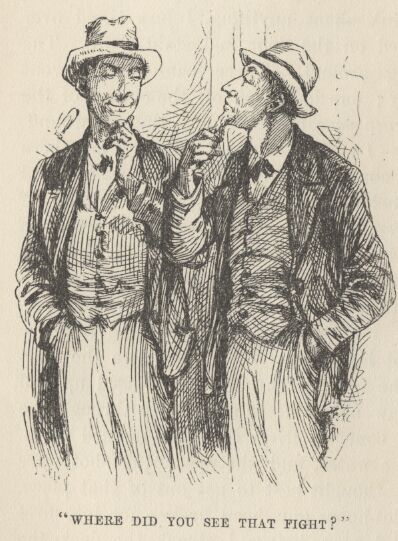
The next time I saw my partner, I said, 'Now, come out, be honest, and tell me the truth. Where did you go when you went to see that battle?' He says, 'I went down in the hold.'
The next time I saw my partner, I said, 'Now, be honest and tell me the truth. Where did you go when you went to see that battle?' He said, 'I went down into the hold.'
All through that fight I was scared nearly to death. I hardly knew anything, I was so frightened; but you see, nobody knew that but me. Next day General Polk sent for me, and praised me for my bravery and gallant conduct. I never said anything, I let it go at that. I judged it wasn't so, but it was not for me to contradict a general officer.
Throughout that fight, I was scared nearly to death. I was so frightened I hardly knew what was happening. But you see, nobody knew how scared I was except me. The next day, General Polk sent for me and praised me for my bravery and courageous conduct. I said nothing and let it go at that. I didn't think his praise was deserved, but it wasn't my place to contradict a general.
Pretty soon after that I was sick, and used up, and had to go off to the Hot Springs. When there, I got a good many letters from commanders saying they wanted me to come back. I declined, because I wasn't well enough or strong enough; but I kept still, and kept the reputation I had made.
Soon after that, I got sick and worn out, and I had to go to Hot Springs. While I was there, I got quite a few letters from commanders asking me to come back. I said no because I wasn't well enough or strong enough. But I kept quiet and kept the reputation I had earned.
A plain story, straightforwardly told; but Mumford told me that that pilot had 'gilded that scare of his, in spots;' that his subsequent career in the war was proof of it.
A simple story, told plainly. But Mumford told me that the pilot had 'exaggerated his fear in places.' He said the pilot's later career in the war proved it.
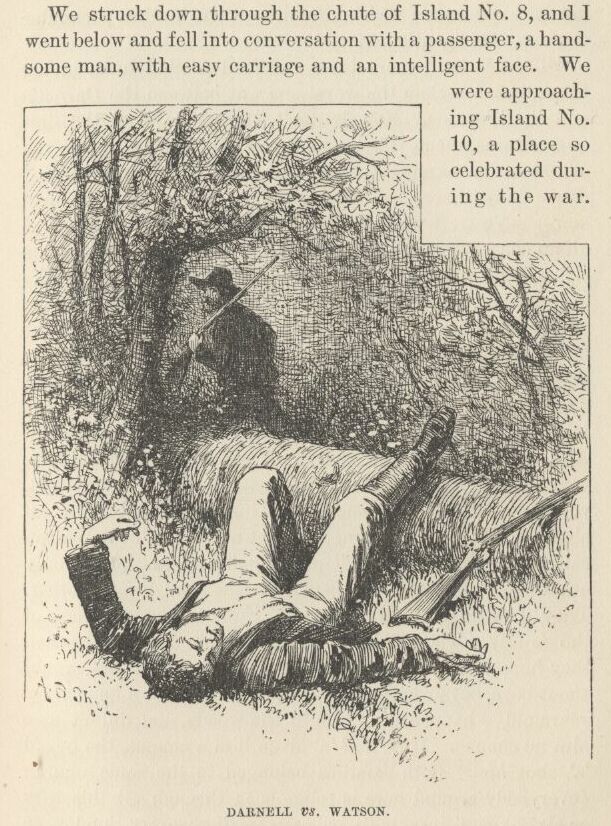
We struck down through the chute of Island No. 8, and I went below and fell into conversation with a passenger, a handsome man, with easy carriage and an intelligent face. We were approaching Island No. 10, a place so celebrated during the war. This gentleman's home was on the main shore in its neighborhood. I had some talk with him about the war times; but presently the discourse fell upon 'feuds,' for in no part of the South has the vendetta flourished more briskly, or held out longer between warring families, than in this particular region. This gentleman said—
We headed down through the channel at Island No. 8, and I went below. There I fell into conversation with a passenger, a handsome man with an easy manner and an intelligent face. We were approaching Island No. 10, a place that had become famous during the war. The gentleman lived nearby, on the mainland shore. I talked with him about the war years, but soon the conversation turned to 'feuds.' For nowhere else in the South had feuds flourished more vigorously or lasted longer between warring families than in this region. The gentleman said:
'There's been more than one feud around here, in old times, but I reckon the worst one was between the Darnells and the Watsons. Nobody don't know now what the first quarrel was about, it's so long ago; the Darnells and the Watsons don't know, if there's any of them living, which I don't think there is. Some says it was about a horse or a cow—anyway, it was a little matter; the money in it wasn't of no consequence—none in the world—both families was rich. The thing could have been fixed up, easy enough; but no, that wouldn't do. Rough words had been passed; and so, nothing but blood could fix it up after that. That horse or cow, whichever it was, cost sixty years of killing and crippling! Every year or so somebody was shot, on one side or the other; and as fast as one generation was laid out, their sons took up the feud and kept it a-going. And it's just as I say; they went on shooting each other, year in and year out—making a kind of a religion of it, you see—till they'd done forgot, long ago, what it was all about. Wherever a Darnell caught a Watson, or a Watson caught a Darnell, one of 'em was going to get hurt—only question was, which of them got the drop on the other. They'd shoot one another down, right in the presence of the family. They didn't hunt for each other, but when they happened to meet, they puffed and begun. Men would shoot boys, boys would shoot men. A man shot a boy twelve years old—happened on him in the woods, and didn't give him no chance. If he had 'a' given him a chance, the boy'd 'a' shot him. Both families belonged to the same church (everybody around here is religious); through all this fifty or sixty years' fuss, both tribes was there every Sunday, to worship. They lived each side of the line, and the church was at a landing called Compromise. Half the church and half the aisle was in Kentucky, the other half in Tennessee. Sundays you'd see the families drive up, all in their Sunday clothes, men, women, and children, and file up the aisle, and set down, quiet and orderly, one lot on the Tennessee side of the church and the other on the Kentucky side; and the men and boys would lean their guns up against the wall, handy, and then all hands would join in with the prayer and praise; though they say the man next the aisle didn't kneel down, along with the rest of the family; kind of stood guard. I don't know; never was at that church in my life; but I remember that that's what used to be said.
'There were several feuds around here in the old days, but I reckon the worst was between the Darnells and the Watsons. It started so long ago that nobody knows what the first quarrel was about. Even the Darnells and the Watsons don't know, if any of them are still living, which I don't think they are. Some say it was about a horse or a cow. Anyway, it was a small matter, and the money meant nothing at all. Both families were rich. They could have settled it easily enough, but no, that wouldn't do. Harsh words had been exchanged, so after that, only blood could settle it. That horse or cow, whichever it was, cost sixty years of killing and crippling! Every year or so, somebody on one side or the other was shot. As soon as one generation was killed off, their sons took up the feud and kept it going. Just as I say, they went on shooting each other year after year. They made a kind of religion of it, you see. Long before they stopped, they had forgotten what the feud was about. Wherever a Darnell met a Watson, or a Watson met a Darnell, one of them was going to get hurt. The only question was who got the drop on the other. They would shoot each other down right in front of their families. They didn't go looking for each other, but when they happened to meet, they got worked up and started shooting. Men shot boys, and boys shot men. One man came upon a twelve-year-old boy in the woods and shot him without giving him a chance. If he had given the boy a chance, the boy would have shot him. Both families belonged to the same church. Everybody around here is religious. Through all those fifty or sixty years of fighting, both families were there to worship every Sunday. They lived on opposite sides of the state line, and the church was at a landing called Compromise. Half the church and half the aisle were in Kentucky. The other half was in Tennessee. On Sundays, you would see the families drive up in their Sunday clothes, men, women, and children. They would file up the aisle and sit down quietly and orderly, one family on the Tennessee side and the other on the Kentucky side. The men and boys would lean their guns against the wall, where they could reach them. Then everyone would join in the prayers and praise. Though they say the man nearest the aisle didn't kneel with the rest of the family. He sort of stood guard. I don't know. I was never at that church in my life, but I remember that's what people used to say.
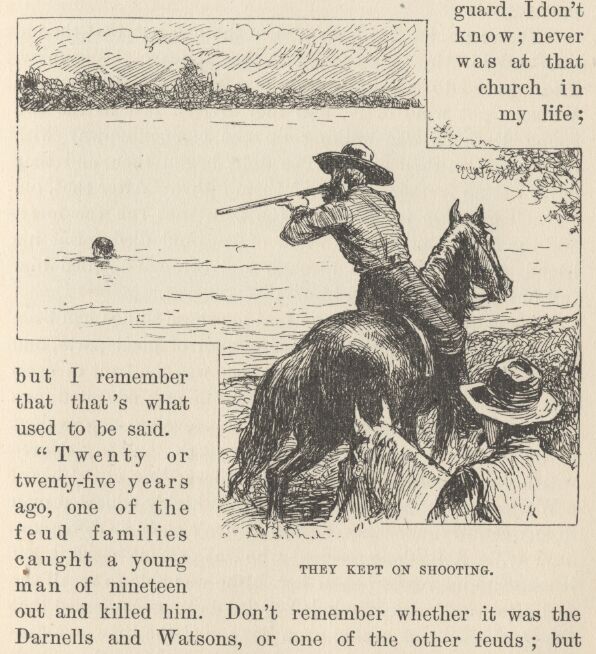
'Twenty or twenty-five years ago, one of the feud families caught a young man of nineteen out and killed him. Don't remember whether it was the Darnells and Watsons, or one of the other feuds; but anyway, this young man rode up—steamboat laying there at the time—and the first thing he saw was a whole gang of the enemy. He jumped down behind a wood-pile, but they rode around and begun on him, he firing back, and they galloping and cavorting and yelling and banging away with all their might. Think he wounded a couple of them; but they closed in on him and chased him into the river; and as he swum along down stream, they followed along the bank and kept on shooting at him; and when he struck shore he was dead. Windy Marshall told me about it. He saw it. He was captain of the boat.
'Twenty or twenty-five years ago, one of the feuding families caught a nineteen-year-old man alone and killed him. I don't remember whether it was the Darnells and Watsons or one of the other feuds. Anyway, the young man rode up while a steamboat was docked there. The first thing he saw was a whole gang of his enemies. He jumped down behind a woodpile, but they rode around it and started shooting at him. He fired back while they galloped around, yelling and shooting with all their might. I think he wounded a couple of them, but they closed in and chased him into the river. As he swam downstream, they followed along the bank and kept shooting at him. By the time he reached shore, he was dead. Windy Marshall told me about it. He saw it happen. He was captain of the boat.
'Years ago, the Darnells was so thinned out that the old man and his two sons concluded they'd leave the country. They started to take steamboat just above No. 10; but the Watsons got wind of it; and they arrived just as the two young Darnells was walking up the companion-way with their wives on their arms. The fight begun then, and they never got no further—both of them killed. After that, old Darnell got into trouble with the man that run the ferry, and the ferry-man got the worst of it—and died. But his friends shot old Darnell through and through—filled him full of bullets, and ended him.'
'Years ago, so few Darnells were left that the old man and his two sons decided to leave the country. They went to catch a steamboat just above No. 10, but the Watsons heard about it. The Watsons arrived just as the two young Darnells were walking up the gangway with their wives on their arms. The fight started then, and the two young men never got any farther. Both were killed. After that, old Darnell got into trouble with the man who ran the ferry. The ferryman came off worse and died. But his friends shot old Darnell through and through. They filled him with bullets and killed him.'
The country gentleman who told me these things had been reared in ease and comfort, was a man of good parts, and was college bred. His loose grammar was the fruit of careless habit, not ignorance. This habit among educated men in the West is not universal, but it is prevalent—prevalent in the towns, certainly, if not in the cities; and to a degree which one cannot help noticing, and marveling at. I heard a Westerner who would be accounted a highly educated man in any country, say 'never mind, it don't make no difference, anyway.' A life-long resident who was present heard it, but it made no impression upon her. She was able to recall the fact afterward, when reminded of it; but she confessed that the words had not grated upon her ear at the time—a confession which suggests that if educated people can hear such blasphemous grammar, from such a source, and be unconscious of the deed, the crime must be tolerably common—so common that the general ear has become dulled by familiarity with it, and is no longer alert, no longer sensitive to such affronts.
The country gentleman who told me these things had grown up in ease and comfort. He was capable and college educated. His careless grammar came from habit, not ignorance. Not all educated men in the West have this habit, but it is common. It is certainly common in towns, if not in cities, and common enough to be impossible not to notice and marvel at. I heard a Westerner say, 'never mind, it don't make no difference, anyway.' He would be considered highly educated in any country. A woman who had lived there all her life was present and heard him, but she took no notice. When reminded afterward, she could recall what he had said. But she admitted that the words had not grated on her ear at the time. Her admission suggests that the crime must be fairly common. If educated people can hear such blasphemous grammar from such a source without noticing the offense, familiarity must have dulled the general ear. It is no longer alert, no longer sensitive to such affronts.
No one in the world speaks blemishless grammar; no one has ever written it—no one, either in the world or out of it (taking the Scriptures for evidence on the latter point); therefore it would not be fair to exact grammatical perfection from the peoples of the Valley; but they and all other peoples may justly be required to refrain from knowingly and purposely debauching their grammar.
No one in the world speaks perfect grammar. And no one has ever written perfect grammar, either in this world or outside it (if the Scriptures are evidence of what happens outside it). So it would not be fair to demand perfect grammar from the people of the Valley. But they and all other people may reasonably be expected not to knowingly and purposely corrupt their grammar.
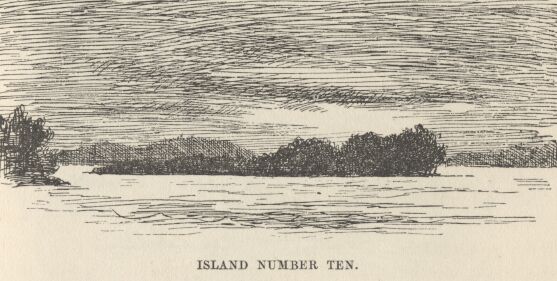
I found the river greatly changed at Island No. 10. The island which I remembered was some three miles long and a quarter of a mile wide, heavily timbered, and lay near the Kentucky shore—within two hundred yards of it, I should say. Now, however, one had to hunt for it with a spy-glass. Nothing was left of it but an insignificant little tuft, and this was no longer near the Kentucky shore; it was clear over against the opposite shore, a mile away. In war times the island had been an important place, for it commanded the situation; and, being heavily fortified, there was no getting by it. It lay between the upper and lower divisions of the Union forces, and kept them separate, until a junction was finally effected across the Missouri neck of land; but the island being itself joined to that neck now, the wide river is without obstruction.
I found that the river had changed greatly at Island No. 10. As I remembered it, the island was about three miles long and a quarter mile wide. It was heavily wooded and lay near the Kentucky shore, within two hundred yards of it, I would say. Now, though, you had to search for the island with a spyglass. All that remained was an insignificant little tuft of land. It was no longer near the Kentucky shore, but clear across the river against the opposite shore, a mile away. During the war, the island had been important because it controlled the area. It was so heavily fortified that no one could get past it. It lay between the upper and lower divisions of the Union forces and kept them apart. Finally, the two divisions joined forces across the narrow strip of Missouri land. But the island is now joined to that strip of land, leaving the wide river unobstructed.
In this region the river passes from Kentucky into Tennessee, back into Missouri, then back into Kentucky, and thence into Tennessee again. So a mile or two of Missouri sticks over into Tennessee.
In this area, the river passes from Kentucky into Tennessee, then back into Missouri. It returns to Kentucky, then enters Tennessee again. So a mile or two of Missouri sticks out into Tennessee.
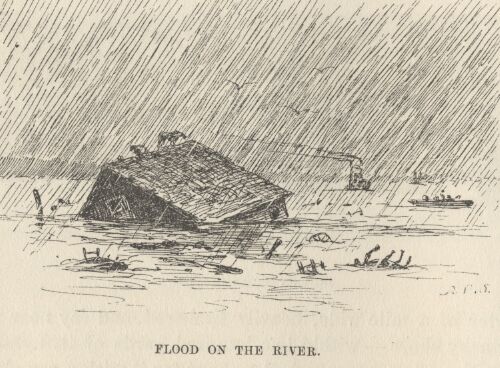
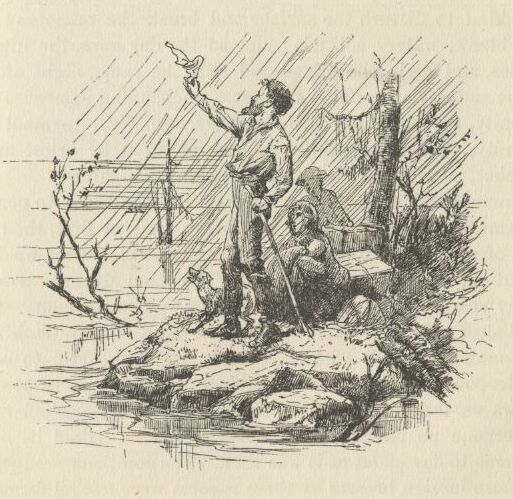
The town of New Madrid was looking very unwell; but otherwise unchanged from its former condition and aspect. Its blocks of frame-houses were still grouped in the same old flat plain, and environed by the same old forests. It was as tranquil as formerly, and apparently had neither grown nor diminished in size. It was said that the recent high water had invaded it and damaged its looks. This was surprising news; for in low water the river bank is very high there (fifty feet), and in my day an overflow had always been considered an impossibility. This present flood of 1882 Will doubtless be celebrated in the river's history for several generations before a deluge of like magnitude shall be seen. It put all the unprotected low lands under water, from Cairo to the mouth; it broke down the levees in a great many places, on both sides of the river; and in some regions south, when the flood was at its highest, the Mississippi was seventy miles wide! a number of lives were lost, and the destruction of property was fearful. The crops were destroyed, houses washed away, and shelterless men and cattle forced to take refuge on scattering elevations here and there in field and forest, and wait in peril and suffering until the boats put in commission by the national and local governments and by newspaper enterprise could come and rescue them. The properties of multitudes of people were under water for months, and the poorer ones must have starved by the hundred if succor had not been promptly afforded.{footnote [For a detailed and interesting description of the great flood, written on board of the New Orleans Times-Democrat's relief-boat, see Appendix A]} The water had been falling during a considerable time now, yet as a rule we found the banks still under water.
The town of New Madrid looked very unwell, but otherwise it had not changed in condition or appearance. Its blocks of wooden houses still stood on the same old flat plain, surrounded by the same old forests. The town was as peaceful as ever and apparently had neither grown nor shrunk. People said the recent high water had flooded it and damaged its appearance. This was surprising news. At low water, the riverbank there is very high, fifty feet, and in my day a flood had always been considered impossible. The flood of 1882 will doubtless be remembered in the river’s history for several generations before another of its size occurs. It covered all the unprotected lowlands from Cairo to the river’s mouth. It broke through the levees in many places on both sides of the river. In some southern regions, when the flood was at its highest, the Mississippi was seventy miles wide! A number of lives were lost, and the destruction of property was terrible. Crops were destroyed and houses washed away. Men and cattle left without shelter were forced to take refuge on scattered patches of high ground in fields and forests. They waited there in danger and suffering until rescue boats could reach them. The national and local governments and newspapers had put these boats into service. The property of many people remained underwater for months. Hundreds of the poorer people would have starved if help had not arrived promptly.{footnote [For a detailed and interesting description of the great flood, written aboard the New Orleans Times-Democrat's relief boat, see Appendix A]} The water had been falling for quite some time, yet we generally found the banks still underwater.