Chapter 25
From Cairo to Hickman
THE scenery, from St. Louis to Cairo—two hundred miles—is varied and beautiful. The hills were clothed in the fresh foliage of spring now, and were a gracious and worthy setting for the broad river flowing between. Our trip began auspiciously, with a perfect day, as to breeze and sunshine, and our boat threw the miles out behind her with satisfactory despatch.
The scenery along the 200 miles from St. Louis to Cairo is varied and beautiful. The hills were covered in fresh spring foliage, forming a lovely and fitting setting for the broad river flowing between them. Our trip began well, with a perfect day of sunshine and breezes. Our boat left the miles behind at a satisfying pace.
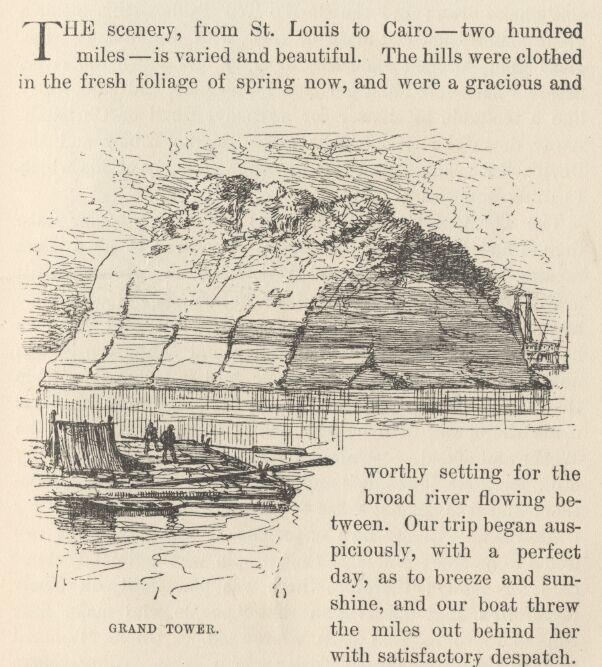
We found a railway intruding at Chester, Illinois; Chester has also a penitentiary now, and is otherwise marching on. At Grand Tower, too, there was a railway; and another at Cape Girardeau. The former town gets its name from a huge, squat pillar of rock, which stands up out of the water on the Missouri side of the river—a piece of nature's fanciful handiwork—and is one of the most picturesque features of the scenery of that region. For nearer or remoter neighbors, the Tower has the Devil's Bake Oven—so called, perhaps, because it does not powerfully resemble anybody else's bake oven; and the Devil's Tea Table—this latter a great smooth-surfaced mass of rock, with diminishing wine-glass stem, perched some fifty or sixty feet above the river, beside a beflowered and garlanded precipice, and sufficiently like a tea-table to answer for anybody, Devil or Christian. Away down the river we have the Devil's Elbow and the Devil's Race-course, and lots of other property of his which I cannot now call to mind.
We found a railway intruding at Chester, Illinois. Chester also has a penitentiary now and is otherwise making progress. There was a railway at Grand Tower, too, and another at Cape Girardeau. Grand Tower takes its name from a huge, squat pillar of rock rising out of the water on the Missouri side of the river. This fanciful piece of nature’s handiwork is one of the most picturesque features of the scenery in that region. The Tower has some neighbors, near and far. One is the Devil’s Bake Oven, perhaps so called because it hardly resembles anyone else’s bake oven. Another is the Devil’s Tea Table. It is a great, smooth mass of rock perched some fifty or sixty feet above the river on a narrowing, wineglass-shaped stem. It stands beside a cliff covered with flowers and garlands. It looks enough like a tea table to suit anyone, Devil or Christian. Farther down the river are the Devil’s Elbow and the Devil’s Race-course, along with lots of other property of his that I cannot remember now.
The Town of Grand Tower was evidently a busier place than it had been in old times, but it seemed to need some repairs here and there, and a new coat of whitewash all over. Still, it was pleasant to me to see the old coat once more. 'Uncle' Mumford, our second officer, said the place had been suffering from high water, and consequently was not looking its best now. But he said it was not strange that it didn't waste white-wash on itself, for more lime was made there, and of a better quality, than anywhere in the West; and added—'On a dairy farm you never can get any milk for your coffee, nor any sugar for it on a sugar plantation; and it is against sense to go to a lime town to hunt for white-wash.' In my own experience I knew the first two items to be true; and also that people who sell candy don't care for candy; therefore there was plausibility in Uncle Mumford's final observation that 'people who make lime run more to religion than whitewash.' Uncle Mumford said, further, that Grand Tower was a great coaling center and a prospering place.
The town of Grand Tower was clearly busier than it had been in the old days. But it seemed to need repairs here and there, and a fresh coat of whitewash all over. Still, I was glad to see the old coat again. 'Uncle' Mumford, our second officer, said high water had damaged the place, so it wasn't looking its best. But he said it was no surprise that Grand Tower didn't waste whitewash on itself. More lime was made there, and of better quality, than anywhere else in the West. He added, 'On a dairy farm you can never get milk for your coffee, nor sugar on a sugar plantation. And it makes no sense to go looking for whitewash in a lime town.' From my own experience, I knew the first two things were true. I also knew that people who sell candy don't care for it. So Uncle Mumford's final observation seemed plausible: 'people who make lime are more inclined toward religion than whitewash.' Uncle Mumford also said Grand Tower was a major coaling center and a prosperous place.
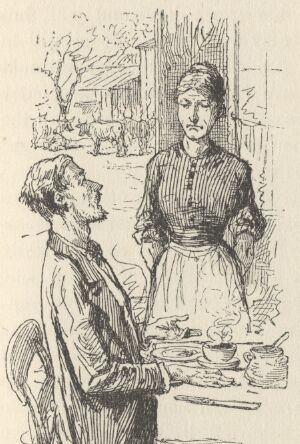
Cape Girardeau is situated on a hillside, and makes a handsome appearance. There is a great Jesuit school for boys at the foot of the town by the river. Uncle Mumford said it had as high a reputation for thoroughness as any similar institution in Missouri! There was another college higher up on an airy summit—a bright new edifice, picturesquely and peculiarly towered and pinnacled—a sort of gigantic casters, with the cruets all complete. Uncle Mumford said that Cape Girardeau was the Athens of Missouri, and contained several colleges besides those already mentioned; and all of them on a religious basis of one kind or another. He directed my attention to what he called the 'strong and pervasive religious look of the town,' but I could not see that it looked more religious than the other hill towns with the same slope and built of the same kind of bricks. Partialities often make people see more than really exists.
Cape Girardeau sits on a hillside and makes a handsome sight. A large Jesuit school for boys stands at the foot of the town, by the river. Uncle Mumford said its reputation for thoroughness was as high as that of any similar school in Missouri! Another college stood higher up on a breezy hilltop. It was a bright new building with picturesque, unusual towers and pinnacles. It looked like a giant condiment stand, complete with all its little bottles. Uncle Mumford said Cape Girardeau was the Athens of Missouri. Besides the two colleges already mentioned, it had several others. All of them had some kind of religious foundation. He pointed out what he called the 'strong and pervasive religious look of the town.' But I could not see that Cape Girardeau looked more religious than other hillside towns. They had the same slope and were built of the same kind of bricks. People’s fondness for things often makes them see more than is really there.
Uncle Mumford has been thirty years a mate on the river. He is a man of practical sense and a level head; has observed; has had much experience of one sort and another; has opinions; has, also, just a perceptible dash of poetry in his composition, an easy gift of speech, a thick growl in his voice, and an oath or two where he can get at them when the exigencies of his office require a spiritual lift. He is a mate of the blessed old-time kind; and goes gravely damning around, when there is work to the fore, in a way to mellow the ex-steamboatman's heart with sweet soft longings for the vanished days that shall come no more. 'Git up there you! Going to be all day? Why d'n't you say you was petrified in your hind legs, before you shipped!'
Uncle Mumford has been a riverboat mate for thirty years. He has practical sense and a level head. He has observed a lot and had many kinds of experience. He has opinions, too. He also has just a noticeable dash of poetry in him, an easy way with words, and a deep growl of a voice. He keeps an oath or two handy for when his duties call for a lift to his spirits. He is a mate of the blessed old-time kind. When there is work to be done, he goes around solemnly cursing. The sound softens a former steamboatman's heart with sweet, gentle longing for the vanished days that will never return. 'Get up there, you! Are you going to take all day? Why didn't you say your hind legs were turned to stone before you signed on!'
He is a steady man with his crew; kind and just, but firm; so they like him, and stay with him. He is still in the slouchy garb of the old generation of mates; but next trip the Anchor Line will have him in uniform—a natty blue naval uniform, with brass buttons, along with all the officers of the line—and then he will be a totally different style of scenery from what he is now.
He treats his crew consistently, with kindness and fairness, but he is firm. So they like him and stay with him. He still wears the sloppy clothes of the older generation of mates. But on his next trip, the Anchor Line will put him in uniform, like all its officers. He will wear a smart blue naval uniform with brass buttons. Then he will look like a completely different piece of scenery.
Uniforms on the Mississippi! It beats all the other changes put together, for surprise. Still, there is another surprise—that it was not made fifty years ago. It is so manifestly sensible, that it might have been thought of earlier, one would suppose. During fifty years, out there, the innocent passenger in need of help and information, has been mistaking the mate for the cook, and the captain for the barber—and being roughly entertained for it, too. But his troubles are ended now. And the greatly improved aspect of the boat's staff is another advantage achieved by the dress-reform period.
Uniforms on the Mississippi! They are more surprising than all the other changes put together. Still, there is another surprise: that uniforms were not introduced fifty years ago. They are so obviously sensible that you would think someone would have thought of them earlier. For fifty years, innocent passengers looking for help and information have mistaken the mate for the cook and the captain for the barber. They have been treated roughly for it, too. But their troubles are over now. The boat's crew also looks much better, another benefit of the new uniforms.
Steered down the bend below Cape Girardeau. They used to call it 'Steersman's Bend;' plain sailing and plenty of water in it, always; about the only place in the Upper River that a new cub was allowed to take a boat through, in low water.
Steered down the bend below Cape Girardeau. They used to call it 'Steersman's Bend.' It was always easy to navigate and had plenty of water. When the water was low, it was about the only place on the Upper River where a new apprentice pilot was allowed to steer a boat.
Thebes, at the head of the Grand Chain, and Commerce at the foot of it, were towns easily rememberable, as they had not undergone conspicuous alteration. Nor the Chain, either—in the nature of things; for it is a chain of sunken rocks admirably arranged to capture and kill steamboats on bad nights. A good many steamboat corpses lie buried there, out of sight; among the rest my first friend the 'Paul Jones;' she knocked her bottom out, and went down like a pot, so the historian told me—Uncle Mumford. He said she had a gray mare aboard, and a preacher. To me, this sufficiently accounted for the disaster; as it did, of course, to Mumford, who added—
Thebes, at the head of the Grand Chain, and Commerce, at its foot, were easy to remember because they had not changed noticeably. Neither had the Chain, of course. It is a chain of sunken rocks perfectly arranged to catch and kill steamboats on bad nights. Many steamboat corpses lie buried there, out of sight. Among them is my first friend, the 'Paul Jones.' She knocked her bottom out and sank like a pot, according to the historian, Uncle Mumford. He said she had a gray mare and a preacher aboard. To me, that explained the disaster well enough. Of course, it did to Mumford, too, and he added:
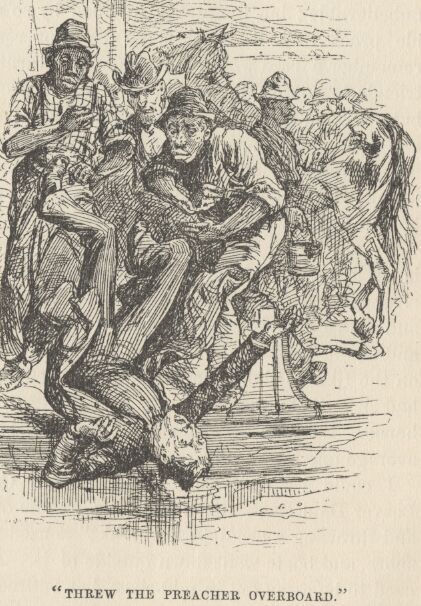
'But there are many ignorant people who would scoff at such a matter, and call it superstition. But you will always notice that they are people who have never traveled with a gray mare and a preacher. I went down the river once in such company. We grounded at Bloody Island; we grounded at Hanging Dog; we grounded just below this same Commerce; we jolted Beaver Dam Rock; we hit one of the worst breaks in the 'Graveyard' behind Goose Island; we had a roustabout killed in a fight; we burnt a boiler; broke a shaft; collapsed a flue; and went into Cairo with nine feet of water in the hold—may have been more, may have been less. I remember it as if it were yesterday. The men lost their heads with terror. They painted the mare blue, in sight of town, and threw the preacher overboard, or we should not have arrived at all. The preacher was fished out and saved. He acknowledged, himself, that he had been to blame. I remember it all, as if it were yesterday.'
'But many ignorant people would laugh at such a thing and call it superstition. But you will always notice that they have never traveled with a gray mare and a preacher. I once went down the river in such company. We ran aground at Bloody Island. We ran aground at Hanging Dog. We ran aground just below this same Commerce. We struck Beaver Dam Rock. We hit one of the worst stretches of rough water in the 'Graveyard' behind Goose Island. A roustabout was killed in a fight. We burned a boiler, broke a shaft, and collapsed a flue. We reached Cairo with nine feet of water in the hold. There may have been more, or there may have been less. I remember it as if it were yesterday. The men lost their heads with terror. Within sight of town, they painted the mare blue and threw the preacher overboard. Otherwise, we would not have arrived at all. The preacher was pulled out of the water and saved. He admitted himself that he had been to blame. I remember it all as if it were yesterday.'
That this combination—of preacher and gray mare—should breed calamity, seems strange, and at first glance unbelievable; but the fact is fortified by so much unassailable proof that to doubt is to dishonor reason. I myself remember a case where a captain was warned by numerous friends against taking a gray mare and a preacher with him, but persisted in his purpose in spite of all that could be said; and the same day—it may have been the next, and some say it was, though I think it was the same day—he got drunk and fell down the hatchway, and was borne to his home a corpse. This is literally true.
It seems strange that a preacher and a gray mare together should cause disaster. At first glance, it seems unbelievable. But the evidence is so overwhelming that to doubt it would be an insult to reason. I remember one case myself. Many friends warned a captain not to take a gray mare and a preacher with him. But he stuck to his plan despite everything they said. That same day, he got drunk, fell down the hatchway, and was carried home dead. It may have been the next day, and some say it was, though I think it was the same day. This is literally true.
No vestige of Hat Island is left now; every shred of it is washed away. I do not even remember what part of the river it used to be in, except that it was between St. Louis and Cairo somewhere. It was a bad region—all around and about Hat Island, in early days. A farmer who lived on the Illinois shore there, said that twenty-nine steamboats had left their bones strung along within sight from his house. Between St. Louis and Cairo the steamboat wrecks average one to the mile;—two hundred wrecks, altogether.
No trace of Hat Island is left now. Every bit of it has washed away. I don’t even remember where in the river Hat Island used to be, except that it was somewhere between St. Louis and Cairo. In the early days, the whole area around Hat Island was dangerous. A farmer who lived there on the Illinois shore said twenty-nine steamboats had left their bones within sight of his house. Between St. Louis and Cairo, steamboat wrecks average one per mile, two hundred wrecks in all.
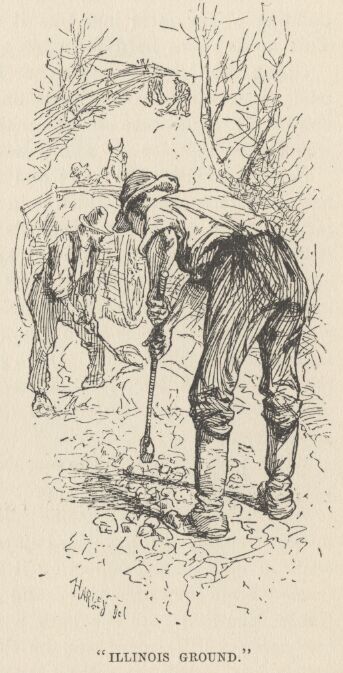
I could recognize big changes from Commerce down. Beaver Dam Rock was out in the middle of the river now, and throwing a prodigious 'break;' it used to be close to the shore, and boats went down outside of it. A big island that used to be away out in mid-river, has retired to the Missouri shore, and boats do not go near it any more. The island called Jacket Pattern is whittled down to a wedge now, and is booked for early destruction. Goose Island is all gone but a little dab the size of a steamboat. The perilous 'Graveyard,' among whose numberless wrecks we used to pick our way so slowly and gingerly, is far away from the channel now, and a terror to nobody. One of the islands formerly called the Two Sisters is gone entirely; the other, which used to lie close to the Illinois shore, is now on the Missouri side, a mile away; it is joined solidly to the shore, and it takes a sharp eye to see where the seam is—but it is Illinois ground yet, and the people who live on it have to ferry themselves over and work the Illinois roads and pay Illinois taxes: singular state of things!
I could see big changes from Commerce downriver. Beaver Dam Rock was now in the middle of the river, creating a huge 'break' in the water. It used to be close to shore, and boats went downriver on its outer side. A big island that used to be out in mid-river has moved back to the Missouri shore, and boats no longer go near it. The island called Jacket Pattern has been whittled down to a wedge and is likely to disappear soon. Goose Island is all gone except for a little bit the size of a steamboat. The dangerous 'Graveyard' is now far from the channel and frightens nobody. We used to pick our way through its countless wrecks so slowly and carefully. One of the islands formerly called the Two Sisters is gone entirely. The other used to lie close to the Illinois shore, but now it is on the Missouri side, a mile away. It is firmly joined to the shore, and you need a sharp eye to see where they meet. But the island is still Illinois land. The people who live there have to ferry themselves across to work on Illinois roads and pay Illinois taxes. What a strange state of affairs!
Near the mouth of the river several islands were missing—washed away. Cairo was still there—easily visible across the long, flat point upon whose further verge it stands; but we had to steam a long way around to get to it. Night fell as we were going out of the 'Upper River' and meeting the floods of the Ohio. We dashed along without anxiety; for the hidden rock which used to lie right in the way has moved up stream a long distance out of the channel; or rather, about one county has gone into the river from the Missouri point, and the Cairo point has 'made down' and added to its long tongue of territory correspondingly. The Mississippi is a just and equitable river; it never tumbles one man's farm overboard without building a new farm just like it for that man's neighbor. This keeps down hard feelings.
Near the mouth of the river, several islands were missing, washed away. Cairo was still there, easily visible across the long, flat point on whose far edge it stands. But we had to steam a long way around to reach it. Night fell as we left the 'Upper River' and met the floods of the Ohio. We raced along without worry. The hidden rock that used to lie directly in our way had moved far upstream, out of the channel. Or rather, about one county's worth of land had fallen into the river from the Missouri point. The Cairo point had 'made down', adding a corresponding amount to its long tongue of land. The Mississippi is a just and fair river. It never tumbles one man's farm into the water without building a matching new farm for that man's neighbor. This keeps hard feelings down.
Going into Cairo, we came near killing a steamboat which paid no attention to our whistle and then tried to cross our bows. By doing some strong backing, we saved him; which was a great loss, for he would have made good literature.
On our way into Cairo, we nearly destroyed a steamboat that ignored our whistle and then tried to cross in front of us. We reversed hard and saved it. That was a great loss, because it would have made good literature.
Cairo is a brisk town now; and is substantially built, and has a city look about it which is in noticeable contrast to its former estate, as per Mr. Dickens's portrait of it. However, it was already building with bricks when I had seen it last—which was when Colonel (now General) Grant was drilling his first command there. Uncle Mumford says the libraries and Sunday-schools have done a good work in Cairo, as well as the brick masons. Cairo has a heavy railroad and river trade, and her situation at the junction of the two great rivers is so advantageous that she cannot well help prospering.
Cairo is a lively town now, with solid buildings and the look of a city. This is a striking contrast to its former condition, as described by Mr. Dickens. However, Cairo was already being built with bricks when I last saw it. That was when Colonel Grant, now General Grant, was drilling his first command there. Uncle Mumford says the libraries and Sunday schools have done good work in Cairo, as have the brick masons. Cairo has a busy railroad and river trade. Its location at the junction of the two great rivers is so advantageous that it can hardly help prospering.
When I turned out, in the morning, we had passed Columbus, Kentucky, and were approaching Hickman, a pretty town, perched on a handsome hill. Hickman is in a rich tobacco region, and formerly enjoyed a great and lucrative trade in that staple, collecting it there in her warehouses from a large area of country and shipping it by boat; but Uncle Mumford says she built a railway to facilitate this commerce a little more, and he thinks it facilitated it the wrong way—took the bulk of the trade out of her hands by 'collaring it along the line without gathering it at her doors.'
When I got up that morning, we had passed Columbus, Kentucky, and were approaching Hickman, a pretty town perched on a handsome hill. Hickman is in a rich tobacco region. It once did a large and profitable trade in tobacco, collecting it in warehouses from a wide area and shipping it by boat. But Uncle Mumford says the town built a railway to make the trade easier. He thinks it made things easier in the wrong direction. It took most of the trade away from Hickman by 'picking up the tobacco along the line instead of gathering it at the town's doors.'