Chapter 23
Traveling Undercover
MY idea was, to tarry a while in every town between St. Louis and New Orleans. To do this, it would be necessary to go from place to place by the short packet lines. It was an easy plan to make, and would have been an easy one to follow, twenty years ago—but not now. There are wide intervals between boats, these days.
My plan was to spend some time in every town between St. Louis and New Orleans. To do that, I would need to travel from place to place on the short packet boat routes. It was an easy plan to make, and twenty years ago, it would have been easy to follow. But not now. These days, boats are few and far between.
I wanted to begin with the interesting old French settlements of St. Genevieve and Kaskaskia, sixty miles below St. Louis. There was only one boat advertised for that section—a Grand Tower packet. Still, one boat was enough; so we went down to look at her. She was a venerable rack-heap, and a fraud to boot; for she was playing herself for personal property, whereas the good honest dirt was so thickly caked all over her that she was righteously taxable as real estate. There are places in New England where her hurricane deck would be worth a hundred and fifty dollars an acre. The soil on her forecastle was quite good—the new crop of wheat was already springing from the cracks in protected places. The companionway was of a dry sandy character, and would have been well suited for grapes, with a southern exposure and a little subsoiling. The soil of the boiler deck was thin and rocky, but good enough for grazing purposes. A colored boy was on watch here—nobody else visible. We gathered from him that this calm craft would go, as advertised, 'if she got her trip;' if she didn't get it, she would wait for it.
I wanted to start with the interesting old French settlements of St. Genevieve and Kaskaskia, sixty miles below St. Louis. Only one boat was advertised for that section, a Grand Tower packet. Still, one boat was enough, so we went down to look at her. She was an ancient wreck and a fraud besides. She was passing herself off as personal property, but good, honest dirt was caked so thickly all over her that she deserved to be taxed as real estate. In some places in New England, her hurricane deck would be worth a hundred and fifty dollars an acre. The soil on her forecastle was quite good. A new crop of wheat was already sprouting from the cracks in sheltered spots. The soil in the companionway was dry and sandy. With a southern exposure and a little loosening of the subsoil, it would have been well suited for grapes. The soil on the boiler deck was thin and rocky, but good enough for grazing. A Black boy was on watch there. No one else was visible. We gathered from him that this unhurried craft would leave, as advertised, 'if she got her trip.' If she didn't get it, she would wait for it.
'Has she got any of her trip?'
'Has she gotten any cargo for her trip?'
'Bless you, no, boss. She ain't unloadened, yit. She only come in dis mawnin'.'
'Bless you, no, boss. She hasn't been unloaded yet. She only came in this morning.'
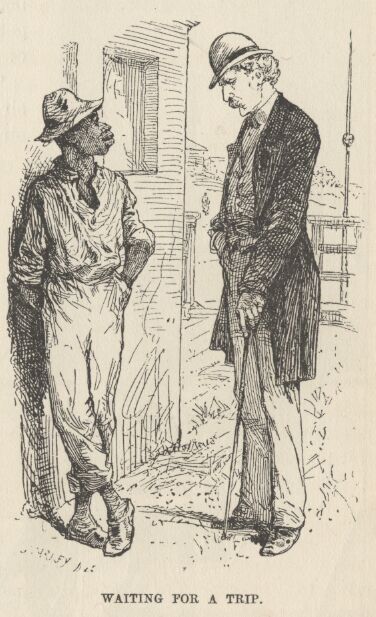
He was uncertain as to when she might get her trip, but thought it might be to-morrow or maybe next day. This would not answer at all; so we had to give up the novelty of sailing down the river on a farm. We had one more arrow in our quiver: a Vicksburg packet, the 'Gold Dust,' was to leave at 5 P.M. We took passage in her for Memphis, and gave up the idea of stopping off here and there, as being impracticable. She was neat, clean, and comfortable. We camped on the boiler deck, and bought some cheap literature to kill time with. The vender was a venerable Irishman with a benevolent face and a tongue that worked easily in the socket, and from him we learned that he had lived in St. Louis thirty-four years and had never been across the river during that period. Then he wandered into a very flowing lecture, filled with classic names and allusions, which was quite wonderful for fluency until the fact became rather apparent that this was not the first time, nor perhaps the fiftieth, that the speech had been delivered. He was a good deal of a character, and much better company than the sappy literature he was selling. A random remark, connecting Irishmen and beer, brought this nugget of information out of him—
He was not sure when the boat might make its trip, but thought it might be tomorrow or perhaps the next day. That would not do at all, so we had to give up the novelty of sailing down the river on a farm. We had one more arrow in our quiver: a Vicksburg packet, the 'Gold Dust,' was due to leave at 5 P.M. We booked passage on her to Memphis and gave up the idea of stopping here and there as impractical. She was neat, clean, and comfortable. We settled on the boiler deck and bought some cheap reading to pass the time. The seller was an elderly Irishman with a kindly face and a tongue that moved easily. He told us he had lived in St. Louis for thirty-four years and had never crossed the river in that time. Then he drifted into a smooth, flowing lecture full of classical names and references. His fluency was remarkable until it became fairly clear that he had given the speech before, perhaps more than fifty times. He was quite a character and much better company than the sentimental literature he sold. A casual remark linking Irishmen and beer brought this nugget of information out of him:
They don't drink it, sir. They can't drink it, sir. Give an Irishman lager for a month, and he's a dead man. An Irishman is lined with copper, and the beer corrodes it. But whiskey polishes the copper and is the saving of him, sir.'
They don't drink it, sir. They can't drink it, sir. Give an Irishman lager for a month, and he'll be dead. An Irishman is lined with copper, and the beer corrodes the copper. But whiskey polishes the copper and saves his life, sir.'
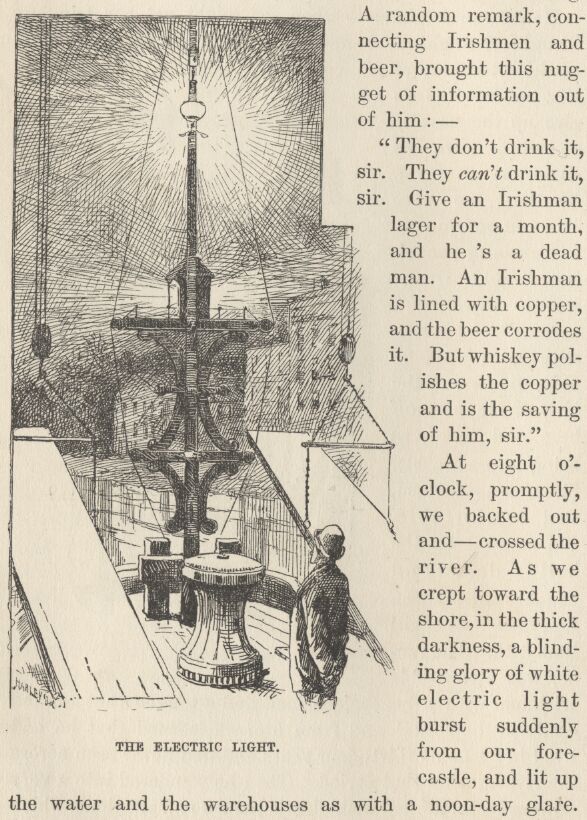
At eight o'clock, promptly, we backed out and crossed the river. As we crept toward the shore, in the thick darkness, a blinding glory of white electric light burst suddenly from our forecastle, and lit up the water and the warehouses as with a noon-day glare. Another big change, this—no more flickering, smoky, pitch-dripping, ineffectual torch-baskets, now: their day is past. Next, instead of calling out a score of hands to man the stage, a couple of men and a hatful of steam lowered it from the derrick where it was suspended, launched it, deposited it in just the right spot, and the whole thing was over and done with before a mate in the olden time could have got his profanity-mill adjusted to begin the preparatory services. Why this new and simple method of handling the stages was not thought of when the first steamboat was built, is a mystery which helps one to realize what a dull-witted slug the average human being is.
At eight o'clock sharp, we backed out and crossed the river. As we crept toward shore in the thick darkness, a blinding white electric light suddenly burst from our forecastle. It lit up the water and warehouses as brightly as midday. This was another big change. The flickering, smoky, useless torch baskets that dripped pitch were gone. Their day was past. Next, instead of calling twenty men to handle the landing stage, a couple of men and a hatful of steam did the job. They lowered the stage from the derrick where it hung, launched it, and put it in exactly the right spot. The whole job was done before a mate in the old days could have got his profanity mill ready to begin the preparations. Why wasn't this simple new way of handling the stages thought of when the first steamboat was built? It's a mystery that helps you realize what a dull-witted slug the average human being is.
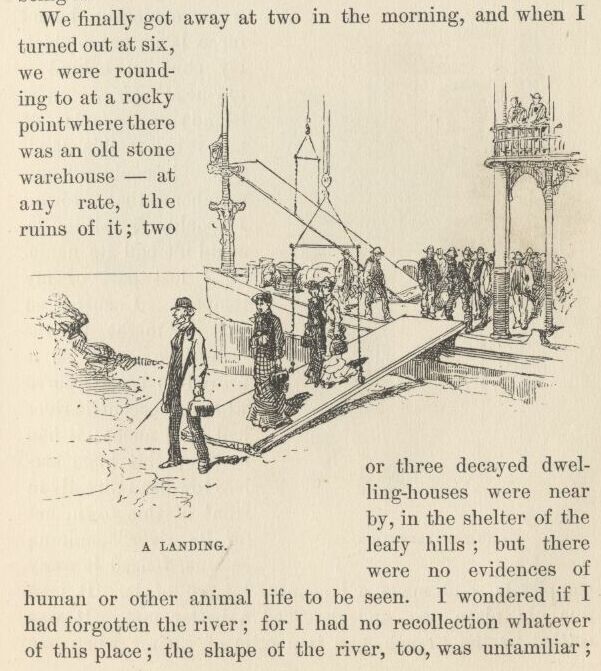
We finally got away at two in the morning, and when I turned out at six, we were rounding to at a rocky point where there was an old stone warehouse—at any rate, the ruins of it; two or three decayed dwelling-houses were near by, in the shelter of the leafy hills; but there were no evidences of human or other animal life to be seen. I wondered if I had forgotten the river; for I had no recollection whatever of this place; the shape of the river, too, was unfamiliar; there was nothing in sight, anywhere, that I could remember ever having seen before. I was surprised, disappointed, and annoyed.
We finally set off at two in the morning. When I got up at six, we were turning in toward a rocky point. An old stone warehouse stood there, or at least its ruins did. Two or three decaying houses stood nearby, sheltered by the leafy hills. But there were no signs of human or animal life. I wondered if I had forgotten the river, because I had no memory of this place at all. The shape of the river was unfamiliar, too. Nowhere in sight was there anything I remembered seeing before. I was surprised, disappointed, and annoyed.
We put ashore a well-dressed lady and gentleman, and two well-dressed, lady-like young girls, together with sundry Russia-leather bags. A strange place for such folk! No carriage was waiting. The party moved off as if they had not expected any, and struck down a winding country road afoot.
We put a well-dressed lady and gentleman ashore, along with two well-dressed, ladylike young girls and several Russia-leather bags. What a strange place for such people! No carriage was waiting. The group walked away as if they had not expected one and headed down a winding country road on foot.
But the mystery was explained when we got under way again; for these people were evidently bound for a large town which lay shut in behind a tow-head (i.e., new island) a couple of miles below this landing. I couldn't remember that town; I couldn't place it, couldn't call its name. So I lost part of my temper. I suspected that it might be St. Genevieve—and so it proved to be. Observe what this eccentric river had been about: it had built up this huge useless tow-head directly in front of this town, cut off its river communications, fenced it away completely, and made a 'country' town of it. It is a fine old place, too, and deserved a better fate. It was settled by the French, and is a relic of a time when one could travel from the mouths of the Mississippi to Quebec and be on French territory and under French rule all the way.
But the mystery was explained when we got moving again. These people were evidently headed for a large town hidden behind a tow-head, or new island. It lay a couple of miles below this landing. I couldn't remember the town. I couldn't place it or recall its name. So I lost some of my temper. I suspected it might be St. Genevieve, and it turned out I was right. Look what this eccentric river had done: it had built this huge, useless tow-head right in front of the town. The tow-head had cut off the town's access to the river, fenced it in completely, and made it a 'country' town. It's a fine old place, too, and deserved a better fate. The French settled it, and it is a relic of another time. Back then, you could travel from the mouths of the Mississippi to Quebec and be on French territory and under French rule all the way.
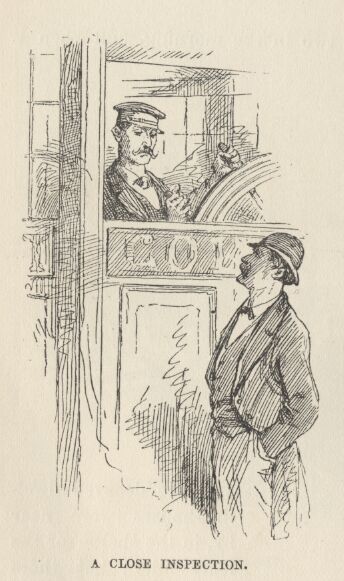
Presently I ascended to the hurricane deck and cast a longing glance toward the pilot-house.
Soon I went up to the hurricane deck and looked longingly toward the pilot house.