Chapter 12
Measuring the Water's Depth
WHEN the river is very low, and one's steamboat is 'drawing all the water' there is in the channel,—or a few inches more, as was often the case in the old times,—one must be painfully circumspect in his piloting. We used to have to 'sound' a number of particularly bad places almost every trip when the river was at a very low stage.
When the river is very low and a steamboat is 'drawing all the water' in the channel, piloting requires painful care. In the old days, a steamboat often drew a few inches more than the water available. When the river was very low, we used to have to 'sound', or measure the depth at, several particularly bad spots on almost every trip.
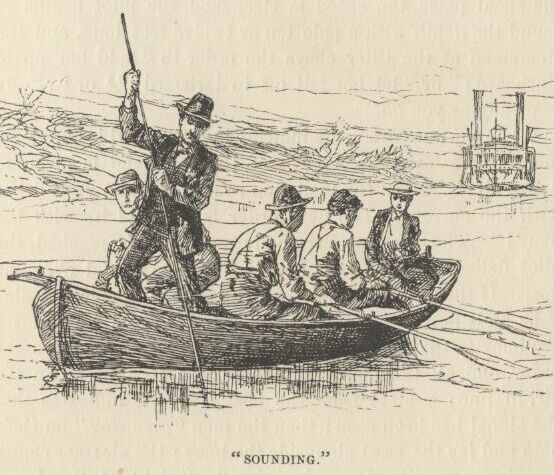
Sounding is done in this way. The boat ties up at the shore, just above the shoal crossing; the pilot not on watch takes his 'cub' or steersman and a picked crew of men (sometimes an officer also), and goes out in the yawl—provided the boat has not that rare and sumptuous luxury, a regularly-devised 'sounding-boat'—and proceeds to hunt for the best water, the pilot on duty watching his movements through a spy-glass, meantime, and in some instances assisting by signals of the boat's whistle, signifying 'try higher up' or 'try lower down;' for the surface of the water, like an oil-painting, is more expressive and intelligible when inspected from a little distance than very close at hand. The whistle signals are seldom necessary, however; never, perhaps, except when the wind confuses the significant ripples upon the water's surface. When the yawl has reached the shoal place, the speed is slackened, the pilot begins to sound the depth with a pole ten or twelve feet long, and the steersman at the tiller obeys the order to 'hold her up to starboard;' or, 'let her fall off to larboard;'{footnote [The term 'larboard' is never used at sea now, to signify the left hand; but was always used on the river in my time]} or 'steady—steady as you go.'
Sounding is done this way. The boat ties up at the shore, just above the shallow crossing. The pilot who is off watch takes his 'cub' or steersman and a handpicked crew of men. Sometimes an officer goes too. They go out in the yawl, unless the boat has that rare and lavish luxury, a specially designed 'sounding-boat.' The crew then searches for the best water. Meanwhile, the pilot on duty watches their movements through a spyglass. Sometimes he helps by signaling with the boat's whistle, meaning 'try higher up' or 'try lower down.' The surface of the water, like an oil painting, is more expressive and easier to read from a little distance than close up. Whistle signals are seldom needed, though. Perhaps they are never needed except when the wind disturbs the telling ripples on the water's surface. When the yawl reaches the shallow place, it slows down. The pilot begins measuring the depth with a pole ten or twelve feet long. The steersman at the tiller follows orders to 'hold her up to starboard,' or 'let her fall off to larboard,'{footnote [The term 'larboard' is no longer used at sea to mean the left side, but it was always used on the river in my time]} or 'steady, steady as you go.'
When the measurements indicate that the yawl is approaching the shoalest part of the reef, the command is given to 'ease all!' Then the men stop rowing and the yawl drifts with the current. The next order is, 'Stand by with the buoy!' The moment the shallowest point is reached, the pilot delivers the order, 'Let go the buoy!' and over she goes. If the pilot is not satisfied, he sounds the place again; if he finds better water higher up or lower down, he removes the buoy to that place. Being finally satisfied, he gives the order, and all the men stand their oars straight up in the air, in line; a blast from the boat's whistle indicates that the signal has been seen; then the men 'give way' on their oars and lay the yawl alongside the buoy; the steamer comes creeping carefully down, is pointed straight at the buoy, husbands her power for the coming struggle, and presently, at the critical moment, turns on all her steam and goes grinding and wallowing over the buoy and the sand, and gains the deep water beyond. Or maybe she doesn't; maybe she 'strikes and swings.' Then she has to while away several hours (or days) sparring herself off.
When the measurements show that the yawl is approaching the shallowest part of the reef, the command comes: 'ease all!' The men stop rowing, and the yawl drifts with the current. The next order is, 'Stand by with the buoy!' The moment the yawl reaches the shallowest point, the pilot orders, 'Let go the buoy!' And over it goes. If the pilot is not satisfied, he measures the depth there again. If he finds deeper water upstream or downstream, he moves the buoy to that spot. Once he is satisfied, he gives the order, and all the men hold their oars straight up in a line. A blast from the steamer's whistle tells them the signal has been seen. Then the men 'give way' on their oars and bring the yawl alongside the buoy. The steamer creeps carefully downstream, aimed straight at the buoy. It saves its power for the coming struggle. Then, at the critical moment, it turns on all its steam. It grinds and wallows over the buoy and the sand, and reaches the deep water beyond. Or maybe it doesn't. Maybe it 'strikes and swings.' Then it has to spend several hours (or days) pushing itself off with poles.
Sometimes a buoy is not laid at all, but the yawl goes ahead, hunting the best water, and the steamer follows along in its wake. Often there is a deal of fun and excitement about sounding, especially if it is a glorious summer day, or a blustering night. But in winter the cold and the peril take most of the fun out of it.
Sometimes no buoy is placed at all. Instead, the yawl goes ahead, looking for the best water, and the steamer follows in its wake. Taking soundings is often great fun and exciting, especially on a glorious summer day or a stormy night. But in winter, the cold and danger take most of the fun out of it.
A buoy is nothing but a board four or five feet long, with one end turned up; it is a reversed school-house bench, with one of the supports left and the other removed. It is anchored on the shoalest part of the reef by a rope with a heavy stone made fast to the end of it. But for the resistance of the turned-up end of the reversed bench, the current would pull the buoy under water. At night, a paper lantern with a candle in it is fastened on top of the buoy, and this can be seen a mile or more, a little glimmering spark in the waste of blackness.
A buoy is simply a board four or five feet long, with one end turned up. It looks like an upside-down schoolhouse bench, with one support left on and the other removed. It is anchored at the shallowest part of the reef by a rope with a heavy stone tied to the end. Without the resistance of the turned-up end, the current would pull the buoy underwater. At night, a paper lantern with a candle inside is fastened to the top of the buoy. The lantern can be seen a mile or more away, a tiny glimmering spark in the vast darkness.
Nothing delights a cub so much as an opportunity to go out sounding. There is such an air of adventure about it; often there is danger; it is so gaudy and man-of-war-like to sit up in the stern-sheets and steer a swift yawl; there is something fine about the exultant spring of the boat when an experienced old sailor crew throw their souls into the oars; it is lovely to see the white foam stream away from the bows; there is music in the rush of the water; it is deliciously exhilarating, in summer, to go speeding over the breezy expanses of the river when the world of wavelets is dancing in the sun. It is such grandeur, too, to the cub, to get a chance to give an order; for often the pilot will simply say, 'Let her go about!' and leave the rest to the cub, who instantly cries, in his sternest tone of command, 'Ease starboard! Strong on the larboard! Starboard give way! With a will, men!' The cub enjoys sounding for the further reason that the eyes of the passengers are watching all the yawl's movements with absorbing interest if the time be daylight; and if it be night he knows that those same wondering eyes are fastened upon the yawl's lantern as it glides out into the gloom and dims away in the remote distance.
Nothing delights a trainee pilot so much as a chance to go out measuring the river’s depth. The job has an air of adventure, and often there is danger. Sitting in the stern of a swift yawl and steering feels so grand and warlike. There is something wonderful about the boat’s eager leap when a crew of experienced old sailors put their souls into rowing. It is lovely to watch white foam stream away from the bow. There is music in the rush of the water. In summer, it is thrilling to speed across the breezy stretches of river, with countless little waves dancing in the sun. It also feels magnificent to the trainee to have a chance to give an order. Often the pilot will simply say, 'Turn her around!' and leave the rest to the trainee. The trainee instantly cries, in his sternest voice of command, 'Ease up on the right! Pull hard on the left! Right side, row! Put your backs into it, men!' The trainee also enjoys measuring the depth because, in daylight, the passengers watch every movement of the yawl with intense interest. At night, he knows those same wondering eyes are fixed on the yawl’s lantern. They watch as it glides into the darkness and grows dim in the distance.
One trip a pretty girl of sixteen spent her time in our pilot-house with her uncle and aunt, every day and all day long. I fell in love with her. So did Mr. Thornburg's cub, Tom G——. Tom and I had been bosom friends until this time; but now a coolness began to arise. I told the girl a good many of my river adventures, and made myself out a good deal of a hero; Tom tried to make himself appear to be a hero, too, and succeeded to some extent, but then he always had a way of embroidering. However, virtue is its own reward, so I was a barely perceptible trifle ahead in the contest. About this time something happened which promised handsomely for me: the pilots decided to sound the crossing at the head of 21. This would occur about nine or ten o'clock at night, when the passengers would be still up; it would be Mr. Thornburg's watch, therefore my chief would have to do the sounding. We had a perfect love of a sounding-boat—long, trim, graceful, and as fleet as a greyhound; her thwarts were cushioned; she carried twelve oarsmen; one of the mates was always sent in her to transmit orders to her crew, for ours was a steamer where no end of 'style' was put on.
On one trip, a pretty sixteen-year-old girl spent every day, all day, in our pilot-house with her uncle and aunt. I fell in love with her. So did Mr. Thornburg's trainee, Tom G——. Tom and I had been close friends until then, but now we began to grow distant. I told the girl many stories about my adventures on the river and made myself out to be quite a hero. Tom tried to make himself look like a hero too, and succeeded to some extent. But he always had a way of embellishing his stories. Still, virtue is its own reward, so I was a barely noticeable bit ahead in the contest. Around this time, something happened that looked very promising for me. The pilots decided to measure the water's depth at the crossing at the head of 21. They would do it around nine or ten at night, while the passengers were still up. It would be Mr. Thornburg's watch, so my chief would have to take the measurements. We had a lovely sounding boat, long, sleek, graceful, and as fast as a greyhound. Its seats were cushioned, and it carried twelve oarsmen. One of the mates was always sent along to pass orders to the crew, because our steamer put on no end of 'style'.
We tied up at the shore above 21, and got ready. It was a foul night, and the river was so wide, there, that a landsman's uneducated eyes could discern no opposite shore through such a gloom. The passengers were alert and interested; everything was satisfactory. As I hurried through the engine-room, picturesquely gotten up in storm toggery, I met Tom, and could not forbear delivering myself of a mean speech—
We tied up at the shore above 21 and got ready. It was a stormy night, and the river was very wide there. In that darkness, a landsman’s untrained eyes could not make out the opposite shore. The passengers were alert and interested. Everything was satisfactory. As I hurried through the engine room, dressed in picturesque storm gear, I met Tom. I could not resist making a mean remark:
'Ain't you glad you don't have to go out sounding?'
'Aren't you glad you don't have to go out measuring the water's depth?'
Tom was passing on, but he quickly turned, and said—
Tom was walking on, but he quickly turned and said:
'Now just for that, you can go and get the sounding-pole yourself. I was going after it, but I'd see you in Halifax, now, before I'd do it.'
'Now, just for that, you can get the sounding pole yourself. I was going to get it, but now I'd see you in Halifax first.'
'Who wants you to get it? I don't. It's in the sounding-boat.'
'Who wants you to get it? I don't. It's in the sounding boat.'
'It ain't, either. It's been new-painted; and it's been up on the ladies' cabin guards two days, drying.'
'It isn't, either. It's been freshly painted, and it's been drying on the ladies' cabin guards for two days.'
I flew back, and shortly arrived among the crowd of watching and wondering ladies just in time to hear the command:
I rushed back and soon reached the crowd of women, who were watching and wondering. I arrived just in time to hear the command:
'Give way, men!'
'Row, men!'
I looked over, and there was the gallant sounding-boat booming away, the unprincipled Tom presiding at the tiller, and my chief sitting by him with the sounding-pole which I had been sent on a fool's errand to fetch. Then that young girl said to me—
I looked over and saw the splendid sounding-boat rushing away. The unprincipled Tom was at the tiller, and my chief sat beside him with the sounding-pole. I had been sent on a fool’s errand to fetch that very pole. Then that young girl said to me:
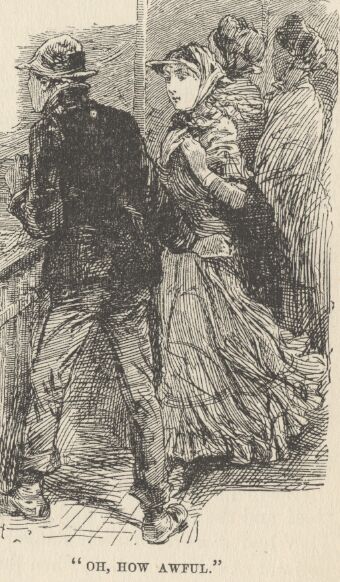
'Oh, how awful to have to go out in that little boat on such a night! Do you think there is any danger?'
'Oh, how awful to have to go out in that little boat on a night like this! Do you think it is dangerous?'
I would rather have been stabbed. I went off, full of venom, to help in the pilot-house. By and by the boat's lantern disappeared, and after an interval a wee spark glimmered upon the face of the water a mile away. Mr. Thornburg blew the whistle, in acknowledgment, backed the steamer out, and made for it. We flew along for a while, then slackened steam and went cautiously gliding toward the spark. Presently Mr. Thornburg exclaimed—
I would rather have been stabbed. I went off, seething with anger, to help in the pilot house. After a while, the boat’s lantern disappeared. A little later, a tiny spark glimmered on the water a mile away. Mr. Thornburg blew the whistle to acknowledge it, backed the steamer out, and headed toward the spark. We raced along for a while. Then we slowed the steamer and glided cautiously toward the spark. Soon Mr. Thornburg exclaimed:
'Hello, the buoy-lantern's out!'
'Hey, the buoy light is out!'
He stopped the engines. A moment or two later he said—
He stopped the engines. A moment or two later, he said:
'Why, there it is again!'
'Oh, there it is again!'
So he came ahead on the engines once more, and rang for the leads. Gradually the water shoaled up, and then began to deepen again! Mr. Thornburg muttered—
So he started the engines forward again and rang for the water depth to be measured. Gradually, the water grew shallower, then began to deepen again! Mr. Thornburg muttered:
'Well, I don't understand this. I believe that buoy has drifted off the reef. Seems to be a little too far to the left. No matter, it is safest to run over it anyhow.'
'Well, I don't understand this. I think that buoy has drifted off the reef. It seems a little too far to the left. Never mind, it's safest to run over it anyway.'
So, in that solid world of darkness we went creeping down on the light. Just as our bows were in the act of plowing over it, Mr. Thornburg seized the bell-ropes, rang a startling peal, and exclaimed—
So, surrounded by complete darkness, we crept toward the light. Just as our bow was about to pass over the light, Mr. Thornburg grabbed the bell ropes. He rang a startling peal and exclaimed:
'My soul, it's the sounding-boat!'
'Oh my, it's the sounding boat!'
A sudden chorus of wild alarms burst out far below—a pause—and then the sound of grinding and crashing followed. Mr. Thornburg exclaimed—
A sudden chorus of frantic alarms rang out far below. There was a pause, and then came the sound of grinding and crashing. Mr. Thornburg exclaimed:
'There! the paddle-wheel has ground the sounding-boat to lucifer matches! Run! See who is killed!'
'Look! The paddle wheel has smashed the sounding boat to splinters! Run! See who has been killed!'
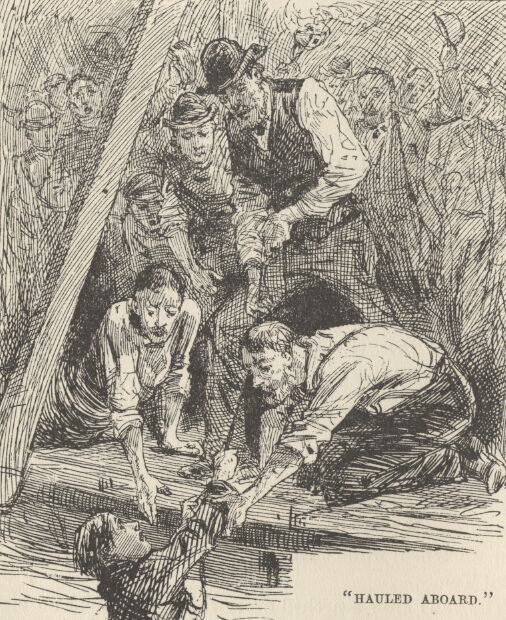
I was on the main deck in the twinkling of an eye. My chief and the third mate and nearly all the men were safe. They had discovered their danger when it was too late to pull out of the way; then, when the great guards overshadowed them a moment later, they were prepared and knew what to do; at my chiefs order they sprang at the right instant, seized the guard, and were hauled aboard. The next moment the sounding-yawl swept aft to the wheel and was struck and splintered to atoms. Two of the men and the cub Tom, were missing—a fact which spread like wildfire over the boat. The passengers came flocking to the forward gangway, ladies and all, anxious-eyed, white-faced, and talked in awed voices of the dreadful thing. And often and again I heard them say, 'Poor fellows! poor boy, poor boy!'
I was on the main deck in an instant. My chief, the third mate, and nearly all the men were safe. They had seen the danger too late to row out of the way. A moment later, the steamboat's great guards loomed over them. By then, they were ready and knew what to do. At my chief's order, they jumped at just the right moment, grabbed the guard, and were hauled aboard. The next moment, the sounding-yawl swept back to the wheel, where it was struck and smashed to pieces. Two of the men and the cub Tom were missing. The news spread like wildfire across the boat. The passengers, including the ladies, flocked to the forward gangway. Their eyes were anxious and their faces pale as they spoke in hushed voices about the dreadful event. Again and again, I heard them say, 'Poor fellows! Poor boy, poor boy!'
By this time the boat's yawl was manned and away, to search for the missing. Now a faint call was heard, off to the left. The yawl had disappeared in the other direction. Half the people rushed to one side to encourage the swimmer with their shouts; the other half rushed the other way to shriek to the yawl to turn about. By the callings, the swimmer was approaching, but some said the sound showed failing strength. The crowd massed themselves against the boiler-deck railings, leaning over and staring into the gloom; and every faint and fainter cry wrung from them such words as, 'Ah, poor fellow, poor fellow! is there no way to save him?'
By now, the boat’s yawl had been crewed and sent out to search for the missing. Then a faint call came from the left. The yawl had disappeared in the other direction. Half the people rushed to one side, shouting encouragement to the swimmer. The other half rushed the other way, shrieking for the yawl to turn around. From the calls, the swimmer seemed to be getting closer. But some said the sound showed that he was losing strength. The crowd gathered at the boiler-deck railings, leaning over and staring into the darkness. Each cry grew fainter, and the crowd cried out, ‘Ah, poor fellow, poor fellow! Is there no way to save him?’
But still the cries held out, and drew nearer, and presently the voice said pluckily—
But the cries continued and drew nearer. Then the voice said bravely:
'I can make it! Stand by with a rope!'
'I can make it! Have a rope ready!'
What a rousing cheer they gave him! The chief mate took his stand in the glare of a torch-basket, a coil of rope in his hand, and his men grouped about him. The next moment the swimmer's face appeared in the circle of light, and in another one the owner of it was hauled aboard, limp and drenched, while cheer on cheer went up. It was that devil Tom.
What a loud cheer they gave him! The chief mate stood in the glare of a torch-basket, holding a coil of rope. His men gathered around him. The next moment, the swimmer's face appeared in the circle of light. A moment later, they hauled him aboard, limp and drenched, as the cheers kept coming. It was that devil Tom.
The yawl crew searched everywhere, but found no sign of the two men. They probably failed to catch the guard, tumbled back, and were struck by the wheel and killed. Tom had never jumped for the guard at all, but had plunged head-first into the river and dived under the wheel. It was nothing; I could have done it easy enough, and I said so; but everybody went on just the same, making a wonderful to do over that ass, as if he had done something great. That girl couldn't seem to have enough of that pitiful 'hero' the rest of the trip; but little I cared; I loathed her, any way.
The yawl crew searched everywhere but found no sign of the two men. They probably failed to grab the guard, fell back, and were struck and killed by the wheel. Tom had never jumped for the guard at all. He had plunged headfirst into the river and dived under the wheel. It was nothing. I could have done it easily, and I said so. But everyone kept making a big fuss over that idiot, as if he had done something great. That girl couldn't seem to get enough of that pitiful 'hero' for the rest of the trip. But I didn't care. I hated her anyway.
The way we came to mistake the sounding-boat's lantern for the buoy-light was this. My chief said that after laying the buoy he fell away and watched it till it seemed to be secure; then he took up a position a hundred yards below it and a little to one side of the steamer's course, headed the sounding-boat up-stream, and waited. Having to wait some time, he and the officer got to talking; he looked up when he judged that the steamer was about on the reef; saw that the buoy was gone, but supposed that the steamer had already run over it; he went on with his talk; he noticed that the steamer was getting very close on him, but that was the correct thing; it was her business to shave him closely, for convenience in taking him aboard; he was expecting her to sheer off, until the last moment; then it flashed upon him that she was trying to run him down, mistaking his lantern for the buoy-light; so he sang out, 'Stand by to spring for the guard, men!' and the next instant the jump was made.
Here is how we came to mistake the sounding boat's lantern for the buoy light. My chief said that after placing the buoy, he moved away and watched until it seemed secure. Then he took up a position a hundred yards downstream, a little to one side of the steamer's course. He pointed the sounding boat upstream and waited. Since he had to wait for some time, he and the officer began talking. When he judged that the steamer was about to reach the reef, he looked up. He saw that the buoy was gone, but assumed the steamer had already passed over it. So he continued talking. He noticed that the steamer was getting very close to him, but that was as it should be. The steamer was supposed to pass close by so he could easily be taken aboard. He expected the steamer to turn away until the last moment. Then he suddenly realized that it was trying to run him down, mistaking his lantern for the buoy light. So he shouted, 'Get ready to jump for the guard, men!' The next instant, they jumped.