Chapter 1
The River and Its History
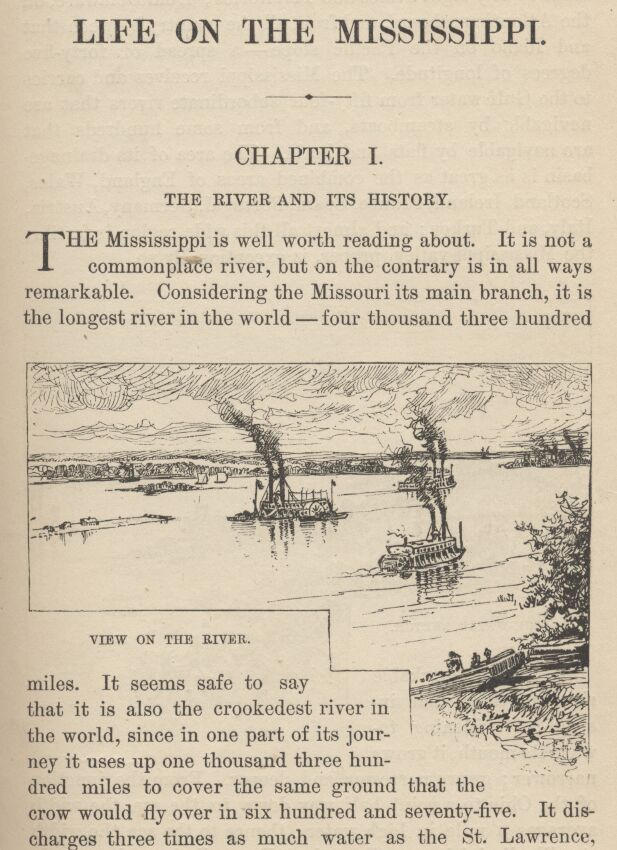
THE Mississippi is well worth reading about. It is not a commonplace river, but on the contrary is in all ways remarkable. Considering the Missouri its main branch, it is the longest river in the world—four thousand three hundred miles. It seems safe to say that it is also the crookedest river in the world, since in one part of its journey it uses up one thousand three hundred miles to cover the same ground that the crow would fly over in six hundred and seventy-five. It discharges three times as much water as the St. Lawrence, twenty-five times as much as the Rhine, and three hundred and thirty-eight times as much as the Thames. No other river has so vast a drainage-basin: it draws its water supply from twenty-eight States and Territories; from Delaware, on the Atlantic seaboard, and from all the country between that and Idaho on the Pacific slope—a spread of forty-five degrees of longitude. The Mississippi receives and carries to the Gulf water from fifty-four subordinate rivers that are navigable by steamboats, and from some hundreds that are navigable by flats and keels. The area of its drainage-basin is as great as the combined areas of England, Wales, Scotland, Ireland, France, Spain, Portugal, Germany, Austria, Italy, and Turkey; and almost all this wide region is fertile; the Mississippi valley, proper, is exceptionally so.
The Mississippi is well worth reading about. It is no ordinary river. On the contrary, it is remarkable in every way. If the Missouri is considered its main branch, the Mississippi is the longest river in the world, at 4,300 miles. It seems safe to say it is also the crookedest river in the world. Along one stretch, it travels 1,300 miles to cover 675 miles as the crow flies. It discharges three times as much water as the St. Lawrence, 25 times as much as the Rhine, and 338 times as much as the Thames. No other river has such a vast drainage basin. The Mississippi draws water from 28 States and Territories. These extend from Delaware on the Atlantic coast to Idaho on the Pacific slope, a span of 45 degrees of longitude. The Mississippi receives water from 54 smaller rivers that steamboats can navigate and carries it to the Gulf. It also receives water from hundreds of rivers that flatboats and keelboats can navigate. Its drainage basin is as large as England, Wales, Scotland, Ireland, France, Spain, Portugal, Germany, Austria, Italy, and Turkey combined. Almost all this vast region is fertile. The Mississippi valley itself is exceptionally fertile.
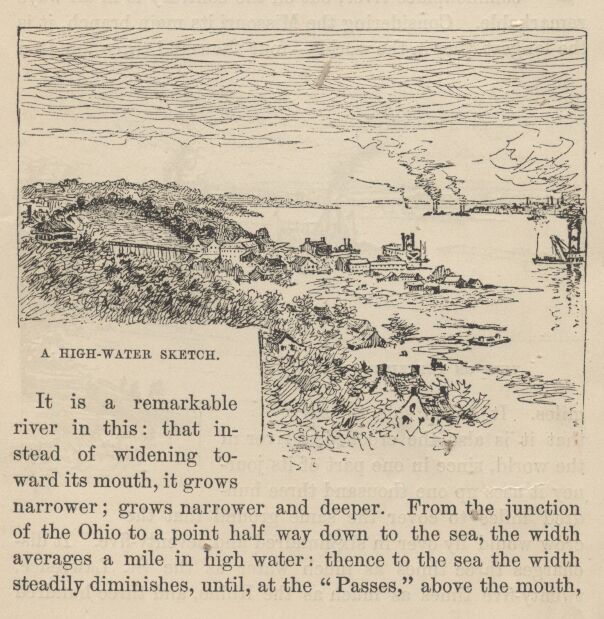
It is a remarkable river in this: that instead of widening toward its mouth, it grows narrower; grows narrower and deeper. From the junction of the Ohio to a point half way down to the sea, the width averages a mile in high water: thence to the sea the width steadily diminishes, until, at the 'Passes,' above the mouth, it is but little over half a mile. At the junction of the Ohio the Mississippi's depth is eighty-seven feet; the depth increases gradually, reaching one hundred and twenty-nine just above the mouth.
This river is remarkable because it grows narrower toward its mouth instead of wider. It also grows deeper. From where the Ohio joins the Mississippi to a point halfway to the sea, the river averages a mile wide at high water. From there, it steadily narrows. At the 'Passes,' above the mouth, it is only a little over half a mile wide. Where the Ohio joins the Mississippi, the river is eighty-seven feet deep. Its depth gradually increases, reaching one hundred and twenty-nine feet just above the mouth.
The difference in rise and fall is also remarkable—not in the upper, but in the lower river. The rise is tolerably uniform down to Natchez (three hundred and sixty miles above the mouth)—about fifty feet. But at Bayou La Fourche the river rises only twenty-four feet; at New Orleans only fifteen, and just above the mouth only two and one half.
The difference in how much the river rises and falls is also remarkable, not in the upper river, but in the lower river. The rise is fairly uniform down to Natchez, about fifty feet. Natchez is 360 miles above the mouth. But at Bayou La Fourche, the river rises only 24 feet. At New Orleans, it rises only 15 feet, and just above the mouth, only two and a half feet.
An article in the New Orleans 'Times-Democrat,' based upon reports of able engineers, states that the river annually empties four hundred and six million tons of mud into the Gulf of Mexico—which brings to mind Captain Marryat's rude name for the Mississippi—'the Great Sewer.' This mud, solidified, would make a mass a mile square and two hundred and forty-one feet high.
An article in the New Orleans 'Times-Democrat' draws on reports by skilled engineers. It says the river empties 406 million tons of mud into the Gulf of Mexico each year. That brings to mind Captain Marryat's rude name for the Mississippi, 'the Great Sewer.' If solidified, this mud would form a mass one mile square and 241 feet high.
The mud deposit gradually extends the land—but only gradually; it has extended it not quite a third of a mile in the two hundred years which have elapsed since the river took its place in history. The belief of the scientific people is, that the mouth used to be at Baton Rouge, where the hills cease, and that the two hundred miles of land between there and the Gulf was built by the river. This gives us the age of that piece of country, without any trouble at all—one hundred and twenty thousand years. Yet it is much the youthfullest batch of country that lies around there anywhere.
Mud deposits gradually extend the land, but only gradually. In the two hundred years since the river entered recorded history, the land has grown by less than a third of a mile. Scientists believe the river’s mouth was once at Baton Rouge, where the hills end. They believe the river built the two hundred miles of land between Baton Rouge and the Gulf. That tells us the age of that stretch of land with no trouble at all: one hundred and twenty thousand years. Yet it is by far the youngest piece of land anywhere around there.
The Mississippi is remarkable in still another way—its disposition to make prodigious jumps by cutting through narrow necks of land, and thus straightening and shortening itself. More than once it has shortened itself thirty miles at a single jump! These cut-offs have had curious effects: they have thrown several river towns out into the rural districts, and built up sand bars and forests in front of them. The town of Delta used to be three miles below Vicksburg: a recent cutoff has radically changed the position, and Delta is now two miles above Vicksburg.
The Mississippi is remarkable in another way. It makes enormous jumps by cutting through narrow strips of land, making its course straighter and shorter. More than once, the river has shortened itself by thirty miles in a single jump! These cutoffs have had curious effects. They have left several river towns out in the countryside, with sandbars and forests in front of them. The town of Delta used to be three miles below Vicksburg. A recent cutoff has radically changed its position, and Delta is now two miles above Vicksburg.
Both of these river towns have been retired to the country by that cut-off. A cut-off plays havoc with boundary lines and jurisdictions: for instance, a man is living in the State of Mississippi to-day, a cut-off occurs to-night, and to-morrow the man finds himself and his land over on the other side of the river, within the boundaries and subject to the laws of the State of Louisiana! Such a thing, happening in the upper river in the old times, could have transferred a slave from Missouri to Illinois and made a free man of him.
That cut-off has left both of these river towns stranded in the countryside. A cut-off plays havoc with boundaries and jurisdictions. For example, a man lives in the State of Mississippi today. A cut-off occurs tonight. Tomorrow, he finds himself and his land on the other side of the river. He is now within the boundaries of Louisiana and subject to its laws! In the old days, a cut-off on the upper river could have transferred an enslaved man from Missouri to Illinois and made him free.
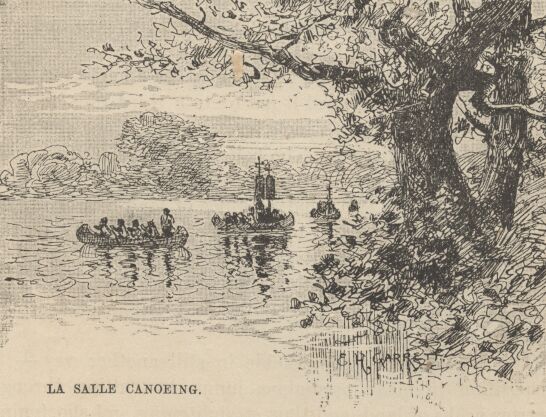
The Mississippi does not alter its locality by cut-offs alone: it is always changing its habitat bodily—is always moving bodily sidewise. At Hard Times, La., the river is two miles west of the region it used to occupy. As a result, the original site of that settlement is not now in Louisiana at all, but on the other side of the river, in the State of Mississippi. Nearly the whole of that one thousand three hundred miles of old mississippi river which la salle floated down in his canoes, two hundred years ago, is good solid dry ground now. The river lies to the right of it, in places, and to the left of it in other places.
The Mississippi does not change its location through cutoffs alone. The whole river is always moving bodily sideways. At Hard Times, La., the river is two miles west of where it used to be. As a result, the original site of the settlement is no longer in Louisiana. It is on the other side of the river, in the State of Mississippi. Nearly all of the 1,300 miles of the old Mississippi River that La Salle floated down in his canoes 200 years ago is now solid, dry ground. The river lies to the right of its old course in some places and to the left in others.
Although the Mississippi's mud builds land but slowly, down at the mouth, where the Gulfs billows interfere with its work, it builds fast enough in better protected regions higher up: for instance, Prophet's Island contained one thousand five hundred acres of land thirty years ago; since then the river has added seven hundred acres to it.
The Mississippi's mud builds land slowly at the river's mouth, where waves from the Gulf interfere with its work. But it builds land quickly enough in better protected areas farther upstream. For example, Prophet's Island contained 1,500 acres of land thirty years ago. Since then, the river has added 700 acres to it.
But enough of these examples of the mighty stream's eccentricities for the present—I will give a few more of them further along in the book.
But enough examples of the mighty river's quirks for now. I'll share a few more later in the book.
Let us drop the Mississippi's physical history, and say a word about its historical history—so to speak. We can glance briefly at its slumbrous first epoch in a couple of short chapters; at its second and wider-awake epoch in a couple more; at its flushest and widest-awake epoch in a good many succeeding chapters; and then talk about its comparatively tranquil present epoch in what shall be left of the book.
Let us leave the Mississippi's physical history and say a little about its historical history, so to speak. We can briefly cover its sleepy first era in a couple of short chapters. Then we can cover its more awake second era in a couple more. Its richest and most wide-awake era will take many chapters after that. Finally, we can discuss its comparatively peaceful present era in the rest of the book.
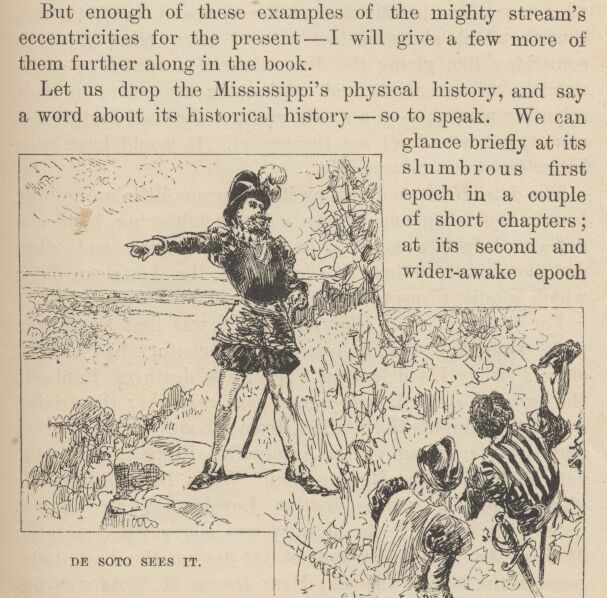
The world and the books are so accustomed to use, and over-use, the word 'new' in connection with our country, that we early get and permanently retain the impression that there is nothing old about it. We do of course know that there are several comparatively old dates in American history, but the mere figures convey to our minds no just idea, no distinct realization, of the stretch of time which they represent. To say that De Soto, the first white man who ever saw the Mississippi River, saw it in 1542, is a remark which states a fact without interpreting it: it is something like giving the dimensions of a sunset by astronomical measurements, and cataloguing the colors by their scientific names;—as a result, you get the bald fact of the sunset, but you don't see the sunset. It would have been better to paint a picture of it.
The world and its books use and overuse the word 'new' when describing our country. So early in life, we get the lasting impression that there is nothing old about it. Of course, we know that American history has several comparatively old dates. But the numbers alone give us no true sense of how much time they represent. Take the fact that De Soto, the first white man ever to see the Mississippi River, saw it in 1542. That statement tells us a fact without helping us understand it. It is like giving the dimensions of a sunset in astronomical measurements and listing its colors by their scientific names. As a result, you get the bare fact of the sunset, but you don't see the sunset. It would have been better to paint a picture of it.
The date 1542, standing by itself, means little or nothing to us; but when one groups a few neighboring historical dates and facts around it, he adds perspective and color, and then realizes that this is one of the American dates which is quite respectable for age.
The date 1542, by itself, means little or nothing to us. But put a few historical dates and facts from around that time beside it, and it gains perspective and color. Then we realize that 1542 is a quite respectable age for an American date.
For instance, when the Mississippi was first seen by a white man, less than a quarter of a century had elapsed since Francis I.'s defeat at Pavia; the death of Raphael; the death of Bayard, Sans Peur Et Sans Reproche; the driving out of the Knights-Hospitallers from Rhodes by the Turks; and the placarding of the Ninety-Five Propositions,—the act which began the Reformation. When De Soto took his glimpse of the river, Ignatius Loyola was an obscure name; the order of the Jesuits was not yet a year old; Michael Angelo's paint was not yet dry on the Last Judgment in the Sistine Chapel; Mary Queen of Scots was not yet born, but would be before the year closed. Catherine de Medici was a child; Elizabeth of England was not yet in her teens; Calvin, Benvenuto Cellini, and the Emperor Charles V. were at the top of their fame, and each was manufacturing history after his own peculiar fashion; Margaret of Navarre was writing the 'Heptameron' and some religious books,—the first survives, the others are forgotten, wit and indelicacy being sometimes better literature preservers than holiness; lax court morals and the absurd chivalry business were in full feather, and the joust and the tournament were the frequent pastime of titled fine gentlemen who could fight better than they could spell, while religion was the passion of their ladies, and classifying their offspring into children of full rank and children by brevet their pastime.
For example, when a white man first saw the Mississippi, less than a quarter century had passed since several momentous events. Francis I. had been defeated at Pavia, Raphael had died, and so had Bayard, Sans Peur Et Sans Reproche. The Turks had driven the Knights-Hospitallers out of Rhodes. The Ninety-Five Propositions had been posted, beginning the Reformation. When De Soto glimpsed the river, Ignatius Loyola was an obscure name. The Jesuit order was not yet a year old. Michael Angelo's paint on the Last Judgment in the Sistine Chapel was not yet dry. Mary Queen of Scots had not yet been born, but she would be before the year ended. Catherine de Medici was a child, and Elizabeth of England was not yet a teenager. Calvin, Benvenuto Cellini, and the Emperor Charles V. were at the height of their fame. Each was making history in his own peculiar way. Margaret of Navarre was writing the 'Heptameron' and some religious books. The 'Heptameron' survives, but the religious books are forgotten. Wit and indecency sometimes preserve literature better than holiness. Loose morals at court and the absurd business of chivalry were in full flower. Titled gentlemen often amused themselves with jousts and tournaments. They could fight better than they could spell. Their ladies were passionate about religion and amused themselves by sorting their children into those of full rank and those of honorary rank.
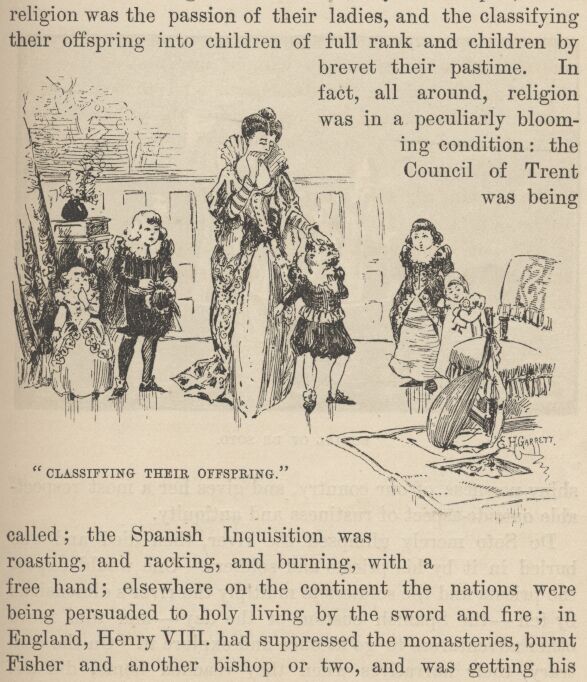
In fact, all around, religion was in a peculiarly blooming condition: the Council of Trent was being called; the Spanish Inquisition was roasting, and racking, and burning, with a free hand; elsewhere on the continent the nations were being persuaded to holy living by the sword and fire; in England, Henry VIII. had suppressed the monasteries, burnt Fisher and another bishop or two, and was getting his English reformation and his harem effectively started. When De Soto stood on the banks of the Mississippi, it was still two years before Luther's death; eleven years before the burning of Servetus; thirty years before the St. Bartholomew slaughter; Rabelais was not yet published; 'Don Quixote' was not yet written; Shakespeare was not yet born; a hundred long years must still elapse before Englishmen would hear the name of Oliver Cromwell.
In fact, religion was in an especially flourishing condition all around. The Council of Trent was being called. The Spanish Inquisition was freely roasting, racking, and burning people. Elsewhere on the continent, nations were being persuaded to live holy lives by the sword and fire. In England, Henry VIII had suppressed the monasteries and burned Fisher and another bishop or two. He was also getting his English reformation and his harem off to an effective start. When De Soto stood on the banks of the Mississippi, Luther would live for another two years. The burning of Servetus was eleven years away, and the St. Bartholomew slaughter was thirty years away. Rabelais had not yet been published. 'Don Quixote' had not yet been written. Shakespeare had not yet been born. A hundred long years would pass before Englishmen heard the name of Oliver Cromwell.
Unquestionably the discovery of the Mississippi is a datable fact which considerably mellows and modifies the shiny newness of our country, and gives her a most respectable outside-aspect of rustiness and antiquity.
The discovery of the Mississippi is unquestionably an event we can date. It takes much of the shine off our country’s newness and gives it a most respectable appearance of age and rust.
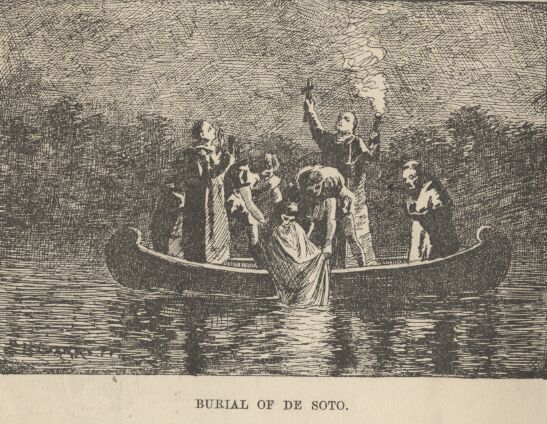
De Soto merely glimpsed the river, then died and was buried in it by his priests and soldiers. One would expect the priests and the soldiers to multiply the river's dimensions by ten—the Spanish custom of the day—and thus move other adventurers to go at once and explore it. On the contrary, their narratives when they reached home, did not excite that amount of curiosity. The Mississippi was left unvisited by whites during a term of years which seems incredible in our energetic days. One may 'sense' the interval to his mind, after a fashion, by dividing it up in this way: After De Soto glimpsed the river, a fraction short of a quarter of a century elapsed, and then Shakespeare was born; lived a trifle more than half a century, then died; and when he had been in his grave considerably more than half a century, the second white man saw the Mississippi. In our day we don't allow a hundred and thirty years to elapse between glimpses of a marvel. If somebody should discover a creek in the county next to the one that the North Pole is in, Europe and America would start fifteen costly expeditions thither: one to explore the creek, and the other fourteen to hunt for each other.
De Soto only glimpsed the river before he died. His priests and soldiers buried him in it. You would expect the priests and soldiers to exaggerate the river’s size tenfold, as the Spanish did in those days. You would expect their accounts to send other adventurers off to explore it at once. Instead, the stories they told when they got home stirred no such curiosity. White people left the Mississippi unvisited for a length of time that seems incredible in our energetic age. You can get a rough “sense” of the interval by breaking it down this way. After De Soto glimpsed the river, nearly a quarter of a century passed before Shakespeare was born. Shakespeare lived a little more than half a century, then died. He had been in his grave for considerably more than half a century when the second white man saw the Mississippi. Today, we don’t let 130 years pass between glimpses of a marvel. Suppose someone discovered a creek in the county next to the one where the North Pole is. Europe and America would send fifteen costly expeditions there: one to explore the creek and the other fourteen to hunt for each other.
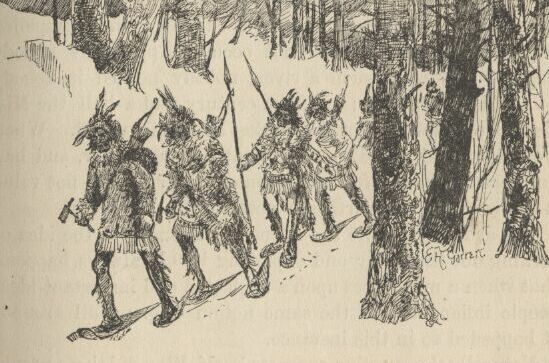
For more than a hundred and fifty years there had been white settlements on our Atlantic coasts. These people were in intimate communication with the Indians: in the south the Spaniards were robbing, slaughtering, enslaving and converting them; higher up, the English were trading beads and blankets to them for a consideration, and throwing in civilization and whiskey, 'for lagniappe;' and in Canada the French were schooling them in a rudimentary way, missionarying among them, and drawing whole populations of them at a time to Quebec, and later to Montreal, to buy furs of them. Necessarily, then, these various clusters of whites must have heard of the great river of the far west; and indeed, they did hear of it vaguely,—so vaguely and indefinitely, that its course, proportions, and locality were hardly even guessable. The mere mysteriousness of the matter ought to have fired curiosity and compelled exploration; but this did not occur. Apparently nobody happened to want such a river, nobody needed it, nobody was curious about it; so, for a century and a half the Mississippi remained out of the market and undisturbed. When De Soto found it, he was not hunting for a river, and had no present occasion for one; consequently he did not value it or even take any particular notice of it.
For more than 150 years, white settlers had lived along our Atlantic coasts. They were in close contact with the Indians. In the south, the Spaniards were robbing, slaughtering, enslaving, and converting them. Farther north, the English were trading beads and blankets to them for a price, and throwing in civilization and whiskey 'for lagniappe.' In Canada, the French were giving them basic schooling and doing missionary work among them. The French also drew whole populations at a time to Quebec, and later to Montreal, to buy furs from them. These various groups of whites must have heard of the great river in the far west. Indeed, they did hear of it, but only vaguely. The reports were so vague that its course, size, and location were hardly even guessable. The mystery alone should have stirred curiosity and compelled exploration, but it did not. Apparently, nobody happened to want such a river, nobody needed it, and nobody was curious about it. So, for a century and a half, the Mississippi remained out of the market and undisturbed. When De Soto found the Mississippi, he was not looking for a river and had no immediate use for one. So he did not value the river or even pay much attention to it.
But at last La Salle the Frenchman conceived the idea of seeking out that river and exploring it. It always happens that when a man seizes upon a neglected and important idea, people inflamed with the same notion crop up all around. It happened so in this instance.
But at last, La Salle the Frenchman came up with the idea of finding and exploring that river. Whenever a man seizes on an important idea that others have neglected, people fired up by the same idea always appear all around him. That happened in this case.
Naturally the question suggests itself, Why did these people want the river now when nobody had wanted it in the five preceding generations? Apparently it was because at this late day they thought they had discovered a way to make it useful; for it had come to be believed that the Mississippi emptied into the Gulf of California, and therefore afforded a short cut from Canada to China. Previously the supposition had been that it emptied into the Atlantic, or Sea of Virginia.
Naturally, this raises the question: Why did these people want the river now, when nobody had wanted it for the previous five generations? Apparently, they now thought they had found a way to make it useful. People had come to believe that the Mississippi emptied into the Gulf of California. That would make it a shortcut from Canada to China. Previously, people had thought the river emptied into the Atlantic, or Sea of Virginia.