A set of lectures asks what makes a human life truly happy, and how habit builds good character. Each virtue sits between two extremes, so courage lies between cowardice and recklessness.
350 pages 6h 48m reading time
The founding work of virtue ethics and a cornerstone of Western moral thought.
Holds that the goal of life is eudaimonia, a flourishing life, reached by living well rather than by chasing pleasure or wealth.
Teaches that virtues are habits built by practice, each a middle path between extremes, as courage lies between cowardice and recklessness.
Thomas Aquinas built it into Catholic theology, making it a basis of medieval Christian ethics.
It inspired the 20th-century revival of virtue ethics, now one of the main approaches in moral philosophy.
Hidden in a cellar
An ancient story says Aristotle's writings lay hidden in a cellar for over a century before being found.
Probably lecture notes
Scholars think it was written as teaching notes for Aristotle's students, not as a polished book for the public.
Named for a Nicomachus
It is named for Nicomachus, Aristotle's son or perhaps his father, and one tradition says the son edited it.
Shares books with another
Three of its ten books also appear in Aristotle's other ethics work, and scholars still debate where they began.


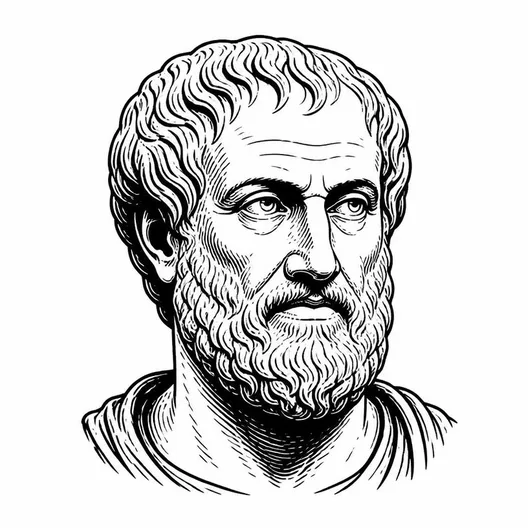 Aristotle c. 350 BCE