A conversation led by Socrates asks what justice is, and imagines a city ruled by philosophers to answer it. Along the way comes the tale of a magic ring that makes its wearer invisible.
766 pages 14h 52m reading time
The founding text of Western political philosophy.
Imagines an ideal state ruled by philosopher-kings, wise rulers trained to seek the good rather than power.
Uses the Allegory of the Cave, where prisoners mistake shadows for reality, to show how most people mistake appearances for truth.
Its imagined ideal state began the tradition of utopian writing, from Thomas More's Utopia onward.
Its ideal state drew lasting criticism as a blueprint for authoritarian rule, notably in Karl Popper's The Open Society and Its Enemies.
Starring a dead teacher
Socrates had been executed years before Plato wrote it, so Plato put his own arguments in his teacher's mouth.
Cast of real people
The talk happens at a real family's home near Athens, and two of Socrates' main partners are Plato's own brothers.
A famous first sentence
Ancient writers said a wax tablet found after Plato's death had its opening words tried in many orders.
Missing from the medieval West
Western Europe lacked a full Latin version for centuries, while Averroes's commentary survived in Hebrew.


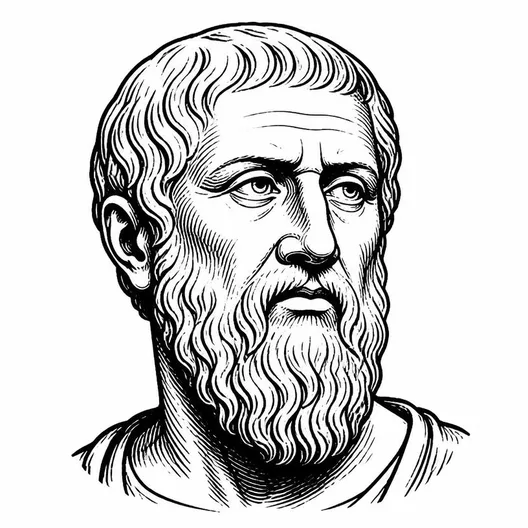 Plato c. 380 BCE