Chapter 11
Samuel Brown
The next morning I met Lady Glenmire and Miss Pole setting out on a long walk to find some old woman who was famous in the neighbourhood for her skill in knitting woollen stockings. Miss Pole said to me, with a smile half-kindly and half-contemptuous upon her countenance, “I have been just telling Lady Glenmire of our poor friend Mrs Forrester, and her terror of ghosts. It comes from living so much alone, and listening to the bug-a-boo stories of that Jenny of hers.” She was so calm and so much above superstitious fears herself that I was almost ashamed to say how glad I had been of her Headingley Causeway proposition the night before, and turned off the conversation to something else.
The next morning I met Lady Glenmire and Miss Pole as they were setting out on a long walk. They were looking for an old woman who was famous in the neighborhood for knitting woolen stockings. Miss Pole smiled at me, half kindly and half contemptuously. “I was just telling Lady Glenmire about our poor friend Mrs Forrester and her fear of ghosts. It comes from living alone so much and listening to those bug-a-boo stories her Jenny tells.” Miss Pole was so calm and so free from superstitious fears herself that I was almost ashamed to admit how glad I had been of her Headingley Causeway suggestion the night before. So I changed the subject.
In the afternoon Miss Pole called on Miss Matty to tell her of the adventure—the real adventure they had met with on their morning’s walk. They had been perplexed about the exact path which they were to take across the fields in order to find the knitting old woman, and had stopped to inquire at a little wayside public-house, standing on the high road to London, about three miles from Cranford. The good woman had asked them to sit down and rest themselves while she fetched her husband, who could direct them better than she could; and, while they were sitting in the sanded parlour, a little girl came in. They thought that she belonged to the landlady, and began some trifling conversation with her; but, on Mrs Roberts’s return, she told them that the little thing was the only child of a couple who were staying in the house. And then she began a long story, out of which Lady Glenmire and Miss Pole could only gather one or two decided facts, which were that, about six weeks ago, a light spring-cart had broken down just before their door, in which there were two men, one woman, and this child. One of the men was seriously hurt—no bones broken, only “shaken,” the landlady called it; but he had probably sustained some severe internal injury, for he had languished in their house ever since, attended by his wife, the mother of this little girl. Miss Pole had asked what he was, what he looked like. And Mrs Roberts had made answer that he was not like a gentleman, nor yet like a common person; if it had not been that he and his wife were such decent, quiet people, she could almost have thought he was a mountebank, or something of that kind, for they had a great box in the cart, full of she did not know what. She had helped to unpack it, and take out their linen and clothes, when the other man—his twin-brother, she believed he was—had gone off with the horse and cart.
That afternoon, Miss Pole called on Miss Matty to tell her about the adventure, the real adventure, they had met with on their morning walk. They had been unsure which path across the fields would lead them to the old woman who knitted. So they stopped to ask at a small roadside inn on the London road, about three miles from Cranford. The landlady asked them to sit down and rest while she fetched her husband, who could give them better directions. While they sat in the parlor, whose floor was covered with sand, a little girl came in. They thought she was the landlady’s child and began chatting with her. But when Mrs Roberts returned, she told them the little girl was the only child of a couple staying at the inn. Mrs Roberts then began a long story. Lady Glenmire and Miss Pole could make out only one or two definite facts. About six weeks earlier, a light spring-cart carrying two men, a woman, and the child had broken down just outside the inn. One of the men had been seriously hurt. No bones were broken, and the landlady called him only “shaken.” But he had probably suffered a severe internal injury. He had been weak and ill at the inn ever since, cared for by his wife, the little girl’s mother. Miss Pole had asked what sort of man he was and what he looked like. Mrs Roberts replied that he was neither like a gentleman nor like an ordinary person. If he and his wife had not been such decent, quiet people, she could almost have thought him a showman or something of the kind. There had been a large box in the cart, full of things she knew nothing about. She had helped unpack the box and take out the couple’s linens and clothes. By then the other man, whom she believed to be the injured man’s twin brother, had gone off with the horse and cart.
Miss Pole had begun to have her suspicions at this point, and expressed her idea that it was rather strange that the box and cart and horse and all should have disappeared; but good Mrs Roberts seemed to have become quite indignant at Miss Pole’s implied suggestion; in fact, Miss Pole said she was as angry as if Miss Pole had told her that she herself was a swindler. As the best way of convincing the ladies, she bethought her of begging them to see the wife; and, as Miss Pole said, there was no doubting the honest, worn, bronzed face of the woman, who at the first tender word from Lady Glenmire, burst into tears, which she was too weak to check until some word from the landlady made her swallow down her sobs, in order that she might testify to the Christian kindness shown by Mr and Mrs Roberts. Miss Pole came round with a swing to as vehement a belief in the sorrowful tale as she had been sceptical before; and, as a proof of this, her energy in the poor sufferer’s behalf was nothing daunted when she found out that he, and no other, was our Signor Brunoni, to whom all Cranford had been attributing all manner of evil this six weeks past! Yes! his wife said his proper name was Samuel Brown—“Sam,” she called him—but to the last we preferred calling him “the Signor”; it sounded so much better.
At this point, Miss Pole began to have her suspicions. She said it was rather strange that the box, cart, horse and everything else had disappeared. But good Mrs Roberts seemed quite indignant at what Miss Pole was suggesting. In fact, Miss Pole said Mrs Roberts was as angry as if Miss Pole had called her a swindler. To convince the ladies, Mrs Roberts thought it best to ask them to see the wife. And, as Miss Pole said, there was no doubting the woman’s honest, weary, sun-darkened face. At Lady Glenmire’s first kind word, the woman burst into tears. She was too weak to stop until the landlady said something to her. Then she swallowed her sobs so she could speak of the Christian kindness Mr and Mrs Roberts had shown her. Miss Pole swung around to believing the sad story as strongly as she had doubted it before. And, as proof, she was no less eager to help the poor sufferer when she discovered who he was. He was none other than our Signor Brunoni, whom all Cranford had blamed for all manner of evil these past six weeks! Yes! His wife said his real name was Samuel Brown. She called him “Sam,” but to the last we preferred calling him “the Signor”; it sounded so much better.
The end of their conversation with the Signora Brunoni was that it was agreed that he should be placed under medical advice, and for any expense incurred in procuring this Lady Glenmire promised to hold herself responsible, and had accordingly gone to Mr Hoggins to beg him to ride over to the “Rising Sun” that very afternoon, and examine into the signor’s real state; and, as Miss Pole said, if it was desirable to remove him to Cranford to be more immediately under Mr Hoggins’s eye, she would undertake to see for lodgings and arrange about the rent. Mrs Roberts had been as kind as could be all throughout, but it was evident that their long residence there had been a slight inconvenience.
At the end of their conversation with the Signora Brunoni, they agreed that the signor should receive medical care. Lady Glenmire promised to pay any costs involved. She had therefore gone to Mr Hoggins and asked him to ride over to the “Rising Sun” that very afternoon. She wanted him to examine the signor and discover his true condition. As Miss Pole said, if it was desirable to move him to Cranford so Mr Hoggins could watch him more closely, she would find lodgings and arrange the rent. Mrs Roberts had been as kind as could be throughout, but their long stay had evidently been a slight inconvenience to her.
Before Miss Pole left us, Miss Matty and I were as full of the morning’s adventure as she was. We talked about it all the evening, turning it in every possible light, and we went to bed anxious for the morning, when we should surely hear from someone what Mr Hoggins thought and recommended; for, as Miss Matty observed, though Mr Hoggins did say “Jack’s up,” “a fig for his heels,” and called Preference “Pref.” she believed he was a very worthy man and a very clever surgeon. Indeed, we were rather proud of our doctor at Cranford, as a doctor. We often wished, when we heard of Queen Adelaide or the Duke of Wellington being ill, that they would send for Mr Hoggins; but, on consideration, we were rather glad they did not, for, if we were ailing, what should we do if Mr Hoggins had been appointed physician-in-ordinary to the Royal Family? As a surgeon we were proud of him; but as a man—or rather, I should say, as a gentleman—we could only shake our heads over his name and himself, and wished that he had read Lord Chesterfield’s Letters in the days when his manners were susceptible of improvement. Nevertheless, we all regarded his dictum in the signor’s case as infallible, and when he said that with care and attention he might rally, we had no more fear for him.
Before Miss Pole left us, Miss Matty and I were just as absorbed in the morning’s adventure as she was. We talked about it all evening, considering it from every angle. We went to bed eager for morning, when someone would surely tell us what Mr Hoggins thought and recommended. As Miss Matty observed, he did say “Jack’s up,” “a fig for his heels,” and called Preference “Pref.” But she believed he was a very worthy man and a very clever surgeon. Indeed, we were rather proud of our Cranford doctor, as a doctor. When we heard that Queen Adelaide or the Duke of Wellington was ill, we often wished they would send for Mr Hoggins. But on second thought, we were rather glad they did not. If Mr Hoggins were appointed physician-in-ordinary to the Royal Family, what would we do when we were ill? We were proud of him as a surgeon. But as a man, or rather as a gentleman, we could only shake our heads over his name and the man himself. We wished he had read Lord Chesterfield’s Letters when his manners could still have been improved. Nevertheless, we all regarded his opinion on the signor’s case as infallible. When he said that the signor might recover with care and attention, we no longer feared for him.
But, although we had no more fear, everybody did as much as if there was great cause for anxiety—as indeed there was until Mr Hoggins took charge of him. Miss Pole looked out clean and comfortable, if homely, lodgings; Miss Matty sent the sedan-chair for him, and Martha and I aired it well before it left Cranford by holding a warming-pan full of red-hot coals in it, and then shutting it up close, smoke and all, until the time when he should get into it at the “Rising Sun.” Lady Glenmire undertook the medical department under Mr Hoggins’s directions, and rummaged up all Mrs Jamieson’s medicine glasses, and spoons, and bed-tables, in a free-and-easy way, that made Miss Matty feel a little anxious as to what that lady and Mr Mulliner might say, if they knew. Mrs Forrester made some of the bread-jelly, for which she was so famous, to have ready as a refreshment in the lodgings when he should arrive. A present of this bread-jelly was the highest mark of favour dear Mrs Forrester could confer. Miss Pole had once asked her for the receipt, but she had met with a very decided rebuff; that lady told her that she could not part with it to any one during her life, and that after her death it was bequeathed, as her executors would find, to Miss Matty. What Miss Matty, or, as Mrs Forrester called her (remembering the clause in her will and the dignity of the occasion), Miss Matilda Jenkyns—might choose to do with the receipt when it came into her possession—whether to make it public, or to hand it down as an heirloom—she did not know, nor would she dictate. And a mould of this admirable, digestible, unique bread-jelly was sent by Mrs Forrester to our poor sick conjuror. Who says that the aristocracy are proud? Here was a lady by birth a Tyrrell, and descended from the great Sir Walter that shot King Rufus, and in whose veins ran the blood of him who murdered the little princes in the Tower, going every day to see what dainty dishes she could prepare for Samuel Brown, a mountebank! But, indeed, it was wonderful to see what kind feelings were called out by this poor man’s coming amongst us. And also wonderful to see how the great Cranford panic, which had been occasioned by his first coming in his Turkish dress, melted away into thin air on his second coming—pale and feeble, and with his heavy, filmy eyes, that only brightened a very little when they fell upon the countenance of his faithful wife, or their pale and sorrowful little girl.
But although we were no longer afraid, everyone acted as if there were great cause for concern. Indeed, there was until Mr Hoggins took charge of him. Miss Pole found clean, comfortable lodgings, though they were modest. Miss Matty sent the sedan-chair for him. Before it left Cranford, Martha and I warmed it thoroughly by holding a warming-pan full of red-hot coals inside it. Then we shut it up tight, smoke and all, until he was due to get in at the “Rising Sun.” Lady Glenmire took charge of his medical care under Mr Hoggins’s direction. She freely rummaged out all Mrs Jamieson’s medicine glasses, spoons, and bed-tables. This made Miss Matty a little anxious about what that lady and Mr Mulliner might say if they knew. Mrs Forrester made some of her famous bread-jelly, to be ready as a refreshment when he arrived at the lodgings. A gift of this bread-jelly was the highest mark of favor dear Mrs Forrester could bestow. Miss Pole had once asked her for the recipe, but Mrs Forrester had firmly refused. She told Miss Pole that she could not give it to anyone during her lifetime. After her death, she had left it to Miss Matty, as her executors would discover. Mrs Forrester did not know what Miss Matty might choose to do with the recipe once she had it, nor would she dictate. She might make it public or pass it down as an heirloom. Remembering the clause in her will and the dignity of the occasion, Mrs Forrester called her Miss Matilda Jenkyns. And Mrs Forrester sent a mold of this admirable, easily digested, unique bread-jelly to our poor sick conjuror. Who says that the aristocracy are proud? Here was a lady born a Tyrrell, descended from the great Sir Walter who shot King Rufus. The blood of the man who murdered the little princes in the Tower ran in her veins. Yet she went every day to see what delicate dishes she could prepare for Samuel Brown, a mountebank! But it really was wonderful to see what kindness this poor man’s arrival brought out. It was also wonderful to see how the great Cranford panic vanished into thin air. His first arrival, in his Turkish dress, had caused the panic. Now he came a second time, pale and weak, with heavy, filmy eyes. They brightened only a little when he looked at his faithful wife or their pale, sorrowful little girl.
Somehow we all forgot to be afraid. I daresay it was that finding out that he, who had first excited our love of the marvellous by his unprecedented arts, had not sufficient every-day gifts to manage a shying horse, made us feel as if we were ourselves again. Miss Pole came with her little basket at all hours of the evening, as if her lonely house and the unfrequented road to it had never been infested by that “murderous gang”; Mrs Forrester said she thought that neither Jenny nor she need mind the headless lady who wept and wailed in Darkness Lane, for surely the power was never given to such beings to harm those who went about to try to do what little good was in their power, to which Jenny tremblingly assented; but the mistress’s theory had little effect on the maid’s practice until she had sewn two pieces of red flannel in the shape of a cross on her inner garment.
Somehow we all forgot to be afraid. I suppose we felt like ourselves again after discovering something about the man who had first excited our love of the marvelous. Despite his astonishing tricks, he lacked the ordinary skill needed to manage a horse that shied. Miss Pole came with her little basket at all hours of the evening. She behaved as if that “murderous gang” had never infested her lonely house and the deserted road leading to it. Mrs Forrester said she thought neither she nor Jenny needed to worry about the headless lady who wept and wailed in Darkness Lane. Surely such beings were never given the power to harm people who went about trying to do what little good they could. Jenny tremblingly agreed. But her mistress’s theory did little to change the maid’s behavior until Jenny had sewn two pieces of red flannel in the shape of a cross on her undergarment.
I found Miss Matty covering her penny ball—the ball that she used to roll under her bed—with gay-coloured worsted in rainbow stripes.
I found Miss Matty covering her penny ball with brightly colored wool yarn in rainbow stripes. She used to roll the ball under her bed.
“My dear,” said she, “my heart is sad for that little careworn child. Although her father is a conjuror, she looks as if she had never had a good game of play in her life. I used to make very pretty balls in this way when I was a girl, and I thought I would try if I could not make this one smart and take it to Phœbe this afternoon. I think ‘the gang’ must have left the neighbourhood, for one does not hear any more of their violence and robbery now.”
“My dear,” she said, “my heart aches for that little, careworn child. Although her father is a conjuror, she looks as if she has never had a good game in her life. I used to make very pretty balls this way when I was a girl. I thought I would try to make this one look nice and take it to Phœbe this afternoon. I think ‘the gang’ must have left the area, because we no longer hear about their violence and robberies.”
We were all of us far too full of the signor’s precarious state to talk either about robbers or ghosts. Indeed, Lady Glenmire said she never had heard of any actual robberies, except that two little boys had stolen some apples from Farmer Benson’s orchard, and that some eggs had been missed on a market-day off Widow Hayward’s stall. But that was expecting too much of us; we could not acknowledge that we had only had this small foundation for all our panic. Miss Pole drew herself up at this remark of Lady Glenmire’s, and said “that she wished she could agree with her as to the very small reason we had had for alarm, but with the recollection of a man disguised as a woman who had endeavoured to force himself into her house while his confederates waited outside; with the knowledge gained from Lady Glenmire herself, of the footprints seen on Mrs Jamieson’s flower borders; with the fact before her of the audacious robbery committed on Mr Hoggins at his own door”—But here Lady Glenmire broke in with a very strong expression of doubt as to whether this last story was not an entire fabrication founded upon the theft of a cat; she grew so red while she was saying all this that I was not surprised at Miss Pole’s manner of bridling up, and I am certain, if Lady Glenmire had not been “her ladyship,” we should have had a more emphatic contradiction than the “Well, to be sure!” and similar fragmentary ejaculations, which were all that she ventured upon in my lady’s presence. But when she was gone Miss Pole began a long congratulation to Miss Matty that so far they had escaped marriage, which she noticed always made people credulous to the last degree; indeed, she thought it argued great natural credulity in a woman if she could not keep herself from being married; and in what Lady Glenmire had said about Mr Hoggins’s robbery we had a specimen of what people came to if they gave way to such a weakness; evidently Lady Glenmire would swallow anything if she could believe the poor vamped-up story about a neck of mutton and a pussy with which he had tried to impose on Miss Pole, only she had always been on her guard against believing too much of what men said.
We were all far too preoccupied with the signor’s precarious condition to talk about robbers or ghosts. In fact, Lady Glenmire said she had never heard of any actual robberies. Two little boys had stolen apples from Farmer Benson’s orchard, and some eggs had gone missing from Widow Hayward’s stall on a market day. But Lady Glenmire was expecting too much of us. We could not admit that our panic had rested on so little. Miss Pole drew herself up at Lady Glenmire’s remark. She said “that she wished she could agree that they had had so little reason for alarm. But she remembered a man disguised as a woman who had tried to force his way into her house while his accomplices waited outside. Lady Glenmire herself had told her about the footprints on Mrs Jamieson’s flower beds. And then there was the bold robbery committed against Mr Hoggins at his own door.” But Lady Glenmire interrupted. She expressed strong doubts about whether this last story was anything but a complete fabrication based on the theft of a cat. Lady Glenmire grew so red as she spoke that I was not surprised when Miss Pole bristled. And I am sure that, if Lady Glenmire had not been “her ladyship,” Miss Pole would have contradicted her more emphatically. In her ladyship’s presence, all she dared say was “Well, to be sure!” and other brief exclamations like it. But when Lady Glenmire had gone, Miss Pole went on at length, congratulating Miss Matty that they had so far escaped marriage. She had noticed that marriage always made people believe anything. Indeed, she thought a woman must be naturally very gullible if she could not keep herself from getting married. And Lady Glenmire’s remarks about Mr Hoggins’s robbery showed what people came to if they gave in to such a weakness. Clearly, Lady Glenmire would swallow anything if she could believe the poor, made-up story about a neck of mutton and a pussy that he had tried to pass off on Miss Pole. Miss Pole, however, had always been careful not to believe too much of what men said.
We were thankful, as Miss Pole desired us to be, that we had never been married; but I think, of the two, we were even more thankful that the robbers had left Cranford; at least I judge so from a speech of Miss Matty’s that evening, as we sat over the fire, in which she evidently looked upon a husband as a great protector against thieves, burglars, and ghosts; and said that she did not think that she should dare to be always warning young people against matrimony, as Miss Pole did continually; to be sure, marriage was a risk, as she saw, now she had had some experience; but she remembered the time when she had looked forward to being married as much as any one.
As Miss Pole wanted, we were thankful that we had never married. But I think we were even more thankful that the robbers had left Cranford. At least, I judge so from something Miss Matty said that evening as we sat by the fire. She clearly thought a husband was a great protector against thieves, burglars, and ghosts. She said she did not think she would dare to keep warning young people against marriage, as Miss Pole constantly did. Of course, she could see now, after some experience, that marriage was a risk. But she remembered when she had looked forward to being married as much as anyone.
“Not to any particular person, my dear,” said she, hastily checking herself up, as if she were afraid of having admitted too much; “only the old story, you know, of ladies always saying, ‘When I marry,’ and gentlemen, ‘If I marry.’” It was a joke spoken in rather a sad tone, and I doubt if either of us smiled; but I could not see Miss Matty’s face by the flickering fire-light. In a little while she continued—
“Not to any particular person, my dear,” she said, quickly stopping herself. She seemed afraid she had admitted too much. “Only the old story, you know, about ladies always saying, ‘When I marry,’ and gentlemen saying, ‘If I marry.’” She spoke the joke rather sadly, and I doubt either of us smiled. But I could not see Miss Matty’s face in the flickering firelight. After a little while, she continued:
“But, after all, I have not told you the truth. It is so long ago, and no one ever knew how much I thought of it at the time, unless, indeed, my dear mother guessed; but I may say that there was a time when I did not think I should have been only Miss Matty Jenkyns all my life; for even if I did meet with any one who wished to marry me now (and, as Miss Pole says, one is never too safe), I could not take him—I hope he would not take it too much to heart, but I could not take him—or any one but the person I once thought I should be married to; and he is dead and gone, and he never knew how it all came about that I said ‘No,’ when I had thought many and many a time—Well, it’s no matter what I thought. God ordains it all, and I am very happy, my dear. No one has such kind friends as I,” continued she, taking my hand and holding it in hers.
“But, after all, I have not told you the truth. It was so long ago, and no one ever knew how much I thought about it at the time. Unless, perhaps, my dear mother guessed. But I can tell you that there was a time when I did not think I would be Miss Matty Jenkyns all my life. Even if I met someone now who wanted to marry me, I could not accept him. As Miss Pole says, one is never too safe. I hope he would not take it too much to heart, but I could not accept him. I could not accept anyone but the person I once thought I would marry. And he is dead and gone. He never knew how it came about that I said ‘No,’ when I had thought so many times. Well, it doesn’t matter what I thought. God ordains it all, and I am very happy, my dear. No one has such kind friends as I do,” she continued, taking my hand and holding it in hers.
If I had never known of Mr Holbrook, I could have said something in this pause, but as I had, I could not think of anything that would come in naturally, and so we both kept silence for a little time.
If I had never known about Mr Holbrook, I could have said something during the pause. But since I did know about him, I could not think of anything natural to say. So we both stayed silent for a little while.
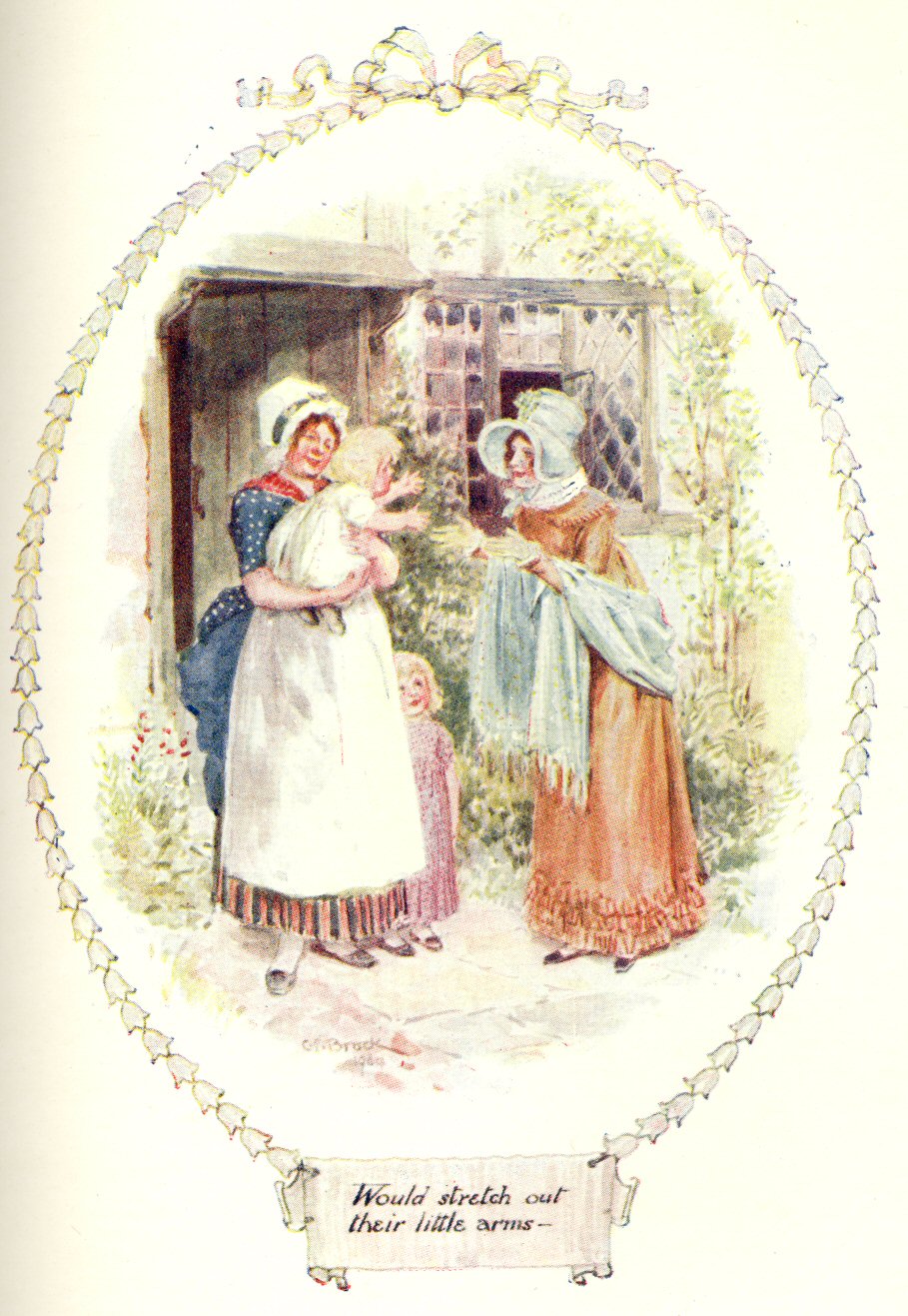
“My father once made us,” she began, “keep a diary, in two columns; on one side we were to put down in the morning what we thought would be the course and events of the coming day, and at night we were to put down on the other side what really had happened. It would be to some people rather a sad way of telling their lives,” (a tear dropped upon my hand at these words)—“I don’t mean that mine has been sad, only so very different to what I expected. I remember, one winter’s evening, sitting over our bedroom fire with Deborah—I remember it as if it were yesterday—and we were planning our future lives, both of us were planning, though only she talked about it. She said she should like to marry an archdeacon, and write his charges; and you know, my dear, she never was married, and, for aught I know, she never spoke to an unmarried archdeacon in her life. I never was ambitious, nor could I have written charges, but I thought I could manage a house (my mother used to call me her right hand), and I was always so fond of little children—the shyest babies would stretch out their little arms to come to me; when I was a girl, I was half my leisure time nursing in the neighbouring cottages; but I don’t know how it was, when I grew sad and grave—which I did a year or two after this time—the little things drew back from me, and I am afraid I lost the knack, though I am just as fond of children as ever, and have a strange yearning at my heart whenever I see a mother with her baby in her arms. Nay, my dear” (and by a sudden blaze which sprang up from a fall of the unstirred coals, I saw that her eyes were full of tears—gazing intently on some vision of what might have been), “do you know I dream sometimes that I have a little child—always the same—a little girl of about two years old; she never grows older, though I have dreamt about her for many years. I don’t think I ever dream of any words or sound she makes; she is very noiseless and still, but she comes to me when she is very sorry or very glad, and I have wakened with the clasp of her dear little arms round my neck. Only last night—perhaps because I had gone to sleep thinking of this ball for Phœbe—my little darling came in my dream, and put up her mouth to be kissed, just as I have seen real babies do to real mothers before going to bed. But all this is nonsense, dear! only don’t be frightened by Miss Pole from being married. I can fancy it may be a very happy state, and a little credulity helps one on through life very smoothly—better than always doubting and doubting and seeing difficulties and disagreeables in everything.”
“My father once made us keep a diary,” she began. “It had two columns. In the morning, we wrote on one side what we thought would happen that day. At night, we wrote on the other side what had actually happened. For some people, that would be a rather sad way to tell the story of their lives.” (A tear dropped onto my hand as she said this.) “I don’t mean that my life has been sad, only that it has been so very different from what I expected. “I remember sitting by our bedroom fire with Deborah one winter evening. I remember it as if it were yesterday. We were both planning our future lives, though only she talked about them. She said she would like to marry an archdeacon and write his formal addresses for him. But you know, my dear, she never married. And as far as I know, she never spoke to an unmarried archdeacon in her life. “I was never ambitious, and I couldn’t have written those addresses. But I thought I could manage a house. My mother used to call me her right hand. And I was always so fond of little children. Even the shyest babies would stretch out their little arms to come to me. When I was a girl, I spent half my free time caring for children in the neighboring cottages. But I don’t know how it happened. A year or two later, I became sad and serious, and the little things drew back from me. I’m afraid I lost the knack, though I’m just as fond of children as ever. Whenever I see a mother with her baby in her arms, I feel a strange longing in my heart. “But, my dear, do you know I sometimes dream that I have a little child?” (The undisturbed coals fell, and a sudden blaze sprang up. In its light, I saw that her eyes were full of tears. She was gazing intently at some vision of what might have been.) “She is always the same, a little girl of about two. She never grows older, though I’ve dreamed about her for many years. I don’t think I ever dream that she speaks or makes a sound. She is very quiet and still. But she comes to me when she is very sorry or very glad. And I have woken up feeling her dear little arms clasped around my neck. “Only last night, perhaps because I had gone to sleep thinking of this ball for Phœbe, my little darling came to me in a dream. She held up her mouth to be kissed, just as I have seen real babies do with their real mothers before bed. But all this is nonsense, dear! Just don’t let Miss Pole frighten you away from getting married. I can imagine it may be a very happy state. And a little willingness to believe helps one through life very smoothly. It is better than always doubting and doubting, and seeing difficulties and unpleasant things in everything.”
If I had been inclined to be daunted from matrimony, it would not have been Miss Pole to do it; it would have been the lot of poor Signor Brunoni and his wife. And yet again, it was an encouragement to see how, through all their cares and sorrows, they thought of each other and not of themselves; and how keen were their joys, if they only passed through each other, or through the little Phœbe.
If anything had discouraged me from marrying, it would not have been Miss Pole. It would have been the troubles of poor Signor Brunoni and his wife. And yet their example was encouraging. Through all their cares and sorrows, they thought of each other rather than themselves. And their joys were so intense when they came through each other or through little Phœbe.
The signora told me, one day, a good deal about their lives up to this period. It began by my asking her whether Miss Pole’s story of the twin-brothers were true; it sounded so wonderful a likeness, that I should have had my doubts, if Miss Pole had not been unmarried. But the signora, or (as we found out she preferred to be called) Mrs Brown, said it was quite true; that her brother-in-law was by many taken for her husband, which was of great assistance to them in their profession; “though,” she continued, “how people can mistake Thomas for the real Signor Brunoni, I can’t conceive; but he says they do; so I suppose I must believe him. Not but what he is a very good man; I am sure I don’t know how we should have paid our bill at the ‘Rising Sun’ but for the money he sends; but people must know very little about art if they can take him for my husband. Why, Miss, in the ball trick, where my husband spreads his fingers wide, and throws out his little finger with quite an air and a grace, Thomas just clumps up his hand like a fist, and might have ever so many balls hidden in it. Besides, he has never been in India, and knows nothing of the proper sit of a turban.”
One day, the signora told me a good deal about their lives up to that point. I had started by asking her whether Miss Pole’s story about the twin brothers was true. Their likeness sounded so remarkable that I would have had my doubts if Miss Pole had not been unmarried. But the signora, or Mrs Brown, as we discovered she preferred to be called, said it was quite true. Many people mistook her brother-in-law for her husband, and this was a great help in their profession. “Though,” she continued, “I can’t imagine how people can mistake Thomas for the real Signor Brunoni. But he says they do, so I suppose I must believe him. Not that he isn’t a very good man. I’m sure I don’t know how we would have paid our bill at the ‘Rising Sun’ without the money he sends. But people must know very little about art if they can take him for my husband. “Why, Miss, in the ball trick, my husband spreads his fingers wide and extends his little finger with such style and grace. Thomas just bunches up his hand like a fist, and he could have any number of balls hidden in it. Besides, he has never been to India and knows nothing about how a turban should sit.”
“Have you been in India?” said I, rather astonished.
“Have you been to India?” I asked, rather surprised.
“Oh, yes! many a year, ma’am. Sam was a sergeant in the 31st; and when the regiment was ordered to India, I drew a lot to go, and I was more thankful than I can tell; for it seemed as if it would only be a slow death to me to part from my husband. But, indeed, ma’am, if I had known all, I don’t know whether I would not rather have died there and then than gone through what I have done since. To be sure, I’ve been able to comfort Sam, and to be with him; but, ma’am, I’ve lost six children,” said she, looking up at me with those strange eyes that I’ve never noticed but in mothers of dead children—with a kind of wild look in them, as if seeking for what they never more might find. “Yes! Six children died off, like little buds nipped untimely, in that cruel India. I thought, as each died, I never could—I never would—love a child again; and when the next came, it had not only its own love, but the deeper love that came from the thoughts of its little dead brothers and sisters. And when Phœbe was coming, I said to my husband, ‘Sam, when the child is born, and I am strong, I shall leave you; it will cut my heart cruel; but if this baby dies too, I shall go mad; the madness is in me now; but if you let me go down to Calcutta, carrying my baby step by step, it will, maybe, work itself off; and I will save, and I will hoard, and I will beg—and I will die, to get a passage home to England, where our baby may live?’ God bless him! he said I might go; and he saved up his pay, and I saved every pice I could get for washing or any way; and when Phœbe came, and I grew strong again, I set off. It was very lonely; through the thick forests, dark again with their heavy trees—along by the river’s side (but I had been brought up near the Avon in Warwickshire, so that flowing noise sounded like home)—from station to station, from Indian village to village, I went along, carrying my child. I had seen one of the officer’s ladies with a little picture, ma’am—done by a Catholic foreigner, ma’am—of the Virgin and the little Saviour, ma’am. She had him on her arm, and her form was softly curled round him, and their cheeks touched. Well, when I went to bid good-bye to this lady, for whom I had washed, she cried sadly; for she, too, had lost her children, but she had not another to save, like me; and I was bold enough to ask her would she give me that print. And she cried the more, and said her children were with that little blessed Jesus; and gave it me, and told me that she had heard it had been painted on the bottom of a cask, which made it have that round shape. And when my body was very weary, and my heart was sick (for there were times when I misdoubted if I could ever reach my home, and there were times when I thought of my husband, and one time when I thought my baby was dying), I took out that picture and looked at it, till I could have thought the mother spoke to me, and comforted me. And the natives were very kind. We could not understand one another; but they saw my baby on my breast, and they came out to me, and brought me rice and milk, and sometimes flowers—I have got some of the flowers dried. Then, the next morning, I was so tired; and they wanted me to stay with them—I could tell that—and tried to frighten me from going into the deep woods, which, indeed, looked very strange and dark; but it seemed to me as if Death was following me to take my baby away from me; and as if I must go on, and on—and I thought how God had cared for mothers ever since the world was made, and would care for me; so I bade them good-bye, and set off afresh. And once when my baby was ill, and both she and I needed rest, He led me to a place where I found a kind Englishman lived, right in the midst of the natives.”
“Oh, yes! For many years, ma’am. Sam was a sergeant in the 31st. When the regiment was ordered to India, I was chosen by lot to go too. I was more thankful than I can say. It seemed that being separated from my husband would be a slow death for me. But, truly, ma’am, if I had known everything, I don’t know if I wouldn’t rather have died then and there than gone through what I have since. Of course, I’ve been able to comfort Sam and be with him. But, ma’am, I’ve lost six children,” she said, looking up at me with those strange eyes I’ve seen only in mothers whose children have died. They had a kind of wild look, as if searching for what they could never find again. “Yes! Six children died in that cruel India, like little buds killed before their time. Each time one died, I thought I could never love another child. I thought I never would. And when the next child came, I loved it not only for itself, but even more because of its little dead brothers and sisters. “And when Phœbe was on the way, I said to my husband, ‘Sam, when the child is born and I’m strong again, I shall leave you. It will break my heart, but if this baby dies too, I shall go mad. The madness is in me now. But if you let me walk down to Calcutta, carrying my baby every step, perhaps it will pass. And I’ll save, and I’ll put money aside, and I’ll beg, and I’ll die to get a passage home to England, where our baby may live.’ “God bless him! He said I could go. He saved his pay, and I saved every pice I could earn by washing or in any other way. And when Phœbe came, and I grew strong again, I set off. “It was very lonely. I went from station to station, from Indian village to Indian village, carrying my child. I went through thick forests, dark with their heavy trees, and along the riverbank. But I had grown up near the Avon in Warwickshire, so the sound of the flowing water reminded me of home. “I had seen a little picture belonging to one of the officers’ wives, ma’am. It was by a Catholic foreigner, ma’am, and showed the Virgin and the little Saviour, ma’am. She held him on her arm, with her body curved gently around him, and their cheeks touched. Well, when I went to say goodbye to this lady, whose washing I had done, she cried sadly. She, too, had lost her children, but she had no other child to save, as I did. And I dared to ask her if she would give me the print. She cried even more and said her children were with that little blessed Jesus. Then she gave me the print. She told me she had heard that the picture had been painted on the bottom of a cask. That was why it was round. “When my body was very tired and my heart was sick, I took out the picture and looked at it. Sometimes I doubted whether I could ever reach home. Sometimes I thought of my husband, and once I thought my baby was dying. I looked at the picture until I could almost believe the mother was speaking to me and comforting me. “And the natives were very kind. We couldn’t understand one another, but they saw my baby at my breast. They came out to me and brought me rice and milk, and sometimes flowers. I still have some of the flowers, dried. Then, the next morning, I was so tired. They wanted me to stay with them, I could tell. They tried to frighten me away from going into the deep woods, which did look very strange and dark. But it seemed to me that Death was following me, ready to take my baby away. I felt I had to go on and on. And I thought how God had cared for mothers ever since the world was made, and would care for me. So I said goodbye to them and set off again. And once, when my baby was ill and we both needed rest, he led me to a place where a kind Englishman lived, right among the natives.”
“And you reached Calcutta safely at last?”
“And you finally reached Calcutta safely?”
“Yes, safely! Oh! when I knew I had only two days’ journey more before me, I could not help it, ma’am—it might be idolatry, I cannot tell—but I was near one of the native temples, and I went into it with my baby to thank God for His great mercy; for it seemed to me that where others had prayed before to their God, in their joy or in their agony, was of itself a sacred place. And I got as servant to an invalid lady, who grew quite fond of my baby aboard-ship; and, in two years’ time, Sam earned his discharge, and came home to me, and to our child. Then he had to fix on a trade; but he knew of none; and once, once upon a time, he had learnt some tricks from an Indian juggler; so he set up conjuring, and it answered so well that he took Thomas to help him—as his man, you know, not as another conjuror, though Thomas has set it up now on his own hook. But it has been a great help to us that likeness between the twins, and made a good many tricks go off well that they made up together. And Thomas is a good brother, only he has not the fine carriage of my husband, so that I can’t think how he can be taken for Signor Brunoni himself, as he says he is.”
“Yes, safely! Oh, when I knew I had only two days of travel left, I could not help myself, ma’am. It may have been idolatry, I cannot say. But I was near one of the local temples, and I went in with my baby to thank God for his great mercy. It seemed to me that a place was sacred simply because others had prayed there to their God, in joy or agony. And I found work as a servant to a sick lady who had grown quite fond of my baby aboard the ship. Two years later, Sam earned his discharge and came home to me and our child. Then he had to choose a trade, but he knew none. Once, long ago, he had learned some tricks from an Indian juggler. So he became a conjuror, and he did so well that he took Thomas on to help him. Thomas was his assistant, you know, not another conjuror, though he has now set up on his own. But the twins’ resemblance has been a great help to us. It helped make many of the tricks they devised together a success. And Thomas is a good brother, but he doesn’t carry himself as well as my husband. So I can’t imagine how anyone could mistake him for Signor Brunoni himself, as Thomas says they do.”
“Poor little Phœbe!” said I, my thoughts going back to the baby she carried all those hundred miles.
“Poor little Phœbe!” I said, thinking again of the baby she had carried all those hundred miles.
“Ah! you may say so! I never thought I should have reared her, though, when she fell ill at Chunderabaddad; but that good, kind Aga Jenkyns took us in, which I believe was the very saving of her.”
“Ah! You can say that again! Though when she fell ill at Chunderabaddad, I never thought she would live to grow up. But that good, kind Aga Jenkyns took us in. I believe his kindness was what saved her.”
“Jenkyns!” said I.
“Jenkyns!” I said.
“Yes, Jenkyns. I shall think all people of that name are kind; for here is that nice old lady who comes every day to take Phœbe a walk!”
“Yes, Jenkyns. I’ll think everyone with that name is kind, because that nice old lady comes every day to take Phœbe for a walk!”
But an idea had flashed through my head; could the Aga Jenkyns be the lost Peter? True he was reported by many to be dead. But, equally true, some had said that he had arrived at the dignity of Great Lama of Thibet. Miss Matty thought he was alive. I would make further inquiry.
But an idea flashed through my mind. Could the Aga Jenkyns be the lost Peter? Many people had indeed reported that he was dead. But it was equally true that some had said he had become the Great Lama of Thibet. Miss Matty thought he was alive. I would make further inquiries.