Chapter 6
Poor Peter
Poor Peter’s career lay before him rather pleasantly mapped out by kind friends, but Bonus Bernardus non videt omnia, in this map too. He was to win honours at the Shrewsbury School, and carry them thick to Cambridge, and after that, a living awaited him, the gift of his godfather, Sir Peter Arley. Poor Peter! his lot in life was very different to what his friends had hoped and planned. Miss Matty told me all about it, and I think it was a relief when she had done so.
Kind friends had planned a pleasant future for poor Peter, but even good Bernard does not see everything, and this plan overlooked things too. He was to win many honours at Shrewsbury School and take them on to Cambridge. After that, a church living awaited him, a gift from his godfather, Sir Peter Arley. Poor Peter! His life turned out very differently from what his friends had hoped and planned. Miss Matty told me all about it, and I think she felt relieved after she had done so.
He was the darling of his mother, who seemed to dote on all her children, though she was, perhaps, a little afraid of Deborah’s superior acquirements. Deborah was the favourite of her father, and when Peter disappointed him, she became his pride. The sole honour Peter brought away from Shrewsbury was the reputation of being the best good fellow that ever was, and of being the captain of the school in the art of practical joking. His father was disappointed, but set about remedying the matter in a manly way. He could not afford to send Peter to read with any tutor, but he could read with him himself; and Miss Matty told me much of the awful preparations in the way of dictionaries and lexicons that were made in her father’s study the morning Peter began.
He was his mother’s darling. She seemed to adore all her children, though she was perhaps a little afraid of Deborah’s greater learning. Deborah was her father’s favourite, and when Peter disappointed him, she became his pride. The only honour Peter brought home from Shrewsbury was his reputation as the best companion anyone had ever known. He was also known as the school’s leading practical joker. His father was disappointed, but set about putting matters right in a manly way. He could not afford to send Peter to study with a tutor, but he could teach him himself. Miss Matty told me much about the daunting preparations in her father’s study, with all the dictionaries and reference books, on the morning Peter began.
“My poor mother!” said she. “I remember how she used to stand in the hall, just near enough the study-door, to catch the tone of my father’s voice. I could tell in a moment if all was going right, by her face. And it did go right for a long time.”
“My poor mother!” she said. “I remember how she used to stand in the hall, close enough to the study door to hear my father’s tone of voice. I could tell from her face at once if everything was going right. And everything did go right for a long time.”
“What went wrong at last?” said I. “That tiresome Latin, I dare say.”
“What finally went wrong?” I asked. “That troublesome Latin, I suppose.”
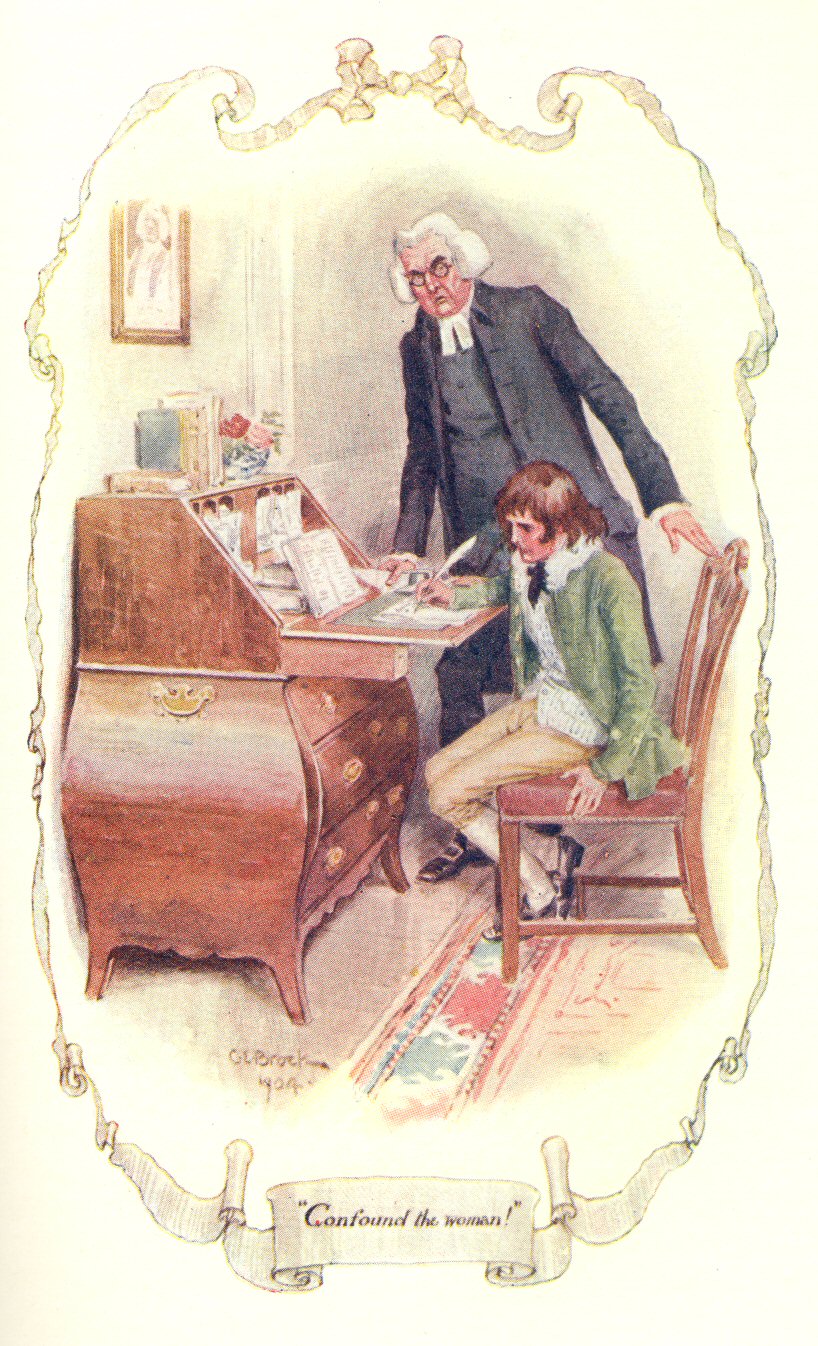
“No! it was not the Latin. Peter was in high favour with my father, for he worked up well for him. But he seemed to think that the Cranford people might be joked about, and made fun of, and they did not like it; nobody does. He was always hoaxing them; ‘hoaxing’ is not a pretty word, my dear, and I hope you won’t tell your father I used it, for I should not like him to think that I was not choice in my language, after living with such a woman as Deborah. And be sure you never use it yourself. I don’t know how it slipped out of my mouth, except it was that I was thinking of poor Peter and it was always his expression. But he was a very gentlemanly boy in many things. He was like dear Captain Brown in always being ready to help any old person or a child. Still, he did like joking and making fun; and he seemed to think the old ladies in Cranford would believe anything. There were many old ladies living here then; we are principally ladies now, I know, but we are not so old as the ladies used to be when I was a girl. I could laugh to think of some of Peter’s jokes. No, my dear, I won’t tell you of them, because they might not shock you as they ought to do, and they were very shocking. He even took in my father once, by dressing himself up as a lady that was passing through the town and wished to see the Rector of Cranford, ‘who had published that admirable Assize Sermon.’ Peter said he was awfully frightened himself when he saw how my father took it all in, and even offered to copy out all his Napoleon Buonaparte sermons for her—him, I mean—no, her, for Peter was a lady then. He told me he was more terrified than he ever was before, all the time my father was speaking. He did not think my father would have believed him; and yet if he had not, it would have been a sad thing for Peter. As it was, he was none so glad of it, for my father kept him hard at work copying out all those twelve Buonaparte sermons for the lady—that was for Peter himself, you know. He was the lady. And once when he wanted to go fishing, Peter said, ‘Confound the woman!’—very bad language, my dear, but Peter was not always so guarded as he should have been; my father was so angry with him, it nearly frightened me out of my wits: and yet I could hardly keep from laughing at the little curtseys Peter kept making, quite slyly, whenever my father spoke of the lady’s excellent taste and sound discrimination.”
“No! It wasn’t the Latin. Peter was in my father’s good graces because he studied hard for him. But Peter seemed to think he could joke about the people of Cranford and make fun of them. They didn’t like it, and nobody does. He was always hoaxing them. ‘Hoaxing’ is not a pretty word, my dear. I hope you won’t tell your father I used it. After living with a woman like Deborah, I wouldn’t want him to think I wasn’t careful with my language. And be sure you never use it yourself. I don’t know how it slipped out, unless it was because I was thinking of poor Peter. It was always his word. “But in many ways, he was a very gentlemanly boy. Like dear Captain Brown, he was always ready to help an old person or a child. Still, he did enjoy joking and making fun. He seemed to think the old ladies in Cranford would believe anything. Many old ladies lived here then. I know we’re mostly ladies now, but we’re not as old as the ladies were when I was a girl. “I could laugh when I think of some of Peter’s jokes. No, my dear, I won’t tell you about them. They might not shock you as they ought to, and they were very shocking. He even fooled my father once. He dressed up as a lady passing through town who wished to see the Rector of Cranford, ‘who had published that admirable Assize Sermon.’ Peter said he was terribly frightened when he saw that my father believed every word. My father even offered to copy out all his Napoleon Buonaparte sermons for her. I mean him. No, her, because Peter was a lady then. “Peter told me that, while my father was speaking, he was more terrified than he had ever been before. He hadn’t thought my father would believe him. Yet if my father hadn’t believed him, it would have been a sad thing for Peter. As it was, he wasn’t all that glad my father believed him. My father made him work hard copying out all twelve Buonaparte sermons for the lady. That was for Peter himself, you know. He was the lady. “Once, when he wanted to go fishing, Peter said, ‘Confound the woman!’ That was very bad language, my dear, but Peter wasn’t always as careful as he should have been. My father was so angry with him that it nearly frightened me out of my wits. Yet I could hardly keep from laughing. Whenever my father spoke of the lady’s excellent taste and sound judgment, Peter would slyly make little curtseys.”
“Did Miss Jenkyns know of these tricks?” said I.
“Did Miss Jenkyns know about these tricks?” I asked.
“Oh, no! Deborah would have been too much shocked. No, no one knew but me. I wish I had always known of Peter’s plans; but sometimes he did not tell me. He used to say the old ladies in the town wanted something to talk about; but I don’t think they did. They had the St James’s Chronicle three times a week, just as we have now, and we have plenty to say; and I remember the clacking noise there always was when some of the ladies got together. But, probably, schoolboys talk more than ladies. At last there was a terrible, sad thing happened.” Miss Matty got up, went to the door, and opened it; no one was there. She rang the bell for Martha, and when Martha came, her mistress told her to go for eggs to a farm at the other end of the town.
“Oh, no! Deborah would have been too shocked. No, no one knew except me. I wish I had always known about Peter’s plans, but sometimes he didn’t tell me. He used to say the old ladies in town needed something to talk about, but I don’t think they did. They had the St James’s Chronicle three times a week, just as we do now, and we have plenty to say. I remember how the ladies always chattered when some of them got together. But schoolboys probably talk more than ladies. At last, something terrible and sad happened.” Miss Matty got up, went to the door, and opened it. No one was there. She rang the bell for Martha. When Martha came, Miss Matty told her to go to a farm at the other end of town for eggs.
“I will lock the door after you, Martha. You are not afraid to go, are you?”
“I’ll lock the door after you leave, Martha. You’re not afraid to go, are you?”
“No, ma’am, not at all; Jem Hearn will be only too proud to go with me.”
“No, ma’am, not at all. Jem Hearn will be very proud to go with me.”
Miss Matty drew herself up, and as soon as we were alone, she wished that Martha had more maidenly reserve.
Miss Matty straightened up. As soon as we were alone, she said she wished Martha were more modest and reserved.
“We’ll put out the candle, my dear. We can talk just as well by firelight, you know. There! Well, you see, Deborah had gone from home for a fortnight or so; it was a very still, quiet day, I remember, overhead; and the lilacs were all in flower, so I suppose it was spring. My father had gone out to see some sick people in the parish; I recollect seeing him leave the house with his wig and shovel-hat and cane. What possessed our poor Peter I don’t know; he had the sweetest temper, and yet he always seemed to like to plague Deborah. She never laughed at his jokes, and thought him ungenteel, and not careful enough about improving his mind; and that vexed him.
“We’ll put out the candle, my dear. We can talk just as well by firelight, you know. There! Well, you see, Deborah had been away from home for about two weeks. I remember the sky was very still and quiet that day. And the lilacs were all in bloom, so I suppose it was spring. My father had gone out to see some sick people in the parish. I remember seeing him leave the house with his wig, shovel-hat, and cane. I don’t know what came over our poor Peter. He had the sweetest temper, and yet he always seemed to enjoy teasing Deborah. She never laughed at his jokes. She thought him ill-mannered and felt he didn’t do enough to improve his mind. And that upset him.
“Well! he went to her room, it seems, and dressed himself in her old gown, and shawl, and bonnet; just the things she used to wear in Cranford, and was known by everywhere; and he made the pillow into a little—you are sure you locked the door, my dear, for I should not like anyone to hear—into—into a little baby, with white long clothes. It was only, as he told me afterwards, to make something to talk about in the town; he never thought of it as affecting Deborah. And he went and walked up and down in the Filbert walk—just half-hidden by the rails, and half-seen; and he cuddled his pillow, just like a baby, and talked to it all the nonsense people do. Oh dear! and my father came stepping stately up the street, as he always did; and what should he see but a little black crowd of people—I daresay as many as twenty—all peeping through his garden rails. So he thought, at first, they were only looking at a new rhododendron that was in full bloom, and that he was very proud of; and he walked slower, that they might have more time to admire. And he wondered if he could make out a sermon from the occasion, and thought, perhaps, there was some relation between the rhododendrons and the lilies of the field. My poor father! When he came nearer, he began to wonder that they did not see him; but their heads were all so close together, peeping and peeping! My father was amongst them, meaning, he said, to ask them to walk into the garden with him, and admire the beautiful vegetable production, when—oh, my dear, I tremble to think of it—he looked through the rails himself, and saw—I don’t know what he thought he saw, but old Clare told me his face went quite grey-white with anger, and his eyes blazed out under his frowning black brows; and he spoke out—oh, so terribly!—and bade them all stop where they were—not one of them to go, not one of them to stir a step; and, swift as light, he was in at the garden door, and down the Filbert walk, and seized hold of poor Peter, and tore his clothes off his back—bonnet, shawl, gown, and all—and threw the pillow among the people over the railings: and then he was very, very angry indeed, and before all the people he lifted up his cane and flogged Peter!
“Well! He went to her room, it seems, and dressed himself in her old gown, shawl, and bonnet. They were just the things she used to wear in Cranford, and everyone knew her by them. He made the pillow into a little, are you sure you locked the door, my dear? I should not like anyone to hear. He made it into a little baby, dressed in long white baby clothes. As he told me afterwards, he only wanted to give the town something to talk about. He never thought it would affect Deborah. Then he walked up and down the Filbert walk, half-hidden by the railings and half-visible. He cuddled his pillow just like a baby and talked to it with all the nonsense people say to babies. “Oh dear! My father came walking stately up the street, as he always did. And what should he see but a little dark crowd of people, I daresay as many as twenty, all peeping through his garden railings? At first, he thought they were only looking at a new rhododendron in full bloom. He was very proud of it, so he walked more slowly to give them more time to admire it. He wondered if he could make a sermon out of the occasion. He thought, perhaps, there was some connection between the rhododendrons and the lilies of the field. My poor father! “As he came nearer, he began to wonder why they did not see him. But their heads were all so close together, peeping and peeping! My father joined them, intending, he said, to invite them into the garden to admire the beautiful plant. Then, oh, my dear, I tremble to think of it. He looked through the railings himself and saw it. I don’t know what he thought he saw, but old Clare told me his face turned grey-white with anger. His eyes blazed beneath his frowning black brows. He spoke out, oh, so terribly! He told them all to stay where they were. Not one of them was to leave or move a step. As quick as lightning, he went through the garden door and down the Filbert walk. He seized poor Peter and tore the clothes off his back, bonnet, shawl, gown, and all. Then he threw the pillow over the railings into the crowd. He was very, very angry indeed. And there, in front of everyone, he raised his cane and flogged Peter!
“My dear, that boy’s trick, on that sunny day, when all seemed going straight and well, broke my mother’s heart, and changed my father for life. It did, indeed. Old Clare said, Peter looked as white as my father; and stood as still as a statue to be flogged; and my father struck hard! When my father stopped to take breath, Peter said, ‘Have you done enough, sir?’ quite hoarsely, and still standing quite quiet. I don’t know what my father said—or if he said anything. But old Clare said, Peter turned to where the people outside the railing were, and made them a low bow, as grand and as grave as any gentleman; and then walked slowly into the house. I was in the store-room helping my mother to make cowslip wine. I cannot abide the wine now, nor the scent of the flowers; they turn me sick and faint, as they did that day, when Peter came in, looking as haughty as any man—indeed, looking like a man, not like a boy. ‘Mother!’ he said, ‘I am come to say, God bless you for ever.’ I saw his lips quiver as he spoke; and I think he durst not say anything more loving, for the purpose that was in his heart. She looked at him rather frightened, and wondering, and asked him what was to do. He did not smile or speak, but put his arms round her and kissed her as if he did not know how to leave off; and before she could speak again, he was gone. We talked it over, and could not understand it, and she bade me go and seek my father, and ask what it was all about. I found him walking up and down, looking very highly displeased.
“My dear, that boy’s trick broke my mother’s heart and changed my father for life. It happened on that sunny day, when everything seemed to be going smoothly and well. It really did change him. Old Clare said Peter looked as white as my father. He stood as still as a statue while my father flogged him. And my father struck hard! When my father stopped to catch his breath, Peter said, ‘Have you done enough, sir?’ His voice was hoarse, and he still stood quite still. I don’t know what my father said, or if he said anything. But old Clare said Peter turned to the people outside the railing and bowed low to them. He was as grand and solemn as any gentleman. Then he walked slowly into the house. I was in the storeroom, helping my mother make cowslip wine. I can’t bear the wine now, or the scent of the flowers. They make me feel sick and faint, just as they did that day when Peter came in. He looked as proud as any man. Indeed, he looked like a man, not a boy. ‘Mother!’ he said, ‘I have come to say, God bless you forever.’ I saw his lips tremble as he spoke. I think he didn’t dare say anything more loving because of what he had resolved to do. She looked at him, frightened and puzzled, and asked him what was happening. He did not smile or speak. He put his arms around her and kissed her as if he couldn’t bear to stop. Before she could speak again, he was gone. We talked about it but couldn’t understand it. She told me to find my father and ask what it was all about. I found him pacing up and down, looking very displeased.
“‘Tell your mother I have flogged Peter, and that he richly deserved it.’
“‘Tell your mother I whipped Peter, and that he thoroughly deserved it.’
“I durst not ask any more questions. When I told my mother, she sat down, quite faint, for a minute. I remember, a few days after, I saw the poor, withered cowslip flowers thrown out to the leaf heap, to decay and die there. There was no making of cowslip wine that year at the rectory—nor, indeed, ever after.
“I didn’t dare ask any more questions. When I told my mother, she sat down, feeling faint for a moment. I remember seeing the poor, withered cowslip flowers a few days later. They had been thrown onto the leaf heap to decay and die there. No cowslip wine was made at the rectory that year, or ever again.
“Presently my mother went to my father. I know I thought of Queen Esther and King Ahasuerus; for my mother was very pretty and delicate-looking, and my father looked as terrible as King Ahasuerus. Some time after they came out together; and then my mother told me what had happened, and that she was going up to Peter’s room at my father’s desire—though she was not to tell Peter this—to talk the matter over with him. But no Peter was there. We looked over the house; no Peter was there! Even my father, who had not liked to join in the search at first, helped us before long. The rectory was a very old house—steps up into a room, steps down into a room, all through. At first, my mother went calling low and soft, as if to reassure the poor boy, ‘Peter! Peter, dear! it’s only me;’ but, by-and-by, as the servants came back from the errands my father had sent them, in different directions, to find where Peter was—as we found he was not in the garden, nor the hayloft, nor anywhere about—my mother’s cry grew louder and wilder, ‘Peter! Peter, my darling! where are you?’ for then she felt and understood that that long kiss meant some sad kind of ‘good-bye.’ The afternoon went on—my mother never resting, but seeking again and again in every possible place that had been looked into twenty times before, nay, that she had looked into over and over again herself. My father sat with his head in his hands, not speaking except when his messengers came in, bringing no tidings; then he lifted up his face, so strong and sad, and told them to go again in some new direction. My mother kept passing from room to room, in and out of the house, moving noiselessly, but never ceasing. Neither she nor my father durst leave the house, which was the meeting-place for all the messengers. At last (and it was nearly dark), my father rose up. He took hold of my mother’s arm as she came with wild, sad pace through one door, and quickly towards another. She started at the touch of his hand, for she had forgotten all in the world but Peter.
“Soon my mother went to my father. I remember thinking of Queen Esther and King Ahasuerus. My mother was very pretty and delicate-looking, and my father looked as terrifying as King Ahasuerus. Some time later, they came out together. My mother then told me what had happened. She said that my father wanted her to go to Peter’s room and talk the matter over with him. But she was not to tell Peter that my father had sent her. There was no Peter in his room. We searched the house, but Peter was nowhere to be found! Even my father, who had not wanted to join the search at first, soon helped us. The rectory was a very old house, with steps leading up or down into rooms throughout. At first, my mother called softly, as if to reassure the poor boy. ‘Peter! Peter, dear! It’s only me.’ But the servants returned from the different places where my father had sent them to look for Peter. We found he was not in the garden, the hayloft, or anywhere nearby. My mother’s cries grew louder and more desperate. ‘Peter! Peter, my darling! Where are you?’ Now she understood that Peter’s long kiss had been some sad kind of ‘good-bye.’ The afternoon passed. My mother never rested, but searched every possible place again and again. These places had already been searched twenty times. She herself had looked in them over and over. My father sat with his head in his hands. He spoke only when his messengers came back with no news. Then he lifted his face, looking so strong and sad, and told them to search in another direction. My mother kept passing from room to room and in and out of the house. She moved silently, but never stopped. Neither she nor my father dared leave the house, because all the messengers returned there. At last, when it was nearly dark, my father stood up. My mother came through one door and hurried toward another, moving wildly and sadly. He took hold of her arm. She started at his touch, for she had forgotten everything in the world but Peter.
“‘Molly!’ said he, ‘I did not think all this would happen.’ He looked into her face for comfort—her poor face all wild and white; for neither she nor my father had dared to acknowledge—much less act upon—the terror that was in their hearts, lest Peter should have made away with himself. My father saw no conscious look in his wife’s hot, dreary eyes, and he missed the sympathy that she had always been ready to give him—strong man as he was, and at the dumb despair in her face his tears began to flow. But when she saw this, a gentle sorrow came over her countenance, and she said, ‘Dearest John! don’t cry; come with me, and we’ll find him,’ almost as cheerfully as if she knew where he was. And she took my father’s great hand in her little soft one, and led him along, the tears dropping as he walked on that same unceasing, weary walk, from room to room, through house and garden.
“‘Molly!’ he said, ‘I did not think all this would happen.’ He looked into her face for comfort. Her poor face was wild and pale. Neither she nor my father had dared to admit the fear in their hearts, much less act on it. They feared that Peter might have killed himself. My father saw no sign of understanding in his wife’s feverish, despairing eyes. He missed the sympathy she had always been ready to give him, even though he was a strong man. The silent despair on her face brought him to tears. But when she saw him crying, a gentle sorrow came over her face. She said, ‘Dearest John! don’t cry. Come with me, and we’ll find him.’ She spoke almost as cheerfully as if she knew where Peter was. She took my father’s great hand in her small, soft one and led him along. Tears fell as he continued that same endless, weary walk from room to room, through the house and garden.
“Oh, how I wished for Deborah! I had no time for crying, for now all seemed to depend on me. I wrote for Deborah to come home. I sent a message privately to that same Mr Holbrook’s house—poor Mr Holbrook;—you know who I mean. I don’t mean I sent a message to him, but I sent one that I could trust to know if Peter was at his house. For at one time Mr Holbrook was an occasional visitor at the rectory—you know he was Miss Pole’s cousin—and he had been very kind to Peter, and taught him how to fish—he was very kind to everybody, and I thought Peter might have gone off there. But Mr Holbrook was from home, and Peter had never been seen. It was night now; but the doors were all wide open, and my father and mother walked on and on; it was more than an hour since he had joined her, and I don’t believe they had ever spoken all that time. I was getting the parlour fire lighted, and one of the servants was preparing tea, for I wanted them to have something to eat and drink and warm them, when old Clare asked to speak to me.
“Oh, how I wished Deborah were there! I had no time to cry, for now everything seemed to depend on me. I wrote to ask Deborah to come home. I also sent a private message to Mr Holbrook’s house. Poor Mr Holbrook, you know who I mean. I don’t mean I sent a message to him. I sent someone I could trust to find out if Peter was at his house. Mr Holbrook used to visit the rectory occasionally. You know he was Miss Pole’s cousin. He had been very kind to Peter and had taught him to fish. He was very kind to everyone, and I thought Peter might have gone there. But Mr Holbrook was away from home, and no one had seen Peter. It was night by then, but the doors were all wide open. My father and mother kept walking back and forth. He had joined her over an hour earlier, and I don’t believe they had spoken once in all that time. I was having the parlour fire lit, and one of the servants was making tea. I wanted my parents to have something to eat and drink and to get warm. Then old Clare asked to speak to me.
“‘I have borrowed the nets from the weir, Miss Matty. Shall we drag the ponds to-night, or wait for the morning?’
“‘I borrowed the nets from the weir, Miss Matty. Shall we drag the ponds tonight, or wait until morning?’
“I remember staring in his face to gather his meaning; and when I did, I laughed out loud. The horror of that new thought—our bright, darling Peter, cold, and stark, and dead! I remember the ring of my own laugh now.
“I remember staring at his face, trying to understand what he meant. When I understood, I laughed out loud. The horror of that new thought: our bright, darling Peter, cold, stiff, and dead! I can still hear the sound of my own laugh.
“The next day Deborah was at home before I was myself again. She would not have been so weak as to give way as I had done; but my screams (my horrible laughter had ended in crying) had roused my sweet dear mother, whose poor wandering wits were called back and collected as soon as a child needed her care. She and Deborah sat by my bedside; I knew by the looks of each that there had been no news of Peter—no awful, ghastly news, which was what I most had dreaded in my dull state between sleeping and waking.
“The next day, Deborah was home before I had recovered. She would not have been so weak as to give way as I had. But my screams had woken my sweet, dear mother. My horrible laughter had ended in crying. Her poor wandering mind became clear and focused as soon as a child needed her care. She and Deborah sat by my bedside. From their faces, I knew there had been no news of Peter. I had feared awful, ghastly news most of all, in my dazed state between sleeping and waking.
“The same result of all the searching had brought something of the same relief to my mother, to whom, I am sure, the thought that Peter might even then be hanging dead in some of the familiar home places had caused that never-ending walk of yesterday. Her soft eyes never were the same again after that; they had always a restless, craving look, as if seeking for what they could not find. Oh! it was an awful time; coming down like a thunder-bolt on the still sunny day when the lilacs were all in bloom.”
“The result of all the searching had brought my mother some of the same relief. I am sure she had taken that never-ending walk yesterday because she feared Peter might still be hanging dead somewhere familiar around home. After that, her soft eyes were never the same. They always had a restless, longing look, as if searching for something they could not find. Oh, it was an awful time. It came like a thunderbolt on a quiet, sunny day when the lilacs were all in bloom.”
“Where was Mr Peter?” said I.
“Where was Mr Peter?” I asked.
“He had made his way to Liverpool; and there was war then; and some of the king’s ships lay off the mouth of the Mersey; and they were only too glad to have a fine likely boy such as him (five foot nine he was), come to offer himself. The captain wrote to my father, and Peter wrote to my mother. Stay! those letters will be somewhere here.”
“He had made his way to Liverpool, and there was a war on then. Some of the king’s ships were stationed off the mouth of the Mersey. The men on the ships were only too glad when a fine, promising boy like him came to volunteer. He was five foot nine. The captain wrote to my father, and Peter wrote to my mother. Wait! Those letters must be somewhere here.”
We lighted the candle, and found the captain’s letter and Peter’s too. And we also found a little simple begging letter from Mrs Jenkyns to Peter, addressed to him at the house of an old schoolfellow whither she fancied he might have gone. They had returned it unopened; and unopened it had remained ever since, having been inadvertently put by among the other letters of that time. This is it:—
We lit the candle and found the captain’s letter and Peter’s too. We also found a short, simple letter from Mrs Jenkyns, begging Peter to return. She had addressed it to him at the house of an old schoolmate, where she thought he might have gone. The letter had been returned unopened. It had remained unopened ever since, having been put away by mistake among the other letters from that time. Here it is:
“My dearest Peter,—You did not think we should be so sorry as we are, I know, or you would never have gone away. You are too good. Your father sits and sighs till my heart aches to hear him. He cannot hold up his head for grief; and yet he only did what he thought was right. Perhaps he has been too severe, and perhaps I have not been kind enough; but God knows how we love you, my dear only boy. Don looks so sorry you are gone. Come back, and make us happy, who love you so much. I know you will come back.”
“My dearest Peter, I know you did not think we would be so sorry, or you would never have gone away. You are too good for that. Your father sits and sighs, and my heart aches to hear him. He cannot hold up his head for grief, yet he only did what he thought was right. Perhaps he has been too strict, and perhaps I have not been kind enough. But God knows how we love you, my dear only boy. Don looks so sorry that you are gone. Come back and make us happy. We love you so much. I know you will come back.”
But Peter did not come back. That spring day was the last time he ever saw his mother’s face. The writer of the letter—the last—the only person who had ever seen what was written in it, was dead long ago; and I, a stranger, not born at the time when this occurrence took place, was the one to open it.
But Peter did not come back. That spring day was the last time he ever saw his mother’s face. The person who wrote the letter had died long ago. She was the last and only person who had ever seen what was written in it. Yet I was the one to open it, a stranger who had not been born when this happened.
The captain’s letter summoned the father and mother to Liverpool instantly, if they wished to see their boy; and, by some of the wild chances of life, the captain’s letter had been detained somewhere, somehow.
The captain’s letter told the father and mother to come to Liverpool at once if they wanted to see their boy. But through one of life’s strange twists of chance, the letter had somehow been delayed somewhere.
Miss Matty went on, “And it was racetime, and all the post-horses at Cranford were gone to the races; but my father and mother set off in our own gig—and oh! my dear, they were too late—the ship was gone! And now read Peter’s letter to my mother!”
Miss Matty went on, “And it was race time, and all the hired horses in Cranford had gone to the races. But my father and mother set off in our own gig. Oh, my dear, they were too late. The ship had gone! And now read Peter’s letter to my mother!”
It was full of love, and sorrow, and pride in his new profession, and a sore sense of his disgrace in the eyes of the people at Cranford; but ending with a passionate entreaty that she would come and see him before he left the Mersey: “Mother; we may go into battle. I hope we shall, and lick those French: but I must see you again before that time.”
It was full of love, sorrow, and pride in his new profession. It also expressed his painful sense of disgrace in the eyes of the people of Cranford. But it ended with a passionate plea for her to come and see him before he left the Mersey: “Mother, we may go into battle. I hope we do, and beat those French. But I must see you again before then.”
“And she was too late,” said Miss Matty; “too late!”
“And she was too late,” said Miss Matty. “Too late!”
We sat in silence, pondering on the full meaning of those sad, sad words. At length I asked Miss Matty to tell me how her mother bore it.
We sat in silence, thinking about the full meaning of those sad, sad words. Finally, I asked Miss Matty how her mother had endured it.
“Oh!” she said, “she was patience itself. She had never been strong, and this weakened her terribly. My father used to sit looking at her: far more sad than she was. He seemed as if he could look at nothing else when she was by; and he was so humble—so very gentle now. He would, perhaps, speak in his old way—laying down the law, as it were—and then, in a minute or two, he would come round and put his hand on our shoulders, and ask us in a low voice, if he had said anything to hurt us. I did not wonder at his speaking so to Deborah, for she was so clever; but I could not bear to hear him talking so to me.
“Oh!” she said, “she was patience itself. She had never been strong, and this weakened her terribly. My father used to sit and look at her. He was far sadder than she was. When she was near, he seemed unable to look at anything else. He was so humble, so very gentle now. Perhaps he would speak in his old way, as if laying down the law. Then, a minute or two later, he would come over and put his hand on our shoulders. In a low voice, he would ask if he had said anything to hurt us. I was not surprised that he spoke that way to Deborah, because she was so clever. But I could not bear to hear him talk that way to me.
“But, you see, he saw what we did not—that it was killing my mother. Yes! killing her (put out the candle, my dear; I can talk better in the dark), for she was but a frail woman, and ill-fitted to stand the fright and shock she had gone through; and she would smile at him and comfort him, not in words, but in her looks and tones, which were always cheerful when he was there. And she would speak of how she thought Peter stood a good chance of being admiral very soon—he was so brave and clever; and how she thought of seeing him in his navy uniform, and what sort of hats admirals wore; and how much more fit he was to be a sailor than a clergyman; and all in that way, just to make my father think she was quite glad of what came of that unlucky morning’s work, and the flogging which was always in his mind, as we all knew. But oh, my dear! the bitter, bitter crying she had when she was alone; and at last, as she grew weaker, she could not keep her tears in when Deborah or me was by, and would give us message after message for Peter (his ship had gone to the Mediterranean, or somewhere down there, and then he was ordered off to India, and there was no overland route then); but she still said that no one knew where their death lay in wait, and that we were not to think hers was near. We did not think it, but we knew it, as we saw her fading away.
“But you see, he saw what we did not. He saw that it was killing my mother. Yes! Killing her. (Put out the candle, my dear. I can talk better in the dark.) She was a frail woman, not strong enough to bear the fright and shock she had been through. Yet she would smile at him and comfort him, not with words, but with her looks and voice. She was always cheerful when he was there. She would say that she thought Peter had a good chance of becoming an admiral very soon. He was so brave and clever. She would talk about seeing him in his navy uniform and wonder what sort of hats admirals wore. She would say how much better suited he was to being a sailor than a clergyman. She said all this just to make my father think she was quite glad about what had come of that unfortunate morning’s work. We all knew the flogging was always on his mind. But oh, my dear! How bitterly she cried when she was alone. At last, as she grew weaker, she could not hold back her tears when Deborah or I was with her. She would give us message after message for Peter. (His ship had gone to the Mediterranean, or somewhere down there, and then he was ordered to India. There was no overland route then.) But she still said that no one knew where death might be waiting for them. She said we must not think her death was near. We did not think it, but we knew it, as we watched her fade away.
“Well, my dear, it’s very foolish of me, I know, when in all likelihood I am so near seeing her again.
“Well, my dear, I know it’s very foolish of me, since I’ll most likely see her again soon.
“And only think, love! the very day after her death—for she did not live quite a twelvemonth after Peter went away—the very day after—came a parcel for her from India—from her poor boy. It was a large, soft, white Indian shawl, with just a little narrow border all round; just what my mother would have liked.
“And just think, love! She lived less than a year after Peter went away. The very day after her death, a parcel arrived for her from India, from her poor boy. It was a large, soft, white Indian shawl, with just a narrow border all around. It was just what my mother would have liked.
“We thought it might rouse my father, for he had sat with her hand in his all night long; so Deborah took it in to him, and Peter’s letter to her, and all. At first, he took no notice; and we tried to make a kind of light careless talk about the shawl, opening it out and admiring it. Then, suddenly, he got up, and spoke: ‘She shall be buried in it,’ he said; ‘Peter shall have that comfort; and she would have liked it.’
“We thought it might stir my father, because he had sat holding her hand all night. So Deborah took the shawl and Peter’s letter to her in to him. At first, he paid no attention. We tried to talk lightly and casually about the shawl, unfolding it and admiring it. Then he suddenly stood up and spoke. ‘She shall be buried in it,’ he said. ‘Peter will have that comfort, and she would have liked it.’”
“Well, perhaps it was not reasonable, but what could we do or say? One gives people in grief their own way. He took it up and felt it: ‘It is just such a shawl as she wished for when she was married, and her mother did not give it her. I did not know of it till after, or she should have had it—she should; but she shall have it now.’
“Well, perhaps it wasn’t reasonable, but what could we do or say? You let people have their own way when they’re grieving. He picked up the shawl and felt it: ‘It’s just like the shawl she wanted when she got married. Her mother didn’t give it to her. I didn’t know about it until afterward, or she would have had it. She would have. But she shall have it now.’
“My mother looked so lovely in her death! She was always pretty, and now she looked fair, and waxen, and young—younger than Deborah, as she stood trembling and shivering by her. We decked her in the long soft folds; she lay smiling, as if pleased; and people came—all Cranford came—to beg to see her, for they had loved her dearly, as well they might; and the countrywomen brought posies; old Clare’s wife brought some white violets and begged they might lie on her breast.
“My mother looked so lovely in death! She was always pretty, and now she looked fair, waxen, and young. She looked younger than Deborah, who stood trembling and shivering beside her. We dressed her in the long, soft folds. She lay smiling, as if pleased. People came, all of Cranford came, begging to see her. They had loved her dearly, and with good reason. The countrywomen brought small bouquets. Old Clare’s wife brought some white violets and begged to have them laid on her breast.
“Deborah said to me, the day of my mother’s funeral, that if she had a hundred offers she never would marry and leave my father. It was not very likely she would have so many—I don’t know that she had one; but it was not less to her credit to say so. She was such a daughter to my father as I think there never was before or since. His eyes failed him, and she read book after book, and wrote, and copied, and was always at his service in any parish business. She could do many more things than my poor mother could; she even once wrote a letter to the bishop for my father. But he missed my mother sorely; the whole parish noticed it. Not that he was less active; I think he was more so, and more patient in helping every one. I did all I could to set Deborah at liberty to be with him; for I knew I was good for little, and that my best work in the world was to do odd jobs quietly, and set others at liberty. But my father was a changed man.”
“On the day of my mother’s funeral, Deborah told me she would never marry and leave my father, even if she had a hundred offers. It was not very likely she would have so many. I don’t know that she had even one. But saying so was no less to her credit. I don’t think there ever was a daughter like her to my father, before or since. His eyesight failed, and she read book after book to him. She wrote and copied things for him, and was always ready to help with parish business. She could do many more things than my poor mother could. She even once wrote a letter to the bishop for my father. But he missed my mother terribly, and the whole parish noticed it. He was no less active, though. I think he was more active, and more patient in helping everyone. I did all I could to free Deborah to be with him. I knew I was good for little. My best work in the world was to do odd jobs quietly, so that others were free to do theirs. But my father was a changed man.”
“Did Mr Peter ever come home?”
“Did Mr Peter ever come home?”
“Yes, once. He came home a lieutenant; he did not get to be admiral. And he and my father were such friends! My father took him into every house in the parish, he was so proud of him. He never walked out without Peter’s arm to lean upon. Deborah used to smile (I don’t think we ever laughed again after my mother’s death), and say she was quite put in a corner. Not but what my father always wanted her when there was letter-writing or reading to be done, or anything to be settled.”
“Yes, once. He came home as a lieutenant. He did not become an admiral. And he and my father were such friends! My father was so proud of him that he took him into every house in the parish. He never went out walking without leaning on Peter’s arm. Deborah used to smile and say she had been pushed aside. (I don’t think we ever laughed again after my mother’s death.) But my father always wanted Deborah when there were letters to write or read, or anything to settle.”
“And then?” said I, after a pause.
“And then?” I said, after a pause.
“Then Peter went to sea again; and, by-and-by, my father died, blessing us both, and thanking Deborah for all she had been to him; and, of course, our circumstances were changed; and, instead of living at the rectory, and keeping three maids and a man, we had to come to this small house, and be content with a servant-of-all-work; but, as Deborah used to say, we have always lived genteelly, even if circumstances have compelled us to simplicity. Poor Deborah!”
“Then Peter went to sea again. Some time later, my father died, blessing us both and thanking Deborah for all she had been to him. Of course, our circumstances changed. We had to leave the rectory, where we had kept three maids and a manservant. We came to this small house and had to be content with one servant to do all the work. But, as Deborah used to say, we have always lived respectably, even if circumstances have forced us to live simply. Poor Deborah!”
“And Mr Peter?” asked I.
“And Mr Peter?” I asked.
“Oh, there was some great war in India—I forget what they call it—and we have never heard of Peter since then. I believe he is dead myself; and it sometimes fidgets me that we have never put on mourning for him. And then again, when I sit by myself, and all the house is still, I think I hear his step coming up the street, and my heart begins to flutter and beat; but the sound always goes past—and Peter never comes.
“Oh, there was some great war in India. I forget what they call it. We have never heard from Peter since then. I believe he is dead, and it sometimes troubles me that we have never worn mourning clothes for him. But then, when I sit alone and the whole house is quiet, I think I hear his footsteps coming up the street. My heart begins to flutter and beat, but the sound always passes by, and Peter never comes.
“That’s Martha back? No! I’ll go, my dear; I can always find my way in the dark, you know. And a blow of fresh air at the door will do my head good, and it’s rather got a trick of aching.”
“Is that Martha back? No! I’ll go, my dear. You know I can always find my way in the dark. And some fresh air at the door will do my head good. It has a habit of aching.”
So she pattered off. I had lighted the candle, to give the room a cheerful appearance against her return.
So she pattered off. I had lit the candle to make the room look cheerful when she returned.
“Was it Martha?” asked I.
“Was it Martha?” I asked.
“Yes. And I am rather uncomfortable, for I heard such a strange noise, just as I was opening the door.”
“Yes. And I’m a little uneasy because I heard a strange noise just as I was opening the door.”
“Where?” I asked, for her eyes were round with affright.
“Where?” I asked, because her eyes were wide with fear.
“In the street—just outside—it sounded like”—
“In the street, just outside, it sounded like...”
“Talking?” I put in, as she hesitated a little.
“Talking?” I prompted, as she hesitated a little.
“No! kissing”—
“No! Kissing...”