Chapter 5
Old Letters
I have often noticed that almost every one has his own individual small economies—careful habits of saving fractions of pennies in some one peculiar direction—any disturbance of which annoys him more than spending shillings or pounds on some real extravagance. An old gentleman of my acquaintance, who took the intelligence of the failure of a Joint-Stock Bank, in which some of his money was invested, with stoical mildness, worried his family all through a long summer’s day because one of them had torn (instead of cutting) out the written leaves of his now useless bank-book; of course, the corresponding pages at the other end came out as well, and this little unnecessary waste of paper (his private economy) chafed him more than all the loss of his money. Envelopes fretted his soul terribly when they first came in; the only way in which he could reconcile himself to such waste of his cherished article was by patiently turning inside out all that were sent to him, and so making them serve again. Even now, though tamed by age, I see him casting wistful glances at his daughters when they send a whole inside of a half-sheet of note paper, with the three lines of acceptance to an invitation, written on only one of the sides. I am not above owning that I have this human weakness myself. String is my foible. My pockets get full of little hanks of it, picked up and twisted together, ready for uses that never come. I am seriously annoyed if any one cuts the string of a parcel instead of patiently and faithfully undoing it fold by fold. How people can bring themselves to use india-rubber rings, which are a sort of deification of string, as lightly as they do, I cannot imagine. To me an india-rubber ring is a precious treasure. I have one which is not new—one that I picked up off the floor nearly six years ago. I have really tried to use it, but my heart failed me, and I could not commit the extravagance.
I have often noticed that almost everyone has a small economy of their own. They carefully save fractions of pennies in some particular way. When something disrupts that habit, it annoys them more than spending shillings or pounds on a real extravagance. An old gentleman I know once received news that a joint-stock bank had failed. He had some money invested in it, yet he took the news with stoic calm. But he bothered his family all through a long summer day because one of them had torn the written pages out of his now useless bank book instead of cutting them out. Of course, the corresponding pages at the other end came out too. This little unnecessary waste of paper, the thing he was careful to save, irritated him more than the loss of all his money. Envelopes bothered him terribly when they first came into use. The only way he could accept such waste of his treasured paper was to turn every envelope he received inside out, patiently making it useful again. Even now, though age has mellowed him, I see him looking wistfully at his daughters when they accept an invitation. They send a whole half sheet of note paper with their three-line reply written on only one side. I must admit that I have this human weakness myself. String is my weakness. My pockets fill up with little bundles of string that I have picked up and wound together, ready for uses that never come. I am seriously annoyed if anyone cuts the string on a parcel instead of patiently and carefully undoing it, one turn at a time. I cannot imagine how people can use rubber bands as casually as they do. They are a kind of glorified string. To me, a rubber band is a precious treasure. I have one that is not new. I picked it up off the floor nearly six years ago. I have really tried to use it, but my courage failed me, and I could not bring myself to be so extravagant.
Small pieces of butter grieve others. They cannot attend to conversation because of the annoyance occasioned by the habit which some people have of invariably taking more butter than they want. Have you not seen the anxious look (almost mesmeric) which such persons fix on the article? They would feel it a relief if they might bury it out of their sight by popping it into their own mouths and swallowing it down; and they are really made happy if the person on whose plate it lies unused suddenly breaks off a piece of toast (which he does not want at all) and eats up his butter. They think that this is not waste.
Small pieces of butter upset others. They cannot pay attention to a conversation because some people always take more butter than they need. Have you seen the anxious, almost hypnotic stare they fix on the butter? They would feel relieved if they could hide it from sight by popping it into their own mouths and swallowing it. And they are truly happy if the person with unused butter on his plate suddenly breaks off a piece of toast and eats up the butter. He does not want the toast at all. They think this is not waste.
Now Miss Matty Jenkyns was chary of candles. We had many devices to use as few as possible. In the winter afternoons she would sit knitting for two or three hours—she could do this in the dark, or by firelight—and when I asked if I might not ring for candles to finish stitching my wristbands, she told me to “keep blind man’s holiday.” They were usually brought in with tea; but we only burnt one at a time. As we lived in constant preparation for a friend who might come in any evening (but who never did), it required some contrivance to keep our two candles of the same length, ready to be lighted, and to look as if we burnt two always. The candles took it in turns; and, whatever we might be talking about or doing, Miss Matty’s eyes were habitually fixed upon the candle, ready to jump up and extinguish it and to light the other before they had become too uneven in length to be restored to equality in the course of the evening.
Miss Matty Jenkyns was careful with candles. We had many ways of using as few as possible. On winter afternoons, she would sit knitting for two or three hours. She could knit in the dark or by firelight. When I asked if I might ring for candles to finish stitching my wristbands, she told me to “keep blind man’s holiday,” or rest while it was too dark to work. The candles were usually brought in with tea, but we burned only one at a time. We were always prepared for a friend who might come in any evening, though she never did. So we had to find a way to keep our two candles the same length, ready to be lit. We wanted it to look as if we always burned two. The candles took turns. Whatever we were talking about or doing, Miss Matty usually kept her eyes fixed on the burning candle. She was ready to jump up, put it out, and light the other. She had to do this before they became too uneven to make the same length again that evening.
One night, I remember this candle economy particularly annoyed me. I had been very much tired of my compulsory “blind man’s holiday,” especially as Miss Matty had fallen asleep, and I did not like to stir the fire and run the risk of awakening her; so I could not even sit on the rug, and scorch myself with sewing by firelight, according to my usual custom. I fancied Miss Matty must be dreaming of her early life; for she spoke one or two words in her uneasy sleep bearing reference to persons who were dead long before. When Martha brought in the lighted candle and tea, Miss Matty started into wakefulness, with a strange, bewildered look around, as if we were not the people she expected to see about her. There was a little sad expression that shadowed her face as she recognised me; but immediately afterwards she tried to give me her usual smile. All through tea-time her talk ran upon the days of her childhood and youth. Perhaps this reminded her of the desirableness of looking over all the old family letters, and destroying such as ought not to be allowed to fall into the hands of strangers; for she had often spoken of the necessity of this task, but had always shrunk from it, with a timid dread of something painful. To-night, however, she rose up after tea and went for them—in the dark; for she piqued herself on the precise neatness of all her chamber arrangements, and used to look uneasily at me when I lighted a bed-candle to go to another room for anything. When she returned there was a faint, pleasant smell of Tonquin beans in the room. I had always noticed this scent about any of the things which had belonged to her mother; and many of the letters were addressed to her—yellow bundles of love-letters, sixty or seventy years old.
One night, I remember, this saving of candles annoyed me particularly. I was very tired of my compulsory “blind man’s holiday,” sitting in the dark without a candle. Miss Matty had fallen asleep, and I did not want to stir the fire and risk waking her. So I could not even sit on the rug and scorch myself while sewing by firelight, as I usually did. I imagined Miss Matty must be dreaming of her early life. In her uneasy sleep, she said a word or two about people who had died long ago. When Martha brought in tea and a lighted candle, Miss Matty woke with a start. She looked around in a strange, bewildered way, as if we were not the people she expected to see. A little sadness crossed her face when she recognized me, but she immediately tried to give me her usual smile. Throughout tea, she talked about her childhood and youth. Perhaps this reminded her that she ought to look through all the old family letters. She wanted to destroy any that should not be allowed to fall into strangers’ hands. She had often spoken of the need to do this, but had always shrunk from the task, timidly fearing something painful. Tonight, however, she got up after tea and went to fetch the letters in the dark. She prided herself on keeping everything in her bedroom precisely in order. She used to look uneasy when I lit a candle to go into another room for something. When she returned, the room had a faint, pleasant smell of Tonquin beans. I had always noticed this scent on things that had belonged to her mother. Many of the letters were addressed to her mother. They were yellow bundles of love letters, sixty or seventy years old.
Miss Matty undid the packet with a sigh; but she stifled it directly, as if it were hardly right to regret the flight of time, or of life either. We agreed to look them over separately, each taking a different letter out of the same bundle and describing its contents to the other before destroying it. I never knew what sad work the reading of old letters was before that evening, though I could hardly tell why. The letters were as happy as letters could be—at least those early letters were. There was in them a vivid and intense sense of the present time, which seemed so strong and full, as if it could never pass away, and as if the warm, living hearts that so expressed themselves could never die, and be as nothing to the sunny earth. I should have felt less melancholy, I believe, if the letters had been more so. I saw the tears stealing down the well-worn furrows of Miss Matty’s cheeks, and her spectacles often wanted wiping. I trusted at last that she would light the other candle, for my own eyes were rather dim, and I wanted more light to see the pale, faded ink; but no, even through her tears, she saw and remembered her little economical ways.
Miss Matty opened the packet with a sigh. But she quickly suppressed it, as if it were hardly right to regret the passing of time or life itself. We agreed to look through the letters separately. We would each take a different letter from the same bundle and describe its contents to the other before destroying it. I had never known how sad it was to read old letters until that evening, though I could hardly say why. The letters were as happy as letters could be, at least the early ones were. They conveyed a vivid, intense sense of the present. That moment seemed so strong and full, as if it could never pass away. It was as if the warm, living hearts that expressed themselves so fully could never die and be nothing to the sunlit earth. I believe I would have felt less melancholy if the letters had been more melancholy. I saw tears running down the familiar lines in Miss Matty’s cheeks, and she often needed to wipe her spectacles. At last, I hoped she would light the other candle. My own eyes were rather dim, and I needed more light to read the pale, faded ink. But no, even through her tears, she saw and remembered her little habits of thrift.
The earliest set of letters were two bundles tied together, and ticketed (in Miss Jenkyns’s handwriting) “Letters interchanged between my ever-honoured father and my dearly-beloved mother, prior to their marriage, in July 1774.” I should guess that the rector of Cranford was about twenty-seven years of age when he wrote those letters; and Miss Matty told me that her mother was just eighteen at the time of her wedding. With my idea of the rector derived from a picture in the dining-parlour, stiff and stately, in a huge full-bottomed wig, with gown, cassock, and bands, and his hand upon a copy of the only sermon he ever published—it was strange to read these letters. They were full of eager, passionate ardour; short homely sentences, right fresh from the heart (very different from the grand Latinised, Johnsonian style of the printed sermon preached before some judge at assize time). His letters were a curious contrast to those of his girl-bride. She was evidently rather annoyed at his demands upon her for expressions of love, and could not quite understand what he meant by repeating the same thing over in so many different ways; but what she was quite clear about was a longing for a white “Paduasoy”—whatever that might be; and six or seven letters were principally occupied in asking her lover to use his influence with her parents (who evidently kept her in good order) to obtain this or that article of dress, more especially the white “Paduasoy.” He cared nothing how she was dressed; she was always lovely enough for him, as he took pains to assure her, when she begged him to express in his answers a predilection for particular pieces of finery, in order that she might show what he said to her parents. But at length he seemed to find out that she would not be married till she had a “trousseau” to her mind; and then he sent her a letter, which had evidently accompanied a whole box full of finery, and in which he requested that she might be dressed in everything her heart desired. This was the first letter, ticketed in a frail, delicate hand, “From my dearest John.” Shortly afterwards they were married, I suppose, from the intermission in their correspondence.
The earliest letters were in two bundles tied together. Miss Jenkyns had labeled them: “Letters interchanged between my ever-honoured father and my dearly-beloved mother, prior to their marriage, in July 1774.” I would guess that the rector of Cranford was about twenty-seven when he wrote them. Miss Matty told me that her mother was just eighteen when she married. My idea of the rector came from a picture in the dining room. He looked stiff and stately, wearing a huge full-bottomed wig, gown, cassock, and bands. His hand rested on a copy of the only sermon he ever published. With that picture in mind, I found it strange to read his letters. They were full of eager passion, with short, homely sentences that came straight from the heart. They were very different from the grand, Latinized, Johnsonian style of his printed sermon. He had preached it before a judge at the assizes. His letters were a curious contrast to those of his young bride-to-be. She was clearly rather annoyed that he asked her to express her love. She could not quite understand why he repeated the same thing in so many different ways. But she knew very well that she longed for a white “Paduasoy”, whatever that might be. Six or seven of her letters were mostly taken up with requests for clothes, especially the white “Paduasoy”. She asked her lover to use his influence with her parents to get them for her. Her parents clearly kept her well in hand. He did not care how she dressed. As he took pains to assure her, she was always lovely enough for him. She had begged him to say in his replies that he preferred particular pieces of finery. Then she could show his words to her parents. But at last he seemed to realize that she would not marry until she had a “trousseau” that satisfied her. He then sent her a letter that had clearly accompanied a whole box full of finery. In it, he asked that she be dressed in everything her heart desired. This was the first letter labeled “From my dearest John” in a frail, delicate hand. Shortly afterward, I suppose, they were married, since their correspondence stopped for a time.
“We must burn them, I think,” said Miss Matty, looking doubtfully at me. “No one will care for them when I am gone.” And one by one she dropped them into the middle of the fire, watching each blaze up, die out, and rise away, in faint, white, ghostly semblance, up the chimney, before she gave another to the same fate. The room was light enough now; but I, like her, was fascinated into watching the destruction of those letters, into which the honest warmth of a manly heart had been poured forth.
“I think we must burn them,” said Miss Matty, looking at me uncertainly. “No one will care about them when I am gone.” One by one, she dropped the letters into the middle of the fire. She watched each one flare up, die out, and rise up the chimney as a faint, white, ghostly shape. Only then did she give the next letter to the same fate. The room was bright enough now, but I was fascinated, as she was, by the destruction of those letters. A man had poured the honest warmth of his heart into them.
The next letter, likewise docketed by Miss Jenkyns, was endorsed, “Letter of pious congratulation and exhortation from my venerable grandfather to my beloved mother, on occasion of my own birth. Also some practical remarks on the desirability of keeping warm the extremities of infants, from my excellent grandmother.”
Miss Jenkyns had also labeled the next letter. Her label read: “A letter of religious congratulations and advice from my venerable grandfather to my beloved mother on the occasion of my birth. Also, some practical remarks from my excellent grandmother on the importance of keeping babies’ hands and feet warm.”
The first part was, indeed, a severe and forcible picture of the responsibilities of mothers, and a warning against the evils that were in the world, and lying in ghastly wait for the little baby of two days old. His wife did not write, said the old gentleman, because he had forbidden it, she being indisposed with a sprained ankle, which (he said) quite incapacitated her from holding a pen. However, at the foot of the page was a small “T.O.,” and on turning it over, sure enough, there was a letter to “my dear, dearest Molly,” begging her, when she left her room, whatever she did, to go up stairs before going down: and telling her to wrap her baby’s feet up in flannel, and keep it warm by the fire, although it was summer, for babies were so tender.
The first part was, indeed, a stern and powerful account of a mother’s responsibilities. It warned of the evils in the world, lying in ghastly wait for the two-day-old baby. The old gentleman said his wife had not written because he had forbidden her to. She was unwell with a sprained ankle, which, he said, made her quite unable to hold a pen. However, at the bottom of the page was a small “T.O.” Sure enough, on the other side was a letter to “my dear, dearest Molly.” His wife begged her, when she left her room, whatever she did, to go up stairs before going down. She also told Molly to wrap her baby’s feet in flannel and keep the baby warm by the fire. Even though it was summer, babies were so delicate.
It was pretty to see from the letters, which were evidently exchanged with some frequency between the young mother and the grandmother, how the girlish vanity was being weeded out of her heart by love for her baby. The white “Paduasoy” figured again in the letters, with almost as much vigour as before. In one, it was being made into a christening cloak for the baby. It decked it when it went with its parents to spend a day or two at Arley Hall. It added to its charms, when it was “the prettiest little baby that ever was seen. Dear mother, I wish you could see her! Without any pershality, I do think she will grow up a regular bewty!” I thought of Miss Jenkyns, grey, withered, and wrinkled, and I wondered if her mother had known her in the courts of heaven: and then I knew that she had, and that they stood there in angelic guise.
The young mother and grandmother clearly exchanged letters quite often. It was lovely to see from them how love for her baby was slowly replacing the young mother’s girlish vanity. The white “Paduasoy” appeared in the letters again, almost as often as before. In one letter, it was being made into a christening cloak for the baby. The baby wore it when she went with her parents to spend a day or two at Arley Hall. It made her even more charming when she was “the prettiest little baby that ever was seen. Dear mother, I wish you could see her! Without any partiality, I do think she will grow up a real beauty!” I thought of Miss Jenkyns, grey, withered, and wrinkled. I wondered if her mother had recognized her in the courts of heaven. Then I knew that she had, and that they stood there in angelic form.
There was a great gap before any of the rector’s letters appeared. And then his wife had changed her mode of her endorsement. It was no longer from, “My dearest John;” it was from “My Honoured Husband.” The letters were written on occasion of the publication of the same sermon which was represented in the picture. The preaching before “My Lord Judge,” and the “publishing by request,” was evidently the culminating point—the event of his life. It had been necessary for him to go up to London to superintend it through the press. Many friends had to be called upon and consulted before he could decide on any printer fit for so onerous a task; and at length it was arranged that J. and J. Rivingtons were to have the honourable responsibility. The worthy rector seemed to be strung up by the occasion to a high literary pitch, for he could hardly write a letter to his wife without cropping out into Latin. I remember the end of one of his letters ran thus: “I shall ever hold the virtuous qualities of my Molly in remembrance, dum memor ipse mei, dum spiritus regit artus,” which, considering that the English of his correspondent was sometimes at fault in grammar, and often in spelling, might be taken as a proof of how much he “idealised his Molly;” and, as Miss Jenkyns used to say, “People talk a great deal about idealising now-a-days, whatever that may mean.” But this was nothing to a fit of writing classical poetry which soon seized him, in which his Molly figured away as “Maria.” The letter containing the carmen was endorsed by her, “Hebrew verses sent me by my honoured husband. I thowt to have had a letter about killing the pig, but must wait. Mem., to send the poetry to Sir Peter Arley, as my husband desires.” And in a post-scriptum note in his handwriting it was stated that the Ode had appeared in the Gentleman’s Magazine, December 1782.
There was a long gap before any of the rector’s letters appeared. By then, his wife had changed how she labeled them. They were no longer from “My dearest John,” but from “My Honoured Husband.” The letters were written when the sermon shown in the picture was published. Preaching before “My Lord Judge” and “publishing by request” were evidently the high point of his life. He had to go to London to supervise the sermon’s printing. He had to visit and consult many friends before choosing a printer fit for such a demanding task. At last, it was settled that J. and J. Rivingtons would have the honor of taking on the responsibility. The occasion seemed to put the worthy rector in a highly literary mood. He could hardly write a letter to his wife without slipping into Latin. I remember the end of one letter: “I shall always remember the virtuous qualities of my Molly, dum memor ipse mei, dum spiritus regit artus.” His correspondent’s English was sometimes grammatically wrong and often misspelled. So his words might be taken as proof of how much he “idealised his Molly.” As Miss Jenkyns used to say, “People talk a great deal about idealising nowadays, whatever that may mean.” But that was nothing compared with his sudden urge to write classical poetry. In these poems, his Molly appeared as “Maria.” She labeled the letter containing the carmen: “Hebrew verses sent me by my honoured husband. I thought I would get a letter about killing the pig, but I must wait. Note: Send the poetry to Sir Peter Arley, as my husband wishes.” In a postscript in the rector’s handwriting, he stated that the Ode had appeared in the Gentleman’s Magazine, December 1782.
Her letters back to her husband (treasured as fondly by him as if they had been M. T. Ciceronis Epistolæ) were more satisfactory to an absent husband and father than his could ever have been to her. She told him how Deborah sewed her seam very neatly every day, and read to her in the books he had set her; how she was a very “forrard,” good child, but would ask questions her mother could not answer, but how she did not let herself down by saying she did not know, but took to stirring the fire, or sending the “forrard” child on an errand. Matty was now the mother’s darling, and promised (like her sister at her age), to be a great beauty. I was reading this aloud to Miss Matty, who smiled and sighed a little at the hope, so fondly expressed, that “little Matty might not be vain, even if she were a bewty.”
Her letters to her husband were more satisfying to an absent husband and father than his letters could ever have been to her. He treasured them as fondly as if they had been M. T. Ciceronis Epistolæ. She told him that Deborah sewed her seam very neatly every day. Deborah also read to her from the books he had assigned her. She was a very “forrard,” good child, but she asked questions her mother could not answer. Her mother did not diminish her authority by admitting she did not know. Instead, she would stir the fire or send the “forrard” child on an errand. Matty was now her mother’s darling and, like her sister at the same age, showed promise of being a great beauty. I was reading this aloud to Miss Matty. She smiled and sighed a little at the fondly expressed hope that “little Matty might not be vain, even if she were a bewty.”
“I had very pretty hair, my dear,” said Miss Matilda; “and not a bad mouth.” And I saw her soon afterwards adjust her cap and draw herself up.
“I had very pretty hair, my dear,” said Miss Matilda, “and not a bad mouth.” Soon afterward, I saw her adjust her cap and sit up straighter.
But to return to Mrs Jenkyns’s letters. She told her husband about the poor in the parish; what homely domestic medicines she had administered; what kitchen physic she had sent. She had evidently held his displeasure as a rod in pickle over the heads of all the ne’er-do-wells. She asked for his directions about the cows and pigs; and did not always obtain them, as I have shown before.
But to return to Mrs Jenkyns’s letters. She told her husband about the poor people in the parish. She described the simple home remedies she had given them and the medicinal foods she had sent. Clearly, she had threatened all the troublemakers with his displeasure. She asked for his instructions about the cows and pigs, but did not always receive them, as I have shown before.
The kind old grandmother was dead when a little boy was born, soon after the publication of the sermon; but there was another letter of exhortation from the grandfather, more stringent and admonitory than ever, now that there was a boy to be guarded from the snares of the world. He described all the various sins into which men might fall, until I wondered how any man ever came to a natural death. The gallows seemed as if it must have been the termination of the lives of most of the grandfather’s friends and acquaintance; and I was not surprised at the way in which he spoke of this life being “a vale of tears.”
The kind old grandmother had died when a little boy was born, soon after the sermon was published. But the grandfather sent another letter of advice, stricter and more cautionary than ever. Now there was a boy to protect from the traps of the world. He described all the different sins men might fall into. I wondered how any man ever managed to die a natural death. It seemed as if most of the grandfather’s friends and acquaintances must have ended their lives on the gallows. And I was not surprised that he called this life “a vale of tears.”
It seemed curious that I should never have heard of this brother before; but I concluded that he had died young, or else surely his name would have been alluded to by his sisters.
It seemed strange that I had never heard of this brother before. But I concluded that he must have died young. Otherwise, surely his sisters would have mentioned him.
By-and-by we came to packets of Miss Jenkyns’s letters. These Miss Matty did regret to burn. She said all the others had been only interesting to those who loved the writers, and that it seemed as if it would have hurt her to allow them to fall into the hands of strangers, who had not known her dear mother, and how good she was, although she did not always spell quite in the modern fashion; but Deborah’s letters were so very superior! Any one might profit by reading them. It was a long time since she had read Mrs Chapone, but she knew she used to think that Deborah could have said the same things quite as well; and as for Mrs Carter! people thought a deal of her letters, just because she had written “Epictetus,” but she was quite sure Deborah would never have made use of such a common expression as “I canna be fashed!”
Soon we came to bundles of Miss Jenkyns’s letters. Miss Matty was sorry to burn these. She said all the other letters had interested only those who loved the people who wrote them. It seemed as if it would have hurt her to let them fall into strangers’ hands. Those strangers had not known her dear mother or how good she was, although she did not always spell quite as people did nowadays. But Deborah’s letters were so very superior! Anyone could benefit from reading them. It had been a long time since Miss Matty had read Mrs Chapone. But she knew she used to think Deborah could have said the same things just as well. And as for Mrs Carter! People thought highly of her letters just because she had written “Epictetus.” But Miss Matty was quite sure Deborah would never have used such a common expression as “I canna be fashed!”
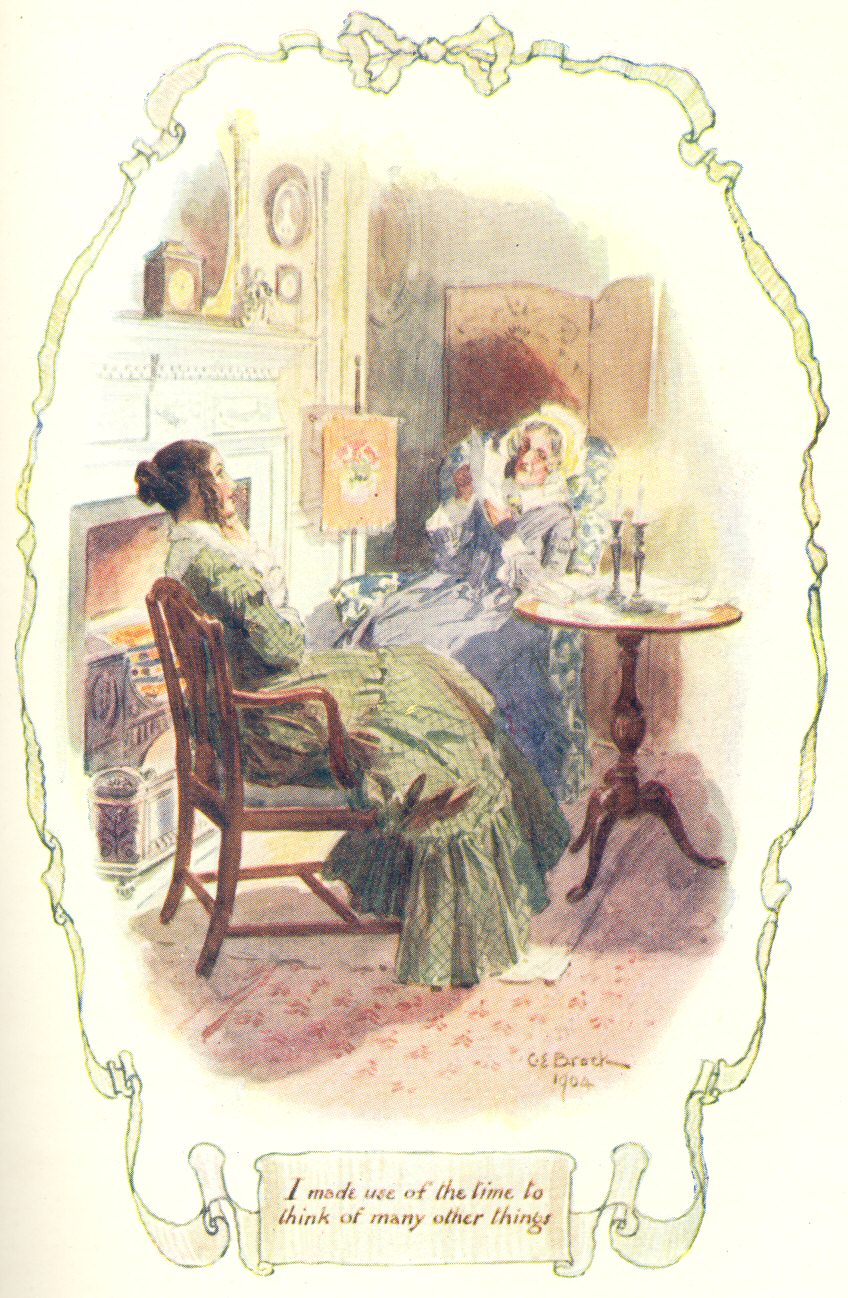
Miss Matty did grudge burning these letters, it was evident. She would not let them be carelessly passed over with any quiet reading, and skipping, to myself. She took them from me, and even lighted the second candle in order to read them aloud with a proper emphasis, and without stumbling over the big words. Oh dear! how I wanted facts instead of reflections, before those letters were concluded! They lasted us two nights; and I won’t deny that I made use of the time to think of many other things, and yet I was always at my post at the end of each sentence.
It was clear that Miss Matty hated to burn these letters. She would not let me read them quietly to myself, skimming and skipping as I pleased. She took them from me and even lit the second candle. She wanted to read them aloud with proper emphasis and without stumbling over the big words. Oh dear! Before she finished, how I wished for facts instead of reflections! The letters lasted us two nights. I won’t deny that I used the time to think about many other things, yet I was always ready to respond at the end of each sentence.
The rector’s letters, and those of his wife and mother-in-law, had all been tolerably short and pithy, written in a straight hand, with the lines very close together. Sometimes the whole letter was contained on a mere scrap of paper. The paper was very yellow, and the ink very brown; some of the sheets were (as Miss Matty made me observe) the old original post, with the stamp in the corner representing a post-boy riding for life and twanging his horn. The letters of Mrs Jenkyns and her mother were fastened with a great round red wafer; for it was before Miss Edgeworth’s “patronage” had banished wafers from polite society. It was evident, from the tenor of what was said, that franks were in great request, and were even used as a means of paying debts by needy members of Parliament. The rector sealed his epistles with an immense coat of arms, and showed by the care with which he had performed this ceremony that he expected they should be cut open, not broken by any thoughtless or impatient hand. Now, Miss Jenkyns’s letters were of a later date in form and writing. She wrote on the square sheet which we have learned to call old-fashioned. Her hand was admirably calculated, together with her use of many-syllabled words, to fill up a sheet, and then came the pride and delight of crossing. Poor Miss Matty got sadly puzzled with this, for the words gathered size like snowballs, and towards the end of her letter Miss Jenkyns used to become quite sesquipedalian. In one to her father, slightly theological and controversial in its tone, she had spoken of Herod, Tetrarch of Idumea. Miss Matty read it “Herod Petrarch of Etruria,” and was just as well pleased as if she had been right.
The letters from the rector, his wife, and his mother-in-law had all been fairly short and to the point. They were written in a straight hand, with the lines very close together. Sometimes an entire letter fit on a mere scrap of paper. The paper was very yellow, and the ink very brown. Some sheets were the original post paper, as Miss Matty pointed out to me. They had a stamp in the corner showing a post-boy riding for his life and blowing his horn. Mrs Jenkyns and her mother sealed their letters with a large, round red wafer. This was before Miss Edgeworth’s “patronage” had driven wafers out of polite society. From what the letters said, it was clear that franks were much sought after. Needy members of Parliament even used them to pay debts. The rector sealed his letters with an enormous coat of arms. He took such care over the seal that he clearly expected it to be cut open. It was not to be broken by some thoughtless or impatient hand. Miss Jenkyns’s letters, however, were later in style and handwriting. She wrote on the square sheets we have learned to call old-fashioned. Her handwriting, along with her use of long words, was perfectly suited to filling a sheet. Then came the pride and delight of crossing, writing another set of lines across the first. Poor Miss Matty found this very confusing. The words grew like snowballs, and toward the end of a letter Miss Jenkyns would use extremely long words. In one letter to her father, which was slightly theological and argumentative in tone, she mentioned Herod, Tetrarch of Idumea. Miss Matty read it as “Herod Petrarch of Etruria,” and was just as pleased as if she had been right.
I can’t quite remember the date, but I think it was in 1805 that Miss Jenkyns wrote the longest series of letters—on occasion of her absence on a visit to some friends near Newcastle-upon-Tyne. These friends were intimate with the commandant of the garrison there, and heard from him of all the preparations that were being made to repel the invasion of Buonaparte, which some people imagined might take place at the mouth of the Tyne. Miss Jenkyns was evidently very much alarmed; and the first part of her letters was often written in pretty intelligible English, conveying particulars of the preparations which were made in the family with whom she was residing against the dreaded event; the bundles of clothes that were packed up ready for a flight to Alston Moor (a wild hilly piece of ground between Northumberland and Cumberland); the signal that was to be given for this flight, and for the simultaneous turning out of the volunteers under arms—which said signal was to consist (if I remember rightly) in ringing the church bells in a particular and ominous manner. One day, when Miss Jenkyns and her hosts were at a dinner-party in Newcastle, this warning summons was actually given (not a very wise proceeding, if there be any truth in the moral attached to the fable of the Boy and the Wolf; but so it was), and Miss Jenkyns, hardly recovered from her fright, wrote the next day to describe the sound, the breathless shock, the hurry and alarm; and then, taking breath, she added, “How trivial, my dear father, do all our apprehensions of the last evening appear, at the present moment, to calm and enquiring minds!” And here Miss Matty broke in with—
I can’t quite remember the date, but I think it was in 1805. Miss Jenkyns was visiting friends near Newcastle-upon-Tyne, and she wrote her longest series of letters during her stay. Her friends were close to the commandant of the garrison there. He told them about all the preparations being made to repel an invasion by Buonaparte. Some people imagined that he might invade at the mouth of the Tyne. Miss Jenkyns was clearly very alarmed. The first part of her letters was often written in fairly understandable English. In these passages, she described the preparations her host family had made for the dreaded event. They had packed bundles of clothes, ready to flee to Alston Moor. Alston Moor is a wild, hilly area between Northumberland and Cumberland. She also described the signal for their flight and for the volunteers to turn out under arms at the same time. If I remember rightly, the signal was to be the church bells ringing in a particular, ominous way. One day, Miss Jenkyns and her hosts were at a dinner party in Newcastle when the warning signal actually sounded. This was not a very wise thing to do, if there is any truth in the moral of the fable of the Boy and the Wolf, but it happened. Miss Jenkyns had hardly recovered from her fright when she wrote the next day. She described the sound, the breathless shock, the rush and the alarm. Then, taking a breath, she added, “How trivial, my dear father, do all our fears of last night seem now to calm and questioning minds!” And here Miss Matty broke in with:
“But, indeed, my dear, they were not at all trivial or trifling at the time. I know I used to wake up in the night many a time and think I heard the tramp of the French entering Cranford. Many people talked of hiding themselves in the salt mines—and meat would have kept capitally down there, only perhaps we should have been thirsty. And my father preached a whole set of sermons on the occasion; one set in the mornings, all about David and Goliath, to spirit up the people to fighting with spades or bricks, if need were; and the other set in the afternoons, proving that Napoleon (that was another name for Bony, as we used to call him) was all the same as an Apollyon and Abaddon. I remember my father rather thought he should be asked to print this last set; but the parish had, perhaps, had enough of them with hearing.”
“But really, my dear, they were not at all trivial or unimportant at the time. I often woke in the night and thought I heard the French marching into Cranford. Many people talked of hiding in the salt mines. Meat would have kept very well down there, although perhaps we would have been thirsty. My father also preached a whole series of sermons for the occasion. In the mornings, he preached about David and Goliath. He wanted to encourage people to fight with spades or bricks, if necessary. In the afternoons, he preached another series, proving that Napoleon was the same as Apollyon and Abaddon. Napoleon was another name for Bony, as we used to call him. I remember my father rather thought he would be asked to print the afternoon sermons. But perhaps the parish had had enough of them just from listening.”
Peter Marmaduke Arley Jenkyns (“poor Peter!” as Miss Matty began to call him) was at school at Shrewsbury by this time. The rector took up his pen, and rubbed up his Latin once more, to correspond with his boy. It was very clear that the lad’s were what are called show letters. They were of a highly mental description, giving an account of his studies, and his intellectual hopes of various kinds, with an occasional quotation from the classics; but, now and then, the animal nature broke out in such a little sentence as this, evidently written in a trembling hurry, after the letter had been inspected: “Mother dear, do send me a cake, and put plenty of citron in.” The “mother dear” probably answered her boy in the form of cakes and “goody,” for there were none of her letters among this set; but a whole collection of the rector’s, to whom the Latin in his boy’s letters was like a trumpet to the old war-horse. I do not know much about Latin, certainly, and it is, perhaps, an ornamental language, but not very useful, I think—at least to judge from the bits I remember out of the rector’s letters. One was, “You have not got that town in your map of Ireland; but Bonus Bernardus non videt omnia, as the Proverbia say.” Presently it became very evident that “poor Peter” got himself into many scrapes. There were letters of stilted penitence to his father, for some wrong-doing; and among them all was a badly-written, badly-sealed, badly-directed, blotted note:—“My dear, dear, dear, dearest mother, I will be a better boy; I will, indeed; but don’t, please, be ill for me; I am not worth it; but I will be good, darling mother.”
By this time, Peter Marmaduke Arley Jenkyns (“poor Peter!” as Miss Matty began to call him) was at school in Shrewsbury. The rector took up his pen and refreshed his Latin so he could write to his boy. Peter’s letters were clearly what are called show letters. They were highly intellectual, describing his studies and his various hopes for his education, with an occasional quotation from the classics. But now and then, his appetite broke through. A little sentence like this was plainly written in a trembling hurry, after the letter had been inspected: “Mother dear, do send me a cake, and put plenty of citron in.” His “mother dear” probably answered her boy with cakes and treats, since none of her letters were among these. But there was a whole collection of the rector’s letters. The Latin in his boy’s letters was like a trumpet call to an old warhorse. I certainly do not know much about Latin. Perhaps it is a decorative language, but I do not think it is very useful. At least, that is my judgment from the passages I remember from the rector’s letters. One was, “You have not got that town on your map of Ireland. But Bonus Bernardus non videt omnia, as the Proverbia say.” Before long, it became very clear that “poor Peter” got himself into many scrapes. There were stiffly worded letters to his father, expressing regret for some wrongdoing. Among them all was a blotted note, badly written, badly sealed, and badly addressed: “My dear, dear, dear, dearest mother, I will be a better boy. I will, indeed. But please don’t be ill because of me. I am not worth it. But I will be good, darling mother.”
Miss Matty could not speak for crying, after she had read this note. She gave it to me in silence, and then got up and took it to her sacred recesses in her own room, for fear, by any chance, it might get burnt. “Poor Peter!” she said; “he was always in scrapes; he was too easy. They led him wrong, and then left him in the lurch. But he was too fond of mischief. He could never resist a joke. Poor Peter!”
After reading the note, Miss Matty was crying too hard to speak. She gave it to me without a word. Then she got up and took it to a private hiding place in her room, so it would not accidentally get burned. “Poor Peter!” she said. “He was always getting into trouble. He was too easily influenced. They led him astray, then abandoned him. But he was too fond of mischief. He could never resist a joke. Poor Peter!”