Chapter 39
Therese Neumann, the Catholic Stigmatist
“Return to india. I have waited for you patiently for fifteen years. Soon I shall swim out of the body and on to the Shining Abode. Yogananda, come!”
“Return to India. I have waited patiently for you for fifteen years. Soon I will swim out of my body and into the Shining Abode. Yogananda, come!”
Sri Yukteswar’s voice sounded startlingly in my inner ear as I sat in meditation at my Mt. Washington headquarters. Traversing ten thousand miles in the twinkling of an eye, his message penetrated my being like a flash of lightning.
Sri Yukteswar’s voice startled me, sounding in my inner ear as I meditated at my Mt. Washington headquarters. His message crossed ten thousand miles in an instant and pierced my being like a flash of lightning.
Fifteen years! Yes, I realized, now it is 1935; I have spent fifteen years in spreading my guru’s teachings in America. Now he recalls me.
Fifteen years! Yes, I realized, it is now 1935. I have spent fifteen years spreading my guru’s teachings in America. Now he is calling me back.
That afternoon I recounted my experience to a visiting disciple. His spiritual development under Kriya Yoga was so remarkable that I often called him “saint,” remembering Babaji’s prophecy that America too would produce men and women of divine realization through the ancient yogic path.
That afternoon I told a visiting disciple about my experience. His spiritual growth through Kriya Yoga was so remarkable that I often called him “saint.” When I did, I remembered Babaji’s prophecy. America too would produce men and women who achieved divine realization through the ancient yogic path.
This disciple and a number of others generously insisted on making a donation for my travels. The financial problem thus solved, I made arrangements to sail, via Europe, for India. Busy weeks of preparations at Mount Washington! In March, 1935 I had the Self- Realization Fellowship chartered under the laws of the State of California as a non-profit corporation. To this educational institution go all public donations as well as the revenue from the sale of my books, magazine, written courses, class tuition, and every other source of income.
This disciple and several others generously insisted on donating money for my travels. With the financial problem solved, I arranged to sail to India via Europe. What busy weeks of preparation at Mount Washington! In March 1935, I had the Self-Realization Fellowship legally established as a nonprofit corporation under California state law. All public donations go to this educational institution. So does all income from sales of my books, magazine, and written courses, from class tuition, and from every other source.
“I shall be back,” I told my students. “Never shall I forget America.”
“I’ll be back,” I told my students. “I’ll never forget America.”
At a farewell banquet given to me in Los Angeles by loving friends, I looked long at their faces and thought gratefully, “Lord, he who remembers Thee as the Sole Giver will never lack the sweetness of friendship among mortals.”
Loving friends held a farewell banquet for me in Los Angeles. I gazed at their faces for a long time and thought gratefully, “Lord, whoever remembers you as the only giver will never lack the sweetness of human friendship.”
I sailed from New York on June 9, 1935 [^39] in the Europa. Two students accompanied me: my secretary, Mr. C. Richard Wright, and an elderly lady from Cincinnati, Miss Ettie Bletch. We enjoyed the days of ocean peace, a welcome contrast to the past hurried weeks. Our period of leisure was short-lived; the speed of modern boats has some regrettable features!
I sailed from New York on June 9, 1935 [^39] aboard the Europa. Two students accompanied me: my secretary, Mr. C. Richard Wright, and an elderly woman from Cincinnati, Miss Ettie Bletch. We enjoyed the peaceful days at sea, a welcome contrast to the busy weeks before. Our leisure did not last long. The speed of modern ships has some drawbacks!
Like any other group of inquisitive tourists, we walked around the huge and ancient city of London. The following day I was invited to address a large meeting in Caxton Hall, at which I was introduced to the London audience by Sir Francis Younghusband. Our party spent a pleasant day as guests of Sir Harry Lauder at his estate in Scotland. We soon crossed the English Channel to the continent, for I wanted to make a special pilgrimage to Bavaria. This would be my only chance, I felt, to visit the great Catholic mystic, Therese Neumann of Konnersreuth.
Like any other group of curious tourists, we explored the vast, ancient city of London. The next day, I was invited to speak at a large gathering in Caxton Hall. Sir Francis Younghusband introduced me to the London audience. Our group spent a pleasant day as guests of Sir Harry Lauder at his estate in Scotland. We soon crossed the English Channel to mainland Europe because I wanted to make a special pilgrimage to Bavaria. I felt this would be my only chance to visit the great Catholic mystic, Therese Neumann of Konnersreuth.
Years earlier I had read an amazing account of Therese. Information given in the article was as follows:
Years earlier, I had read an amazing account of Therese. The article gave the following information:
(1) Therese, born in 1898, had been injured in an accident at the age of twenty; she became blind and paralyzed.
(1) Therese was born in 1898. She was injured in an accident at twenty and became blind and paralyzed.
(2) She miraculously regained her sight in 1923 through prayers to St. Teresa, “The Little Flower.” Later Therese Neumann’s limbs were instantaneously healed.
(2) She miraculously regained her sight in 1923 through prayers to St. Teresa, “The Little Flower.” Later, Therese Neumann’s limbs were instantly healed.
(3) From 1923 onward, Therese has abstained completely from food and drink, except for the daily swallowing of one small consecrated wafer.
(3) Since 1923, Therese has had no food or drink except for one small consecrated wafer, swallowed daily.
(4) The stigmata, or sacred wounds of Christ, appeared in 1926 on Therese’s head, breast, hands, and feet. On Friday of every week thereafter, she has passed through the Passion of Christ, suffering in her own body all his historic agonies.
(4) In 1926, the stigmata, or sacred wounds of Christ, appeared on Therese’s head, chest, hands, and feet. Every Friday since then, she has relived the Passion of Christ. She has suffered in her own body all the agonies he endured.
(5) Knowing ordinarily only the simple German of her village, during her Friday trances Therese utters phrases which scholars have identified as ancient Aramaic. At appropriate times in her vision, she speaks Hebrew or Greek.
(5) Therese normally knows only the simple German spoken in her village. But during her Friday trances, she speaks phrases that scholars have identified as ancient Aramaic. At appropriate moments in her vision, she speaks Hebrew or Greek.
(6) By ecclesiastical permission, Therese has several times been under close scientific observation. Dr. Fritz Gerlick, editor of a Protestant German newspaper, went to Konnersreuth to “expose the Catholic fraud,” but ended up by reverently writing her biography. [^39]
(6) With Church permission, Therese has been under close scientific observation several times. Dr. Fritz Gerlick was the editor of a Protestant German newspaper. He went to Konnersreuth to “expose the Catholic fraud,” but ended up writing her biography with deep respect. [^39]
As always, whether in East or West, I was eager to meet a saint. I rejoiced as our little party entered, on July 16th, the quaint village of Konnersreuth. The Bavarian peasants exhibited lively interest in our Ford automobile (brought with us from America) and its assorted group-an American young man, an elderly lady, and an olive-hued Oriental with long hair tucked under his coat collar.
As always, whether in East or West, I was eager to meet a saint. I was delighted as our small group entered the quaint village of Konnersreuth on July 16. The Bavarian peasants showed keen interest in our Ford automobile. We had brought the car with us from America. They were also curious about our varied group: a young American man, an elderly lady, and an olive-skinned Asian man. The Asian man’s long hair was tucked under his coat collar.
Therese’s little cottage, clean and neat, with geraniums blooming by a primitive well, was alas! silently closed. The neighbors, and even the village postman who passed by, could give us no information. Rain began to fall; my companions suggested that we leave.
Therese’s little cottage was clean and neat, with geraniums blooming beside a simple well. Sadly, the cottage was closed and silent. The neighbors, and even the village postman passing by, could give us no information. Rain began to fall, and my companions suggested we leave.
“No,” I said stubbornly, “I will stay here until I find some clue leading to Therese.”
“No,” I said stubbornly, “I’ll stay here until I find some clue that leads to Therese.”
Two hours later we were still sitting in our car amidst the dismal rain. “Lord,” I sighed complainingly, “why didst Thou lead me here if she has disappeared?”
Two hours later, we were still sitting in our car in the dreary rain. “Lord,” I sighed in frustration, “why did you lead me here if she has disappeared?”
An English-speaking man halted beside us, politely offering his aid.
An English-speaking man stopped beside us and politely offered to help.
“I don’t know for certain where Therese is,” he said, “but she often visits at the home of Professor Wurz, a seminary master of Eichstatt, eighty miles from here.”
“I don’t know for sure where Therese is,” he said, “but she often visits Professor Wurz’s home. He teaches at a seminary in Eichstatt, eighty miles from here.”
The following morning our party motored to the quiet village of Eichstatt, narrowly lined with cobblestoned streets. Dr. Wurz greeted us cordially at his home; “Yes, Therese is here.” He sent her word of the visitors. A messenger soon appeared with her reply.
The next morning our group drove to the quiet village of Eichstatt, with its narrow cobblestone streets. Dr. Wurz welcomed us warmly at his home. “Yes, Therese is here.” He sent Therese a message that we had arrived. A messenger soon came with her reply.
“Though the bishop has asked me to see no one without his permission, I will receive the man of God from India.”
“The bishop has asked me not to see anyone without his permission. But I will welcome the man of God from India.”
Deeply touched at these words, I followed Dr. Wurz upstairs to the sitting room. Therese entered immediately, radiating an aura of peace and joy. She wore a black gown and spotless white head dress. Although her age was thirty-seven at this time, she seemed much younger, possessing indeed a childlike freshness and charm. Healthy, well- formed, rosy-cheeked, and cheerful, this is the saint that does not eat!
Deeply moved by these words, I followed Dr. Wurz upstairs to the sitting room. Therese entered immediately, radiating peace and joy. She wore a black gown and a spotless white headdress. Although she was thirty-seven at the time, she looked much younger, with a truly childlike freshness and charm. Healthy, well-built, rosy-cheeked, and cheerful, here was the saint who does not eat!
Therese greeted me with a very gentle handshaking. We both beamed in silent communion, each knowing the other to be a lover of God.
Therese greeted me with a very gentle handshake. We both smiled brightly in silent connection, each knowing that the other loved God.
Dr. Wurz kindly offered to serve as interpreter. As we seated ourselves, I noticed that Therese was glancing at me with naive curiosity; evidently Hindus had been rare in Bavaria.
Dr. Wurz kindly offered to interpret. As we sat down, I noticed Therese glancing at me with innocent curiosity. Evidently, Hindus had been rare in Bavaria.
“Don’t you eat anything?” I wanted to hear the answer from her own lips.
“Don’t you eat anything?” I wanted to hear the answer directly from her.
“No, except a consecrated rice-flour wafer, once every morning at six o’clock.”
“No, except for a blessed rice-flour wafer, once every morning at six o’clock.”
“How large is the wafer?”
“How big is the wafer?”
“It is paper-thin, the size of a small coin.” She added, “I take it for sacramental reasons; if it is unconsecrated, I am unable to swallow it.”
“It is paper-thin and the size of a small coin.” She added, “I take it as a sacrament. If it has not been consecrated, I cannot swallow it.”
“Certainly you could not have lived on that, for twelve whole years?”
“Surely you couldn’t have lived on that for twelve whole years?”
“I live by God’s light.” How simple her reply, how Einsteinian!
“I live by God’s light.” Her reply was so simple, so Einsteinian!
“I see you realize that energy flows to your body from the ether, sun, and air.”
“I see you understand that energy flows into your body from the ether, the sun, and the air.”
A swift smile broke over her face. “I am so happy to know you understand how I live.”
She smiled suddenly. “I’m so happy to know you understand how I live.”
“Your sacred life is a daily demonstration of the truth uttered by Christ: ‘Man shall not live by bread alone, but by every word that proceedeth out of the mouth of God.’” [^39]
“Your sacred life shows the truth of Christ’s words every day: ‘People do not live on bread alone. They live on every word that comes from the mouth of God.’” [^39]
Again she showed joy at my explanation. “It is indeed so. One of the reasons I am here on earth today is to prove that man can live by God’s invisible light, and not by food only.”
Again, she was delighted by my explanation. “Yes, that is true. One reason I am here on earth today is to prove that people can live by God’s invisible light, not just food.”
“Can you teach others how to live without food?”
“Can you teach others how to live without food?”
She appeared a trifle shocked. “I cannot do that; God does not wish it.”
She looked slightly shocked. “I can’t do that. God doesn’t want me to.”
As my gaze fell on her strong, graceful hands, Therese showed me a little, square, freshly healed wound on each of her palms. On the back of each hand, she pointed out a smaller, crescent-shaped wound, freshly healed. Each wound went straight through the hand. The sight brought to my mind distinct recollection of the large square iron nails with crescent-tipped ends, still used in the Orient, but which I do not recall having seen in the West.
As I looked at her strong, graceful hands, Therese showed me a small, square, freshly healed wound on each palm. On the back of each hand, she pointed out a smaller, crescent-shaped wound, also freshly healed. Each wound went straight through the hand. The sight vividly reminded me of the large, square iron nails with crescent-shaped tips still used in the Orient. But I do not recall ever seeing such nails in the West.
The saint told me something of her weekly trances. “As a helpless onlooker, I observe the whole Passion of Christ.” Each week, from Thursday midnight until Friday afternoon at one o’clock, her wounds open and bleed; she loses ten pounds of her ordinary 121-pound weight. Suffering intensely in her sympathetic love, Therese yet looks forward joyously to these weekly visions of her Lord.
The saint told me a little about her weekly trances. “As a helpless witness, I watch the whole Passion of Christ.” Each week, from midnight Thursday until one o’clock Friday afternoon, her wounds open and bleed. She loses ten pounds from her usual weight of 121 pounds. Therese suffers intensely out of love and compassion for her Lord. Yet she joyfully looks forward to these weekly visions of him.
I realized at once that her strange life is intended by God to reassure all Christians of the historical authenticity of Jesus’ life and crucifixion as recorded in the New Testament, and to dramatically display the ever-living bond between the Galilean Master and his devotees.
I realized at once that God intended her strange life to reassure all Christians about Jesus’ life and crucifixion. It was meant to confirm their historical truth as recorded in the New Testament. Her life was also meant to show dramatically the enduring bond between the Galilean Master and his devotees.
Professor Wurz related some of his experiences with the saint.
Professor Wurz shared some of his experiences with the saint.
“Several of us, including Therese, often travel for days on sight- seeing trips throughout Germany,” he told me. “It is a striking contrast-while we have three meals a day, Therese eats nothing. She remains as fresh as a rose, untouched by the fatigue which the trips cause us. As we grow hungry and hunt for wayside inns, she laughs merrily.”
“Several of us, including Therese, often spend days traveling around Germany to see the sights,” he told me. “The contrast is striking. While we eat three meals a day, Therese eats nothing. She stays as fresh as a rose, without any of the tiredness the trips cause us. As we grow hungry and look for roadside inns, she laughs happily.”
The professor added some interesting physiological details: “Because Therese takes no food, her stomach has shrunk. She has no excretions, but her perspiration glands function; her skin is always soft and firm.”
The professor added some interesting details about her body: “Because Therese eats no food, her stomach has shrunk. She excretes no waste, but her sweat glands work. Her skin is always soft and firm.”
At the time of parting, I expressed to Therese my desire to be present at her trance.
As we said goodbye, I told Therese I wanted to be present during her trance.
“Yes, please come to Konnersreuth next Friday,” she said graciously. “The bishop will give you a permit. I am very happy you sought me out in Eichstatt.”
“Yes, please come to Konnersreuth next Friday,” she said warmly. “The bishop will give you a permit. I’m very happy you came to find me in Eichstatt.”
Therese shook hands gently, many times, and walked with our party to the gate. Mr. Wright turned on the automobile radio; the saint examined it with little enthusiastic chuckles. Such a large crowd of youngsters gathered that Therese retreated into the house. We saw her at a window, where she peered at us, childlike, waving her hand.
Therese gently shook hands many times and walked with our group to the gate. Mr. Wright turned on the car radio. The saint examined the radio with little chuckles of delight. Such a large crowd of children gathered that Therese retreated into the house. We saw her at a window, peering at us like a child and waving her hand.
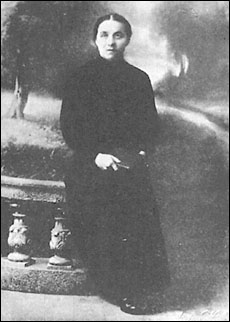
THERESE NEUMANN
THERESE NEUMANN
Famous Catholic Stigmatist who inspired my 1935 pilgrimage to Konnersreuth, Bavaria
Famous Catholic stigmatist who inspired my 1935 pilgrimage to Konnersreuth, Bavaria
From a conversation the next day with two of Therese’s brothers, very kind and amiable, we learned that the saint sleeps only one or two hours at night. In spite of the many wounds in her body, she is active and full of energy. She loves birds, looks after an aquarium of fish, and works often in her garden. Her correspondence is large; Catholic devotees write her for prayers and healing blessings. Many seekers have been cured through her of serious diseases.
The next day, we spoke with two of Therese’s brothers, who were very kind and friendly. We learned from them that the saint sleeps only one or two hours a night. Despite the many wounds on her body, she is active and full of energy. She loves birds, cares for an aquarium of fish, and often works in her garden. She receives many letters. Catholic devotees write to her asking for prayers and healing blessings. Many people seeking her help have been cured of serious diseases through her.
Her brother Ferdinand, about twenty-three, explained that Therese has the power, through prayer, of working out on her own body the ailments of others. The saint’s abstinence from food dates from a time when she prayed that the throat disease of a young man of her parish, then preparing to enter holy orders, be transferred to her own throat.
Her brother Ferdinand, about twenty-three years old, explained that Therese can take on other people’s illnesses through prayer. She experiences these illnesses in her own body. The saint stopped eating after praying for a young man in her parish who was preparing to enter the priesthood. She prayed that his throat disease would be transferred to her own throat.
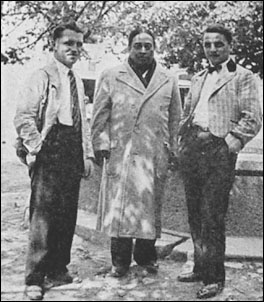
On Thursday afternoon our party drove to the home of the bishop, who looked at my flowing locks with some surprise. He readily wrote out the necessary permit. There was no fee; the rule made by the Church is simply to protect Therese from the onrush of casual tourists, who in previous years had flocked on Fridays by the thousands.
On Thursday afternoon our group drove to the bishop’s home. He looked at my long, flowing hair with some surprise. He readily wrote out the required permit. There was no fee. The Church’s rule is simply meant to protect Therese from crowds of casual tourists. In previous years, thousands of these tourists had flocked to see her on Fridays.
We arrived Friday morning about nine-thirty in Konnersreuth. I noticed that Therese’s little cottage possesses a special glass-roofed section to afford her plenty of light. We were glad to see the doors no longer closed, but wide-open in hospitable cheer. There was a line of about twenty visitors, armed with their permits. Many had come from great distances to view the mystic trance.
We arrived in Konnersreuth on Friday morning at about nine-thirty. I noticed that Therese’s little cottage had a special glass-roofed section to give her plenty of light. We were glad to see the doors were no longer closed, but wide open in cheerful welcome. About twenty visitors stood in line, each with a permit. Many had traveled great distances to see the mystic trance.
Therese had passed my first test at the professor’s house by her intuitive knowledge that I wanted to see her for spiritual reasons, and not just to satisfy a passing curiosity.
Therese had passed my first test at the professor’s house because she intuitively knew why I wanted to see her. My reasons were spiritual, not just a matter of passing curiosity.
My second test was connected with the fact that, just before I went upstairs to her room, I put myself into a yogic trance state in order to be one with her in telepathic and televisic rapport. I entered her chamber, filled with visitors; she was lying in a white robe on the bed. With Mr. Wright following closely behind me, I halted just inside the threshold, awestruck at a strange and most frightful spectacle.
My second test was connected to the yogic trance I entered just before going upstairs to her room. I entered the trance to become one with her through telepathy and clairvoyant vision. I entered her room, which was full of visitors. She lay on the bed in a white robe. With Mr. Wright following closely behind me, I stopped just inside the doorway, awestruck by a strange and terrifying sight.
Blood flowed thinly and continuously in an inch-wide stream from Therese’s lower eyelids. Her gaze was focused upward on the spiritual eye within the central forehead. The cloth wrapped around her head was drenched in blood from the stigmata wounds of the crown of thorns. The white garment was redly splotched over her heart from the wound in her side at the spot where Christ’s body, long ages ago, had suffered the final indignity of the soldier’s spear-thrust.
Blood flowed steadily from Therese’s lower eyelids in a thin stream an inch wide. Her gaze was fixed upward on the spiritual eye within the center of her forehead. The cloth wrapped around her head was soaked with blood from the stigmata wounds of the crown of thorns. Her white garment had red blotches over her heart from the wound in her side. The wound marked the spot where, long ago, Christ’s body had suffered the final indignity of a soldier’s spear thrust.
Therese’s hands were extended in a gesture maternal, pleading; her face wore an expression both tortured and divine. She appeared thinner, changed in many subtle as well as outward ways. Murmuring words in a foreign tongue, she spoke with slightly quivering lips to persons visible before her inner sight.
Therese held out her hands in a motherly, pleading gesture. Her face showed both suffering and divinity. She looked thinner and had changed in many subtle and visible ways. Her lips trembled slightly as she murmured in a foreign language to people she could see in her inner vision.
As I was in attunement with her, I began to see the scenes of her vision. She was watching Jesus as he carried the cross amidst the jeering multitude. [^39] Suddenly she lifted her head in consternation: the Lord had fallen under the cruel weight. The vision disappeared. In the exhaustion of fervid pity, Therese sank heavily against her pillow.
As I was in tune with her, I began to see the scenes of her vision. She was watching Jesus carry the cross through the mocking crowd. [^39] Suddenly she lifted her head in alarm: the Lord had fallen under the cruel weight. The vision disappeared. Exhausted by her intense pity, Therese sank heavily back against her pillow.
At this moment I heard a loud thud behind me. Turning my head for a second, I saw two men carrying out a prostrate body. But because I was coming out of the deep superconscious state, I did not immediately recognize the fallen person. Again I fixed my eyes on Therese’s face, deathly pale under the rivulets of blood, but now calm, radiating purity and holiness. I glanced behind me later and saw Mr. Wright standing with his hand against his cheek, from which blood was trickling.
At that moment, I heard a loud thud behind me. I turned my head briefly and saw two men carrying out a body lying flat. But because I was emerging from a deep superconscious state, I did not immediately recognize the person who had fallen. I focused again on Therese’s face, deathly pale beneath the streams of blood. But her face was now calm, radiating purity and holiness. Later, I glanced behind me and saw Mr. Wright standing with his hand against his cheek. Blood was trickling from his cheek.
“Dick,” I inquired anxiously, “were you the one who fell?”
“Dick,” I asked anxiously, “were you the one who fell?”
“Yes, I fainted at the terrifying spectacle.”
“Yes, I fainted at the terrifying sight.”
“Well,” I said consolingly, “you are brave to return and look upon the sight again.”
“Well,” I said gently, “you’re brave to come back and see the sight again.”
Remembering the patiently waiting line of pilgrims, Mr. Wright and I silently bade farewell to Therese and left her sacred presence. [^39]
Remembering the line of pilgrims waiting patiently, Mr. Wright and I silently said goodbye to Therese. We left her sacred presence. [^39]
The following day our little group motored south, thankful that we were not dependent on trains, but could stop the Ford wherever we chose throughout the countryside. We enjoyed every minute of a tour through Germany, Holland, France, and the Swiss Alps. In Italy we made a special trip to Assisi to honor the apostle of humility, St. Francis. The European tour ended in Greece, where we viewed the Athenian temples, and saw the prison in which the gentle Socrates [^39] had drunk his death potion. One is filled with admiration for the artistry with which the Greeks have everywhere wrought their very fancies in alabaster.
The next day our little group drove south, thankful we did not have to depend on trains. Instead, we could stop the Ford wherever we chose throughout the countryside. We enjoyed every minute of our tour through Germany, Holland, France, and the Swiss Alps. In Italy we made a special trip to Assisi to honor St. Francis, the apostle of humility. Our European tour ended in Greece, where we visited the temples of Athens. We also saw the prison where the gentle Socrates [^39] had drunk the poison that killed him. One cannot help admiring the artistry with which the Greeks everywhere brought their imagined visions to life in alabaster.
We took ship over the sunny Mediterranean, disembarking at Palestine. Wandering day after day over the Holy Land, I was more than ever convinced of the value of pilgrimage. The spirit of Christ is all- pervasive in Palestine; I walked reverently by his side at Bethlehem, Gethsemane, Calvary, the holy Mount of Olives, and by the River Jordan and the Sea of Galilee.
We sailed across the sunny Mediterranean and went ashore in Palestine. Walking through the Holy Land day after day, I became more convinced than ever of the value of pilgrimage. The spirit of Christ is present everywhere in Palestine. I walked reverently by his side at Bethlehem, Gethsemane, Calvary, and the holy Mount of Olives. I also walked by his side along the River Jordan and the Sea of Galilee.
Our little party visited the Birth Manger, Joseph’s carpenter shop, the tomb of Lazarus, the house of Martha and Mary, the hall of the Last Supper. Antiquity unfolded; scene by scene, I saw the divine drama that Christ once played for the ages.
Our small group visited the Birth Manger, Joseph’s carpenter shop, and the tomb of Lazarus. We also visited the house of Martha and Mary and the hall of the Last Supper. The ancient past unfolded before me. Scene by scene, I saw the divine drama that Christ once acted out for all ages.
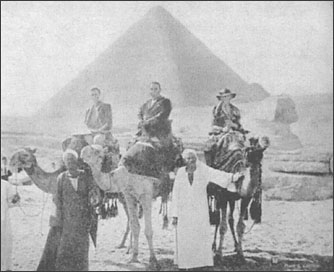
On to Egypt, with its modern Cairo and ancient pyramids. Then a boat down the narrow Red Sea, over the vasty Arabian Sea; lo, India!
On to Egypt, with modern Cairo and the ancient pyramids. Then by boat down the narrow Red Sea and across the vast Arabian Sea. And there was India!
39-1: The remarkable inclusion here of a complete date is due to the fact that my secretary, Mr. Wright, kept a travel diary.
39-1: Unusually, I can give a full date here because my secretary, Mr. Wright, kept a travel diary.
39-2: Other books on her life are Therese Neumann: A Stigmatist Of Our Day, and Further Chronicles Of Therese Neumann, both by Friedrich Ritter von Lama (Milwaukee: Bruce Pub. Co.).
39-2: Other books about her life include Therese Neumann: A Stigmatist Of Our Day and Further Chronicles Of Therese Neumann. Both are by Friedrich Ritter von Lama (Milwaukee: Bruce Pub. Co.).
39-3: Matthew 4:4. Man’s body battery is not sustained by gross food (bread) alone, but by the vibratory cosmic energy (word, or AUM). The invisible power flows into the human body through the gate of the medulla oblongata. This sixth bodily center is located at the back of the neck at the top of the five spinal chakras (Sanskrit for “wheels” or centers of radiating force). The medulla is the principal entrance for the body’s supply of universal life force (AUM), and is directly connected with man’s power of will, concentrated in the seventh or Christ Consciousness center (Kutastha) in the third eye between the eyebrows. Cosmic energy is then stored up in the brain as a reservoir of infinite potentialities, poetically mentioned in the Vedas as the “thousand-petaled lotus of light.” The Bible invariably refers to AUM as the “Holy Ghost” or invisible life force which divinely upholds all creation. “What? know ye not that your body is the temple of the Holy Ghost which is in you, which ye have of God, and ye are not your own?”-I Corinthians 6:19.
39-3: Matthew 4:4. The human body is like a battery, sustained not by physical food (bread) alone, but by vibrating cosmic energy (word, or AUM). This invisible power enters the human body through the medulla oblongata. This sixth bodily center lies at the back of the neck, above the five spinal chakras. The Sanskrit word means “wheels” or centers of radiating force. The medulla is the main entrance for the body’s supply of universal life force (AUM). It is directly connected to human willpower, concentrated in the seventh center, the Christ Consciousness center (Kutastha). This center is in the third eye between the eyebrows. Cosmic energy is then stored in the brain, a reservoir of infinite possibilities. The Vedas poetically describe this reservoir as the “thousand-petaled lotus of light.” The Bible always refers to AUM as the “Holy Ghost,” the invisible life force that divinely sustains all creation. “Do you not know that your body is the temple of the Holy Ghost within you? You have received this Holy Ghost from God, and you are not your own.” 1 Corinthians 6:19.
39-4: During the hours preceding my arrival, Therese had already passed through many visions of the closing days in Christ’s life. Her entrancement usually starts with scenes of the events which followed the Last Supper. Her visions end with Jesus’ death on the cross or, occasionally, with his entombment.
39-4: In the hours before I arrived, Therese had already experienced many visions of the final days of Christ’s life. Her trance usually begins with scenes of the events after the Last Supper. Her visions end with Jesus’ death on the cross or, occasionally, with his burial.
39-5: Therese has survived the Nazi persecution, and is still present in Konnersreuth, according to 1945 American news dispatches from Germany.
39-5: Therese has survived Nazi persecution. She is still in Konnersreuth, according to 1945 American news reports from Germany.
39-6: A passage in Eusebius relates an interesting encounter between Socrates and a Hindu sage. The passage runs: “Aristoxenus, the musician, tells the following story about the Indians. One of these men met Socrates at Athens, and asked him what was the scope of his philosophy. ‘An inquiry into human phenomena,’ replied Socrates. At this the Indian burst out laughing. ‘How can a man inquire into human phenomena,’ he said, ‘when he is ignorant of divine ones?’” The Aristoxenus mentioned was a pupil of Aristotle, and a noted writer on harmonics. His date is 330 B.C.
39-6: A passage in Eusebius describes an interesting encounter between Socrates and a Hindu sage. It reads: “Aristoxenus, the musician, tells the following story about the Indians. One of these men met Socrates in Athens and asked what his philosophy studied. ‘Human phenomena,’ Socrates replied. At this answer, the Indian burst out laughing. ‘How can a man study human phenomena,’ he said, ‘when he knows nothing about divine phenomena?’” Aristoxenus was a student of Aristotle and a well-known writer on harmonics. He lived around 330 B.C.