Chapter 38
Luther Burbank: A Saint Among the Roses
“The secret of improved plant breeding, apart from scientific knowledge, is love.” Luther Burbank uttered this wisdom as I walked beside him in his Santa Rosa garden. We halted near a bed of edible cacti.
“The secret to better plant breeding, beyond scientific knowledge, is love.” Luther Burbank shared this wisdom as I walked beside him in his Santa Rosa garden. We stopped near a bed of edible cacti.
“While I was conducting experiments to make ‘spineless’ cacti,” he continued, “I often talked to the plants to create a vibration of love. ‘You have nothing to fear,’ I would tell them. ‘You don’t need your defensive thorns. I will protect you.’ Gradually the useful plant of the desert emerged in a thornless variety.”
“While I was experimenting to grow ‘spineless’ cacti,” he continued, “I often talked to the plants to create a vibration of love. ‘You have nothing to fear,’ I would tell them. ‘You don’t need thorns to defend yourselves. I will protect you.’ Gradually, a thornless variety of this useful desert plant emerged.”
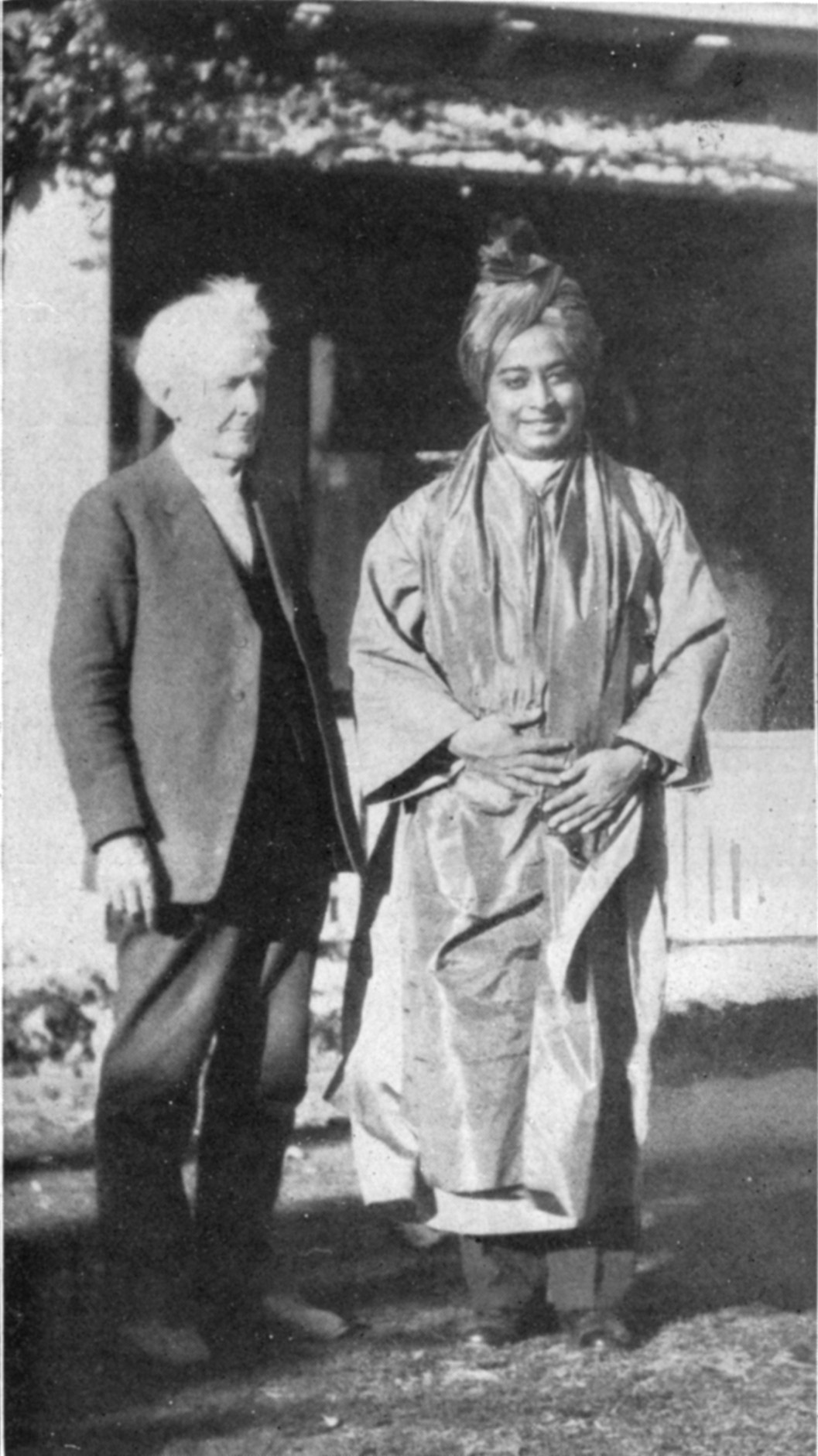
I was charmed at this miracle. “Please, dear Luther, give me a few cacti leaves to plant in my garden at Mount Washington.”
I was delighted by this miracle. “Please, dear Luther, give me a few cactus leaves to plant in my garden at Mount Washington.”
A workman standing near-by started to strip off some leaves; Burbank prevented him.
A worker standing nearby started stripping off some leaves. Burbank stopped him.
“I myself will pluck them for the swami.” He handed me three leaves, which later I planted, rejoicing as they grew to huge estate.
“I’ll pick them myself for the swami.” He handed me three leaves, which I later planted. I was delighted as they grew to an enormous size.
The great horticulturist told me that his first notable triumph was the large potato, now known by his name. With the indefatigability of genius, he went on to present the world with hundreds of crossed improvements on nature-his new Burbank varieties of tomato, corn, squash, cherries, plums, nectarines, berries, poppies, lilies, roses.
The great horticulturist told me his first major success was the large potato now named after him. With the tireless energy of a genius, he went on to give the world hundreds of improvements on nature through crossbreeding. These were his new Burbank varieties of tomatoes, corn, squash, cherries, plums, nectarines, berries, poppies, lilies, and roses.
I focused my camera as Luther led me before the famous walnut tree by which he had proved that natural evolution can be telescopically hastened.
I focused my camera as Luther led me to the famous walnut tree. With this tree, he had proved that natural evolution can be greatly sped up.
“In only sixteen years,” he said, “this walnut tree reached a state of abundant nut production to which an unaided nature would have brought the tree in twice that time.”
“In only sixteen years,” he said, “this walnut tree began producing abundant nuts. Without help, the tree would have taken twice as long to produce that many.”
Burbank’s little adopted daughter came romping with her dog into the garden.
Burbank’s little adopted daughter came running playfully into the garden with her dog.
“She is my human plant.” Luther waved to her affectionately. “I see humanity now as one vast plant, needing for its highest fulfillments only love, the natural blessings of the great outdoors, and intelligent crossing and selection. In the span of my own lifetime I have observed such wondrous progress in plant evolution that I look forward optimistically to a healthy, happy world as soon as its children are taught the principles of simple and rational living. We must return to nature and nature’s God.”
“She is my human plant.” Luther waved to her affectionately. “I now see humanity as one vast plant. To reach its full potential, humanity needs only love, nature’s blessings outdoors, and intelligent crossbreeding and selection. In my own lifetime, I have seen such wonderful progress in plant evolution. That progress makes me optimistic about a healthy, happy world once children learn the principles of simple, sensible living. We must return to nature and nature’s God.”
“Luther, you would delight in my Ranchi school, with its outdoor classes, and atmosphere of joy and simplicity.”
“Luther, you would love my Ranchi school, with its outdoor classes and its joyful, simple atmosphere.”
My words touched the chord closest to Burbank’s heart-child education. He plied me with questions, interest gleaming from his deep, serene eyes.
My words touched on the subject closest to Burbank’s heart: children’s education. He asked me many questions, his deep, calm eyes shining with interest.
“Swamiji,” he said finally, “schools like yours are the only hope of a future millennium. I am in revolt against the educational systems of our time, severed from nature and stifling of all individuality. I am with you heart and soul in your practical ideals of education.”
“Swamiji,” he said finally, “schools like yours are the only hope for a future golden age. I rebel against today’s education systems. They are cut off from nature and stifle all individuality. I support you wholeheartedly in your practical ideals for education.”
As I was taking leave of the gentle sage, he autographed a small volume and presented it to me. [^38] “Here is my book on The Training Of The Human Plant,” [^38] he said. “New types of training are needed-fearless experiments. At times the most daring trials have succeeded in bringing out the best in fruits and flowers. Educational innovations for children should likewise become more numerous, more courageous.”
As I was saying goodbye to the gentle sage, he signed a small book and gave it to me. [^38] “Here is my book on The Training Of The Human Plant,” [^38] he said. “New kinds of training are needed, with fearless experiments. Sometimes the boldest experiments have succeeded in bringing out the best in fruits and flowers. Likewise, there should be more new approaches to educating children, and those approaches should be bolder.”
I read his little book that night with intense interest. His eye envisioning a glorious future for the race, he wrote: “The most stubborn living thing in this world, the most difficult to swerve, is a plant once fixed in certain habits. . . . Remember that this plant has preserved its individuality all through the ages; perhaps it is one which can be traced backward through eons of time in the very rocks themselves, never having varied to any great extent in all these vast periods. Do you suppose, after all these ages of repetition, the plant does not become possessed of a will, if you so choose to call it, of unparalleled tenacity? Indeed, there are plants, like certain of the palms, so persistent that no human power has yet been able to change them. The human will is a weak thing beside the will of a plant. But see how this whole plant’s lifelong stubbornness is broken simply by blending a new life with it, making, by crossing, a complete and powerful change in its life. Then when the break comes, fix it by these generations of patient supervision and selection, and the new plant sets out upon its new way never again to return to the old, its tenacious will broken and changed at last.
I read his little book that night with intense interest. Looking ahead to a glorious future for humanity, he wrote: “The most stubborn living thing in this world is a plant that has settled into certain habits. Nothing is harder to change. . . . Remember that this plant has kept its individuality throughout the ages. Perhaps its history can be traced back through vast ages in the rocks themselves. Throughout all that time, the plant has changed very little. After all these ages of repetition, don’t you think the plant develops a will of unmatched persistence? You may call it a will if you choose. Indeed, some plants, like certain palms, are so resistant to change that no human power has yet changed them. The human will is weak beside the will of a plant. But see how simply a plant’s lifelong stubbornness is broken by blending a new life with it. Crossbreeding brings about a complete and powerful change in the plant’s life. Then, once that break with old habits comes, make the change permanent through generations of patient supervision and selection. The new plant then follows its new path, never again returning to the old one. Its persistent will is finally broken and changed.
“When it comes to so sensitive and pliable a thing as the nature of a child, the problem becomes vastly easier.”
“When dealing with a child’s sensitive and easily shaped nature, the problem becomes much easier.”
Magnetically drawn to this great American, I visited him again and again. One morning I arrived at the same time as the postman, who deposited in Burbank’s study about a thousand letters. Horticulturists wrote him from all parts of the world.
I felt a magnetic pull toward this great American and visited him again and again. One morning, I arrived at the same time as the mail carrier. He delivered about a thousand letters to Burbank’s study. Horticulturists wrote to Burbank from all parts of the world.
“Swamiji, your presence is just the excuse I need to get out into the garden,” Luther said gaily. He opened a large desk-drawer containing hundreds of travel folders.
“Swamiji, your visit is just the excuse I need to get out into the garden,” Luther said cheerfully. He opened a large desk drawer containing hundreds of travel brochures.
“See,” he said, “this is how I do my traveling. Tied down by my plants and correspondence, I satisfy my desire for foreign lands by a glance now and then at these pictures.”
“See,” he said, “this is how I travel. My plants and letters keep me tied down. So I satisfy my desire to visit foreign lands by looking at these pictures now and then.”
My car was standing before his gate; Luther and I drove along the streets of the little town, its gardens bright with his own varieties of Santa Rosa, Peachblow, and Burbank roses.
My car was parked in front of his gate. Luther and I drove through the little town. The gardens were bright with his own varieties of Santa Rosa, Peachblow, and Burbank roses.
“My friend Henry Ford and I both believe in the ancient theory of reincarnation,” Luther told me. “It sheds light on aspects of life otherwise inexplicable. Memory is not a test of truth; just because man fails to remember his past lives does not prove he never had them. Memory is blank concerning his womb-life and infancy, too; but he probably passed through them!” He chuckled.
“My friend Henry Ford and I both believe in the ancient theory of reincarnation,” Luther told me. “Reincarnation helps explain parts of life that otherwise make no sense. Memory is not a test of truth. Just because people cannot remember their past lives does not prove they never had any. People also have no memory of their time in the womb or their infancy. But they probably went through both!” He chuckled.
The great scientist had received Kriya initiation during one of my earlier visits. “I practice the technique devoutly, Swamiji,” he said. After many thoughtful questions to me about various aspects of yoga, Luther remarked slowly:
The great scientist had been initiated into Kriya during one of my earlier visits. “I practice the technique faithfully, Swamiji,” he said. After asking me many thoughtful questions about different aspects of yoga, Luther said slowly:
“The East indeed possesses immense hoards of knowledge which the West has scarcely begun to explore.”
“The East truly holds vast stores of knowledge that the West has barely begun to explore.”
Intimate communion with nature, who unlocked to him many of her jealously guarded secrets, had given Burbank a boundless spiritual reverence.
Burbank’s close connection with nature had revealed many of her closely guarded secrets to him. This connection had given him boundless spiritual reverence.
“Sometimes I feel very close to the Infinite Power,” he confided shyly. His sensitive, beautifully modeled face lit with his memories. “Then I have been able to heal sick persons around me, as well as many ailing plants.”
“Sometimes I feel very close to the Infinite Power,” he said shyly. His sensitive face, with its beautifully shaped features, lit up as he remembered. “At those times, I have been able to heal sick people around me, as well as many unhealthy plants.”
He told me of his mother, a sincere Christian. “Many times after her death,” Luther said, “I have been blessed by her appearance in visions; she has spoken to me.”
He told me about his mother, a devout Christian. “Many times after her death,” Luther said, “I have been blessed to see her in visions. She has spoken to me.”
We drove back reluctantly toward his home and those waiting thousand letters.
We reluctantly drove back toward his home and the thousand letters waiting there.
“Luther,” I remarked, “next month I am starting a magazine to present the truth-offerings of East and West. Please help me decide on a good name for the journal.”
“Luther,” I said, “next month I’m starting a magazine to share the truths offered by East and West. Please help me choose a good name for the magazine.”
We discussed titles for awhile, and finally agreed on East-West. After we had reentered his study, Burbank gave me an article he had written on “Science and Civilization.”
We discussed titles for a while and finally agreed on East-West. After we returned to his study, Burbank gave me an article he had written on “Science and Civilization.”
“This will go in the first issue of East-West,” I said gratefully.
“This will appear in the first issue of East-West,” I said gratefully.
As our friendship grew deeper, I called Burbank my “American saint.” “Behold a man,” I quoted, “in whom there is no guile!” His heart was fathomlessly deep, long acquainted with humility, patience, sacrifice. His little home amidst the roses was austerely simple; he knew the worthlessness of luxury, the joy of few possessions. The modesty with which he wore his scientific fame repeatedly reminded me of the trees that bend low with the burden of ripening fruits; it is the barren tree that lifts its head high in an empty boast.
As our friendship deepened, I called Burbank my “American saint.” “Here is a man,” I quoted, “who has no deceit in him!” His heart had immeasurable depth, shaped by long experience with humility, patience, and sacrifice. His little home among the roses was very plain and simple. He knew luxury was worthless and found joy in owning little. His modesty about his scientific fame often reminded me of trees bending low under the weight of ripening fruit. By contrast, a barren tree holds its head high in an empty boast.
I was in New York when, in 1926, my dear friend passed away. In tears I thought, “Oh, I would gladly walk all the way from here to Santa Rosa for one more glimpse of him!” Locking myself away from secretaries and visitors, I spent the next twenty-four hours in seclusion.
I was in New York when my dear friend died in 1926. In tears, I thought, “Oh, I would gladly walk all the way from here to Santa Rosa to see him once more!” I locked myself away from secretaries and visitors and spent the next twenty-four hours alone.
The following day I conducted a Vedic memorial rite around a large picture of Luther. A group of my American students, garbed in Hindu ceremonial clothes, chanted the ancient hymns as an offering was made of flowers, water, and fire-symbols of the bodily elements and their release in the Infinite Source.
The next day I led a Vedic memorial ceremony around a large picture of Luther. A group of my American students, dressed in Hindu ceremonial clothing, chanted the ancient hymns. As they chanted, an offering was made of flowers, water, and fire. These symbolized the elements of the body and their release into the Infinite Source.
Though the form of Burbank lies in Santa Rosa under a Lebanon cedar that he planted years ago in his garden, his soul is enshrined for me in every wide-eyed flower that blooms by the wayside. Withdrawn for a time into the spacious spirit of nature, is that not Luther whispering in her winds, walking her dawns?
Burbank's body lies in Santa Rosa beneath a Lebanon cedar he planted years ago in his garden. Yet for me, his soul lives in every wide-eyed flower blooming by the wayside. Resting for a time in nature's vast spirit, isn't Luther whispering in her winds, walking through her dawns?
His name has now passed into the heritage of common speech. Listing “burbank” as a transitive verb, Webster’s New International Dictionary defines it: “To cross or graft (a plant). Hence, figuratively, to improve (anything, as a process or institution) by selecting good features and rejecting bad, or by adding good features.”
His name has now become part of everyday language. Webster’s New International Dictionary lists “burbank” as a transitive verb and defines it as follows: “To cross or graft (a plant). By extension, to improve anything, such as a process or institution, by keeping good features and rejecting bad ones. Or to improve it by adding good features.”
“Beloved Burbank,” I cried after reading the definition, “your very name is now a synonym for goodness!”
“Dear Burbank,” I exclaimed after reading the definition, “your name itself now means goodness!”
| LUTHER BURBANK SANTA ROSA, CALIFORNIA U.S.A. December 22, 1924 I have examined the Yogoda system of Swami Yogananda and in my opinion it is ideal for training and harmonizing man’s physical, mental, and spiritual natures. Swami’s aim is to establish “How-to-Live” schools throughout the world, wherein education will not confine itself to intellectual development alone, but also training of the body, will, and feelings. Through the Yogoda system of physical, mental, and spiritual unfoldment by simple and scientific methods of concentration and meditation, most of the complex problems of life may be solved, and peace and good-will come upon earth. The Swami’s idea of right education is plain commonsense, free from all mysticism and non-practicality; otherwise it would not have my approval. I am glad to have this opportunity of heartily joining with the Swami in his appeal for international schools on the art of living which, if established, will come as near to bringing the millennium as anything with which I am acquainted. |
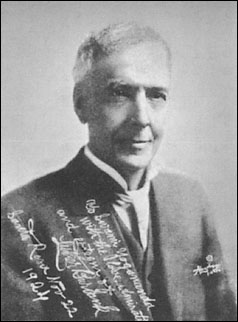
38-1: Burbank also gave me an autographed picture of himself. I treasure it even as a Hindu merchant once treasured a picture of Lincoln. The Hindu, who was in America during the Civil War years, conceived such an admiration for Lincoln that he was unwilling to return to India until he had obtained a portrait of the Great Emancipator. Planting himself adamantly on Lincoln’s doorstep, the merchant refused to leave until the astonished President permitted him to engage the services of Daniel Huntington, the famous New York artist. When the portrait was finished, the Hindu carried it in triumph to Calcutta.
38-1: Burbank also gave me a signed picture of himself. I treasure it just as a Hindu merchant once treasured a picture of Lincoln. The merchant was in America during the Civil War years and came to admire Lincoln deeply. He refused to return to India until he had obtained a portrait of the Great Emancipator. The merchant firmly took his place on Lincoln’s doorstep and refused to leave. He stayed until the astonished President allowed him to hire Daniel Huntington, the famous New York artist, to paint the portrait. When the portrait was finished, the merchant carried it triumphantly to Calcutta.
38-2: New York: Century Co., 1922.
38-2: New York: Century Co., 1922.