Socrates defends himself in court against charges of corrupting the young and offending the gods. Found guilty, he suggests his punishment should be free meals for life at public expense.
57 pages 1h 7m reading time
A founding text of Western philosophy: Plato's account of Socrates' defense against charges of impiety and corrupting the young, which ended in a death sentence.
Shows Socrates saying his only wisdom is knowing how little he knows, and that the unexamined life is not worth living.
Portrays him refusing to stop questioning people even to save his life, choosing conscience over obedience to the state.
His defiance became a model of conscience against state power, invoked by later dissenters such as Martin Luther King Jr.
Plato watched the trial
Plato names himself as one of the young friends in the courtroom, offering to help pay a fine.
Not a word-for-word record
Plato probably wrote it years after the trial, so it is his version of the speech, not a transcript.
A rival account survives
Xenophon, another follower of Socrates, wrote his own Apology, with a different reason for his boldness.
A jury of hundreds
Socrates was tried by about 500 citizens, and he says a swing of thirty votes would have acquitted him.


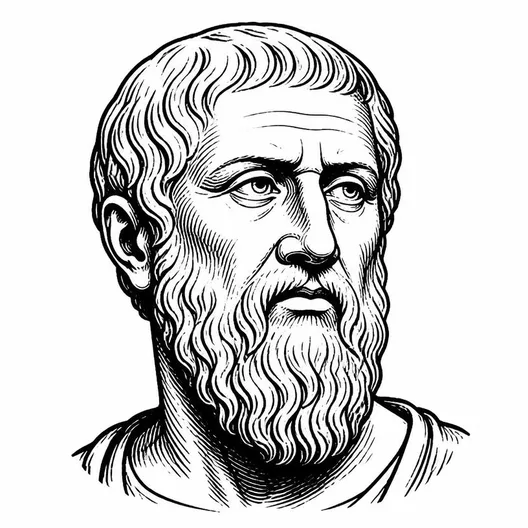 Plato c. 399 BCE