Chapter 22
They swarmed up towards Sherburn’s house, a-whooping and raging like Injuns, and everything had to clear the way or get run over and tromped to mush, and it was awful to see. Children was heeling it ahead of the mob, screaming and trying to get out of the way; and every window along the road was full of women’s heads, and there was boys in every tree, and bucks and wenches looking over every fence; and as soon as the mob would get nearly to them they would break and skaddle back out of reach. Lots of the women and girls was crying and taking on, scared most to death.
They swarmed up toward Sherburn’s house, whooping and raging like Injuns. Everything had to clear the way or get run over and trampled to mush. And it was awful to see. Children was running ahead of the mob, screaming and trying to get out of the way. And every window along the road was full of women’s heads. And there was boys in every tree, and bucks and wenches looking over every fence. And as soon as the mob got close to them, they would turn and run back out of reach. Lots of the women and girls was crying and carrying on, scared almost to death.
They swarmed up in front of Sherburn’s palings as thick as they could jam together, and you couldn’t hear yourself think for the noise. It was a little twenty-foot yard. Some sung out “Tear down the fence! tear down the fence!” Then there was a racket of ripping and tearing and smashing, and down she goes, and the front wall of the crowd begins to roll in like a wave.
They swarmed up in front of Sherburn’s fence, packed as tight as they could get. And you couldn’t hear yourself think for the noise. It was a little twenty-foot yard. Some shouted “Tear down the fence! tear down the fence!” Then there was a racket of ripping and tearing and smashing, and down goes the fence. And the front of the crowd begins to roll in like a wave.
Just then Sherburn steps out on to the roof of his little front porch, with a double-barrel gun in his hand, and takes his stand, perfectly ca’m and deliberate, not saying a word. The racket stopped, and the wave sucked back.
Just then Sherburn steps out onto the roof of his little front porch, holding a double-barreled gun. He takes his stand, perfectly calm and deliberate, without saying a word. The noise stopped, and the crowd pulled back like a retreating wave.
Sherburn never said a word—just stood there, looking down. The stillness was awful creepy and uncomfortable. Sherburn run his eye slow along the crowd; and wherever it struck the people tried a little to out-gaze him, but they couldn’t; they dropped their eyes and looked sneaky. Then pretty soon Sherburn sort of laughed; not the pleasant kind, but the kind that makes you feel like when you are eating bread that’s got sand in it.
Sherburn never said a word. He just stood there, looking down. The silence was awful creepy and uncomfortable. Sherburn run his eye slow over the crowd. Whoever he looked at tried a little to stare him down, but they couldn’t. They dropped their eyes and looked sneaky. Then pretty soon Sherburn sort of laughed. It wasn’t a pleasant laugh. It was the kind that makes you feel like when you are eating bread that’s got sand in it.
Then he says, slow and scornful:
Then he says, slow and full of contempt:
“The idea of you lynching anybody! It’s amusing. The idea of you thinking you had pluck enough to lynch a man! Because you’re brave enough to tar and feather poor friendless cast-out women that come along here, did that make you think you had grit enough to lay your hands on a man? Why, a man’s safe in the hands of ten thousand of your kind—as long as it’s daytime and you’re not behind him.
“The idea of you lynching anybody! It’s laughable. The idea that you think you have enough courage to lynch a man! You’re brave enough to tar and feather poor women who come here with no friends, rejected by everyone. Because of that, did you think you had enough courage to lay your hands on a man? Why, a man’s safe in the hands of ten thousand of your kind, as long as it’s daytime and you’re not behind him.
“Do I know you? I know you clear through. I was born and raised in the South, and I’ve lived in the North; so I know the average all around. The average man’s a coward. In the North he lets anybody walk over him that wants to, and goes home and prays for a humble spirit to bear it. In the South one man all by himself, has stopped a stage full of men in the daytime, and robbed the lot. Your newspapers call you a brave people so much that you think you are braver than any other people—whereas you’re just as brave, and no braver. Why don’t your juries hang murderers? Because they’re afraid the man’s friends will shoot them in the back, in the dark—and it’s just what they would do.
“Do I know you? I know you through and through. I was born and raised in the South, and I’ve lived in the North. So I know what the average man is like in both places. The average man’s a coward. In the North he lets anybody walk all over him who wants to. Then he goes home and prays for a humble spirit to put up with it. In the South one man, all by himself, has stopped a stagecoach full of men in broad daylight. And he’s robbed every one of them. Your newspapers call you a brave people so often that you think you are braver than any other people. But you’re just as brave, and no braver. Why don’t your juries hang murderers? Because they’re afraid the murderer’s friends will shoot them in the back, in the dark. And that’s just what those friends would do.
“So they always acquit; and then a man goes in the night, with a hundred masked cowards at his back and lynches the rascal. Your mistake is, that you didn’t bring a man with you; that’s one mistake, and the other is that you didn’t come in the dark and fetch your masks. You brought part of a man—Buck Harkness, there—and if you hadn’t had him to start you, you’d a taken it out in blowing.
“So they always acquit. And then a man goes out at night with a hundred masked cowards behind him and lynches the rascal. Your mistake is that you didn’t bring a man with you. That’s one mistake. The other is that you didn’t come in the dark and bring your masks. You brought part of a man, Buck Harkness there. And if you hadn’t had him to get you started, you’d have done nothing but talk big.
“You didn’t want to come. The average man don’t like trouble and danger. You don’t like trouble and danger. But if only half a man—like Buck Harkness, there—shouts ‘Lynch him! lynch him!’ you’re afraid to back down—afraid you’ll be found out to be what you are—cowards—and so you raise a yell, and hang yourselves on to that half-a-man’s coat-tail, and come raging up here, swearing what big things you’re going to do. The pitifulest thing out is a mob; that’s what an army is—a mob; they don’t fight with courage that’s born in them, but with courage that’s borrowed from their mass, and from their officers. But a mob without any man at the head of it is beneath pitifulness. Now the thing for you to do is to droop your tails and go home and crawl in a hole. If any real lynching’s going to be done, it will be done in the dark, Southern fashion; and when they come they’ll bring their masks, and fetch a man along. Now leave—and take your half-a-man with you”—tossing his gun up across his left arm and cocking it when he says this.
“You didn’t want to come. The average man don’t like trouble and danger. You don’t like trouble and danger. But if even half a man like Buck Harkness there shouts ‘Lynch him! lynch him!’ you’re afraid to back down. You’re afraid you’ll be exposed for what you are: cowards. So you start yelling and grab onto that half-a-man’s coattails. You come raging up here, swearing what big things you’re going to do. The most pathetic thing there is is a mob. That’s what an army is, a mob. They don’t fight with courage of their own. They borrow their courage from their numbers and their officers. But a mob without any man leading it is beneath contempt. Now what you need to do is tuck your tails, go home, and crawl into a hole. If any real lynching’s going to be done, it will be done in the dark, Southern style. And when they come, they’ll bring their masks and bring a man along. Now leave and take your half-a-man with you.” He tosses his gun across his left arm and cocks it as he says this.
The crowd washed back sudden, and then broke all apart, and went tearing off every which way, and Buck Harkness he heeled it after them, looking tolerable cheap. I could a staid if I wanted to, but I didn’t want to.
The crowd surged back sudden, and then they all scattered and went tearing off every which way. And Buck Harkness he ran after them, looking pretty embarrassed. I could have stayed if I wanted to, but I didn’t want to.
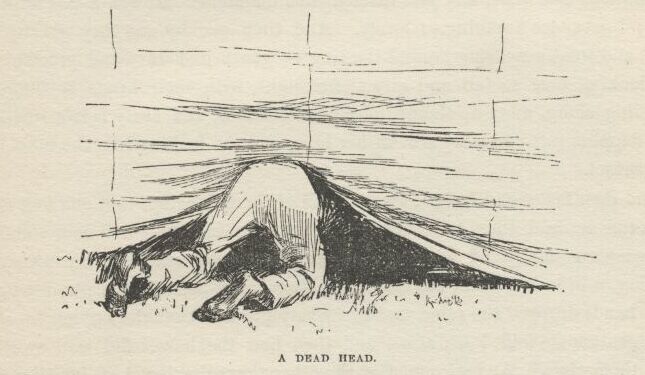
I went to the circus and loafed around the back side till the watchman went by, and then dived in under the tent. I had my twenty-dollar gold piece and some other money, but I reckoned I better save it, because there ain’t no telling how soon you are going to need it, away from home and amongst strangers that way. You can’t be too careful. I ain’t opposed to spending money on circuses when there ain’t no other way, but there ain’t no use in wasting it on them.
I went to the circus and hung around out back till the watchman went by. Then I slipped in under the tent. I had my twenty-dollar gold piece and some other money, but I reckoned I better save it. There ain’t no telling how soon you are going to need money, away from home and among strangers like that. You can’t be too careful. I ain’t opposed to spending money on circuses when there ain’t no other way. But there ain’t no use in wasting it on them.
It was a real bully circus. It was the splendidest sight that ever was when they all come riding in, two and two, a gentleman and lady, side by side, the men just in their drawers and undershirts, and no shoes nor stirrups, and resting their hands on their thighs easy and comfortable—there must a been twenty of them—and every lady with a lovely complexion, and perfectly beautiful, and looking just like a gang of real sure-enough queens, and dressed in clothes that cost millions of dollars, and just littered with diamonds. It was a powerful fine sight; I never see anything so lovely. And then one by one they got up and stood, and went a-weaving around the ring so gentle and wavy and graceful, the men looking ever so tall and airy and straight, with their heads bobbing and skimming along, away up there under the tent-roof, and every lady’s rose-leafy dress flapping soft and silky around her hips, and she looking like the most loveliest parasol.
It was a really great circus. It was the grandest sight that ever was when they all come riding in, two by two. A gentleman and a lady rode side by side. The men wore just their underwear and undershirts, with no shoes or stirrups. They rested their hands on their thighs, easy and comfortable. There must have been twenty of them. And every lady had a lovely complexion and was perfectly beautiful, looking just like a bunch of real queens. Their clothes cost millions of dollars and were just covered with diamonds. It was a mighty fine sight. I never see anything so lovely. And then, one by one, they got up and stood on their horses. They went weaving around the ring, so gentle and flowing and graceful. The men looked ever so tall and light and straight. Their heads bobbed and skimmed along, way up there under the tent roof. And every lady’s dress, like rose petals, fluttered soft and silky around her hips. She looked like the most loveliest sun umbrella.
And then faster and faster they went, all of them dancing, first one foot out in the air and then the other, the horses leaning more and more, and the ring-master going round and round the center-pole, cracking his whip and shouting “Hi!—hi!” and the clown cracking jokes behind him; and by-and-by all hands dropped the reins, and every lady put her knuckles on her hips and every gentleman folded his arms, and then how the horses did lean over and hump themselves! And so one after the other they all skipped off into the ring, and made the sweetest bow I ever see, and then scampered out, and everybody clapped their hands and went just about wild.
And then faster and faster they went, all of them dancing, sticking first one foot out and then the other. The horses leaned more and more. The ringmaster went round and round the center pole, cracking his whip and shouting “Hi! Hi!” The clown followed behind him, cracking jokes. After a while, all the riders dropped the reins. Every lady put her knuckles on her hips, and every gentleman folded his arms. And then how the horses did lean over and arch their backs! And so, one after another, the riders all jumped off into the ring. They made the prettiest bow I ever see, then scampered out. And everybody clapped their hands and went just about wild.
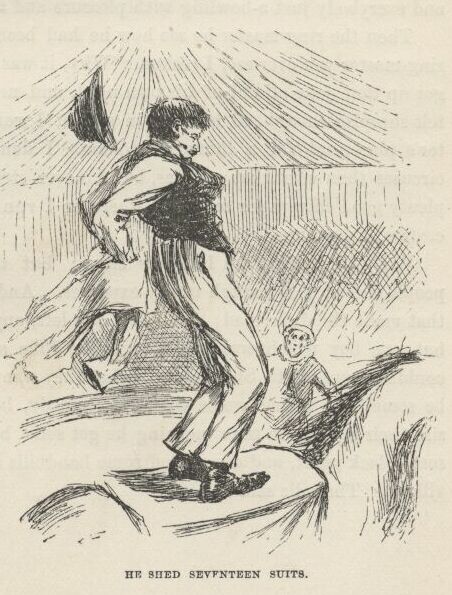
Well, all through the circus they done the most astonishing things; and all the time that clown carried on so it most killed the people. The ring-master couldn’t ever say a word to him but he was back at him quick as a wink with the funniest things a body ever said; and how he ever could think of so many of them, and so sudden and so pat, was what I couldn’t noway understand. Why, I couldn’t a thought of them in a year. And by-and-by a drunk man tried to get into the ring—said he wanted to ride; said he could ride as well as anybody that ever was. They argued and tried to keep him out, but he wouldn’t listen, and the whole show come to a standstill. Then the people begun to holler at him and make fun of him, and that made him mad, and he begun to rip and tear; so that stirred up the people, and a lot of men begun to pile down off of the benches and swarm towards the ring, saying, “Knock him down! throw him out!” and one or two women begun to scream. So, then, the ring-master he made a little speech, and said he hoped there wouldn’t be no disturbance, and if the man would promise he wouldn’t make no more trouble he would let him ride if he thought he could stay on the horse. So everybody laughed and said all right, and the man got on. The minute he was on, the horse begun to rip and tear and jump and cavort around, with two circus men hanging on to his bridle trying to hold him, and the drunk man hanging on to his neck, and his heels flying in the air every jump, and the whole crowd of people standing up shouting and laughing till tears rolled down. And at last, sure enough, all the circus men could do, the horse broke loose, and away he went like the very nation, round and round the ring, with that sot laying down on him and hanging to his neck, with first one leg hanging most to the ground on one side, and then t’other one on t’other side, and the people just crazy. It warn’t funny to me, though; I was all of a tremble to see his danger. But pretty soon he struggled up astraddle and grabbed the bridle, a-reeling this way and that; and the next minute he sprung up and dropped the bridle and stood! and the horse a-going like a house afire too. He just stood up there, a-sailing around as easy and comfortable as if he warn’t ever drunk in his life—and then he begun to pull off his clothes and sling them. He shed them so thick they kind of clogged up the air, and altogether he shed seventeen suits. And, then, there he was, slim and handsome, and dressed the gaudiest and prettiest you ever saw, and he lit into that horse with his whip and made him fairly hum—and finally skipped off, and made his bow and danced off to the dressing-room, and everybody just a-howling with pleasure and astonishment.
Well, all through the circus they done the most astonishing things, and all the time that clown carried on so it most killed the people. The ring-master couldn’t ever say a word to him but he was back at him quick as a wink with the funniest things a body ever said. And how he ever could think of so many of them, and so sudden and so pat, was what I couldn’t noway understand. Why, I couldn’t have thought of them in a year. And by-and-by a drunk man tried to get into the ring. He said he wanted to ride. He said he could ride as well as anybody that ever was. They argued and tried to keep him out, but he wouldn’t listen, and the whole show come to a standstill. Then the people begun to holler at him and make fun of him, and that made him mad, and he begun to rip and tear. So that stirred up the people, and a lot of men begun to pile down off of the benches and swarm towards the ring, saying, “Knock him down! throw him out!” And one or two women begun to scream. So, then, the ring-master he made a little speech. He said he hoped there wouldn’t be no disturbance, and if the man would promise he wouldn’t make no more trouble, he would let him ride if he thought he could stay on the horse. So everybody laughed and said all right, and the man got on. The minute he was on, the horse begun to rip and tear and jump and cavort around, with two circus men hanging on to his bridle trying to hold him, and the drunk man hanging on to his neck, and his heels flying in the air every jump, and the whole crowd of people standing up shouting and laughing till tears rolled down. And at last, sure enough, in spite of all the circus men could do, the horse broke loose. Away he went like the very nation, round and round the ring, with that sot laying down on him and hanging to his neck. First one leg hung most to the ground on one side, and then the other one on the other side, and the people just crazy. It wasn’t funny to me, though. I was all of a tremble to see his danger. But pretty soon he struggled up astraddle and grabbed the bridle, a-reeling this way and that. And the next minute he sprung up and dropped the bridle and stood! And the horse a-going like a house afire too. He just stood up there, a-sailing around as easy and comfortable as if he wasn’t ever drunk in his life. And then he begun to pull off his clothes and sling them. He shed them so thick they kind of clogged up the air, and altogether he shed seventeen suits. And then there he was, slim and handsome, and dressed the gaudiest and prettiest you ever saw. He lit into that horse with his whip and made him fairly hum. Finally he skipped off, and made his bow and danced off to the dressing-room, and everybody just a-howling with pleasure and astonishment.
Then the ring-master he see how he had been fooled, and he was the sickest ring-master you ever see, I reckon. Why, it was one of his own men! He had got up that joke all out of his own head, and never let on to nobody. Well, I felt sheepish enough to be took in so, but I wouldn’t a been in that ring-master’s place, not for a thousand dollars. I don’t know; there may be bullier circuses than what that one was, but I never struck them yet. Anyways, it was plenty good enough for me; and wherever I run across it, it can have all of my custom every time.
Then the ringmaster he see how he had been fooled. And he was the most miserable ringmaster you ever see, I reckon. Why, it was one of his own men! The man had thought up that joke all on his own, and never let on to nobody. Well, I felt foolish enough to be took in like that. But I wouldn’t have been in that ringmaster’s place, not for a thousand dollars. I don’t know. There may be better circuses than that one was, but I never come across them yet. Anyways, it was plenty good enough for me. And wherever I run across that circus, it can have all of my business every time.
Well, that night we had our show; but there warn’t only about twelve people there—just enough to pay expenses. And they laughed all the time, and that made the duke mad; and everybody left, anyway, before the show was over, but one boy which was asleep. So the duke said these Arkansaw lunkheads couldn’t come up to Shakespeare; what they wanted was low comedy—and maybe something ruther worse than low comedy, he reckoned. He said he could size their style. So next morning he got some big sheets of wrapping paper and some black paint, and drawed off some handbills, and stuck them up all over the village. The bills said:
Well, that night we had our show. But there wasn't only about twelve people there, just enough to pay expenses. And they laughed all the time, and that made the duke mad. And everybody left before the show was over anyway, except one boy which was asleep. So the duke said these Arkansaw lunkheads couldn't appreciate Shakespeare. What they wanted was low comedy, and maybe something rather worse than low comedy, he reckoned. He said he could size up their tastes. So next morning he got some big sheets of wrapping paper and some black paint. He drawed up some flyers and stuck them up all over the village. The flyers said:
AT THE COURT HOUSE! FOR 3 NIGHTS ONLY! The World-Renowned Tragedians DAVID GARRICK THE YOUNGER! AND EDMUND KEAN THE ELDER! Of the London and Continental Theatres, In their Thrilling Tragedy of THE KING’S CAMELOPARD OR THE ROYAL NONESUCH!!! Admission 50 cents.
AT THE COURTHOUSE! FOR 3 NIGHTS ONLY! The World-Famous Tragic Actors DAVID GARRICK THE YOUNGER! AND EDMUND KEAN THE ELDER! From the London and European Theaters, In their Thrilling Tragedy: THE KING’S CAMELOPARD OR THE ROYAL NONESUCH!!! Admission 50 cents.
Then at the bottom was the biggest line of all—which said:
Then at the bottom was the biggest line of all. It said:
LADIES AND CHILDREN NOT ADMITTED.
WOMEN AND CHILDREN NOT ALLOWED.
“There,” says he, “if that line don’t fetch them, I dont know Arkansaw!”
“There,” says he, “if that line don't win them over, I don't know Arkansaw!”