Chapter 31
Marco
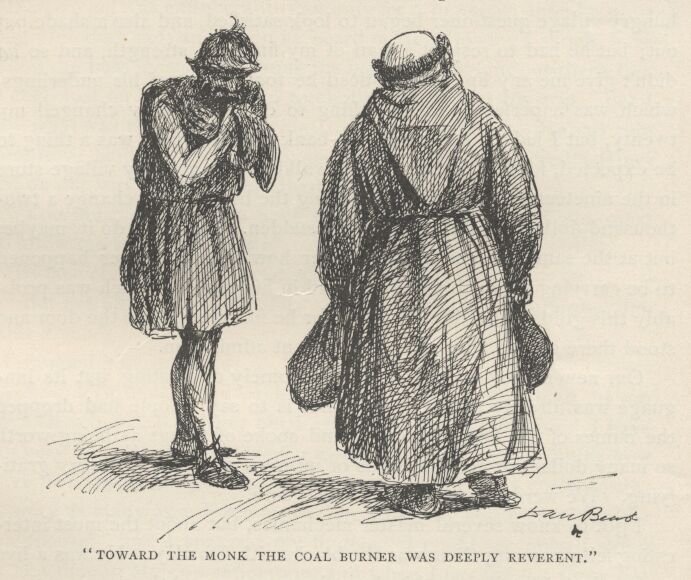
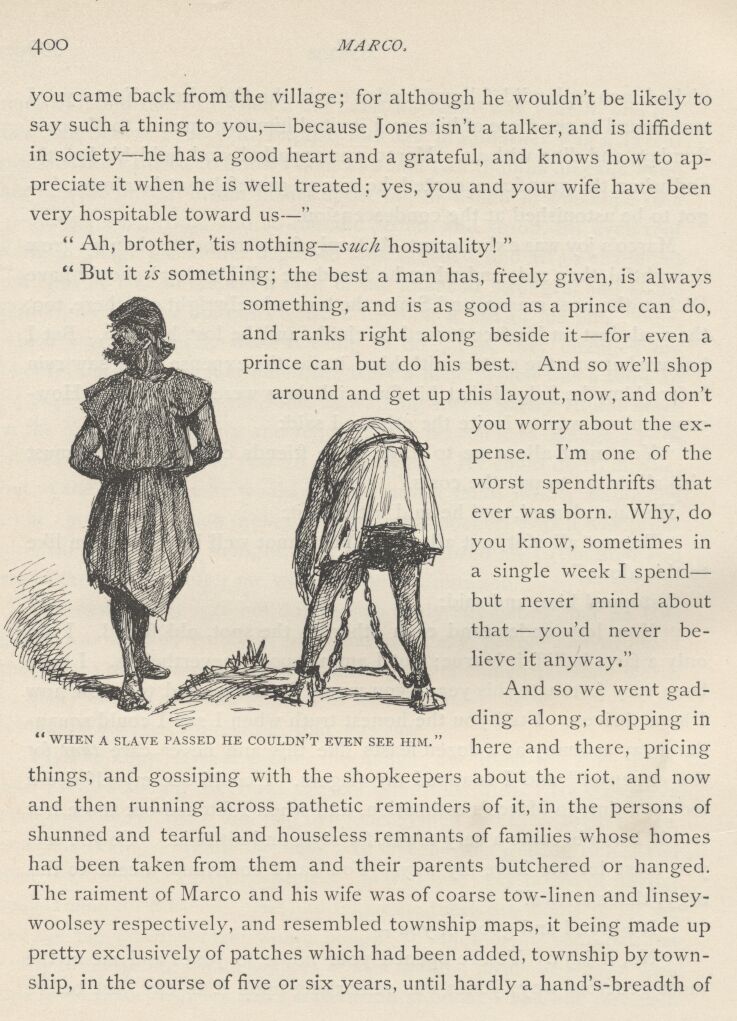
We strolled along in a sufficiently indolent fashion now, and talked. We must dispose of about the amount of time it ought to take to go to the little hamlet of Abblasoure and put justice on the track of those murderers and get back home again. And meantime I had an auxiliary interest which had never paled yet, never lost its novelty for me since I had been in Arthur’s kingdom: the behavior—born of nice and exact subdivisions of caste—of chance passers-by toward each other. Toward the shaven monk who trudged along with his cowl tilted back and the sweat washing down his fat jowls, the coal-burner was deeply reverent; to the gentleman he was abject; with the small farmer and the free mechanic he was cordial and gossipy; and when a slave passed by with a countenance respectfully lowered, this chap’s nose was in the air—he couldn’t even see him. Well, there are times when one would like to hang the whole human race and finish the farce.
We strolled along lazily now, talking as we went. We had to kill enough time to make it seem we had gone to the little village of Abblasoure, alerted the authorities to the murderers, and returned home. Meanwhile, I had another interest that had never faded or lost its novelty during my time in Arthur’s kingdom. I liked watching how people who happened to pass one another behaved, according to the fine and precise divisions of caste. The coal-burner was deeply respectful toward a shaven monk trudging along with his cowl pushed back and sweat running down his fat cheeks. He was utterly submissive to a gentleman, but friendly and talkative with a small farmer or a free mechanic. And when a slave passed by with his face respectfully lowered, this fellow stuck his nose in the air. He couldn’t even see the slave. Well, there are times when you’d like to hang the whole human race and put an end to the farce.
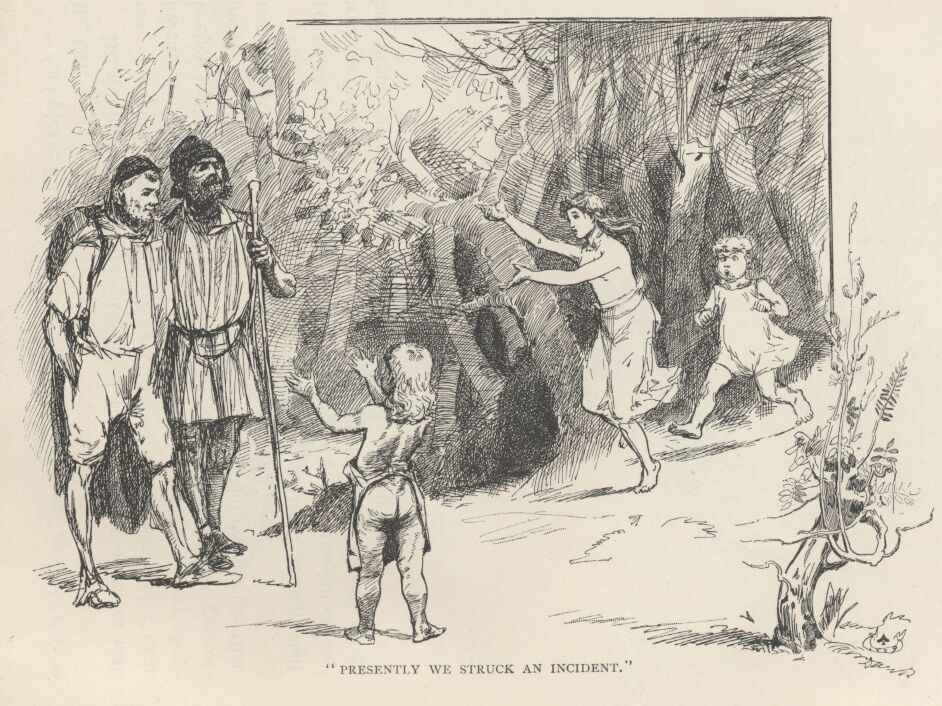
Presently we struck an incident. A small mob of half-naked boys and girls came tearing out of the woods, scared and shrieking. The eldest among them were not more than twelve or fourteen years old. They implored help, but they were so beside themselves that we couldn’t make out what the matter was. However, we plunged into the wood, they skurrying in the lead, and the trouble was quickly revealed: they had hanged a little fellow with a bark rope, and he was kicking and struggling, in the process of choking to death. We rescued him, and fetched him around. It was some more human nature; the admiring little folk imitating their elders; they were playing mob, and had achieved a success which promised to be a good deal more serious than they had bargained for.
Soon we came upon an incident. A small mob of half-naked boys and girls came running out of the woods, terrified and screaming. The oldest were no more than twelve or fourteen. They begged for help, but they were so frantic that we couldn’t understand what was wrong. Still, we rushed into the woods, with the children scurrying ahead. We quickly saw the trouble: they had hanged a little boy with a rope made of bark. He was kicking and struggling, choking to death. We rescued him and brought him around. It was another example of human nature. The admiring children were imitating their elders, playing mob. They had succeeded, and the result promised to be much more serious than they had bargained for.
It was not a dull excursion for me. I managed to put in the time very well. I made various acquaintanceships, and in my quality of stranger was able to ask as many questions as I wanted to. A thing which naturally interested me, as a statesman, was the matter of wages. I picked up what I could under that head during the afternoon. A man who hasn’t had much experience, and doesn’t think, is apt to measure a nation’s prosperity or lack of prosperity by the mere size of the prevailing wages; if the wages be high, the nation is prosperous; if low, it isn’t. Which is an error. It isn’t what sum you get, it’s how much you can buy with it, that’s the important thing; and it’s that that tells whether your wages are high in fact or only high in name. I could remember how it was in the time of our great civil war in the nineteenth century. In the North a carpenter got three dollars a day, gold valuation; in the South he got fifty—payable in Confederate shinplasters worth a dollar a bushel. In the North a suit of overalls cost three dollars—a day’s wages; in the South it cost seventy-five—which was two days’ wages. Other things were in proportion. Consequently, wages were twice as high in the North as they were in the South, because the one wage had that much more purchasing power than the other had.
The excursion was not dull for me. I managed to pass the time quite well. I met various people, and as a stranger, I could ask as many questions as I wanted. As a statesman, I was naturally interested in wages. I learned what I could about them that afternoon. A person who has little experience and doesn’t think is apt to judge a nation’s prosperity by wages alone. If wages are high, the nation is prosperous. If they are low, it isn’t. But that is a mistake. What matters is not how much money you get, but how much you can buy with it. That tells you whether your wages are really high or only high in name. I remembered how things were during our great civil war in the nineteenth century. In the North, a carpenter earned three dollars a day in gold. In the South, he earned fifty dollars, paid in Confederate shinplasters worth a dollar a bushel. In the North, a suit of overalls cost three dollars, or a day’s wages. In the South, it cost seventy-five dollars, or two days’ wages. Other prices were in proportion. Consequently, wages were twice as high in the North as in the South, because they had twice the purchasing power.
Yes, I made various acquaintances in the hamlet and a thing that gratified me a good deal was to find our new coins in circulation—lots of milrays, lots of mills, lots of cents, a good many nickels, and some silver; all this among the artisans and commonalty generally; yes, and even some gold—but that was at the bank, that is to say, the goldsmith’s. I dropped in there while Marco, the son of Marco, was haggling with a shopkeeper over a quarter of a pound of salt, and asked for change for a twenty-dollar gold piece. They furnished it—that is, after they had chewed the piece, and rung it on the counter, and tried acid on it, and asked me where I got it, and who I was, and where I was from, and where I was going to, and when I expected to get there, and perhaps a couple of hundred more questions; and when they got aground, I went right on and furnished them a lot of information voluntarily; told them I owned a dog, and his name was Watch, and my first wife was a Free Will Baptist, and her grandfather was a Prohibitionist, and I used to know a man who had two thumbs on each hand and a wart on the inside of his upper lip, and died in the hope of a glorious resurrection, and so on, and so on, and so on, till even that hungry village questioner began to look satisfied, and also a shade put out; but he had to respect a man of my financial strength, and so he didn’t give me any lip, but I noticed he took it out of his underlings, which was a perfectly natural thing to do. Yes, they changed my twenty, but I judged it strained the bank a little, which was a thing to be expected, for it was the same as walking into a paltry village store in the nineteenth century and requiring the boss of it to change a two thousand-dollar bill for you all of a sudden. He could do it, maybe; but at the same time he would wonder how a small farmer happened to be carrying so much money around in his pocket; which was probably this goldsmith’s thought, too; for he followed me to the door and stood there gazing after me with reverent admiration.
Yes, I got to know various people in the village. I was very pleased to find our new coins in circulation. There were lots of milrays, mills, and cents, quite a few nickels, and some silver. All this was among the artisans and ordinary people in general. There was even some gold, but that was at the bank, or rather, the goldsmith’s. I stopped in while Marco, the son of Marco, was haggling with a shopkeeper over a quarter pound of salt. I asked for change for a twenty-dollar gold piece. They gave it to me, but only after they had chewed the coin, rung it on the counter, and tested it with acid. They also asked where I got it, who I was, where I came from, where I was going, and when I expected to get there. They asked perhaps a couple of hundred more questions. When they ran out of questions, I went right on volunteering information. I told them I owned a dog named Watch. My first wife was a Free Will Baptist, and her grandfather was a Prohibitionist. I used to know a man with two thumbs on each hand and a wart inside his upper lip. He died hoping for a glorious resurrection. I went on and on until even that question-hungry villager began to look satisfied, and a little annoyed too. But he had to respect a man with my kind of money, so he didn’t talk back to me. I noticed he took it out on his underlings, though, which was perfectly natural. Yes, they changed my twenty, but I thought it strained the bank a little. That was to be expected. It was like walking into a small village store in the nineteenth century. Then, all of a sudden, you ask the owner to change a two thousand-dollar bill. Maybe he could do it. But he would also wonder how a small farmer came to be carrying so much money in his pocket. The goldsmith was probably thinking the same thing. He followed me to the door and stood there gazing after me with reverent admiration.
Our new money was not only handsomely circulating, but its language was already glibly in use; that is to say, people had dropped the names of the former moneys, and spoke of things as being worth so many dollars or cents or mills or milrays now. It was very gratifying. We were progressing, that was sure.
Our new money was circulating well, and people were already using its terms with ease. They had stopped using the names of the old money. Now they spoke of things as worth so many dollars, cents, mills, or milrays. It was very satisfying. We were making progress, that was sure.
I got to know several master mechanics, but about the most interesting fellow among them was the blacksmith, Dowley. He was a live man and a brisk talker, and had two journeymen and three apprentices, and was doing a raging business. In fact, he was getting rich, hand over fist, and was vastly respected. Marco was very proud of having such a man for a friend. He had taken me there ostensibly to let me see the big establishment which bought so much of his charcoal, but really to let me see what easy and almost familiar terms he was on with this great man. Dowley and I fraternized at once; I had had just such picked men, splendid fellows, under me in the Colt Arms Factory. I was bound to see more of him, so I invited him to come out to Marco’s Sunday, and dine with us. Marco was appalled, and held his breath; and when the grandee accepted, he was so grateful that he almost forgot to be astonished at the condescension.
I got to know several master mechanics, but the most interesting of them was the blacksmith, Dowley. He was energetic and a lively talker. He had two journeymen and three apprentices, and business was booming. In fact, he was getting rich hand over fist and was highly respected. Marco was very proud to have such a man as a friend. He had supposedly taken me there to see the big business that bought so much of his charcoal. But he really wanted me to see how relaxed and almost familiar he was with this great man. Dowley and I hit it off at once. I had had just such handpicked men, splendid fellows, working under me at the Colt Arms Factory. I was determined to see more of him, so I invited him to dine with us at Marco’s on Sunday. Marco was horrified and held his breath. When the great man accepted, Marco was so grateful that he almost forgot to be astonished at his condescension.
Marco’s joy was exuberant—but only for a moment; then he grew thoughtful, then sad; and when he heard me tell Dowley I should have Dickon, the boss mason, and Smug, the boss wheelwright, out there, too, the coal-dust on his face turned to chalk, and he lost his grip. But I knew what was the matter with him; it was the expense. He saw ruin before him; he judged that his financial days were numbered. However, on our way to invite the others, I said:
Marco was overjoyed, but only for a moment. Then he grew thoughtful, then sad. I told Dowley I would have Dickon, the master mason, and Smug, the master wheelwright, out there too. When Marco heard this, his coal-dusted face turned chalk-white, and he lost his composure. But I knew what was troubling him: the expense. He saw ruin ahead and thought his financial days were numbered. However, on our way to invite the others, I said:
“You must allow me to have these friends come; and you must also allow me to pay the costs.”
“You must let me invite these friends, and you must also let me pay the costs.”
His face cleared, and he said with spirit:
His face brightened, and he said eagerly:
“But not all of it, not all of it. Ye cannot well bear a burden like to this alone.”
“But not all of it, not all of it. You can hardly carry a burden like this alone.”
I stopped him, and said:
I stopped him and said:
“Now let’s understand each other on the spot, old friend. I am only a farm bailiff, it is true; but I am not poor, nevertheless. I have been very fortunate this year—you would be astonished to know how I have thriven. I tell you the honest truth when I say I could squander away as many as a dozen feasts like this and never care that for the expense!” and I snapped my fingers. I could see myself rise a foot at a time in Marco’s estimation, and when I fetched out those last words I was become a very tower for style and altitude. “So you see, you must let me have my way. You can’t contribute a cent to this orgy, that’s settled.”
“Let’s get this straight right now, old friend. It’s true that I’m only a farm bailiff, but I’m not poor. I’ve been very lucky this year. You’d be amazed to know how well I’ve done. Honestly, I could spend my money on a dozen feasts like this and not care that much about the cost!” I snapped my fingers. I could see myself rising a foot at a time in Marco’s estimation. By the time I said those last words, I was a tower of style and stature. “So you see, you must let me have my way. You can’t contribute a cent to this orgy. That’s settled.”
“It’s grand and good of you—”
“It’s generous and kind of you...”
“No, it isn’t. You’ve opened your house to Jones and me in the most generous way; Jones was remarking upon it to-day, just before you came back from the village; for although he wouldn’t be likely to say such a thing to you—because Jones isn’t a talker, and is diffident in society—he has a good heart and a grateful, and knows how to appreciate it when he is well treated; yes, you and your wife have been very hospitable toward us—”
“No, it isn’t. You’ve welcomed Jones and me into your home so generously. Jones was saying so today, just before you came back from the village. He probably wouldn’t say that to you, though, because Jones isn’t much of a talker and is shy around people. But he has a good heart and is grateful. He knows how to appreciate being treated well. Yes, you and your wife have been very welcoming to us.”
“Ah, brother, ’tis nothing—such hospitality!”
“Ah, brother, it's nothing, such hospitality!”
“But it is something; the best a man has, freely given, is always something, and is as good as a prince can do, and ranks right along beside it—for even a prince can but do his best. And so we’ll shop around and get up this layout now, and don’t you worry about the expense. I’m one of the worst spendthrifts that ever was born. Why, do you know, sometimes in a single week I spend—but never mind about that—you’d never believe it anyway.”
“But it is something. The best a man has, freely given, is always something. It’s as good as what a prince can give, and ranks right alongside it. Even a prince can only do his best. So we’ll shop around and put this outfit together now, and don’t you worry about the expense. I’m one of the worst spenders ever born. Why, do you know, sometimes I spend so much in a single week. But never mind about that. You’d never believe it anyway.”
And so we went gadding along, dropping in here and there, pricing things, and gossiping with the shopkeepers about the riot, and now and then running across pathetic reminders of it, in the persons of shunned and tearful and houseless remnants of families whose homes had been taken from them and their parents butchered or hanged. The raiment of Marco and his wife was of coarse tow-linen and linsey-woolsey respectively, and resembled township maps, it being made up pretty exclusively of patches which had been added, township by township, in the course of five or six years, until hardly a hand’s-breadth of the original garments was surviving and present. Now I wanted to fit these people out with new suits, on account of that swell company, and I didn’t know just how to get at it—with delicacy, until at last it struck me that as I had already been liberal in inventing wordy gratitude for the king, it would be just the thing to back it up with evidence of a substantial sort; so I said:
And so we wandered along, dropping in here and there, checking prices, and gossiping with the shopkeepers about the riot. Now and then we came across heartbreaking reminders of it. These were shunned, tearful, homeless survivors of families whose homes had been taken and whose parents had been butchered or hanged. Marco wore coarse linen, and his wife wore linsey-woolsey. Their clothes looked like township maps. They were made almost entirely of patches, added township by township over five or six years. Hardly a hand’s width of the original garments remained. I wanted to buy them new outfits because of that high-class company, but I didn’t know how to go about it delicately. Then it struck me that I had already been generous with my invented words of gratitude for the king. So it would be just the thing to back those words up with something more substantial. I said:
“And Marco, there’s another thing which you must permit—out of kindness for Jones—because you wouldn’t want to offend him. He was very anxious to testify his appreciation in some way, but he is so diffident he couldn’t venture it himself, and so he begged me to buy some little things and give them to you and Dame Phyllis and let him pay for them without your ever knowing they came from him—you know how a delicate person feels about that sort of thing—and so I said I would, and we would keep mum. Well, his idea was, a new outfit of clothes for you both—”
“And Marco, there’s another thing you must allow, out of kindness to Jones. You wouldn’t want to offend him. He was very eager to show his appreciation somehow, but he was too shy to do it himself. So he begged me to buy a few little things for you and Dame Phyllis. He wanted to pay for them without your ever knowing they came from him. You know how a sensitive person feels about that sort of thing. So I said I would do it, and we would keep quiet. Well, his idea was a new set of clothes for each of you.”
“Oh, it is wastefulness! It may not be, brother, it may not be. Consider the vastness of the sum—”
“Oh, it is wasteful! We cannot do it, brother, we cannot. Think how enormous the sum is.”
“Hang the vastness of the sum! Try to keep quiet for a moment, and see how it would seem; a body can’t get in a word edgeways, you talk so much. You ought to cure that, Marco; it isn’t good form, you know, and it will grow on you if you don’t check it. Yes, we’ll step in here now and price this man’s stuff—and don’t forget to remember to not let on to Jones that you know he had anything to do with it. You can’t think how curiously sensitive and proud he is. He’s a farmer—pretty fairly well-to-do farmer—and I’m his bailiff; but—the imagination of that man! Why, sometimes when he forgets himself and gets to blowing off, you’d think he was one of the swells of the earth; and you might listen to him a hundred years and never take him for a farmer—especially if he talked agriculture. He thinks he’s a Sheol of a farmer; thinks he’s old Grayback from Wayback; but between you and me privately he don’t know as much about farming as he does about running a kingdom—still, whatever he talks about, you want to drop your underjaw and listen, the same as if you had never heard such incredible wisdom in all your life before, and were afraid you might die before you got enough of it. That will please Jones.”
“Forget how huge the sum is! Try to keep quiet for a moment and see how that feels. You talk so much, nobody can get a word in. You ought to break that habit, Marco. It’s bad manners, you know, and it’ll get worse if you don’t stop. Yes, we’ll step in here now and ask the price of this man’s goods. And don’t forget to remember not to let Jones know you’re aware he had anything to do with it. You can’t imagine how oddly sensitive and proud he is. He’s a farmer, a fairly well-to-do one, and I’m his bailiff. But what an imagination that man has! Sometimes he forgets himself and starts boasting, and you’d think he was one of the great men of the world. You could listen to him for a hundred years and never guess he was a farmer, especially if he talked about farming. He thinks he’s a Sheol of a farmer. He thinks he’s old Grayback from Wayback. But just between us, he knows no more about farming than he does about running a kingdom. Still, whatever he talks about, you should drop your jaw and listen. Act as if you’d never heard such incredible wisdom in your life and feared you might die before hearing enough of it. That will please Jones.”
It tickled Marco to the marrow to hear about such an odd character; but it also prepared him for accidents; and in my experience when you travel with a king who is letting on to be something else and can’t remember it more than about half the time, you can’t take too many precautions.
Marco was delighted to hear about such an odd character, but it also prepared him for mishaps. In my experience, you can’t be too careful when traveling with a king pretending to be someone else. Especially when he can only remember the act about half the time.
This was the best store we had come across yet; it had everything in it, in small quantities, from anvils and drygoods all the way down to fish and pinchbeck jewelry. I concluded I would bunch my whole invoice right here, and not go pricing around any more. So I got rid of Marco, by sending him off to invite the mason and the wheelwright, which left the field free to me. For I never care to do a thing in a quiet way; it’s got to be theatrical or I don’t take any interest in it. I showed up money enough, in a careless way, to corral the shopkeeper’s respect, and then I wrote down a list of the things I wanted, and handed it to him to see if he could read it. He could, and was proud to show that he could. He said he had been educated by a priest, and could both read and write. He ran it through, and remarked with satisfaction that it was a pretty heavy bill. Well, and so it was, for a little concern like that. I was not only providing a swell dinner, but some odds and ends of extras. I ordered that the things be carted out and delivered at the dwelling of Marco, the son of Marco, by Saturday evening, and send me the bill at dinner-time Sunday. He said I could depend upon his promptness and exactitude, it was the rule of the house. He also observed that he would throw in a couple of miller-guns for the Marcos gratis—that everybody was using them now. He had a mighty opinion of that clever device. I said:
This was the best store we had come across yet. It had a little of everything, from anvils and dry goods to fish and imitation gold jewelry. I decided to place my whole order here and stop shopping around for prices. So I sent Marco off to invite the mason and the wheelwright, leaving me free to handle things. I never care to do anything quietly. It has to be theatrical, or I lose interest. I casually showed enough money to win the shopkeeper’s respect. Then I wrote a list of what I wanted and handed it to him to see if he could read it. He could, and he was proud to show it. He said a priest had educated him, and he could both read and write. He looked over the list and remarked with satisfaction that it was a pretty big order. Well, it was, for a little business like that. I was ordering not only a fancy dinner, but also a few extra odds and ends. I told him to deliver the goods by cart to the home of Marco, son of Marco, by Saturday evening. He was to send me the bill at dinnertime Sunday. He said I could count on him to be prompt and accurate. That was the store’s rule. He added that he would throw in a couple of miller-guns for the Marcos for free. Everybody was using them now. He had a mighty high opinion of that clever device. I said:
“And please fill them up to the middle mark, too; and add that to the bill.”
“And please fill them to the middle mark, too. Add that to the bill.”
He would, with pleasure. He filled them, and I took them with me. I couldn’t venture to tell him that the miller-gun was a little invention of my own, and that I had officially ordered that every shopkeeper in the kingdom keep them on hand and sell them at government price—which was the merest trifle, and the shopkeeper got that, not the government. We furnished them for nothing.
He was happy to. He filled them, and I took them with me. I didn’t dare tell him that the miller-gun was my own little invention. I had officially ordered every shopkeeper in the kingdom to keep them in stock and sell them at the government price. The price was next to nothing, and the shopkeeper got the money, not the government. We supplied the miller-guns for free.
The king had hardly missed us when we got back at nightfall. He had early dropped again into his dream of a grand invasion of Gaul with the whole strength of his kingdom at his back, and the afternoon had slipped away without his ever coming to himself again.
The king had hardly missed us when we returned at nightfall. Earlier, he had fallen back into his dream of a grand invasion of Gaul with his whole kingdom’s strength behind him. The afternoon had slipped away without his ever coming out of his dream.