Chapter 42
War!
I found Clarence alone in his quarters, drowned in melancholy; and in place of the electric light, he had reinstituted the ancient rag-lamp, and sat there in a grisly twilight with all curtains drawn tight. He sprang up and rushed for me eagerly, saying:
I found Clarence alone in his room, deep in misery. He had replaced the electric light with the old rag lamp and drawn all the curtains tight. He sat there in the gloomy half-light. He jumped up and rushed eagerly toward me, saying:
“Oh, it’s worth a billion milrays to look upon a live person again!”
“Oh, it’s worth a billion milrays to see a living person again!”
He knew me as easily as if I hadn’t been disguised at all. Which frightened me; one may easily believe that.
He recognized me as easily as if I hadn’t been disguised at all. That frightened me, as you can easily imagine.
“Quick, now, tell me the meaning of this fearful disaster,” I said. “How did it come about?”
“Quick, tell me what this terrible disaster means,” I said. “How did it happen?”
“Well, if there hadn’t been any Queen Guenever, it wouldn’t have come so early; but it would have come, anyway. It would have come on your own account by and by; by luck, it happened to come on the queen’s.”
“Well, if there hadn’t been a Queen Guenever, it wouldn’t have come so soon. But it would have come anyway. Sooner or later, it would have come because of you. Luckily, it happened to come because of the queen.”
“And Sir Launcelot’s?”
“And Sir Launcelot’s?”
“Just so.”
“Exactly.”
“Give me the details.”
“Give me the details.”
“I reckon you will grant that during some years there has been only one pair of eyes in these kingdoms that has not been looking steadily askance at the queen and Sir Launcelot—”
“I think you’ll agree that for some years, only one person in these kingdoms has not watched the queen and Sir Launcelot with suspicion.”
“Yes, King Arthur’s.”
“Yes, King Arthur’s.”
“—and only one heart that was without suspicion—”
“and only one heart that had no suspicion.”
“Yes—the king’s; a heart that isn’t capable of thinking evil of a friend.”
“Yes, the king’s. His heart is incapable of thinking ill of a friend.”
“Well, the king might have gone on, still happy and unsuspecting, to the end of his days, but for one of your modern improvements—the stock-board. When you left, three miles of the London, Canterbury and Dover were ready for the rails, and also ready and ripe for manipulation in the stock-market. It was wildcat, and everybody knew it. The stock was for sale at a give-away. What does Sir Launcelot do, but—”
“Well, the king might have stayed happy and unsuspecting for the rest of his days, if not for one of your modern improvements: the stock-board. When you left, three miles of the London, Canterbury and Dover were ready for rails. They were also ripe for manipulation on the stock market. It was a risky venture, and everybody knew it. The stock was selling for next to nothing. And what does Sir Launcelot do? Why, he...”
“Yes, I know; he quietly picked up nearly all of it for a song; then he bought about twice as much more, deliverable upon call; and he was about to call when I left.”
“Yes, I know. He quietly bought nearly all of it for very little. Then he bought about twice as much more, to be delivered whenever he asked for it. He was about to ask for it when I left.”
“Very well, he did call. The boys couldn’t deliver. Oh, he had them—and he just settled his grip and squeezed them. They were laughing in their sleeves over their smartness in selling stock to him at 15 and 16 and along there that wasn’t worth 10. Well, when they had laughed long enough on that side of their mouths, they rested-up that side by shifting the laugh to the other side. That was when they compromised with the Invincible at 283!”
“Very well, he did call. The boys couldn’t deliver. Oh, he had them, and he tightened his grip and squeezed them. They had been secretly laughing at how clever they were. They had sold him stock for 15, 16, and thereabouts, when it wasn’t worth 10. Well, they laughed long enough on that side of their mouths. Then they gave that side a rest and switched the laugh to the other side. That was when they settled with the Invincible at 283!”
“Good land!”
“Oh my goodness!”
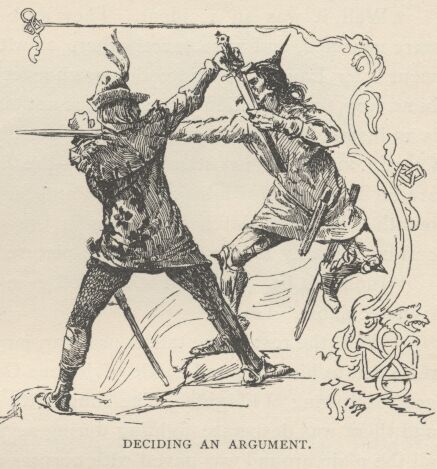
“He skinned them alive, and they deserved it—anyway, the whole kingdom rejoiced. Well, among the flayed were Sir Agravaine and Sir Mordred, nephews to the king. End of the first act. Act second, scene first, an apartment in Carlisle castle, where the court had gone for a few days’ hunting. Persons present, the whole tribe of the king’s nephews. Mordred and Agravaine propose to call the guileless Arthur’s attention to Guenever and Sir Launcelot. Sir Gawaine, Sir Gareth, and Sir Gaheris will have nothing to do with it. A dispute ensues, with loud talk; in the midst of it enter the king. Mordred and Agravaine spring their devastating tale upon him. Tableau. A trap is laid for Launcelot, by the king’s command, and Sir Launcelot walks into it. He made it sufficiently uncomfortable for the ambushed witnesses—to wit, Mordred, Agravaine, and twelve knights of lesser rank, for he killed every one of them but Mordred; but of course that couldn’t straighten matters between Launcelot and the king, and didn’t.”
“He skinned them alive, and they deserved it. Anyway, the whole kingdom rejoiced. Well, among those skinned were Sir Agravaine and Sir Mordred, the king’s nephews. End of the first act. Act two, scene one. A room in Carlisle castle, where the court had gone for a few days of hunting. Present: the whole tribe of the king’s nephews. Mordred and Agravaine propose telling the innocent Arthur about Guenever and Sir Launcelot. Sir Gawaine, Sir Gareth, and Sir Gaheris want nothing to do with it. An argument follows, with lots of shouting. In the middle of it, the king enters. Mordred and Agravaine spring their devastating story on him. Tableau. The king orders a trap for Launcelot, and Sir Launcelot walks into it. He made things quite uncomfortable for the witnesses lying in wait. These were Mordred, Agravaine, and twelve knights of lower rank. He killed all of them except Mordred. But of course, that couldn’t straighten things out between Launcelot and the king, and it didn’t.”
“Oh, dear, only one thing could result—I see that. War, and the knights of the realm divided into a king’s party and a Sir Launcelot’s party.”
“Oh, dear, I see that only one thing could happen. There would be war, and the kingdom’s knights would split between the king’s side and Sir Launcelot’s side.”
“Yes—that was the way of it. The king sent the queen to the stake, proposing to purify her with fire. Launcelot and his knights rescued her, and in doing it slew certain good old friends of yours and mine—in fact, some of the best we ever had; to wit, Sir Belias le Orgulous, Sir Segwarides, Sir Griflet le Fils de Dieu, Sir Brandiles, Sir Aglovale—”
“Yes, that's how it happened. The king sent the queen to be burned at the stake, intending to purify her with fire. Launcelot and his knights rescued her. In doing so, they killed some good old friends of yours and mine. In fact, they killed some of the best friends we ever had: Sir Belias le Orgulous, Sir Segwarides, Sir Griflet le Fils de Dieu, Sir Brandiles, Sir Aglovale...”
“Oh, you tear out my heartstrings.”
“Oh, you’re breaking my heart.”
“—wait, I’m not done yet—Sir Tor, Sir Gauter, Sir Gillimer—”
“Wait, I’m not done yet. Sir Tor, Sir Gauter, Sir Gillimer...”
“The very best man in my subordinate nine. What a handy right-fielder he was!”
“The very best man on my team of nine subordinates. What a skilled right fielder he was!”
“—Sir Reynold’s three brothers, Sir Damus, Sir Priamus, Sir Kay the Stranger—”
“Sir Reynold’s three brothers, Sir Damus, Sir Priamus, Sir Kay the Stranger...”
“My peerless short-stop! I’ve seen him catch a daisy-cutter in his teeth. Come, I can’t stand this!”
“My unbeatable shortstop! I’ve seen him catch a ground ball in his teeth. Come on, I can’t stand this!”
“—Sir Driant, Sir Lambegus, Sir Herminde, Sir Pertilope, Sir Perimones, and—whom do you think?”
“Sir Driant, Sir Lambegus, Sir Herminde, Sir Pertilope, Sir Perimones, and who do you think?”
“Rush! Go on.”
“Hurry! Go on.”
“Sir Gaheris, and Sir Gareth—both!”
“Sir Gaheris and Sir Gareth, both!”
“Oh, incredible! Their love for Launcelot was indestructible.”
“Oh, unbelievable! Their love for Launcelot could never be destroyed.”
“Well, it was an accident. They were simply onlookers; they were unarmed, and were merely there to witness the queen’s punishment. Sir Launcelot smote down whoever came in the way of his blind fury, and he killed these without noticing who they were. Here is an instantaneous photograph one of our boys got of the battle; it’s for sale on every news-stand. There—the figures nearest the queen are Sir Launcelot with his sword up, and Sir Gareth gasping his latest breath. You can catch the agony in the queen’s face through the curling smoke. It’s a rattling battle-picture.”
“Well, it was an accident. They were just spectators. They were unarmed and had only come to watch the queen’s punishment. Sir Launcelot struck down everyone who got in the way of his blind fury. He killed these men without noticing who they were. Here’s an instant photograph of the battle that one of our boys took. It’s for sale at every newsstand. There, the figures nearest the queen are Sir Launcelot with his sword raised and Sir Gareth gasping his last breath. You can see the agony on the queen’s face through the curling smoke. It’s a terrific battle picture.”
“Indeed, it is. We must take good care of it; its historical value is incalculable. Go on.”
“Yes, it is. We must take good care of it. Its historical value is impossible to calculate. Go on.”
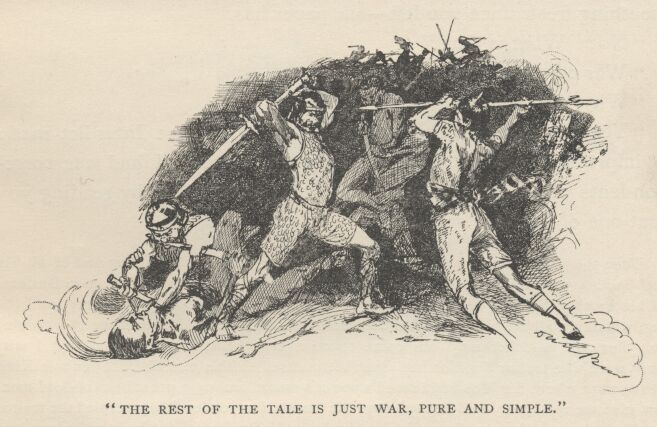
“Well, the rest of the tale is just war, pure and simple. Launcelot retreated to his town and castle of Joyous Gard, and gathered there a great following of knights. The king, with a great host, went there, and there was desperate fighting during several days, and, as a result, all the plain around was paved with corpses and cast-iron. Then the Church patched up a peace between Arthur and Launcelot and the queen and everybody—everybody but Sir Gawaine. He was bitter about the slaying of his brothers, Gareth and Gaheris, and would not be appeased. He notified Launcelot to get him thence, and make swift preparation, and look to be soon attacked. So Launcelot sailed to his Duchy of Guienne with his following, and Gawaine soon followed with an army, and he beguiled Arthur to go with him. Arthur left the kingdom in Sir Mordred’s hands until you should return—”
“Well, the rest of the story is just war, pure and simple. Launcelot retreated to his town and castle of Joyous Gard. There he gathered a great following of knights. The king went there with a great army. They fought desperately for several days. As a result, the whole plain around them was paved with corpses and cast iron. Then the Church patched up a peace between Arthur, Launcelot, the queen, and everybody else. Everybody except Sir Gawaine, that is. He was bitter about the killing of his brothers, Gareth and Gaheris, and nothing would satisfy him. He told Launcelot to leave, prepare quickly, and expect an attack soon. So Launcelot sailed to his Duchy of Guienne with his followers. Gawaine soon followed with an army, and he persuaded Arthur to go with him. Arthur left the kingdom in Sir Mordred’s hands until you returned.”
“Ah—a king’s customary wisdom!”
“Ah, a king’s usual wisdom!”
“Yes. Sir Mordred set himself at once to work to make his kingship permanent. He was going to marry Guenever, as a first move; but she fled and shut herself up in the Tower of London. Mordred attacked; the Bishop of Canterbury dropped down on him with the Interdict. The king returned; Mordred fought him at Dover, at Canterbury, and again at Barham Down. Then there was talk of peace and a composition. Terms, Mordred to have Cornwall and Kent during Arthur’s life, and the whole kingdom afterward.”
“Yes. Sir Mordred immediately set to work making his kingship permanent. His first move was to marry Guenever, but she fled and locked herself in the Tower of London. Mordred attacked, and the Bishop of Canterbury came down on him with the Interdict. The king returned, and Mordred fought him at Dover, at Canterbury, and again at Barham Down. Then they discussed peace and a settlement. The terms were that Mordred would have Cornwall and Kent during Arthur’s life, and the whole kingdom afterward.”
“Well, upon my word! My dream of a republic to be a dream, and so remain.”
“Well, would you believe it! My dream of a republic was to be a dream, and to remain one.”
“Yes. The two armies lay near Salisbury. Gawaine—Gawaine’s head is at Dover Castle, he fell in the fight there—Gawaine appeared to Arthur in a dream, at least his ghost did, and warned him to refrain from conflict for a month, let the delay cost what it might. But battle was precipitated by an accident. Arthur had given order that if a sword was raised during the consultation over the proposed treaty with Mordred, sound the trumpet and fall on! for he had no confidence in Mordred. Mordred had given a similar order to his people. Well, by and by an adder bit a knight’s heel; the knight forgot all about the order, and made a slash at the adder with his sword. Inside of half a minute those two prodigious hosts came together with a crash! They butchered away all day. Then the king—however, we have started something fresh since you left—our paper has.”
“Yes. The two armies were camped near Salisbury. Gawaine fell in the fight at Dover Castle, and his head is there. Gawaine appeared to Arthur in a dream, or at least his ghost did. He warned Arthur not to fight for a month, no matter what the delay cost. But an accident brought on the battle. Arthur had given an order for the talks over the proposed treaty with Mordred. If anyone raised a sword, his men were to sound the trumpet and attack! He had no confidence in Mordred. Mordred had given a similar order to his people. Well, after a while, an adder bit a knight’s heel. The knight forgot all about the order and slashed at the adder with his sword. In less than half a minute, those two enormous armies came together with a crash! They butchered each other all day. Then the king. But wait, our paper has started something new since you left.”
“No? What is that?”
“No? What is that?”
“War correspondence!”
“War reporting!”
“Why, that’s good.”
“Oh, that’s good.”
“Yes, the paper was booming right along, for the Interdict made no impression, got no grip, while the war lasted. I had war correspondents with both armies. I will finish that battle by reading you what one of the boys says:
“Yes, the newspaper was thriving, because the Interdict had no effect while the war lasted. I had war correspondents with both armies. I’ll finish the story of that battle by reading you what one of the boys wrote:
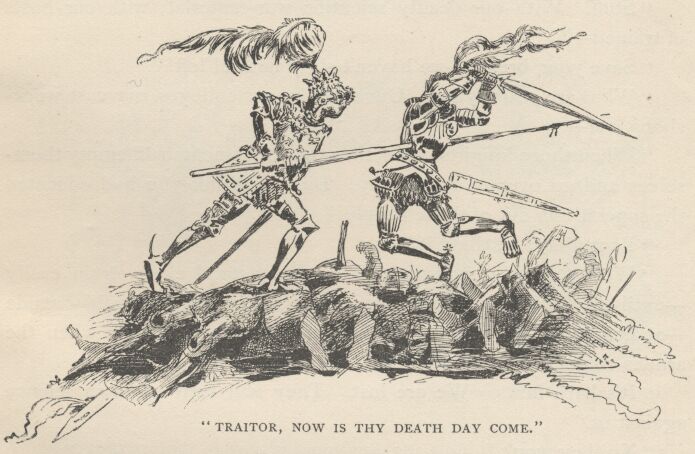
Then the king looked about him, and then was he ware of all his host and of all his good knights were left no more on live but two knights, that was Sir Lucan de Butlere, and his brother Sir Bedivere: and they were full sore wounded. Jesu mercy, said the king, where are all my noble knights becomen? Alas that ever I should see this doleful day. For now, said Arthur, I am come to mine end. But would to God that I wist where were that traitor Sir Mordred, that hath caused all this mischief. Then was King Arthur ware where Sir Mordred leaned upon his sword among a great heap of dead men. Now give me my spear, said Arthur unto Sir Lucan, for yonder I have espied the traitor that all this woe hath wrought. Sir, let him be, said Sir Lucan, for he is unhappy; and if ye pass this unhappy day, ye shall be right well revenged upon him. Good lord, remember ye of your night’s dream, and what the spirit of Sir Gawaine told you this night, yet God of his great goodness hath preserved you hitherto. Therefore, for God’s sake, my lord, leave off by this. For blessed be God ye have won the field: for here we be three on live, and with Sir Mordred is none on live. And if ye leave off now, this wicked day of destiny is past. Tide me death, betide me life, saith the king, now I see him yonder alone, he shall never escape mine hands, for at a better avail shall I never have him. God speed you well, said Sir Bedivere. Then the king gat his spear in both his hands, and ran toward Sir Mordred crying, Traitor, now is thy death day come. And when Sir Mordred heard Sir Arthur, he ran until him with his sword drawn in his hand. And then King Arthur smote Sir Mordred under the shield, with a foin of his spear throughout the body more than a fathom. And when Sir Mordred felt that he had his death’s wound, he thrust himself, with the might that he had, up to the butt of King Arthur’s spear. And right so he smote his father Arthur with his sword holden in both his hands, on the side of the head, that the sword pierced the helmet and the brain-pan, and therewithal Sir Mordred fell stark dead to the earth. And the noble Arthur fell in a swoon to the earth, and there he swooned oft-times—”
Then the king looked around and saw that only two of his whole army and all his good knights were still alive. They were Sir Lucan de Butlere and his brother Sir Bedivere, and both were badly wounded. Jesus, have mercy, said the king, where have all my noble knights gone? Alas, that I should live to see this sorrowful day. For now, said Arthur, I have come to my end. But I wish to God I knew where that traitor Sir Mordred was, who caused all this misery. Then King Arthur saw Sir Mordred leaning on his sword among a great heap of dead men. Now give me my spear, Arthur said to Sir Lucan, for I have spotted the traitor who caused all this suffering. Sir, let him be, said Sir Lucan, for he is doomed. If you survive this dreadful day, you shall have your full revenge on him. Good lord, remember your dream last night and what Sir Gawaine’s spirit told you. God, in his great goodness, has preserved you until now. Therefore, for God’s sake, my lord, stop here. Blessed be God, you have won the battle. Three of us are alive here, and none of Sir Mordred’s men are alive. If you stop now, this wicked day of destiny will be past. Whether I die or live, said the king, now that I see him there alone, he shall never escape my hands. I shall never have a better chance to take him. God speed you, said Sir Bedivere. Then the king took his spear in both hands and ran toward Sir Mordred, crying, Traitor, your death day has come. When Sir Mordred heard Sir Arthur, he ran toward him with his sword drawn. King Arthur struck Sir Mordred below his shield, driving his spear through his body for more than a fathom. When Sir Mordred felt his death wound, he used all his strength to thrust himself up to the butt of King Arthur’s spear. Then, holding his sword in both hands, he struck his father Arthur on the side of the head. The sword pierced his helmet and skull, and Sir Mordred fell dead to the ground. The noble Arthur fell to the ground in a faint, and there he fainted many times.”
“That is a good piece of war correspondence, Clarence; you are a first-rate newspaper man. Well—is the king all right? Did he get well?”
“That is a good war report, Clarence. You are a first-rate journalist. Well, is the king all right? Did he recover?”
“Poor soul, no. He is dead.”
“Poor soul, no. He's dead.”
I was utterly stunned; it had not seemed to me that any wound could be mortal to him.
I was completely stunned. I had never thought any wound could kill him.
“And the queen, Clarence?”
“And the queen, Clarence?”
“She is a nun, in Almesbury.”
“She is a nun in Almesbury.”
“What changes! and in such a short while. It is inconceivable. What next, I wonder?”
“What changes, and in such a short time! It’s hard to believe. I wonder what will happen next?”
“I can tell you what next.”
“I can tell you what comes next.”
“Well?”
“Well?”
“Stake our lives and stand by them!”
“Risk our lives and stand by them!”
“What do you mean by that?”
“What do you mean by that?”
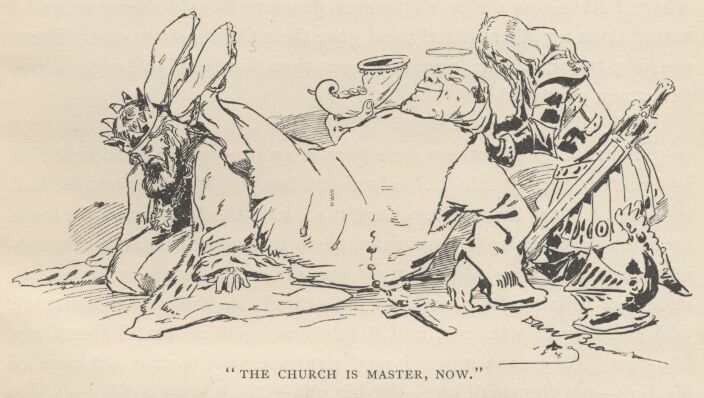
“The Church is master now. The Interdict included you with Mordred; it is not to be removed while you remain alive. The clans are gathering. The Church has gathered all the knights that are left alive, and as soon as you are discovered we shall have business on our hands.”
“The Church is in control now. The Interdict included you along with Mordred. It will not be lifted while you are alive. The clans are gathering. The Church has gathered all the knights still alive. As soon as you are discovered, we’ll have trouble on our hands.”
“Stuff! With our deadly scientific war-material; with our hosts of trained—”
“Nonsense! With our deadly modern weapons, with our armies of trained...”
“Save your breath—we haven’t sixty faithful left!”
“Save your breath. We don’t have sixty faithful people left!”
“What are you saying? Our schools, our colleges, our vast workshops, our—”
“What are you saying? Our schools, our colleges, our huge workshops, our...”
“When those knights come, those establishments will empty themselves and go over to the enemy. Did you think you had educated the superstition out of those people?”
“When those knights come, those establishments will empty out and join the enemy. Did you think you had taught those people to stop believing in superstition?”
“I certainly did think it.”
“I certainly did think it.”
“Well, then, you may unthink it. They stood every strain easily—until the Interdict. Since then, they merely put on a bold outside—at heart they are quaking. Make up your mind to it—when the armies come, the mask will fall.”
“Well, then, stop thinking it. They handled every strain easily until the Interdict. Since then, they have only pretended to be brave. Deep down, they are trembling. Make no mistake: when the armies come, the mask will fall.”
“It’s hard news. We are lost. They will turn our own science against us.”
“It’s bad news. We’re doomed. They’ll use our own science against us.”
“No they won’t.”
“No, they won’t.”
“Why?”
“Why?”
“Because I and a handful of the faithful have blocked that game. I’ll tell you what I’ve done, and what moved me to it. Smart as you are, the Church was smarter. It was the Church that sent you cruising—through her servants, the doctors.”
“Because a handful of faithful people and I have blocked that game. I’ll tell you what I did and why I did it. As smart as you are, the Church was smarter. The Church sent you traveling, using its servants, the doctors.”
“Clarence!”
“Clarence!”
“It is the truth. I know it. Every officer of your ship was the Church’s picked servant, and so was every man of the crew.”
“It’s true. I know it. Every officer on your ship was chosen to serve the Church, and so was every crew member.”
“Oh, come!”
“Oh, come on!”
“It is just as I tell you. I did not find out these things at once, but I found them out finally. Did you send me verbal information, by the commander of the ship, to the effect that upon his return to you, with supplies, you were going to leave Cadiz—”
“It is just as I tell you. I didn't find these things out at once, but I eventually did. Did you send me a verbal message through the ship's commander? Did you say that when he returned to you with supplies, you were going to leave Cadiz...”
“Cadiz! I haven’t been at Cadiz at all!”
“Cadiz! I haven’t been to Cadiz at all!”
“—going to leave Cadiz and cruise in distant seas indefinitely, for the health of your family? Did you send me that word?”
“Are you going to leave Cadiz and sail in distant seas indefinitely for your family’s health? Did you send me that message?”
“Of course not. I would have written, wouldn’t I?”
“Of course not. I would have written, wouldn’t I?”
“Naturally. I was troubled and suspicious. When the commander sailed again I managed to ship a spy with him. I have never heard of vessel or spy since. I gave myself two weeks to hear from you in. Then I resolved to send a ship to Cadiz. There was a reason why I didn’t.”
“Of course. I was worried and suspicious. When the commander sailed again, I managed to send a spy with him. I have heard nothing of the ship or the spy since. I gave myself two weeks to hear from you. Then I decided to send a ship to Cadiz. There was a reason I didn’t.”
“What was that?”
“What was that?”
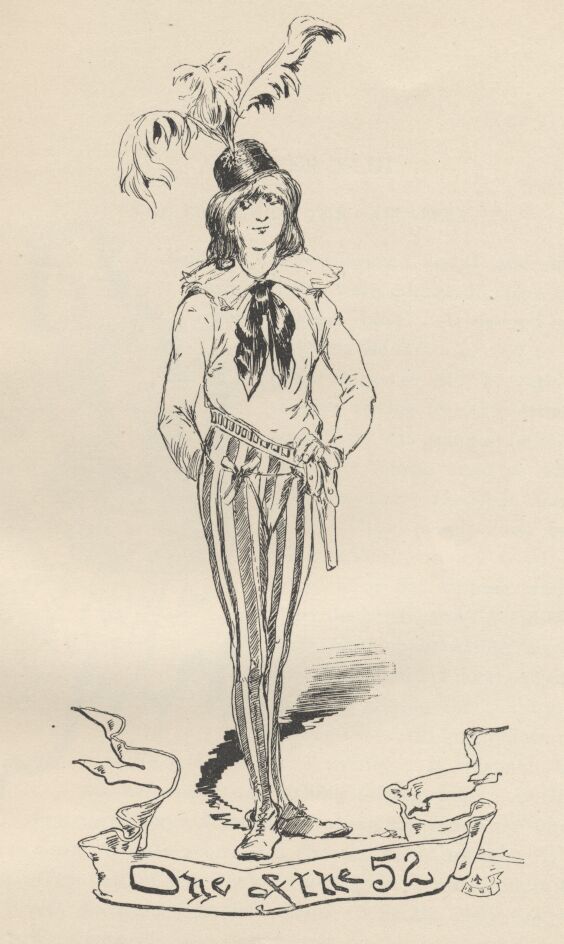
“Our navy had suddenly and mysteriously disappeared! Also, as suddenly and as mysteriously, the railway and telegraph and telephone service ceased, the men all deserted, poles were cut down, the Church laid a ban upon the electric light! I had to be up and doing—and straight off. Your life was safe—nobody in these kingdoms but Merlin would venture to touch such a magician as you without ten thousand men at his back—I had nothing to think of but how to put preparations in the best trim against your coming. I felt safe myself—nobody would be anxious to touch a pet of yours. So this is what I did. From our various works I selected all the men—boys I mean—whose faithfulness under whatsoever pressure I could swear to, and I called them together secretly and gave them their instructions. There are fifty-two of them; none younger than fourteen, and none above seventeen years old.”
“Our navy had suddenly and mysteriously disappeared! Just as suddenly and mysteriously, the railway, telegraph, and telephone services stopped. All the men deserted, poles were cut down, and the Church banned electric light! I had to get busy, and right away. Your life was safe. Nobody in these kingdoms but Merlin would dare touch a magician like you without ten thousand men backing him up. All I had to think about was how to get everything ready for your return. I felt safe myself, because nobody would be eager to touch someone you favored. So here is what I did. From our various workshops, I chose all the men, or rather boys, whose loyalty I could swear to under any pressure. I called them together secretly and gave them their instructions. There are fifty-two of them, none younger than fourteen or older than seventeen.”
“Why did you select boys?”
“Why did you choose boys?”
“Because all the others were born in an atmosphere of superstition and reared in it. It is in their blood and bones. We imagined we had educated it out of them; they thought so, too; the Interdict woke them up like a thunderclap! It revealed them to themselves, and it revealed them to me, too. With boys it was different. Such as have been under our training from seven to ten years have had no acquaintance with the Church’s terrors, and it was among these that I found my fifty-two. As a next move, I paid a private visit to that old cave of Merlin’s—not the small one—the big one—”
“Because all the others were born and raised in an atmosphere of superstition. It’s in their blood and bones. We thought we had educated it out of them, and they thought so, too. Then the Interdict woke them up like a thunderclap! It showed them what they really were, and it showed me, too. But it was different with boys. Those who had been under our training for seven to ten years had never known the Church’s terrors. It was among them that I found my fifty-two. Next, I paid a private visit to that old cave of Merlin’s. Not the small one, the big one.”
“Yes, the one where we secretly established our first great electric plant when I was projecting a miracle.”
“Yes, the one where we secretly built our first great electric plant when I was planning a miracle.”
“Just so. And as that miracle hadn’t become necessary then, I thought it might be a good idea to utilize the plant now. I’ve provisioned the cave for a siege—”
“Exactly. That miracle hadn't been needed then, so I thought it might be a good idea to use the plant now. I've stocked the cave for a siege.”
“A good idea, a first-rate idea.”
“A good idea, an excellent idea.”
“I think so. I placed four of my boys there as a guard—inside, and out of sight. Nobody was to be hurt—while outside; but any attempt to enter—well, we said just let anybody try it! Then I went out into the hills and uncovered and cut the secret wires which connected your bedroom with the wires that go to the dynamite deposits under all our vast factories, mills, workshops, magazines, etc., and about midnight I and my boys turned out and connected that wire with the cave, and nobody but you and I suspects where the other end of it goes to. We laid it under ground, of course, and it was all finished in a couple of hours or so. We sha’n’t have to leave our fortress now when we want to blow up our civilization.”
“I think so. I stationed four of my boys inside as guards, out of sight. Nobody was to be hurt while outside. But if anyone tried to enter, well, we said just let them try! Then I went into the hills and dug up and cut the secret wires connected to your bedroom. They led to the dynamite stored beneath all our vast factories, mills, workshops, ammunition stores, and so on. Around midnight, my boys and I went out and connected that wire to the cave. Nobody but you and I suspects where the other end leads. We laid the wire underground, of course, and finished the whole job in a couple of hours or so. Now we won’t have to leave our fortress when we want to blow up our civilization.”
“It was the right move—and the natural one; military necessity, in the changed condition of things. Well, what changes have come! We expected to be besieged in the palace some time or other, but—however, go on.”
“It was the right move, and the natural one. The changed circumstances made it a military necessity. Well, things have changed! We expected to be besieged in the palace sooner or later, but... anyway, go on.”
“Next, we built a wire fence.”
“Next, we built a wire fence.”
“Wire fence?”
“Wire fence?”
“Yes. You dropped the hint of it yourself, two or three years ago.”
“Yes. You hinted at it yourself two or three years ago.”
“Oh, I remember—the time the Church tried her strength against us the first time, and presently thought it wise to wait for a hopefuler season. Well, how have you arranged the fence?”
“Oh, I remember. That was when the Church first tried its strength against us. It soon decided it was wiser to wait for a more promising time. Well, how have you arranged the fence?”
“I start twelve immensely strong wires—naked, not insulated—from a big dynamo in the cave—dynamo with no brushes except a positive and a negative one—”
“I run twelve immensely strong wires from a large dynamo in the cave. The wires are bare, not insulated. The dynamo has only two brushes, one positive and one negative.”
“Yes, that’s right.”
“Yes, that’s right.”
“The wires go out from the cave and fence in a circle of level ground a hundred yards in diameter; they make twelve independent fences, ten feet apart—that is to say, twelve circles within circles—and their ends come into the cave again.”
“The wires run out from the cave and enclose a circle of level ground a hundred yards across. They form twelve separate fences, ten feet apart. In other words, the fences form twelve circles, one inside another. The ends of the wires run back into the cave.”
“Right; go on.”
“Right, go on.”
“The fences are fastened to heavy oaken posts only three feet apart, and these posts are sunk five feet in the ground.”
“The fences are fastened to heavy oak posts just three feet apart. The posts are buried five feet deep.”
“That is good and strong.”
“That is good and strong.”
“Yes. The wires have no ground-connection outside of the cave. They go out from the positive brush of the dynamo; there is a ground-connection through the negative brush; the other ends of the wire return to the cave, and each is grounded independently.”
“Yes. The wires are not grounded outside the cave. They lead out from the dynamo’s positive brush. The negative brush has a ground connection. The other ends of the wires return to the cave, where each is grounded separately.”
“No, no, that won’t do!”
“No, no, that won’t work!”
“Why?”
“Why?”
“It’s too expensive—uses up force for nothing. You don’t want any ground-connection except the one through the negative brush. The other end of every wire must be brought back into the cave and fastened independently, and without any ground-connection. Now, then, observe the economy of it. A cavalry charge hurls itself against the fence; you are using no power, you are spending no money, for there is only one ground-connection till those horses come against the wire; the moment they touch it they form a connection with the negative brush through the ground, and drop dead. Don’t you see?—you are using no energy until it is needed; your lightning is there, and ready, like the load in a gun; but it isn’t costing you a cent till you touch it off. Oh, yes, the single ground-connection—”
“It’s too expensive. It wastes power. You only want one ground connection, through the negative brush. The other end of every wire must be brought back into the cave and fastened separately, without a ground connection. Now, see how much that saves. A cavalry charge rushes against the fence. Until the horses hit the wire, you’re using no power and spending no money, because there’s only one ground connection. The moment the horses touch the wire, they make a connection to the negative brush through the ground and drop dead. Don’t you see? You use no energy until it’s needed. Your lightning is there and ready, like the load in a gun. But it doesn’t cost you a cent until you set it off. Oh, yes, the single ground connection.”
“Of course! I don’t know how I overlooked that. It’s not only cheaper, but it’s more effectual than the other way, for if wires break or get tangled, no harm is done.”
“Of course! I don’t know how I missed that. It’s not only cheaper but also more effective than the other way. If wires break or get tangled, no harm is done.”
“No, especially if we have a tell-tale in the cave and disconnect the broken wire. Well, go on. The gatlings?”
“No, especially if we have a warning device in the cave and disconnect the broken wire. Well, go on. The Gatling guns?”
“Yes—that’s arranged. In the center of the inner circle, on a spacious platform six feet high, I’ve grouped a battery of thirteen gatling guns, and provided plenty of ammunition.”
“Yes, that’s arranged. I’ve grouped thirteen Gatling guns on a large platform six feet high in the center of the inner circle. I’ve also provided plenty of ammunition.”
“That’s it. They command every approach, and when the Church’s knights arrive, there’s going to be music. The brow of the precipice over the cave—”
“That’s it. They control every approach. And when the Church’s knights arrive, there’s going to be music. The edge of the cliff above the cave...”
“I’ve got a wire fence there, and a gatling. They won’t drop any rocks down on us.”
“I’ve got a wire fence and a Gatling gun there. They won’t drop any rocks on us.”
“Well, and the glass-cylinder dynamite torpedoes?”
“Well, what about the glass-cylinder dynamite torpedoes?”
“That’s attended to. It’s the prettiest garden that was ever planted. It’s a belt forty feet wide, and goes around the outer fence—distance between it and the fence one hundred yards—kind of neutral ground that space is. There isn’t a single square yard of that whole belt but is equipped with a torpedo. We laid them on the surface of the ground, and sprinkled a layer of sand over them. It’s an innocent looking garden, but you let a man start in to hoe it once, and you’ll see.”
“That’s taken care of. It’s the prettiest garden ever planted. It’s a belt forty feet wide that runs around the outer fence. There are one hundred yards between the garden and the fence, a kind of neutral ground. Every square yard of the belt has a torpedo. We laid them on the ground and sprinkled a layer of sand over them. The garden looks innocent, but let a man start hoeing it, and you’ll see.”
“You tested the torpedoes?”
“You tested the torpedoes?”
“Well, I was going to, but—”
“Well, I was going to, but...”
“But what? Why, it’s an immense oversight not to apply a—”
“But what? Why, it’s a huge mistake not to apply a...”
“Test? Yes, I know; but they’re all right; I laid a few in the public road beyond our lines and they’ve been tested.”
“Test? Yes, I know, but they’re all right. I put a few on the public road beyond our lines, and they’ve been tested.”
“Oh, that alters the case. Who did it?”
“Oh, that changes things. Who did it?”
“A Church committee.”
“A Church committee.”
“How kind!”
“How kind!”
“Yes. They came to command us to make submission. You see they didn’t really come to test the torpedoes; that was merely an incident.”
“Yes. They came to order us to surrender. You see, they didn’t really come to test the torpedoes. That was just something that happened along the way.”
“Did the committee make a report?”
“Did the committee make a report?”
“Yes, they made one. You could have heard it a mile.”
“Yes, they made one. You could have heard it a mile away.”
“Unanimous?”
“Unanimous?”
“That was the nature of it. After that I put up some signs, for the protection of future committees, and we have had no intruders since.”
“That’s how it was. After that, I put up some signs to protect future committees, and we haven’t had any intruders since.”
“Clarence, you’ve done a world of work, and done it perfectly.”
“Clarence, you’ve done a huge amount of work, and you’ve done it perfectly.”
“We had plenty of time for it; there wasn’t any occasion for hurry.”
“We had plenty of time for it. There was no need to hurry.”
We sat silent awhile, thinking. Then my mind was made up, and I said:
We sat quietly for a while, thinking. Then I made up my mind and said:
“Yes, everything is ready; everything is shipshape, no detail is wanting. I know what to do now.”
“Yes, everything is ready. Everything is in order, and no detail has been overlooked. I know what to do now.”
“So do I; sit down and wait.”
“So do I. Sit down and wait.”
“No, sir! rise up and strike!”
“No, sir! get up and strike!”
“Do you mean it?”
“Do you mean it?”
“Yes, indeed! The de fensive isn’t in my line, and the of fensive is. That is, when I hold a fair hand—two-thirds as good a hand as the enemy. Oh, yes, we’ll rise up and strike; that’s our game.”
“Yes, indeed! The _de_fensive isn’t my style, but the _of_fensive is. That is, when I have a decent hand, at least two-thirds as good as the enemy’s. Oh, yes, we’ll rise up and strike. That’s our game.”
“A hundred to one you are right. When does the performance begin?”
“I'm a hundred to one sure you're right. When does the performance begin?”
“Now! We’ll proclaim the Republic.”
“Now! We’ll declare the Republic.”
“Well, that will precipitate things, sure enough!”
“Well, that will speed things up, sure enough!”
“It will make them buzz, I tell you! England will be a hornets’ nest before noon to-morrow, if the Church’s hand hasn’t lost its cunning—and we know it hasn’t. Now you write and I’ll dictate thus:
“It will make them buzz, I tell you! England will be a hornets’ nest before noon tomorrow if the Church hasn’t lost its skill. And we know it hasn’t. Now write while I dictate:
“PROCLAMATION
“ANNOUNCEMENT
“BE IT KNOWN UNTO ALL. Whereas the king having died and left no heir, it becomes my duty to continue the executive authority vested in me, until a government shall have been created and set in motion. The monarchy has lapsed, it no longer exists. By consequence, all political power has reverted to its original source, the people of the nation. With the monarchy, its several adjuncts died also; wherefore there is no longer a nobility, no longer a privileged class, no longer an Established Church; all men are become exactly equal; they are upon one common level, and religion is free. A Republic is hereby proclaimed, as being the natural estate of a nation when other authority has ceased. It is the duty of the British people to meet together immediately, and by their votes elect representatives and deliver into their hands the government.”
“LET IT BE KNOWN TO ALL. The king has died and left no heir. Therefore, it is my duty to continue exercising the executive authority vested in me until a government is established and functioning. The monarchy has ended. As a result, all political power has returned to its original source, the people of the nation. The institutions attached to the monarchy also ended with it. Therefore, there is no longer a nobility, a privileged class, or an Established Church. All men are now exactly equal. They are on the same level, and religion is free. A Republic is hereby proclaimed, as the natural state of a nation when other authority has ended. It is the duty of the British people to meet immediately, elect representatives by voting, and place the government in their hands.”
I signed it “The Boss,” and dated it from Merlin’s Cave. Clarence said—
I signed it “The Boss” and dated it from Merlin’s Cave. Clarence said:
“Why, that tells where we are, and invites them to call right away.”
“Why, that tells them where we are and invites them to visit right away.”
“That is the idea. We strike—by the Proclamation—then it’s their innings. Now have the thing set up and printed and posted, right off; that is, give the order; then, if you’ve got a couple of bicycles handy at the foot of the hill, ho for Merlin’s Cave!”
“That’s the idea. We strike with the Proclamation. Then it’s their turn. Now give the order to have it set in type, printed, and posted right away. Then, if you have a couple of bicycles handy at the foot of the hill, let’s go to Merlin’s Cave!”
“I shall be ready in ten minutes. What a cyclone there is going to be to-morrow when this piece of paper gets to work!... It’s a pleasant old palace, this is; I wonder if we shall ever again—but never mind about that.”
“I’ll be ready in ten minutes. What a storm there will be tomorrow when this piece of paper gets to work!... This is a pleasant old palace. I wonder if we’ll ever again... but never mind about that.”