This book uses short, sharp arguments to challenge accepted morality, philosophy, and Christianity. One section asks whether Socrates' faith in reason was a sign of sickness.
110 pages 2h 8m reading time
One of the last and most quoted books from one of the most influential thinkers of the modern age, written in his final working year.
Argues that the morality most people take for granted, with its ideas of sin, guilt, and pity, grew out of weakness and resentment and turns people against life itself.
Explains its subtitle, "How to Philosophise with the Hammer": it taps old ideals, its "idols," as with a tuning fork to hear how hollow they sound.
Gave the world the line "That which does not kill me, makes me stronger," which first appeared in this book and is now quoted everywhere from sports to self-help.
Its attacks on traditional morality and religion shaped later thinkers such as Sartre, Camus, and Foucault, and fed directly into existentialism, the movement built on the idea that people must create their own meaning.
Written in a few days
Nietzsche finished it at Sils Maria in early September 1888, then added "Things the Germans Lack" while it was at the printer.
Released as he collapsed
Twilight of the Idols reached readers in January 1889, the same month Nietzsche suffered a mental breakdown in Turin.
A joke on Wagner
The title mocks Wagner's opera "Twilight of the Gods," after a first, milder title was dropped at a friend's urging.


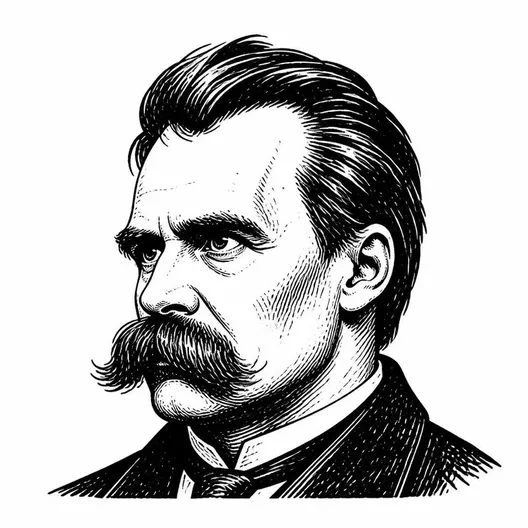 Friedrich Nietzsche 1889