Chapter 3
PAINFUL MEDITATIONS—JAMES H. BURCH—WILLIAMS' SLAVE PEN IN WASHINGTON—THE LACKEY, RADBURN—ASSERT MY FREEDOM—THE ANGER OF THE TRADER—THE PADDLE AND CAT-O'-NINETAILS—THE WHIPPING—NEW ACQUAINTANCES—RAY, WILLIAMS, AND RANDALL—ARRIVAL OF LITTLE EMILY AND HER MOTHER IN THE PEN—MATERNAL SORROWS—THE STORY OF ELIZA.
PAINFUL THOUGHTS. JAMES H. BURCH. WILLIAMS' SLAVE PEN IN WASHINGTON. THE SERVANT, RADBURN. I ASSERT MY FREEDOM. THE TRADER'S ANGER. THE PADDLE AND CAT-O'-NINE-TAILS. THE WHIPPING. NEW ACQUAINTANCES: RAY, WILLIAMS, AND RANDALL. LITTLE EMILY AND HER MOTHER ARRIVE AT THE PEN. A MOTHER'S SORROW. ELIZA'S STORY.
Some three hours elapsed, during which time I remained seated on the low bench, absorbed in painful meditations. At length I heard the crowing of a cock, and soon a distant rumbling sound, as of carriages hurrying through the streets, came to my ears, and I knew that it was day. No ray of light, however, penetrated my prison. Finally, I heard footsteps immediately overhead, as of some one walking to and fro. It occurred to me then that I must be in an underground apartment, and the damp, mouldy odors of the place confirmed the supposition. The noise above continued for at least an hour, when, at last, I heard footsteps approaching from without. A key rattled in the lock—a strong door swung back upon its hinges, admitting a flood of light, and two men entered and stood before me. One of them was a large, powerful man, forty years of age, perhaps, with dark, chestnut-colored hair, slightly interspersed with gray. His face was full, his complexion flush, his features grossly coarse, expressive of nothing but cruelty and cunning. He was about five feet ten inches high, of full habit, and, without prejudice, I must be allowed to say, was a man whose whole appearance was sinister and repugnant. His name was James H. Burch, as I learned afterwards—a well-known slave-dealer in Washington; and then, or lately, connected in business, as a partner, with Theophilus Freeman, of New-Orleans. The person who accompanied him was a simple lackey, named Ebenezer Radburn, who acted merely in the capacity of turnkey. Both of these men still live in Washington, or did, at the time of my return through that city from slavery in January last.
About three hours passed. I remained seated on the low bench, absorbed in painful thoughts. At last I heard a rooster crow. Soon I heard a distant rumbling, like carriages hurrying through the streets, and I knew it was day. Yet no ray of light entered my prison. Finally, I heard footsteps directly overhead, as if someone were walking back and forth. It occurred to me that I must be in an underground room. The damp, musty smell confirmed my suspicion. The noise above continued for at least an hour. Then, at last, I heard footsteps approaching from outside. A key rattled in the lock. A heavy door swung open, letting in a flood of light. Two men entered and stood before me. One was a large, powerful man, perhaps forty years old. His dark, chestnut-colored hair was slightly streaked with gray. He had a full face, a flushed complexion, and very coarse features that expressed nothing but cruelty and cunning. He was about five feet ten inches tall and heavily built. Without prejudice, I must be allowed to say that his whole appearance was sinister and repulsive. I later learned that his name was James H. Burch. He was a well-known slave dealer in Washington. At that time, or until recently, he had been a business partner of Theophilus Freeman, of New-Orleans. The man with him was a mere servant named Ebenezer Radburn, whose only role was to act as jailer. Both men still live in Washington, or did when I passed through the city last January after returning from slavery.
The light admitted through the open door enabled me to observe the room in which I was confined. It was about twelve feet square—the walls of solid masonry. The floor was of heavy plank. There was one small window, crossed with great iron bars, with an outside shutter, securely fastened.
Light from the open door allowed me to see the room where I was confined. It was about twelve feet square, with solid masonry walls. The floor was made of heavy planks. There was one small window with thick iron bars across it and a securely fastened shutter on the outside.
An iron-bound door led into an adjoining cell, or vault, wholly destitute of windows, or any means of admitting light. The furniture of the room in which I was, consisted of the wooden bench on which I sat, an old-fashioned, dirty box stove, and besides these, in either cell, there was neither bed, nor blanket, nor any other thing whatever. The door, through which Burch and Radburn entered, led through a small passage, up a flight of steps into a yard, surrounded by a brick wall ten or twelve feet high, immediately in rear of a building of the same width as itself. The yard extended rearward from the house about thirty feet. In one part of the wall there was a strongly ironed door, opening into a narrow, covered passage, leading along one side of the house into the street. The doom of the colored man, upon whom the door leading out of that narrow passage closed, was sealed. The top of the wall supported one end of a roof, which ascended inwards, forming a kind of open shed. Underneath the roof there was a crazy loft all round, where slaves, if so disposed, might sleep at night, or in inclement weather seek shelter from the storm. It was like a farmer's barnyard in most respects, save it was so constructed that the outside world could never see the human cattle that were herded there.
An iron-bound door led into an adjoining cell, or vault, with no windows or any other way to admit light. The room I was in contained the wooden bench on which I sat and an old-fashioned, dirty box stove. Apart from these, neither cell contained a bed, a blanket, or anything else. The door through which Burch and Radburn entered opened onto a small passage. From there, a flight of steps led up into a yard surrounded by a brick wall ten or twelve feet high. The yard lay directly behind a building and was as wide as the building. It extended about thirty feet behind the house. A heavily ironed door in one part of the wall opened into a narrow, covered passage. This passage led along one side of the house to the street. When the door leading out of that narrow passage closed on a colored man, his doom was sealed. The top of the wall supported one end of a roof that sloped upward toward the inside, forming a kind of open shed. Beneath the roof, a rickety loft ran all the way around. Slaves could sleep there at night if they wished, or shelter from storms in bad weather. In most respects, the yard was like a farmer’s barnyard. But it was built so that the outside world could never see the human cattle herded there.
The building to which the yard was attached, was two stories high, fronting on one of the public streets of Washington. Its outside presented only the appearance of a quiet private residence. A stranger looking at it, would never have dreamed of its execrable uses. Strange as it may seem, within plain sight of this same house, looking down from its commanding height upon it, was the Capitol. The voices of patriotic representatives boasting of freedom and equality, and the rattling of the poor slave's chains, almost commingled. A slave pen within the very shadow of the Capitol!
The building attached to the yard was two stories high and faced a public street in Washington. From the outside, it looked like a quiet private residence. A stranger looking at it would never have imagined its dreadful uses. Strange as it may seem, the Capitol was in plain sight of the house, looking down on it from its commanding height. The voices of patriotic representatives boasting of freedom and equality almost mingled with the rattling of the poor slave's chains. A slave pen in the very shadow of the Capitol!
Such is a correct description as it was in 1841, of Williams' slave pen in Washington, in one of the cellars of which I found myself so unaccountably confined.
This is an accurate description of Williams' slave pen in Washington as it was in 1841. I found myself confined for no apparent reason in one of its cellars.
"Well, my boy, how do you feel now?" said Burch, as he entered through the open door. I replied that I was sick, and inquired the cause of my imprisonment. He answered that I was his slave—that he had bought me, and that he was about to send me to New-Orleans. I asserted, aloud and boldly, that I was a free man—a resident of Saratoga, where I had a wife and children, who were also free, and that my name was Northup. I complained bitterly of the strange treatment I had received, and threatened, upon my liberation, to have satisfaction for the wrong. He denied that I was free, and with an emphatic oath, declared that I came from Georgia. Again and again I asserted I was no man's slave, and insisted upon his taking off my chains at once. He endeavored to hush me, as if he feared my voice would be overheard. But I would not be silent, and denounced the authors of my imprisonment, whoever they might be, as unmitigated villains. Finding he could not quiet me, he flew into a towering passion. With blasphemous oaths, he called me a black liar, a runaway from Georgia, and every other profane and vulgar epithet that the most indecent fancy could conceive.
"Well, my boy, how do you feel now?" Burch asked as he came through the open door. I said I was sick and asked why I was being held. He answered that I was his slave. He said he had bought me and was about to send me to New-Orleans. I declared loudly and boldly that I was a free man. I lived in Saratoga, where I had a wife and children who were also free. I told him my name was Northup. I complained bitterly about the strange treatment I had received. I threatened to seek justice for the wrong once I was free. He denied that I was free and swore emphatically that I came from Georgia. Again and again I declared that I was no man's slave. I insisted that he remove my chains at once. He tried to quiet me, as if he feared someone would overhear me. But I refused to be silent. I denounced whoever was responsible for my imprisonment as complete villains. When he saw that he could not quiet me, he flew into a towering rage. With blasphemous oaths, he called me a black liar and a runaway from Georgia. He used every other profane and vulgar insult that the most indecent imagination could conceive.
During this time Radburn was standing silently by. His business was, to oversee this human, or rather inhuman stable, receiving slaves, feeding and whipping them, at the rate of two shillings a head per day. Turning to him, Burch ordered the paddle and cat-o'-ninetails to be brought in. He disappeared, and in a few moments returned with these instruments of torture. The paddle, as it is termed in slave-beating parlance, or at least the one with which I first became acquainted, and of which I now speak, was a piece of hard-wood board, eighteen or twenty inches long, moulded to the shape of an old-fashioned pudding stick, or ordinary oar. The flattened portion, which was about the size in circumference of two open hands, was bored with a small auger in numerous places. The cat was a large rope of many strands—the strands unraveled, and a knot tied at the extremity of each.
During this time, Radburn stood silently nearby. His job was to oversee this human, or rather inhuman, stable. He received, fed, and whipped slaves for two shillings a head per day. Burch turned to him and ordered him to bring in the paddle and cat-o'-nine-tails. Radburn disappeared and returned a few moments later with these instruments of torture. Slave beaters called the first instrument a paddle. The one I first came to know, and now describe, was a hardwood board, eighteen or twenty inches long. It was shaped like an old-fashioned pudding stick or an ordinary oar. Its flat part was about as wide around as two open hands. It had many holes bored in it with a small auger. The cat was a large rope made of many strands. The strands were unraveled, and a knot was tied at the end of each one.
As soon as these formidable whips appeared, I was seized by both of them, and roughly divested of my clothing. My feet, as has been stated, were fastened to the floor. Drawing me over the bench, face downwards, Radburn placed his heavy foot upon the fetters, between my wrists, holding them painfully to the floor. With the paddle, Burch commenced beating me. Blow after blow was inflicted upon my naked body. When his unrelenting arm grew tired, he stopped and asked if I still insisted I was a free man. I did insist upon it, and then the blows were renewed, faster and more energetically, if possible, than before. When again tired, he would repeat the same question, and receiving the same answer, continue his cruel labor. All this time, the incarnate devil was uttering most fiendish oaths. At length the paddle broke, leaving the useless handle in his hand. Still I would not yield. All his brutal blows could not force from my lips the foul lie that I was a slave. Casting madly on the floor the handle of the broken paddle, he seized the rope. This was far more painful than the other. I struggled with all my power, but it was in vain. I prayed for mercy, but my prayer was only answered with imprecations and with stripes. I thought I must die beneath the lashes of the accursed brute. Even now the flesh crawls upon my bones, as I recall the scene. I was all on fire. My sufferings I can compare to nothing else than the burning agonies of hell!
As soon as these fearsome whips appeared, both men seized me and roughly stripped off my clothes. As I have said, my feet were fastened to the floor. They pulled me face down over the bench. Radburn placed his heavy foot on the fetters between my wrists, pressing them painfully to the floor. Burch began beating me with the paddle. Blow after blow fell on my naked body. When his relentless arm grew tired, he stopped and asked if I still insisted I was a free man. I did, and then the blows began again, faster and harder than before, if that was possible. Each time he grew tired, he asked the same question. When I gave the same answer, he continued his cruel work. All the while, the devil in human form cursed with the most fiendish oaths. At last, the paddle broke, leaving the useless handle in his hand. Still, I would not give in. All his brutal blows could not force me to utter the foul lie that I was a slave. He threw the broken paddle handle furiously onto the floor and seized the rope. The rope was far more painful than the paddle. I struggled with all my strength, but it was no use. I begged for mercy, but my pleas were answered only with curses and blows. I thought I would die under the lashes of that accursed brute. Even now, my flesh crawls as I remember the scene. I was on fire all over. I can compare my suffering to nothing but the burning agony of hell!
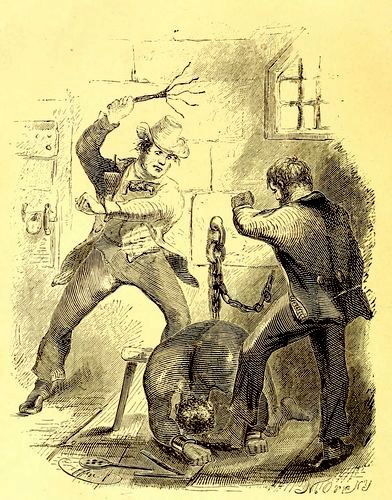
At last I became silent to his repeated questions. I would make no reply. In fact, I was becoming almost unable to speak. Still he plied the lash without stint upon my poor body, until it seemed that the lacerated flesh was stripped from my bones at every stroke. A man with a particle of mercy in his soul would not have beaten even a dog so cruelly. At length Radburn said that it was useless to whip me any more—that I would be sore enough. Thereupon, Burch desisted, saying, with an admonitory shake of his fist in my face, and hissing the words through his firm-set teeth, that if ever I dared to utter again that I was entitled to my freedom, that I had been kidnapped, or any thing whatever of the kind, the castigation I had just received was nothing in comparison with what would follow. He swore that he would either conquer or kill me. With these consolatory words, the fetters were taken from my wrists, my feet still remaining fastened to the ring; the shutter of the little barred window, which had been opened, was again closed, and going out, locking the great door behind them, I was left in darkness as before.
At last I fell silent as he kept questioning me. I would not answer. In fact, I was becoming almost unable to speak. Still, he kept whipping my poor body without restraint. With every stroke, it seemed as though my torn flesh was being stripped from my bones. A man with even a trace of mercy in his soul would not have beaten a dog so cruelly. Finally, Radburn said there was no use whipping me any more. I would be sore enough. Burch then stopped and shook his fist in my face as a warning. Through clenched teeth, he hissed that if I ever again dared to say I was entitled to my freedom, that I had been kidnapped, or anything of the kind, the beating I had just received would be nothing compared with what would follow. He swore he would either conquer or kill me. With these comforting words, they removed the fetters from my wrists, though my feet remained fastened to the ring. They closed the shutter of the little barred window, which had been opened. Then they went out and locked the great door behind them, leaving me in darkness as before.
In an hour, perhaps two, my heart leaped to my throat, as the key rattled in the door again. I, who had been so lonely, and who had longed so ardently to see some one, I cared not who, now shuddered at the thought of man's approach. A human face was fearful to me, especially a white one. Radburn entered, bringing with him, on a tin plate, a piece of shriveled fried pork, a slice of bread and a cup of water. He asked me how I felt, and remarked that I had received a pretty severe flogging. He remonstrated with me against the propriety of asserting my freedom. In rather a patronizing and confidential manner, he gave it to me as his advice, that the less I said on that subject the better it would be for me. The man evidently endeavored to appear kind—whether touched at the sight of my sad condition, or with the view of silencing, on my part, any further expression of my rights, it is not necessary now to conjecture. He unlocked the fetters from my ankles, opened the shutters of the little window, and departed, leaving me again alone.
An hour passed, perhaps two, before the key rattled in the door again. My heart leaped to my throat. I had been so lonely and had longed so intensely to see someone, anyone. But now I shuddered at the thought of a man approaching. A human face frightened me, especially a white one. Radburn entered carrying a tin plate with a piece of shriveled fried pork, a slice of bread, and a cup of water. He asked how I felt and remarked that I had received a pretty severe whipping. He told me I should not claim to be free. In a rather patronizing, confidential way, he advised me to say as little as possible about my freedom. He said that would be better for me. The man clearly tried to appear kind. He may have been moved by my sad condition, or he may have wanted to stop me from claiming my rights. There is no need to guess now. He unlocked the shackles from my ankles, opened the shutters of the little window, and left me alone again.
By this time I had become stiff and sore; my body was covered with blisters, and it was with great pain and difficulty that I could move. From the window I could observe nothing but the roof resting on the adjacent wall. At night I laid down upon the damp, hard floor, without any pillow or covering whatever. Punctually, twice a day, Radburn came in, with his pork, and bread, and water. I had but little appetite, though I was tormented with continual thirst. My wounds would not permit me to remain but a few minutes in any one position; so, sitting, or standing, or moving slowly round, I passed the days and nights. I was heart sick and discouraged. Thoughts of my family, of my wife and children, continually occupied my mind. When sleep overpowered me I dreamed of them—dreamed I was again in Saratoga—that I could see their faces, and hear their voices calling me. Awakening from the pleasant phantasms of sleep to the bitter realities around me, I could but groan and weep. Still my spirit was not broken. I indulged the anticipation of escape, and that speedily. It was impossible, I reasoned, that men could be so unjust as to detain me as a slave, when the truth of my case was known. Burch, ascertaining I was no runaway from Georgia, would certainly let me go. Though suspicions of Brown and Hamilton were not unfrequent, I could not reconcile myself to the idea that they were instrumental to my imprisonment. Surely they would seek me out—they would deliver me from thraldom. Alas! I had not then learned the measure of "man's inhumanity to man," nor to what limitless extent of wickedness he will go for the love of gain.
By this time, I had become stiff and sore. My body was covered with blisters, and I could move only with great pain and difficulty. From the window, I could see nothing but the roof resting on the adjoining wall. At night I lay down on the damp, hard floor, with no pillow or covering. Twice a day, without fail, Radburn came in with pork, bread, and water. I had little appetite, though I was constantly tormented by thirst. My wounds kept me from staying in any one position for more than a few minutes. So I passed the days and nights sitting, standing, or moving slowly around. I was heartsick and discouraged. My thoughts were constantly with my family, my wife and children. When sleep overcame me, I dreamed of them. I dreamed I was back in Saratoga, seeing their faces and hearing their voices calling me. When I woke from those pleasant dreams to the bitter reality around me, I could only groan and weep. Still, my spirit was not broken. I held on to the hope that I would escape, and soon. I reasoned that once the truth of my case was known, no men could be unjust enough to keep me as a slave. Once Burch learned that I was not a runaway from Georgia, he would surely let me go. Though I often suspected Brown and Hamilton, I could not bring myself to believe they had helped bring about my imprisonment. Surely they would look for me. They would free me from bondage. Alas! I had not yet learned the extent of "man's inhumanity to man," or the limitless wickedness he will commit for the love of gain.
In the course of several days the outer door was thrown open, allowing me the liberty of the yard. There I found three slaves—one of them a lad of ten years, the others young men of about twenty and twenty-five. I was not long in forming an acquaintance, and learning their names and the particulars of their history.
After several days, the outer door was opened, and I was allowed into the yard. There I found three slaves. One was a boy of ten, and the others were young men of about twenty and twenty-five. I soon got to know them and learned their names and the details of their lives.
The eldest was a colored man named Clemens Ray. He had lived in Washington; had driven a hack, and worked in a livery stable there for a long time. He was very intelligent, and fully comprehended his situation. The thought of going south overwhelmed him with grief. Burch had purchased him a few days before, and had placed him there until such time as he was ready to send him to the New-Orleans market. From him I learned for the first time that I was in William's Slave Pen, a place I had never heard of previously. He described to me the uses for which it was designed. I repeated to him the particulars of my unhappy story, but he could only give me the consolation of his sympathy. He also advised me to be silent henceforth on the subject of my freedom; for, knowing the character of Burch, he assured me that it would only be attended with renewed whipping. The next eldest was named John Williams. He was raised in Virginia, not far from Washington. Burch had taken him in payment of a debt, and he constantly entertained the hope that his master would redeem him—a hope that was subsequently realized. The lad was a sprightly child, that answered to the name of Randall. Most of the time he was playing about the yard, but occasionally would cry, calling for his mother, and wondering when she would come. His mother's absence seemed to be the great and only grief in his little heart. He was too young to realize his condition, and when the memory of his mother was not in his mind, he amused us with his pleasant pranks.
The eldest was a colored man named Clemens Ray. He had lived in Washington, where he had driven a hired carriage and worked in a livery stable for a long time. He was very intelligent and fully understood his situation. The thought of going south overwhelmed him with grief. Burch had purchased him a few days earlier and placed him there until he was ready to send him to the New-Orleans market. Ray was the first to tell me that I was in William's Slave Pen, a place I had never heard of before. He described what the place was used for. I told him the details of my unhappy story, but he could offer me only his sympathy. He also advised me not to speak of my freedom again. Knowing Burch's character, he assured me that speaking of it would only lead to another whipping. The next eldest was named John Williams. He was raised in Virginia, not far from Washington. Burch had taken him as payment for a debt. Williams always hoped his master would redeem him, and his hope was later fulfilled. The lad was a lively child named Randall. He spent most of his time playing in the yard. But sometimes he would cry, call for his mother, and wonder when she would come. Her absence seemed to be the one great sorrow in his little heart. He was too young to understand his situation. When he was not thinking of his mother, he amused us with his cheerful pranks.
At night, Ray, Williams, and the boy, slept in the loft of the shed, while I was locked in the cell. Finally we were each provided with blankets, such as are used upon horses—the only bedding I was allowed to have for twelve years afterwards. Ray and Williams asked me many questions about New-York—how colored people were treated there; how they could have homes and families of their own, with none to disturb and oppress them; and Ray, especially, sighed continually for freedom. Such conversations, however, were not in the hearing of Burch, or the keeper Radburn. Aspirations such as these would have brought down the lash upon our backs.
At night, Ray, Williams, and the boy slept in the shed’s loft, while I was locked in the cell. Eventually, we were each given blankets like those used on horses. Those blankets were the only bedding I was allowed for the next twelve years. Ray and Williams asked me many questions about New-York. They asked how colored people were treated there. They asked how colored people could have homes and families of their own, with no one to disturb or oppress them. Ray especially sighed constantly for freedom. But we never had such conversations within hearing of Burch or the keeper, Radburn. Such hopes would have brought the lash down on our backs.
It is necessary in this narrative, in order to present a full and truthful statement of all the principal events in the history of my life, and to portray the institution of Slavery as I have seen and known it, to speak of well-known places, and of many persons who are yet living. I am, and always was, an entire stranger in Washington and its vicinity—aside from Burch and Radburn, knowing no man there, except as I have heard of them through my enslaved companions. What I am about to say, if false, can be easily contradicted.
To give a full and truthful account of all the main events of my life, I must name well-known places and many people who are still living. I must also do so to portray Slavery as I have seen and known it. I am, and always was, a complete stranger in Washington and the surrounding area. Aside from Burch and Radburn, I know no one there except through what my enslaved companions have told me. If what I am about to say is false, it can easily be contradicted.
I remained in Williams' slave pen about two weeks. The night previous to my departure a woman was brought in, weeping bitterly, and leading by the hand a little child. They were Randall's mother and half-sister. On meeting them he was overjoyed, clinging to her dress, kissing the child, and exhibiting every demonstration of delight. The mother also clasped him in her arms, embraced him tenderly, and gazed at him fondly through her tears, calling him by many an endearing name.
I stayed in Williams' slave pen for about two weeks. The night before I left, a woman was brought in, weeping bitterly. She was leading a small child by the hand. They were Randall's mother and half-sister. Randall was overjoyed to see them. He clung to his mother's dress, kissed the child, and showed his delight in every way. His mother also held him in her arms and embraced him tenderly. She gazed at him lovingly through her tears, calling him many affectionate names.
Emily, the child, was seven or eight years old, of light complexion, and with a face of admirable beauty. Her hair fell in curls around her neck, while the style and richness of her dress, and the neatness of her whole appearance indicated she had been brought up in the midst of wealth. She was a sweet child indeed. The woman also was arrayed in silk, with rings upon her fingers, and golden ornaments suspended from her ears. Her air and manners, the correctness and propriety of her language—all showed, evidently, that she had sometime stood above the common level of a slave. She seemed to be amazed at finding herself in such a place as that. It was plainly a sudden and unexpected turn of fortune that had brought her there. Filling the air with her complainings, she was hustled, with the children and myself, into the cell. Language can convey but an inadequate impression of the lamentations to which she gave incessant utterance. Throwing herself upon the floor, and encircling the children in her arms, she poured forth such touching words as only maternal love and kindness can suggest. They nestled closely to her, as if there only was there any safety or protection. At last they slept, their heads resting upon her lap. While they slumbered, she smoothed the hair back from their little foreheads, and talked to them all night long. She called them her darlings—her sweet babes—poor innocent things, that knew not the misery they were destined to endure. Soon they would have no mother to comfort them—they would be taken from her. What would become of them? Oh! she could not live away from her little Emmy and her dear boy. They had always been good children, and had such loving ways. It would break her heart, God knew, she said, if they were taken from her; and yet she knew they meant to sell them, and, may be, they would be separated, and could never see each other any more. It was enough to melt a heart of stone to listen to the pitiful expressions of that desolate and distracted mother. Her name was Eliza; and this was the story of her life, as she afterwards related it:
Emily was seven or eight years old, with a light complexion and a remarkably beautiful face. Her hair fell in curls around her neck. Her rich, stylish dress and her neat appearance showed that she had been raised in wealth. She was a sweet child indeed. The woman also wore silk, with rings on her fingers and gold ornaments hanging from her ears. Her bearing, manners, and proper speech all showed that she had once lived above the usual position of a slave. She seemed amazed to find herself in such a place. Clearly, a sudden and unexpected change in fortune had brought her there. She filled the air with her cries as she was hurried into the cell with the children and me. Words can hardly convey her endless cries of grief. She threw herself on the floor and wrapped her arms around the children. She spoke with a tenderness that only a loving, kind mother could express. They nestled close to her, as if there alone they could find safety or protection. At last they slept, with their heads resting on her lap. As they slept, she smoothed the hair back from their little foreheads and talked to them all night. She called them her darlings, her sweet babies, poor innocent things who knew nothing of the misery they were destined to endure. Soon they would have no mother to comfort them. They would be taken from her. What would become of them? Oh, she could not live apart from her little Emmy and her dear boy. They had always been good children, with such loving ways. God knew it would break her heart if they were taken from her, she said. Yet she knew they meant to sell them. Perhaps the children would be separated and never see each other again. Listening to the pitiful words of that desolate, distraught mother would have melted a heart of stone. Her name was Eliza, and this was the story of her life, as she later told it:
She was the slave of Elisha Berry, a rich man, living in the neighborhood of Washington. She was born, I think she said, on his plantation. Years before, he had fallen into dissipated habits, and quarreled with his wife. In fact, soon after the birth of Randall, they separated. Leaving his wife and daughter in the house they had always occupied, he erected a new one near by, on the estate. Into this house he brought Eliza; and, on condition of her living with him, she and her children were to be emancipated. She resided with him there nine years, with servants to attend upon her, and provided with every comfort and luxury of life. Emily was his child! Finally, her young mistress, who had always remained with her mother at the homestead, married a Mr. Jacob Brooks. At length, for some cause, (as I gathered from her relation,) beyond Berry's control, a division of his property was made. She and her children fell to the share of Mr. Brooks. During the nine years she had lived with Berry, in consequence of the position she was compelled to occupy, she and Emily had become the object of Mrs. Berry and her daughter's hatred and dislike. Berry himself she represented as a man of naturally a kind heart, who always promised her that she should have her freedom, and who, she had no doubt, would grant it to her then, if it were only in his power. As soon as they thus came into the possession and control of the daughter, it became very manifest they would not live long together. The sight of Eliza seemed to be odious to Mrs. Brooks; neither could she bear to look upon the child, half-sister, and beautiful as she was!
She was the slave of Elisha Berry, a rich man who lived near Washington. I think she said she was born on his plantation. Years earlier, Berry had fallen into a life of excess and quarreled with his wife. In fact, they separated soon after Randall was born. He left his wife and daughter in the house they had always lived in. Then he built a new house nearby, on the estate. He brought Eliza into the new house. In return for living with him, she and her children were to be freed. She lived with him there for nine years. Servants attended her, and she was provided with every comfort and luxury of life. Emily was his child! Eventually, her young mistress married a Mr. Jacob Brooks. The daughter had always stayed with her mother at the family home. Later, Berry’s property was divided for some reason beyond his control, as I gathered from Eliza’s account. She and her children fell to Mr. Brooks’s share. During the nine years Eliza had lived with Berry, Mrs. Berry and her daughter had come to hate and dislike her and Emily. This was because of the position Eliza had been forced to occupy. She described Berry himself as a naturally kindhearted man who always promised her freedom. She had no doubt he would grant it to her then, if only he had the power. As soon as Eliza and her children came under the daughter’s possession and control, it became clear they would not live together long. The sight of Eliza seemed hateful to Mrs. Brooks. Nor could she bear to look at the child, her own half-sister, beautiful as she was!
The day she was led into the pen, Brooks had brought her from the estate into the city, under pretence that the time had come when her free papers were to be executed, in fulfillment of her master's promise. Elated at the prospect of immediate liberty, she decked herself and little Emmy in their best apparel, and accompanied him with a joyful heart. On their arrival in the city, instead of being baptized into the family of freemen, she was delivered to the trader Burch. The paper that was executed was a bill of sale. The hope of years was blasted in a moment. From the height of most exulting happiness to the utmost depths of wretchedness, she had that day descended. No wonder that she wept, and filled the pen with wailings and expressions of heart-rending woe.
On the day she was led into the pen, Brooks brought her from the estate into the city. He claimed that the time had come to sign her free papers, as her master had promised. Overjoyed at the prospect of immediate freedom, she dressed herself and little Emmy in their best clothes. She went with Brooks with a joyful heart. When they arrived in the city, she was not welcomed into the family of free people. Instead, she was handed over to the trader Burch. The paper that was signed was a bill of sale. Years of hope were destroyed in a moment. In one day, she fell from the heights of joy to the depths of misery. No wonder she wept, filling the pen with cries and expressions of heartbreaking sorrow.
Eliza is now dead. Far up the Red River, where it pours its waters sluggishly through the unhealthy low lands of Louisiana, she rests in the grave at last—the only resting place of the poor slave! How all her fears were realized—how she mourned day and night, and never would be comforted—how, as she predicted, her heart did indeed break, with the burden of maternal sorrow, will be seen as the narrative proceeds.
Eliza is now dead. Far up the Red River, the water flows slowly through the unhealthy lowlands of Louisiana. There, she rests in the grave at last, the only resting place for the poor slave! As the story continues, we will see how all her fears came true. We will see how she mourned day and night and could never be comforted. As she predicted, her heart did indeed break under the weight of a mother’s sorrow.