This autobiography follows Gandhi's early life and his experiments with truth, diet, religion, and nonviolent resistance. One episode recounts his written confession of a childhood theft to his father.
613 pages 11h 54m reading time
One of the most widely read autobiographies of the 20th century, and the main firsthand account of how Gandhi became the leader of India's independence movement.
Argues that a person finds truth by testing ideas in daily life, through small choices about food, money, and honesty, and not only through belief or study.
Presents nonviolence as an active force: a way to resist injustice by openly refusing to obey unjust laws while accepting the punishment, without hating or harming the opponent.
Spread the method Gandhi called satyagraha ("holding firmly to truth"), which shaped later nonviolent movements, including the American civil rights movement led by Martin Luther King Jr.
Set an example of a public leader writing frankly about his own failures, fears, and private struggles, which helped make honest self-examination part of how political lives are told.
A friend's warning
Before he began, a religious friend warned him that writing an autobiography was a Western habit.
Written in weekly parts
Gandhi wrote it chapter by chapter for his Gujarati weekly journal Navajivan over about four years.
Translated by his secretary
Mahadev Desai, Gandhi's close aide and secretary, translated most of the book into English.
Ends around 1921
The story stops around 1921, because Gandhi felt his later life was already well known to the public.


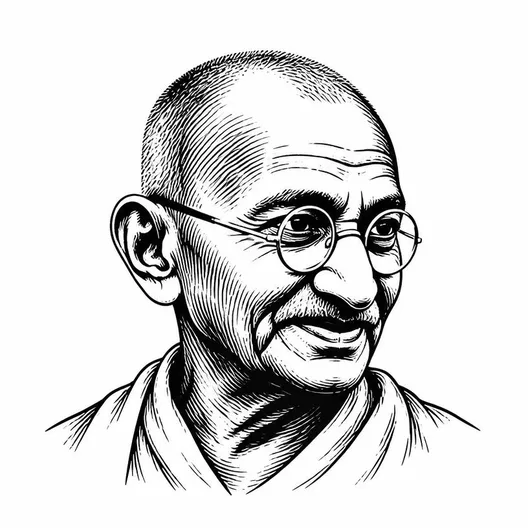 Mohandas K. Gandhi 1925