This novel follows a mysterious millionaire through his neighbor Nick's account of love and wealth on Long Island. Gatsby's longing takes shape in a green light across the water from his grand house.
186 pages 3h 36m reading time
Often called the great American novel, it is one of the most widely read books in American schools.
Argues that the American Dream, the hope that anyone can remake their life through money and effort, can turn hollow when it is chased for the wrong reasons.
Suggests that no amount of wealth can bring back the past, however hard a person tries to repeat it.
It became the defining picture of the Jazz Age of the 1920s, shaping how people still imagine that decade of parties, money, and excess.
It has inspired many stage, film, and opera versions, and its green light has become a common symbol for a dream that stays just out of reach.
Flop in its own time
It sold fewer than 25,000 copies while Fitzgerald lived, and unsold copies still sat in a warehouse when he died.
Saved by wartime soldiers
During World War II, about 155,000 free copies went to American troops, helping bring the novel back to life.
Cover painted before ending
The famous cover, a sad face of eyes floating above bright city lights, was painted before Fitzgerald finished writing the book.
Many other possible titles
Fitzgerald tried titles such as "Trimalchio in West Egg" and "Under the Red, White, and Blue" before settling.


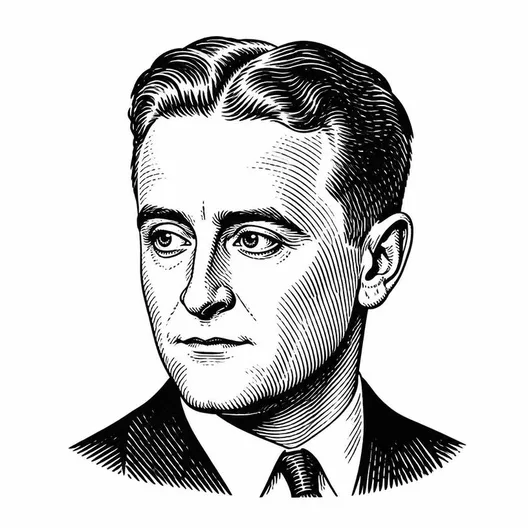 F. Scott Fitzgerald 1925