Short reflections and poems question morality, religion, and the search for knowledge. A madman carrying a lantern announces that God is dead.
310 pages 6h 1m reading time
One of the central books of modern philosophy, and the one where Nietzsche's mature thinking first comes together.
Argues that if belief in God has faded, people must face the loss honestly and find new ways to give life meaning and value.
Imagines a test: if you had to live your exact life over and over forever, could you say yes to it, an idea Nietzsche called "eternal recurrence."
Its phrase "God is dead" became one of the most famous lines in philosophy and is still widely quoted and argued over today.
It helped shape later thinkers and movements, especially existentialism, the philosophy of writers like Sartre and Camus about making meaning in a world without fixed answers.
Book Four ends with a preview
Its last section introduces Zarathustra, the prophet who became the hero of Nietzsche's next book.
Named after troubadour poetry
The German title echoes "gaya scienza," an old name for the art of medieval love poets.
Written in sunny Genoa
Nietzsche wrote most of it during a happy, healthier winter on the Italian coast.
Expanded years later
Nietzsche later added a new preface, a fifth part, and a group of playful poems.


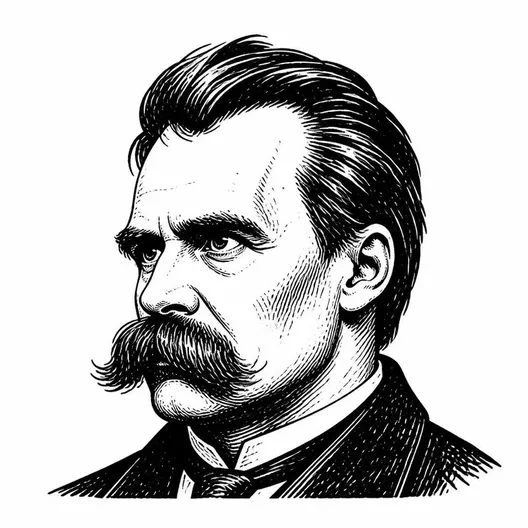 Friedrich Nietzsche 1882