A small handbook of short, practical rules for staying calm, drawn from the teaching of a former slave. It begins by dividing everything into what is in our power and what is not.
26 pages 30 min reading time
The classic short handbook of Stoic philosophy.
Teaches that only some things, like our judgments and choices, are in our control, and peace comes from knowing which.
Holds that people are disturbed not by things but by their views of things.
That idea helped inspire cognitive behavioral therapy, and Albert Ellis, one of its founders, credited Epictetus.
Epictetus, born into slavery, shaped the thinking of the emperor Marcus Aurelius, who quotes him in the Meditations.
Never written by Epictetus
Epictetus wrote nothing himself, and his student Arrian boiled his lectures down into this little handbook.
A book to keep close
Its Greek title means "ready to hand," a word that could also name a dagger kept at one's side.
Shaped by Arrian's longer record
Arrian also recorded the longer Discourses, which the handbook draws on, though only part of them survives.
Adopted by Christian monks
Christian writers later adapted it as a guide for monks, sometimes swapping Socrates for Saint Paul.


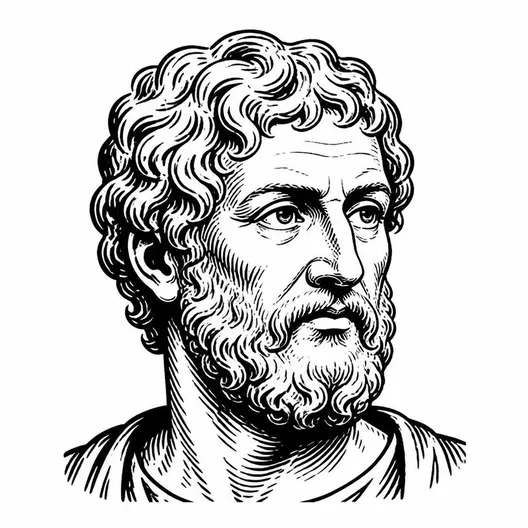 Epictetus c. 125 CE