Editor's Preface
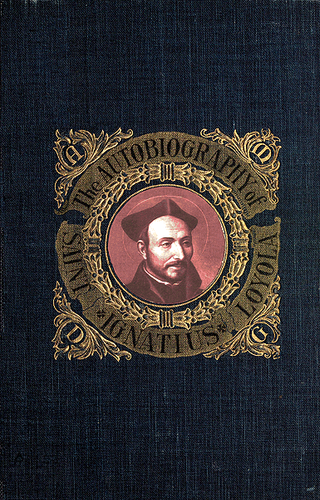
This account of the life of St. Ignatius, dictated by himself, is considered by the Bollandists the most valuable record of the great Founder of the Society of Jesus. The editors of the Stimmen Aus Maria Laach, the German review, as well as those of the English magazine, The Month, tell us that it, more than any other work, gives an insight into the spiritual life of St. Ignatius. Few works in ascetical literature, except the writings of St. Teresa and St. Augustine, impart such a knowledge of the soul.
St. Ignatius dictated this account of his own life. The Bollandists consider it the most valuable record of the great Founder of the Society of Jesus. The editors of the German review Stimmen Aus Maria Laach and the English magazine The Month agree. They say that this account offers more insight into the spiritual life of St. Ignatius than any other work. Few works of spiritual literature, apart from the writings of St. Teresa and St. Augustine, offer such insight into the soul.
To understand fully the Spiritual Exercises, we should know something of the man who wrote them. In this life of St. Ignatius, told in his own words, we acquire an intimate knowledge of the author of the Exercises. We discern the Saint's natural disposition, which was the foundation of his spiritual character. We learn of his conversion, his trials, the obstacles in his way, the heroism with which he accomplished his great mission.
To fully understand the Spiritual Exercises, we should know something about the man who wrote them. This life of St. Ignatius, told in his own words, gives us an intimate knowledge of the author of the Exercises. We see the Saint's natural character, which was the foundation of his spiritual character. We learn about his conversion, his trials, and the obstacles he faced. We also learn of the heroism with which he accomplished his great mission.
This autobiography of St. Ignatius is the groundwork of all the great lives of him that have been written.
This autobiography of St. Ignatius is the foundation for all the great biographies written about him.
Bartoli draws from it, Genelli develops it, the recent magnificent works of Father Clair, S.J., and of Stewart Rose are amplifications of this simple story of the life of St. Ignatius.
Bartoli draws on this simple story of St. Ignatius's life, and Genelli develops it. The recent, magnificent works of Father Clair, S.J., and Stewart Rose expand on it.
The Saint in his narrative always refers to himself in the third person, and this mode of speech has here been retained. Many persons who have neither the time, nor, perhaps, the inclination, to read larger works, will read, we trust, with pleasure and profit this autobiography.
The Saint always refers to himself in the third person in his account, and we have kept that style here. Many people have neither the time nor, perhaps, the desire to read longer works. We trust they will find pleasure and benefit in reading this autobiography.
Ignatius, as he lay wounded in his brother's house, read the lives of the saints to while away the time. Touched by grace, he cried, "What St. Francis and St. Dominic have done, that, by God's grace, I will do." May this little book, in like manner, inspire its readers with the desire of imitating St. Ignatius.
While recovering from his wounds in his brother's house, Ignatius read the lives of the saints to pass the time. Touched by grace, he cried, "What St. Francis and St. Dominic have done, I will do with God's grace." May this little book likewise inspire its readers to imitate St. Ignatius.
THE EDITOR.
THE EDITOR.
Easter, 1900. College of St. Francis Xavier, New York.
Easter, 1900. College of St. Francis Xavier, New York.
Preface of Father Louis Gonzalez, S.J., to the "Acts of St. Ignatius," received from the lips of the Saint and translated into Latin by Father Hannibal Codretto, S.J.
Preface by Father Louis Gonzalez, S.J., to the "Acts of St. Ignatius," told by the Saint himself and translated into Latin by Father Hannibal Codretto, S.J.