Brief sayings and short exchanges between Confucius and his students on learning, family, and good government. He describes his own life in stages, saying that at fifteen he set his heart on learning.
101 pages 1h 58m reading time
The founding text of Confucianism and one of the most influential books in history.
Makes humaneness the core virtue, summed up as not doing to others what you would not want done to yourself.
Urges rulers to govern by moral example rather than force, and teaches that social order starts with respect within the family.
As one of the Four Books, it was the basis of China's imperial civil service exams for about six centuries.
Its ideals of learning, family duty and good government shaped societies across East Asia, especially Korea, Japan and Vietnam.
Not written by Confucius
His students and their followers wrote down his sayings after his death, likely over several generations.
Hidden from a book burning
When China's first emperor ordered books burned in 213 BCE, a copy was reportedly hidden in a wall of Confucius's family home. It turned up decades later, when the house was torn down.
Required for office
From 1313 until 1905, China's civil service exams were built on the Analects, the Mencius, the Great Learning and the Doctrine of the Mean, which candidates learned by heart.
Translated by a missionary
James Legge, a Scottish missionary in Hong Kong, spent decades translating China's classics with Chinese scholars.


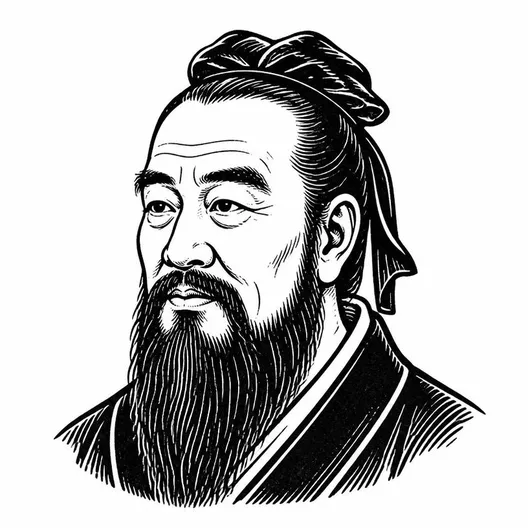 Confucius c. 400 BCE