These essays examine the Bible and organized religion through reason rather than religious authority. Paine declares that his own mind is his church.
248 pages 4h 48m reading time
The best-known defense of deism (belief in a God known through reason and nature, not through holy books or miracles) ever written in English.
Argues that the Bible cannot be the word of God, pointing to its contradictions, its cruel stories, and the long gap between the events and the people who wrote them down.
Argues that the true revelation of God is the natural world itself, which anyone can study and understand without priests or churches.
Brought hard questions about the Bible out of scholars' studies and into the hands of ordinary working readers in Britain and America.
Became a founding text for later freethinkers and secularists, people who wanted religion kept separate from public life and open to free questioning.
Finished just before arrest
Paine completed the first part in Paris hours before his arrest and passed the manuscript to a friend.
Written without a Bible
He wrote the first part from memory because he had no Bible with him to check.
Second part after prison
He wrote much of the second part after his release from a Paris prison, while still recovering from serious illness.
Sellers sent to jail
In Britain, booksellers were prosecuted for selling it, and publisher Richard Carlile spent years in prison over it.
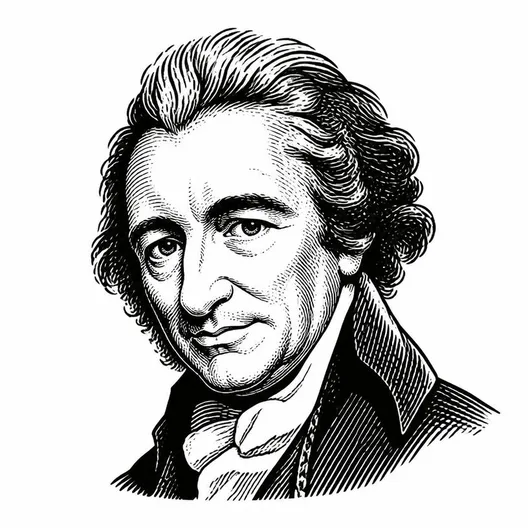 Thomas Paine 1794