This epic poem follows Aeneas as he escapes Troy and journeys to Italy in search of a new homeland. His journey takes him into the underworld, where his father shows him Rome's future.
376 pages 7h 18m reading time
The great national epic of ancient Rome, and one of the most important poems in Western literature.
Argues that founding something lasting can demand giving up personal happiness, as when Aeneas leaves Dido, the queen who loves him, because his duty lies in Italy.
Shows the cost of empire alongside its glory, ending not in triumph but with Aeneas killing a defeated enemy in a moment of rage.
Was taught in schools across Europe for nearly two thousand years, making it the main way generations of students learned Latin and poetry.
Inspired major later works, most famously Dante's Divine Comedy, in which Virgil himself guides Dante through Hell, and it was a model for Milton's Paradise Lost.
Saved against its author's wishes
Dying with the poem unfinished, Virgil asked for it to be burned, but Emperor Augustus refused.
Eleven years of slow work
Virgil spent about eleven years on it, reportedly writing only a few lines each day.
Unfinished lines left behind
Some lines in the poem stop halfway, a sign that Virgil never completed his final revisions.
Read aloud to the emperor
Virgil read parts of the poem to Augustus and his family, and Augustus's sister reportedly fainted while listening.


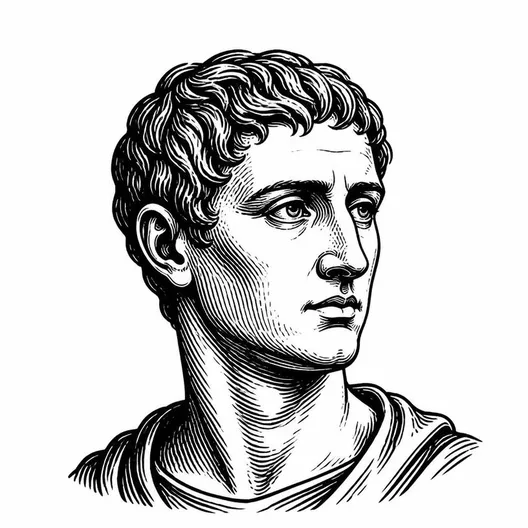 Virgil c. 19 BCE