This novel follows a mischievous boy’s adventures in a small town beside the Mississippi River. Tom famously turns painting a fence into a privilege his friends pay to enjoy.
266 pages 5h 9m reading time
One of the best-known American novels about childhood, still widely read in schools and homes.
Imagines boyhood as a time of freedom, play, and make-believe, set against the rules that adults try to impose.
Shows a boy facing real danger and moral choices, as when Tom speaks up in court to save an innocent man.
Led directly to its companion novel "Adventures of Huckleberry Finn," which grew out of the character of Tom's friend Huck and is often called one of the greatest American novels.
Made the phrase "Tom Sawyer" a common way to describe a clever boy who talks others into doing his work, and turned Twain's hometown of Hannibal, Missouri, into a lasting tourist site built around the story.
Beaten to market by pirates
Cheap unauthorized Canadian copies reached American readers before the official US edition, which cut into its sales.
Drawn from Twain's own boyhood
Twain based the town, Tom, and Huck on his own childhood in Hannibal and the boys he knew there.
A friend shaped the audience
Twain's friend and editor William Dean Howells read the manuscript and urged him to present it as a book for boys.
Removed from a children's room
In 1905, the Brooklyn Public Library took it off its children's shelves, calling it a bad example for young readers.
American humorist and novelist whose Tom Sawyer and Huckleberry Finn drew on his Mississippi River boyhood
The original uses words for races and peoples that are now dated or offensive, including slurs, which are covered. The modernized text uses today’s words, keeping slurs only where people in the book say them. Why


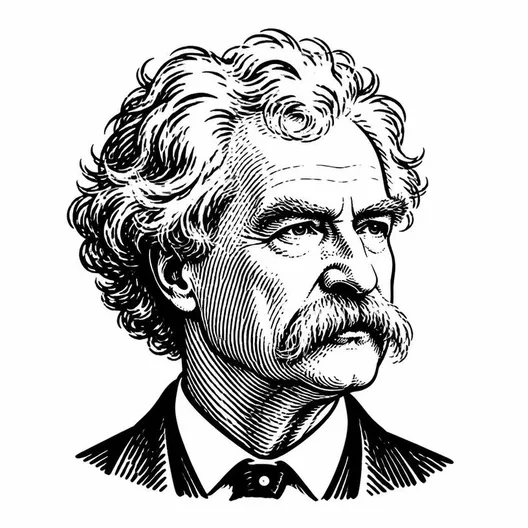 Mark Twain 1876