Chapter 35
The reader may rest satisfied that Tom’s and Huck’s windfall made a mighty stir in the poor little village of St. Petersburg. So vast a sum, all in actual cash, seemed next to incredible. It was talked about, gloated over, glorified, until the reason of many of the citizens tottered under the strain of the unhealthy excitement. Every “haunted” house in St. Petersburg and the neighboring villages was dissected, plank by plank, and its foundations dug up and ransacked for hidden treasure—and not by boys, but men—pretty grave, unromantic men, too, some of them. Wherever Tom and Huck appeared they were courted, admired, stared at. The boys were not able to remember that their remarks had possessed weight before; but now their sayings were treasured and repeated; everything they did seemed somehow to be regarded as remarkable; they had evidently lost the power of doing and saying commonplace things; moreover, their past history was raked up and discovered to bear marks of conspicuous originality. The village paper published biographical sketches of the boys.
The reader can be sure that Tom’s and Huck’s sudden fortune caused a huge stir in the poor little village of St. Petersburg. Such a vast sum, all in cash, seemed almost impossible to believe. People talked about it, gloated over it, and celebrated it. The unhealthy excitement nearly drove many of the villagers out of their minds. Every “haunted” house in St. Petersburg and the neighboring villages was taken apart, board by board. Their foundations were dug up and searched for hidden treasure. And the treasure hunters were not boys, but men. Some were quite serious, unimaginative men, too. Wherever Tom and Huck appeared, people sought their company, admired them, and stared at them. The boys could not remember their words ever carrying any weight before. But now people treasured and repeated their sayings. Everything they did somehow seemed remarkable. Apparently, they had lost the ability to do or say anything ordinary. What’s more, people dug into the boys’ past and discovered signs of striking originality. The village newspaper published short accounts of the boys’ lives.
The Widow Douglas put Huck’s money out at six per cent., and Judge Thatcher did the same with Tom’s at Aunt Polly’s request. Each lad had an income, now, that was simply prodigious—a dollar for every weekday in the year and half of the Sundays. It was just what the minister got—no, it was what he was promised—he generally couldn’t collect it. A dollar and a quarter a week would board, lodge, and school a boy in those old simple days—and clothe him and wash him, too, for that matter.
The Widow Douglas invested Huck’s money at six percent interest. At Aunt Polly’s request, Judge Thatcher did the same with Tom’s money. Each boy now had an enormous income: a dollar for every weekday of the year and half the Sundays. That was just what the minister earned. No, it was what he was promised. He usually couldn’t collect it. In those simple old days, a dollar and a quarter a week would cover a boy’s food, housing, and schooling. It would even pay for his clothes and laundry, too.
Judge Thatcher had conceived a great opinion of Tom. He said that no commonplace boy would ever have got his daughter out of the cave. When Becky told her father, in strict confidence, how Tom had taken her whipping at school, the Judge was visibly moved; and when she pleaded grace for the mighty lie which Tom had told in order to shift that whipping from her shoulders to his own, the Judge said with a fine outburst that it was a noble, a generous, a magnanimous lie—a lie that was worthy to hold up its head and march down through history breast to breast with George Washington’s lauded Truth about the hatchet! Becky thought her father had never looked so tall and so superb as when he walked the floor and stamped his foot and said that. She went straight off and told Tom about it.
Judge Thatcher had come to think very highly of Tom. He said no ordinary boy could ever have gotten his daughter out of the cave. Becky told her father, in strict confidence, how Tom had taken her whipping at school, and the Judge was visibly moved. Then she asked him to forgive the enormous lie Tom had told to take the whipping in her place. The Judge burst out passionately that it was a noble, generous, big-hearted lie. It was a lie worthy of holding its head high and marching through history shoulder to shoulder with George Washington’s celebrated truth about the hatchet! Becky thought her father had never looked so tall and magnificent as when he paced the floor and stamped his foot, saying those words. She went straight off and told Tom about it.
Judge Thatcher hoped to see Tom a great lawyer or a great soldier some day. He said he meant to look to it that Tom should be admitted to the National Military Academy and afterward trained in the best law school in the country, in order that he might be ready for either career or both.
Judge Thatcher hoped Tom would become a great lawyer or a great soldier someday. He said he planned to make sure Tom got into the National Military Academy. After that, he would make sure Tom trained at the best law school in the country. That way, Tom would be ready for either career or both.
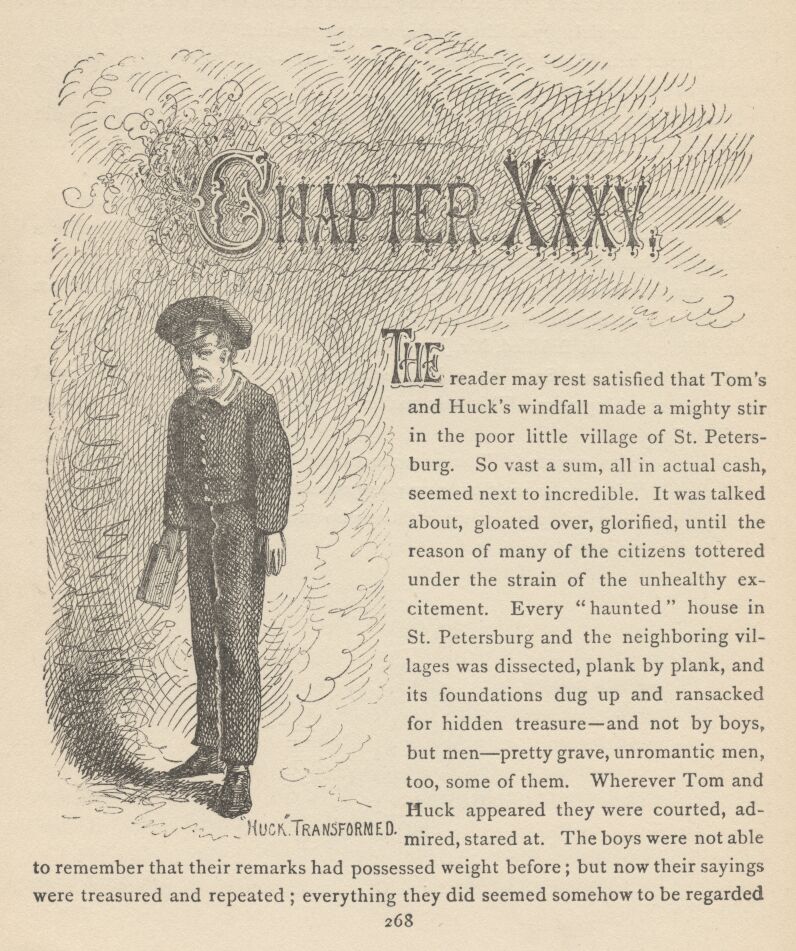
Huck Finn’s wealth and the fact that he was now under the Widow Douglas’ protection introduced him into society—no, dragged him into it, hurled him into it—and his sufferings were almost more than he could bear. The widow’s servants kept him clean and neat, combed and brushed, and they bedded him nightly in unsympathetic sheets that had not one little spot or stain which he could press to his heart and know for a friend. He had to eat with a knife and fork; he had to use napkin, cup, and plate; he had to learn his book, he had to go to church; he had to talk so properly that speech was become insipid in his mouth; whithersoever he turned, the bars and shackles of civilization shut him in and bound him hand and foot.
Huck Finn’s wealth and the protection of the Widow Douglas brought him into polite society. No, dragged him into it, threw him into it. His suffering was almost more than he could bear. The widow’s servants kept him clean and neat, with his hair combed and brushed. Every night they put him to bed in cold, unfriendly sheets. There wasn’t one little spot or stain he could hold close to his heart and recognize as a friend. He had to eat with a knife and fork. He had to use a napkin, cup, and plate. He had to study his lessons and go to church. He had to speak so properly that words had lost all their flavor in his mouth. Everywhere he turned, civilization’s bars closed him in, and its chains bound him hand and foot.
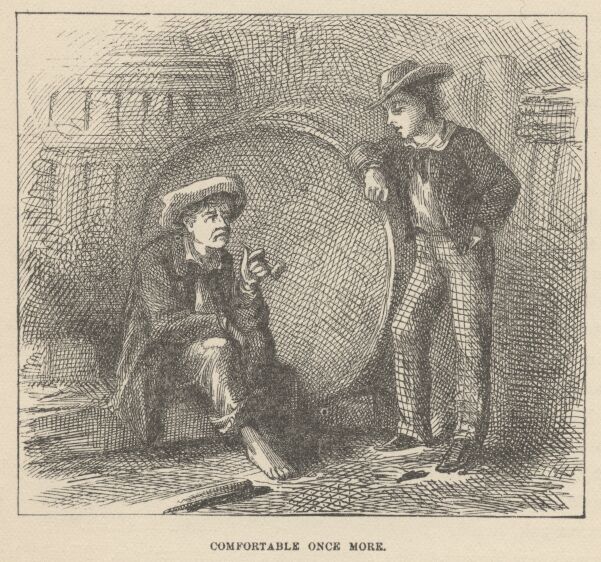
He bravely bore his miseries three weeks, and then one day turned up missing. For forty-eight hours the widow hunted for him everywhere in great distress. The public were profoundly concerned; they searched high and low, they dragged the river for his body. Early the third morning Tom Sawyer wisely went poking among some old empty hogsheads down behind the abandoned slaughter-house, and in one of them he found the refugee. Huck had slept there; he had just breakfasted upon some stolen odds and ends of food, and was lying off, now, in comfort, with his pipe. He was unkempt, uncombed, and clad in the same old ruin of rags that had made him picturesque in the days when he was free and happy. Tom routed him out, told him the trouble he had been causing, and urged him to go home. Huck’s face lost its tranquil content, and took a melancholy cast. He said:
He bravely endured his misery for three weeks, and then one day he disappeared. For forty-eight hours the widow searched everywhere for him, deeply upset. Everyone was terribly worried. They searched high and low and dragged the river for his body. Early on the third morning, Tom Sawyer had the good sense to search some old empty barrels behind the abandoned slaughterhouse. In one of them, he found the runaway. Huck had slept there and had just eaten a breakfast of stolen scraps of food. Now he was stretched out comfortably with his pipe. He was dirty, his hair was uncombed, and he wore the same old tattered rags. Those rags had given him a colorful look in the days when he was free and happy. Tom got him out, told him about the trouble he had been causing, and urged him to go home. The peaceful contentment left Huck’s face, and he looked sad. He said:
“Don’t talk about it, Tom. I’ve tried it, and it don’t work; it don’t work, Tom. It ain’t for me; I ain’t used to it. The widder’s good to me, and friendly; but I can’t stand them ways. She makes me get up just at the same time every morning; she makes me wash, they comb me all to thunder; she won’t let me sleep in the woodshed; I got to wear them blamed clothes that just smothers me, Tom; they don’t seem to any air git through ’em, somehow; and they’re so rotten nice that I can’t set down, nor lay down, nor roll around anywher’s; I hain’t slid on a cellar-door for—well, it ’pears to be years; I got to go to church and sweat and sweat—I hate them ornery sermons! I can’t ketch a fly in there, I can’t chaw. I got to wear shoes all Sunday. The widder eats by a bell; she goes to bed by a bell; she gits up by a bell—everything’s so awful reg’lar a body can’t stand it.”
“Don’t talk about it, Tom. I’ve tried it, and it don’t work. It don’t work, Tom. It ain’t for me. I ain’t used to it. The widow’s good to me, and friendly, but I can’t stand them ways. She makes me get up just at the same time every morning. She makes me wash, they comb me all to thunder. She won’t let me sleep in the woodshed. I got to wear them blamed clothes that just smothers me, Tom. They don’t seem to any air get through ’em, somehow. And they’re so rotten nice that I can’t set down, nor lay down, nor roll around anywheres. I ain’t slid on a cellar door for, well, it appears to be years. I got to go to church and sweat and sweat. I hate them ornery sermons! I can’t catch a fly in there, I can’t chew. I got to wear shoes all Sunday. The widow eats by a bell. She goes to bed by a bell. She gets up by a bell. Everything’s so awful regular a body can’t stand it.”
“Well, everybody does that way, Huck.”
“Well, everybody does it that way, Huck.”
“Tom, it don’t make no difference. I ain’t everybody, and I can’t stand it. It’s awful to be tied up so. And grub comes too easy—I don’t take no interest in vittles, that way. I got to ask to go a-fishing; I got to ask to go in a-swimming—dern’d if I hain’t got to ask to do everything. Well, I’d got to talk so nice it wasn’t no comfort—I’d got to go up in the attic and rip out awhile, every day, to git a taste in my mouth, or I’d a died, Tom. The widder wouldn’t let me smoke; she wouldn’t let me yell, she wouldn’t let me gape, nor stretch, nor scratch, before folks—” [Then with a spasm of special irritation and injury]—“And dad fetch it, she prayed all the time! I never see such a woman! I had to shove, Tom—I just had to. And besides, that school’s going to open, and I’d a had to go to it—well, I wouldn’t stand that, Tom. Looky-here, Tom, being rich ain’t what it’s cracked up to be. It’s just worry and worry, and sweat and sweat, and a-wishing you was dead all the time. Now these clothes suits me, and this bar’l suits me, and I ain’t ever going to shake ’em any more. Tom, I wouldn’t ever got into all this trouble if it hadn’t ’a’ been for that money; now you just take my sheer of it along with your’n, and gimme a ten-center sometimes—not many times, becuz I don’t give a dern for a thing ’thout it’s tollable hard to git—and you go and beg off for me with the widder.”
“Tom, it don’t make no difference. I ain’t everybody, and I can’t stand it. It’s awful to be tied up so. And grub comes too easy. I don’t take no interest in vittles, that way. I got to ask to go a-fishing. I got to ask to go in a-swimming. Darned if I ain’t got to ask to do everything. Well, I’d got to talk so nice it wasn’t no comfort. I’d got to go up in the attic and let rip awhile, every day, to get a taste in my mouth, or I’d have died, Tom. The widow wouldn’t let me smoke. She wouldn’t let me yell, she wouldn’t let me gape, nor stretch, nor scratch, before folks.” [Then, with a spasm of special irritation and grievance:] “And dad fetch it, she prayed all the time! I never see such a woman! I had to shove, Tom. I just had to. And besides, that school’s going to open, and I’d have had to go to it. Well, I wouldn’t stand that, Tom. “Look here, Tom, being rich ain’t what it’s cracked up to be. It’s just worry and worry, and sweat and sweat, and a-wishing you was dead all the time. Now these clothes suits me, and this barrel suits me, and I ain’t ever going to shake ’em any more. Tom, I wouldn’t ever got into all this trouble if it hadn’t have been for that money. Now you just take my share of it along with your’n, and give me a ten-center sometimes. Not many times, because I don’t give a darn for a thing without it’s tolerable hard to get. And you go and beg off for me with the widow.”
“Oh, Huck, you know I can’t do that. ’Tain’t fair; and besides if you’ll try this thing just a while longer you’ll come to like it.”
“Oh, Huck, you know I can’t do that. It ain’t fair. And besides, if you try this thing just a little longer, you’ll come to like it.”
“Like it! Yes—the way I’d like a hot stove if I was to set on it long enough. No, Tom, I won’t be rich, and I won’t live in them cussed smothery houses. I like the woods, and the river, and hogsheads, and I’ll stick to ’em, too. Blame it all! just as we’d got guns, and a cave, and all just fixed to rob, here this dern foolishness has got to come up and spile it all!”
“Like it! Yes, the way I’d like a hot stove if I was to set on it long enough. No, Tom, I won’t be rich, and I won’t live in them cussed smothery houses. I like the woods, and the river, and hogsheads, and I’ll stick to ’em, too. Blame it all! Just as we’d got guns, and a cave, and all just fixed to rob, here this darn foolishness has got to come up and spoil it all!”
Tom saw his opportunity—
Tom saw his chance.
“Lookyhere, Huck, being rich ain’t going to keep me back from turning robber.”
“Look here, Huck, being rich ain’t going to keep me from becoming a robber.”
“No! Oh, good-licks; are you in real dead-wood earnest, Tom?”
“No! Oh, good grief! Are you really, truly serious, Tom?”
“Just as dead earnest as I’m sitting here. But Huck, we can’t let you into the gang if you ain’t respectable, you know.”
“I’m dead serious, as sure as I’m sitting here. But Huck, we can’t let you into the gang if you ain’t respectable, you know.”
Huck’s joy was quenched.
Huck’s joy vanished.
“Can’t let me in, Tom? Didn’t you let me go for a pirate?”
“Can’t let me in, Tom? Didn’t you let me be a pirate?”
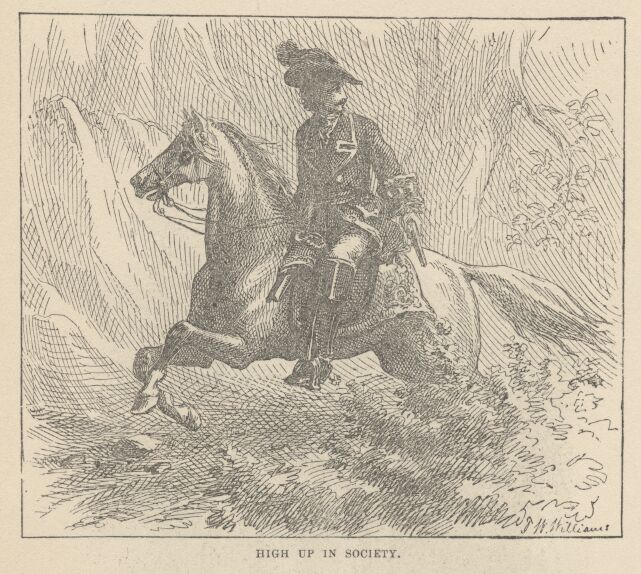
“Yes, but that’s different. A robber is more high-toned than what a pirate is—as a general thing. In most countries they’re awful high up in the nobility—dukes and such.”
“Yes, but that’s different. A robber is more respectable than what a pirate is, generally speaking. In most countries, robbers are awful high up in the nobility, dukes and such.”
“Now, Tom, hain’t you always ben friendly to me? You wouldn’t shet me out, would you, Tom? You wouldn’t do that, now, would you, Tom?”
“Now, Tom, ain’t you always been friendly to me? You wouldn’t shut me out, would you, Tom? You wouldn’t do that, now, would you, Tom?”
“Huck, I wouldn’t want to, and I don’t want to—but what would people say? Why, they’d say, ‘Mph! Tom Sawyer’s Gang! pretty low characters in it!’ They’d mean you, Huck. You wouldn’t like that, and I wouldn’t.”
“Huck, I wouldn’t want to, and I don’t want to. But what would people say? Why, they’d say, ‘Hmph! Tom Sawyer’s Gang! Some pretty low characters in it!’ They’d mean you, Huck. You wouldn’t like that, and I wouldn’t either.”
Huck was silent for some time, engaged in a mental struggle. Finally he said:
Huck stayed silent for a while, struggling with his thoughts. Finally he said:
“Well, I’ll go back to the widder for a month and tackle it and see if I can come to stand it, if you’ll let me b’long to the gang, Tom.”
“Well, I’ll go back to the widow for a month and tackle it. I’ll see if I can learn to stand it, if you’ll let me belong to the gang, Tom.”
“All right, Huck, it’s a whiz! Come along, old chap, and I’ll ask the widow to let up on you a little, Huck.”
“All right, Huck, that’s great! Come along, buddy, and I’ll ask the widow to go easier on you, Huck.”
“Will you, Tom—now will you? That’s good. If she’ll let up on some of the roughest things, I’ll smoke private and cuss private, and crowd through or bust. When you going to start the gang and turn robbers?”
“Will you, Tom? Now will you? That’s good. If she’ll let up on some of the roughest things, I’ll smoke private and cuss private, and crowd through or bust. When you going to start the gang and turn robbers?”
“Oh, right off. We’ll get the boys together and have the initiation tonight, maybe.”
“Oh, right away. We’ll get the boys together and maybe have the initiation tonight.”
“Have the which?”
“Have the what?”
“Have the initiation.”
“Hold the initiation.”
“What’s that?”
“What’s that?”
“It’s to swear to stand by one another, and never tell the gang’s secrets, even if you’re chopped all to flinders, and kill anybody and all his family that hurts one of the gang.”
“It’s to swear to stand by one another and never tell the gang’s secrets, even if you’re chopped to pieces. And to kill anybody who hurts one of the gang, along with all his family.”
“That’s gay—that’s mighty gay, Tom, I tell you.”
“That’s great. That’s really great, Tom, I tell you.”
“Well, I bet it is. And all that swearing’s got to be done at midnight, in the lonesomest, awfulest place you can find—a ha’nted house is the best, but they’re all ripped up now.”
“Well, I bet it is. And all that swearing’s got to be done at midnight, in the lonesomest, awfulest place you can find. A haunted house is the best, but they’ve all been torn down now.”
“Well, midnight’s good, anyway, Tom.”
“Well, midnight’s good, anyway, Tom.”
“Yes, so it is. And you’ve got to swear on a coffin, and sign it with blood.”
“Yes, that’s right. And you’ve got to swear on a coffin and sign it in blood.”
“Now, that’s something like! Why, it’s a million times bullier than pirating. I’ll stick to the widder till I rot, Tom; and if I git to be a reg’lar ripper of a robber, and everybody talking ’bout it, I reckon she’ll be proud she snaked me in out of the wet.”
“Now, that’s more like it! Why, it’s a million times better than being a pirate. I’ll stick with the widow till I rot, Tom. And if I get to be a really great robber, and everybody talking about it, I reckon she’ll be proud she took me in out of the rain.”