Chapter 22
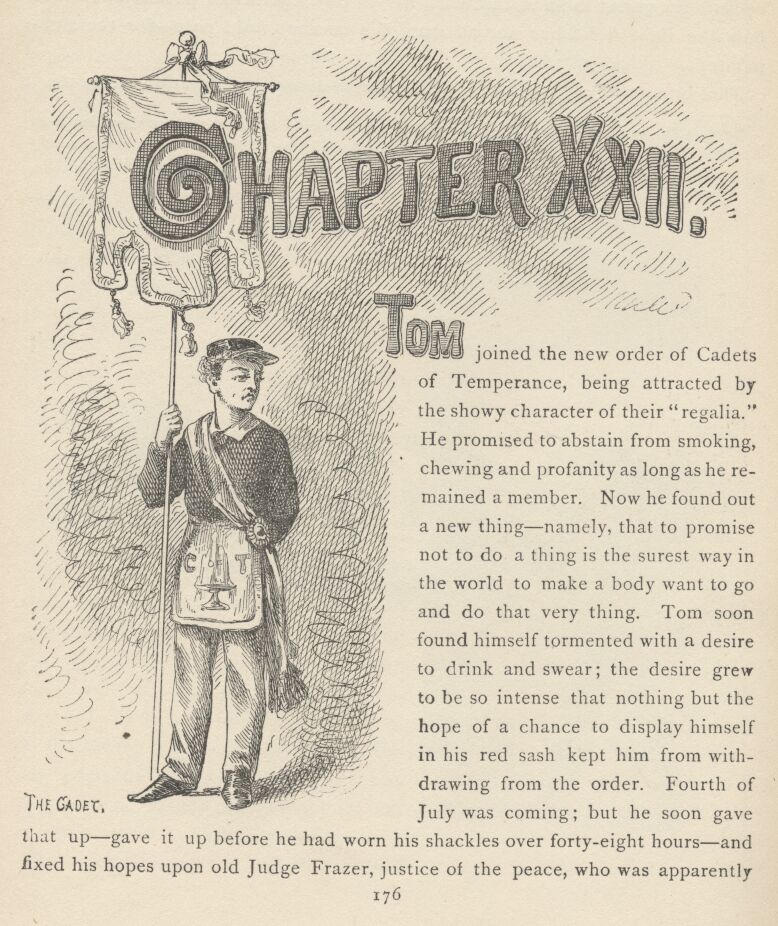
Tom joined the new order of Cadets of Temperance, being attracted by the showy character of their “regalia.” He promised to abstain from smoking, chewing, and profanity as long as he remained a member. Now he found out a new thing—namely, that to promise not to do a thing is the surest way in the world to make a body want to go and do that very thing. Tom soon found himself tormented with a desire to drink and swear; the desire grew to be so intense that nothing but the hope of a chance to display himself in his red sash kept him from withdrawing from the order. Fourth of July was coming; but he soon gave that up—gave it up before he had worn his shackles over forty-eight hours—and fixed his hopes upon old Judge Frazer, justice of the peace, who was apparently on his deathbed and would have a big public funeral, since he was so high an official. During three days Tom was deeply concerned about the Judge’s condition and hungry for news of it. Sometimes his hopes ran high—so high that he would venture to get out his regalia and practise before the looking-glass. But the Judge had a most discouraging way of fluctuating. At last he was pronounced upon the mend—and then convalescent. Tom was disgusted; and felt a sense of injury, too. He handed in his resignation at once—and that night the Judge suffered a relapse and died. Tom resolved that he would never trust a man like that again.
Tom joined the new Cadets of Temperance because he liked their flashy “regalia.” He promised not to smoke, chew tobacco, or swear as long as he remained a member. Now he learned something new. Promising not to do something is the surest way in the world to make you want to do it. Tom soon found himself tormented by a desire to drink and swear. The desire grew so strong that only the hope of showing off his red sash kept him from quitting. The Fourth of July was coming, but he soon gave up waiting for that. He had not even worn his shackles for forty-eight hours before he pinned his hopes on old Judge Frazer. The Judge, a justice of the peace, seemed to be on his deathbed. Since he was such an important official, he would have a big public funeral. For three days, Tom was deeply concerned about the Judge’s condition and eager for news. Sometimes his hopes rose so high that he dared to take out his regalia and practice in front of the mirror. But the Judge had a most discouraging habit of getting worse and then better. At last, he was said to be improving, and then recovering. Tom was disgusted and felt wronged, too. He handed in his resignation at once. That night, the Judge took a turn for the worse and died. Tom decided he would never trust a man like that again.
The funeral was a fine thing. The Cadets paraded in a style calculated to kill the late member with envy. Tom was a free boy again, however—there was something in that. He could drink and swear, now—but found to his surprise that he did not want to. The simple fact that he could, took the desire away, and the charm of it.
The funeral was a grand affair. The Cadets paraded in a style meant to make their dead member die of envy. Tom was a free boy again, though, and that counted for something. He could drink and swear now, but to his surprise, he found he did not want to. Simply knowing he could took away both the desire and the appeal.
Tom presently wondered to find that his coveted vacation was beginning to hang a little heavily on his hands.
Tom soon realized, to his surprise, that the vacation he’d wanted so badly was starting to bore him a little.
He attempted a diary—but nothing happened during three days, and so he abandoned it.
He tried keeping a diary. But nothing happened for three days, so he gave it up.
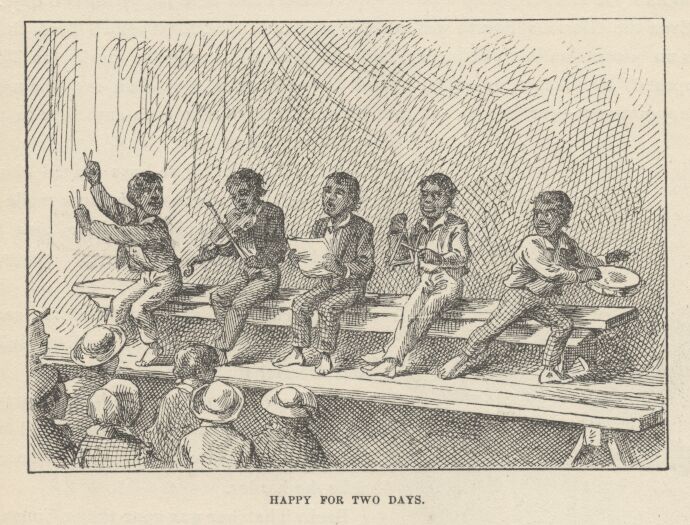
The first of all the negro minstrel shows came to town, and made a sensation. Tom and Joe Harper got up a band of performers and were happy for two days.
The first of all the blackface minstrel shows came to town and caused a sensation. Tom and Joe Harper got up a band of performers and were happy for two days.
Even the Glorious Fourth was in some sense a failure, for it rained hard, there was no procession in consequence, and the greatest man in the world (as Tom supposed), Mr. Benton, an actual United States Senator, proved an overwhelming disappointment—for he was not twenty-five feet high, nor even anywhere in the neighborhood of it.
Even the Glorious Fourth was something of a failure. It rained hard, so there was no parade. And Mr. Benton, an actual United States Senator, turned out to be an enormous disappointment. Tom thought he was the greatest man in the world. But he was not twenty-five feet tall, or even anywhere close to it.
A circus came. The boys played circus for three days afterward in tents made of rag carpeting—admission, three pins for boys, two for girls—and then circusing was abandoned.
A circus came to town. For three days afterward, the boys played circus in tents made of rag carpeting. Admission cost three pins for boys and two for girls. Then they gave up playing circus.
A phrenologist and a mesmerizer came—and went again and left the village duller and drearier than ever.
A phrenologist and a hypnotist came and went. They left the village duller and drearier than ever.
There were some boys-and-girls’ parties, but they were so few and so delightful that they only made the aching voids between ache the harder.
There were some parties for boys and girls. But they were so rare and so delightful that the emptiness between them only felt more painful.
Becky Thatcher was gone to her Constantinople home to stay with her parents during vacation—so there was no bright side to life anywhere.
Becky Thatcher had gone home to Constantinople to stay with her parents during vacation. So there was no bright side to life anywhere.
The dreadful secret of the murder was a chronic misery. It was a very cancer for permanency and pain.
The terrible secret of the murder was a constant misery. It was like a cancer that never went away or stopped hurting.
Then came the measles.
Then came the measles.
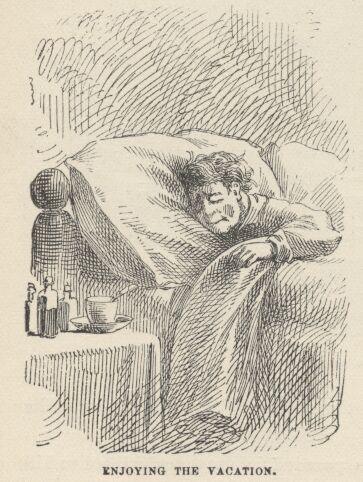
During two long weeks Tom lay a prisoner, dead to the world and its happenings. He was very ill, he was interested in nothing. When he got upon his feet at last and moved feebly downtown, a melancholy change had come over everything and every creature. There had been a “revival,” and everybody had “got religion,” not only the adults, but even the boys and girls. Tom went about, hoping against hope for the sight of one blessed sinful face, but disappointment crossed him everywhere. He found Joe Harper studying a Testament, and turned sadly away from the depressing spectacle. He sought Ben Rogers, and found him visiting the poor with a basket of tracts. He hunted up Jim Hollis, who called his attention to the precious blessing of his late measles as a warning. Every boy he encountered added another ton to his depression; and when, in desperation, he flew for refuge at last to the bosom of Huckleberry Finn and was received with a Scriptural quotation, his heart broke and he crept home and to bed realizing that he alone of all the town was lost, forever and forever.
For two long weeks, Tom lay trapped in bed, cut off from the world and everything happening in it. He was very ill and interested in nothing. At last, he got to his feet and made his way weakly downtown. A gloomy change had come over everything and everyone. There had been a “revival,” and everybody had “got religion,” not just the adults, but even the boys and girls. Tom wandered around, hoping against hope to see just one blessed, sinful face. But everywhere he went, he was disappointed. He found Joe Harper studying the New Testament and turned sadly away from the depressing sight. He looked for Ben Rogers and found him visiting the poor with a basket of religious pamphlets. He tracked down Jim Hollis, who told Tom what a precious blessing his recent measles had been as a warning. Every boy he met added another ton to his misery. Finally, in desperation, he ran to Huckleberry Finn for comfort. But Huckleberry greeted him with a quotation from the Bible. Tom’s heart broke, and he crept home and went to bed. He realized that he alone, out of the whole town, was lost forever and ever.
And that night there came on a terrific storm, with driving rain, awful claps of thunder and blinding sheets of lightning. He covered his head with the bedclothes and waited in a horror of suspense for his doom; for he had not the shadow of a doubt that all this hubbub was about him. He believed he had taxed the forbearance of the powers above to the extremity of endurance and that this was the result. It might have seemed to him a waste of pomp and ammunition to kill a bug with a battery of artillery, but there seemed nothing incongruous about the getting up such an expensive thunderstorm as this to knock the turf from under an insect like himself.
And that night a terrible storm broke out, with driving rain, deafening thunderclaps, and blinding sheets of lightning. He pulled the bedcovers over his head and waited in terror for his doom. For he had no doubt at all that all this noise and fury was aimed at him. He believed he had pushed the patience of the powers above to its limit, and this storm was the result. He might have thought it a waste of grand display and ammunition to kill a bug with a battery of cannons. But he saw nothing strange about putting on such an expensive thunderstorm to blast the ground from under an insect like himself.
By and by the tempest spent itself and died without accomplishing its object. The boy’s first impulse was to be grateful, and reform. His second was to wait—for there might not be any more storms.
Eventually, the storm wore itself out and died without achieving its goal. The boy’s first impulse was to be grateful and change his ways. His second was to wait, because there might not be any more storms.
The next day the doctors were back; Tom had relapsed. The three weeks he spent on his back this time seemed an entire age. When he got abroad at last he was hardly grateful that he had been spared, remembering how lonely was his estate, how companionless and forlorn he was. He drifted listlessly down the street and found Jim Hollis acting as judge in a juvenile court that was trying a cat for murder, in the presence of her victim, a bird. He found Joe Harper and Huck Finn up an alley eating a stolen melon. Poor lads! they—like Tom—had suffered a relapse.
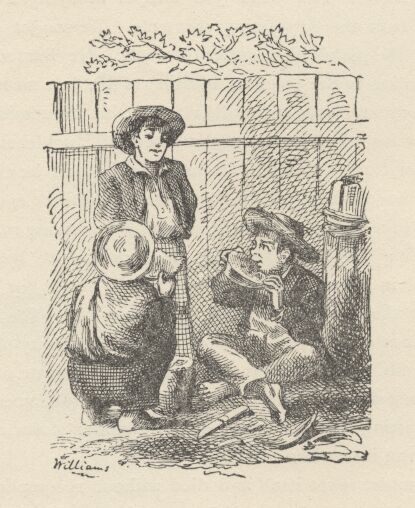
The next day the doctors were back. Tom had fallen ill again. The three weeks he spent in bed this time seemed like a lifetime. When he finally got outside, he was hardly grateful to be alive, remembering how lonely and friendless he was. He wandered listlessly down the street and found Jim Hollis acting as judge in a children’s court. They were trying a cat for murder, with her victim, a bird, right there. He found Joe Harper and Huck Finn in an alley eating a stolen melon. Poor boys! Like Tom, they had suffered a relapse.