Chapter 12
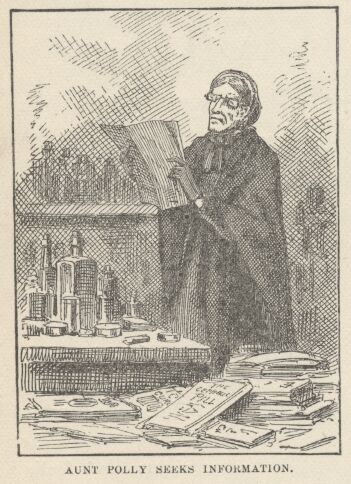
One of the reasons why Tom’s mind had drifted away from its secret troubles was, that it had found a new and weighty matter to interest itself about. Becky Thatcher had stopped coming to school. Tom had struggled with his pride a few days, and tried to “whistle her down the wind,” but failed. He began to find himself hanging around her father’s house, nights, and feeling very miserable. She was ill. What if she should die! There was distraction in the thought. He no longer took an interest in war, nor even in piracy. The charm of life was gone; there was nothing but dreariness left. He put his hoop away, and his bat; there was no joy in them any more. His aunt was concerned. She began to try all manner of remedies on him. She was one of those people who are infatuated with patent medicines and all new-fangled methods of producing health or mending it. She was an inveterate experimenter in these things. When something fresh in this line came out she was in a fever, right away, to try it; not on herself, for she was never ailing, but on anybody else that came handy. She was a subscriber for all the “Health” periodicals and phrenological frauds; and the solemn ignorance they were inflated with was breath to her nostrils. All the “rot” they contained about ventilation, and how to go to bed, and how to get up, and what to eat, and what to drink, and how much exercise to take, and what frame of mind to keep one’s self in, and what sort of clothing to wear, was all gospel to her, and she never observed that her health-journals of the current month customarily upset everything they had recommended the month before. She was as simple-hearted and honest as the day was long, and so she was an easy victim. She gathered together her quack periodicals and her quack medicines, and thus armed with death, went about on her pale horse, metaphorically speaking, with “hell following after.” But she never suspected that she was not an angel of healing and the balm of Gilead in disguise, to the suffering neighbors.
One reason Tom’s mind had wandered from his secret troubles was that something new and serious had caught his attention. Becky Thatcher had stopped coming to school. For a few days, Tom had struggled with his pride and tried to “put her out of his mind,” but failed. He began hanging around her father’s house at night, feeling very miserable. She was ill. What if she should die! The thought nearly drove him out of his mind. He no longer cared about playing at war, or even piracy. Life had lost its charm. Nothing remained but gloom. He put away his hoop and his bat. They gave him no joy anymore. His aunt was worried. She began trying all sorts of remedies on him. She was one of those people obsessed with patent medicines and every new way to improve or restore health. She never stopped experimenting with these treatments. Whenever a new treatment appeared, she was immediately frantic to try it. Not on herself, because she was never sick, but on anyone else who happened to be nearby. She subscribed to all the “Health” magazines and fraudulent publications about reading character from the shape of the skull. The solemn ignorance filling their pages was like the very air she breathed. She accepted as gospel all their “nonsense” about fresh air, how to go to bed, and how to get up. The same went for what to eat and drink, how much exercise to get, and what mood to maintain. She also believed everything they said about what clothes to wear. She never noticed that each month’s health magazines usually contradicted everything they had recommended the month before. She was as trusting and honest as the day was long, so she was an easy victim. She gathered her quack magazines and quack medicines. Armed with death, she rode around on her pale horse, figuratively speaking, with “hell following after.” But she never doubted that, to her suffering neighbors, she was an angel of healing and Gilead’s soothing balm in disguise.
The water treatment was new, now, and Tom’s low condition was a windfall to her. She had him out at daylight every morning, stood him up in the wood-shed and drowned him with a deluge of cold water; then she scrubbed him down with a towel like a file, and so brought him to; then she rolled him up in a wet sheet and put him away under blankets till she sweated his soul clean and “the yellow stains of it came through his pores”—as Tom said.
The water treatment was new then, and Tom’s poor health gave her a lucky chance to try it. She had him up at dawn every morning and stood him in the woodshed. There she nearly drowned him in a flood of cold water. Then she scrubbed him with a towel as rough as a file, bringing him back to his senses. Next she wrapped him in a wet sheet and tucked him under blankets until she sweated his soul clean. As Tom said, “the yellow stains of it came through his pores”.
Yet notwithstanding all this, the boy grew more and more melancholy and pale and dejected. She added hot baths, sitz baths, shower baths, and plunges. The boy remained as dismal as a hearse. She began to assist the water with a slim oatmeal diet and blister-plasters. She calculated his capacity as she would a jug’s, and filled him up every day with quack cure-alls.
Yet despite all this, the boy grew sadder, paler, and more discouraged. She added hot baths, shallow sitting baths, showers, and plunges into water. The boy remained as gloomy as a hearse. She began supplementing the water treatments with a meager oatmeal diet and plasters that raised blisters. She figured out how much he could hold, just as she would with a jug. Then she filled him up every day with phony cure-alls.
Tom had become indifferent to persecution by this time. This phase filled the old lady’s heart with consternation. This indifference must be broken up at any cost. Now she heard of Pain-killer for the first time. She ordered a lot at once. She tasted it and was filled with gratitude. It was simply fire in a liquid form. She dropped the water treatment and everything else, and pinned her faith to Pain-killer. She gave Tom a teaspoonful and watched with the deepest anxiety for the result. Her troubles were instantly at rest, her soul at peace again; for the “indifference” was broken up. The boy could not have shown a wilder, heartier interest, if she had built a fire under him.
By now, Tom no longer cared how much he was tormented. His lack of interest filled the old lady with alarm. She had to put an end to it at any cost. Then she heard of Pain-killer for the first time. She ordered a large supply at once. She tasted it and was filled with gratitude. It was nothing but liquid fire. She gave up the water treatment and everything else, and put all her faith in Pain-killer. She gave Tom a teaspoonful and watched anxiously to see what would happen. Her worries vanished instantly, and her soul was at peace again, because his “indifference” was gone. The boy could not have shown a wilder, more enthusiastic interest if she had built a fire under him.
Tom felt that it was time to wake up; this sort of life might be romantic enough, in his blighted condition, but it was getting to have too little sentiment and too much distracting variety about it. So he thought over various plans for relief, and finally hit upon that of professing to be fond of Pain-killer. He asked for it so often that he became a nuisance, and his aunt ended by telling him to help himself and quit bothering her. If it had been Sid, she would have had no misgivings to alloy her delight; but since it was Tom, she watched the bottle clandestinely. She found that the medicine did really diminish, but it did not occur to her that the boy was mending the health of a crack in the sitting-room floor with it.
Tom felt it was time to snap out of it. This sort of life might be romantic enough in his miserable state. But it was getting to have too little feeling and too many distracting changes. So he considered several ways to get relief and finally decided to pretend he liked Pain-killer. He asked for it so often that he became a nuisance. His aunt finally told him to help himself and stop bothering her. If it had been Sid, her delight would have been free of doubts. But since it was Tom, she secretly kept an eye on the bottle. She found that the medicine really was disappearing. But she never suspected that the boy was using it to nurse a crack in the sitting-room floor back to health.
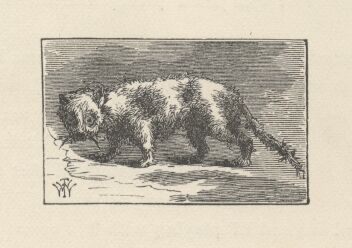
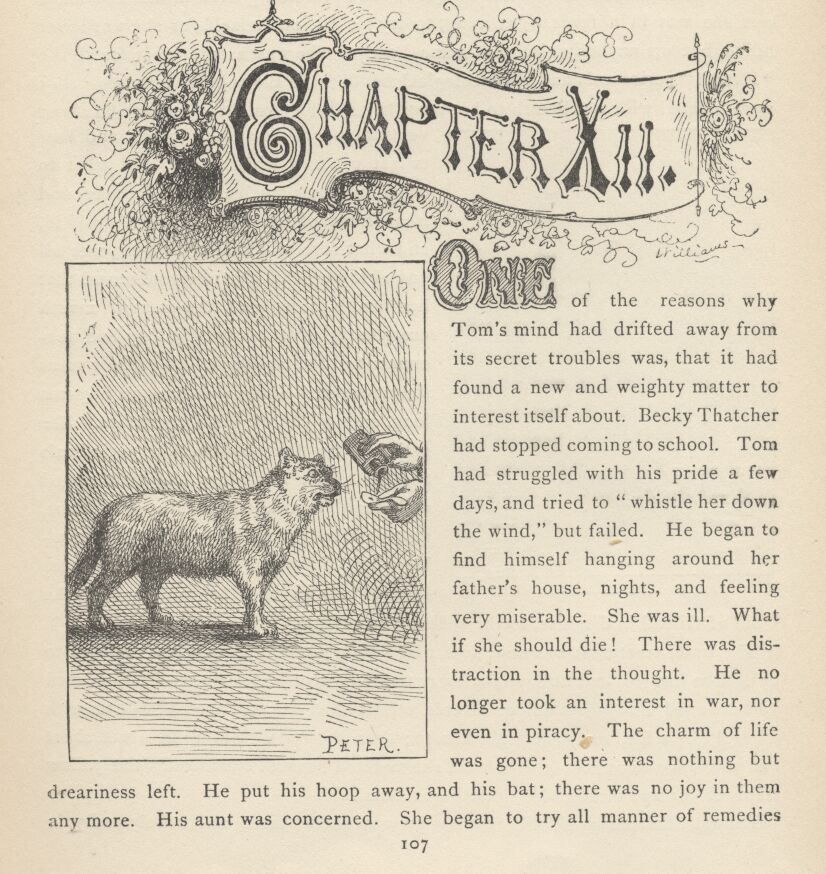
One day Tom was in the act of dosing the crack when his aunt’s yellow cat came along, purring, eyeing the teaspoon avariciously, and begging for a taste. Tom said:
One day Tom was pouring a dose into the crack when his aunt’s yellow cat came along. The cat purred, eyed the teaspoon greedily, and begged for a taste. Tom said:
“Don’t ask for it unless you want it, Peter.”
“Don’t ask for it unless you want it, Peter.”
But Peter signified that he did want it.
But Peter made it clear that he did want it.
“You better make sure.”
“You better make sure.”
Peter was sure.
Peter was sure.
“Now you’ve asked for it, and I’ll give it to you, because there ain’t anything mean about me; but if you find you don’t like it, you mustn’t blame anybody but your own self.”
“Now you’ve asked for it. And I’ll give it to you, because there ain’t anything mean about me. But if you find you don’t like it, you mustn’t blame anybody but your own self.”
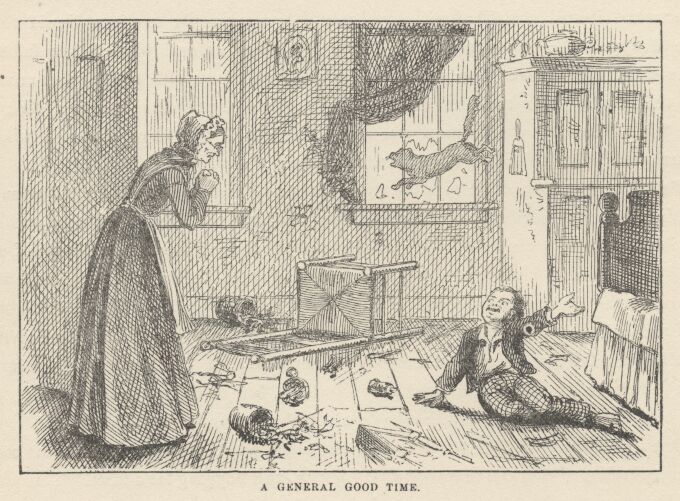
Peter was agreeable. So Tom pried his mouth open and poured down the Pain-killer. Peter sprang a couple of yards in the air, and then delivered a war-whoop and set off round and round the room, banging against furniture, upsetting flower-pots, and making general havoc. Next he rose on his hind feet and pranced around, in a frenzy of enjoyment, with his head over his shoulder and his voice proclaiming his unappeasable happiness. Then he went tearing around the house again spreading chaos and destruction in his path. Aunt Polly entered in time to see him throw a few double summersets, deliver a final mighty hurrah, and sail through the open window, carrying the rest of the flower-pots with him. The old lady stood petrified with astonishment, peering over her glasses; Tom lay on the floor expiring with laughter.
Peter was willing. So Tom pried his mouth open and poured the Pain-killer down his throat. Peter leaped a couple of yards into the air, let out a battle cry, and raced around the room. He crashed into furniture, knocked over flowerpots, and caused havoc everywhere. Next he stood on his hind legs and pranced around in a frenzy of delight, looking back over his shoulder. His cries announced a happiness that nothing could satisfy. Then he tore around the house again, leaving chaos and destruction in his path. Aunt Polly came in just in time to see him do a few double somersaults. He let out one last mighty cheer and sailed through the open window, taking the remaining flowerpots with him. The old lady stood frozen in amazement, peering over her glasses. Tom lay on the floor, dying with laughter.
“Tom, what on earth ails that cat?”
“Tom, what on earth is wrong with that cat?”
“I don’t know, aunt,” gasped the boy.
“I don’t know, Aunt,” the boy gasped.
“Why, I never see anything like it. What did make him act so?”
“Why, I never see anything like it. What made him act like that?”
“Deed I don’t know, Aunt Polly; cats always act so when they’re having a good time.”
“Indeed I don’t know, Aunt Polly. Cats always act that way when they’re having a good time.”
“They do, do they?” There was something in the tone that made Tom apprehensive.
“They do, do they?” Something in the tone made Tom uneasy.
“Yes’m. That is, I believe they do.”
“Yes, ma’am. I mean, I believe they do.”
“You do?”
“You do?”
“Yes’m.”
“Yes, ma’am.”
The old lady was bending down, Tom watching, with interest emphasized by anxiety. Too late he divined her “drift.” The handle of the telltale tea-spoon was visible under the bed-valance. Aunt Polly took it, held it up. Tom winced, and dropped his eyes. Aunt Polly raised him by the usual handle—his ear—and cracked his head soundly with her thimble.
The old lady bent down while Tom watched with anxious interest. Too late, he realized what she was “up to.” The handle of the teaspoon that gave him away was sticking out from under the bed skirt. Aunt Polly picked up the spoon and held it up. Tom winced and lowered his eyes. Aunt Polly pulled him up by his usual handle, his ear, and gave his head a hard rap with her thimble.
“Now, sir, what did you want to treat that poor dumb beast so, for?”
“Now, sir, why did you want to treat that poor animal like that?”
“I done it out of pity for him—because he hadn’t any aunt.”
“I done it out of pity for him because he hadn’t any aunt.”
“Hadn’t any aunt!—you numskull. What has that got to do with it?”
“Didn't have an aunt! You numskull. What does that have to do with it?”
“Heaps. Because if he’d had one she’d a burnt him out herself! She’d a roasted his bowels out of him ’thout any more feeling than if he was a human!”
“Heaps. Because if he’d had one, she’d have burnt him out herself! She’d have roasted his guts out of him without any more feeling than if he was a human!”
Aunt Polly felt a sudden pang of remorse. This was putting the thing in a new light; what was cruelty to a cat might be cruelty to a boy, too. She began to soften; she felt sorry. Her eyes watered a little, and she put her hand on Tom’s head and said gently:
Aunt Polly felt a sudden pang of guilt. She was seeing things in a new light. What was cruel to a cat might be cruel to a boy, too. Her heart began to soften, and she felt sorry. Her eyes filled with tears a little. She put her hand on Tom’s head and said gently:
“I was meaning for the best, Tom. And, Tom, it did do you good.”
“I meant well, Tom. And, Tom, it did do you good.”
Tom looked up in her face with just a perceptible twinkle peeping through his gravity.
Tom looked up at her face, a barely noticeable twinkle in his eyes despite his serious expression.
“I know you was meaning for the best, aunty, and so was I with Peter. It done him good, too. I never see him get around so since—”
“I know you was meaning for the best, aunty. And so was I with Peter. It done him good, too. I never see him get around so since...”
“Oh, go ’long with you, Tom, before you aggravate me again. And you try and see if you can’t be a good boy, for once, and you needn’t take any more medicine.”
“Oh, go on with you, Tom, before you annoy me again. And try and see if you can’t be a good boy for once. And you don’t need to take any more medicine.”
Tom reached school ahead of time. It was noticed that this strange thing had been occurring every day latterly. And now, as usual of late, he hung about the gate of the schoolyard instead of playing with his comrades. He was sick, he said, and he looked it. He tried to seem to be looking everywhere but whither he really was looking—down the road. Presently Jeff Thatcher hove in sight, and Tom’s face lighted; he gazed a moment, and then turned sorrowfully away. When Jeff arrived, Tom accosted him; and “led up” warily to opportunities for remark about Becky, but the giddy lad never could see the bait. Tom watched and watched, hoping whenever a frisking frock came in sight, and hating the owner of it as soon as he saw she was not the right one. At last frocks ceased to appear, and he dropped hopelessly into the dumps; he entered the empty schoolhouse and sat down to suffer. Then one more frock passed in at the gate, and Tom’s heart gave a great bound. The next instant he was out, and “going on” like an Indian; yelling, laughing, chasing boys, jumping over the fence at risk of life and limb, throwing handsprings, standing on his head—doing all the heroic things he could conceive of, and keeping a furtive eye out, all the while, to see if Becky Thatcher was noticing. But she seemed to be unconscious of it all; she never looked. Could it be possible that she was not aware that he was there? He carried his exploits to her immediate vicinity; came war-whooping around, snatched a boy’s cap, hurled it to the roof of the schoolhouse, broke through a group of boys, tumbling them in every direction, and fell sprawling, himself, under Becky’s nose, almost upsetting her—and she turned, with her nose in the air, and he heard her say: “Mf! some people think they’re mighty smart—always showing off!”
Tom reached school early. People had noticed that this strange thing had been happening every day lately. And now, as he usually did these days, he lingered by the schoolyard gate instead of playing with his friends. He said he was sick, and he looked it. He tried to seem as though he was looking everywhere except where he was really looking: down the road. Soon Jeff Thatcher came into view, and Tom’s face lit up. He stared for a moment, then turned sadly away. When Jeff arrived, Tom spoke to him. He carefully “led up” to chances to mention Becky, but the flighty boy never took the bait. Tom kept watching. His hopes rose whenever he saw a girl’s dress bouncing into view. Then he hated its owner as soon as he saw she wasn’t the right girl. At last no more girls appeared, and he sank into hopeless gloom. He went into the empty schoolhouse and sat down to suffer. Then one more girl in a dress came through the gate, and Tom’s heart leaped. An instant later he was outside, “carrying on” like an Indian. He yelled, laughed, chased boys, and jumped over the fence, risking life and limb. He did handsprings and stood on his head. He performed every heroic feat he could think of, secretly watching all the while to see if Becky Thatcher noticed. But she seemed unaware of any of his tricks. She never looked. Was it possible she didn’t know he was there? He moved his feats right up close to her. He came around giving war whoops, snatched a boy’s cap, and threw it onto the schoolhouse roof. He charged through a group of boys, sending them tumbling in every direction. Then he fell flat right in front of Becky, almost knocking her over. She turned with her nose in the air, and he heard her say: “Hmph! Some people think they’re mighty smart, always showing off!”
Tom’s cheeks burned. He gathered himself up and sneaked off, crushed and crestfallen.
Tom’s cheeks burned. He pulled himself together and slipped away, crushed and dejected.