Eighty-one short poems describe the Tao, or Way, and how to live and lead by yielding instead of forcing. One chapter holds the famous line that a journey of a thousand miles begins with a single step.
37 pages 43 min reading time
A founding classic of Chinese philosophy and one of the most translated books in the world.
Teaches that the Tao, or Way, is the nameless source of all things, and that the wise live in harmony with it.
Urges wu wei, acting without forcing, and yielding like water, which is soft yet wears away stone.
It became the central scripture of Taoism, both a philosophy and a religion.
Its ideas helped shape Chan Buddhism, known in Japan as Zen.
Written at a border gate
Legend says a gatekeeper would not let Lao Tzu leave China until he wrote down his wisdom in this book.
Found buried in tombs
Archaeologists found copies on silk in 1973 and on bamboo strips in 1993, older than any versions known before.
Author may be legend
Many scholars think "Lao Tzu," or "Old Master," may not be one real person, and the book may have several writers.
About five thousand characters
The whole book is only about five thousand Chinese characters long, so it can be read in one sitting.


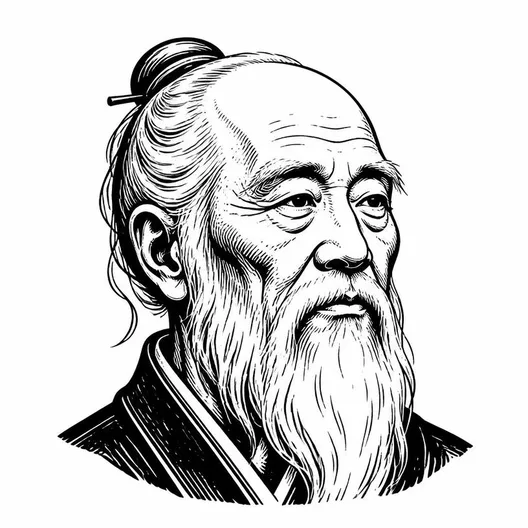 Lao Tzu c. 400 BCE