Chapter 21
Clearing for home—In the calm belt—A sea covered with sargasso—The jibstay parts in a gale—Welcomed by a tornado off Fire Island—A change of plan—Arrival at Newport—End of a cruise of over forty-six thousand miles—The Spray again at Fairhaven.
Setting sail for home. In the calm belt. A sea covered with sargasso. The jibstay breaks in a gale. Welcomed by a tornado off Fire Island. A change of plans. Arrival at Newport. The end of a voyage of over forty-six thousand miles. The Spray back at Fairhaven.
On the 4th of June, 1898, the Spray cleared from the United States consulate, and her license to sail single-handed, even round the world, was returned to her for the last time. The United States consul, Mr. Hunt, before handing the paper to me, wrote on it, as General Roberts had done at Cape Town, a short commentary on the voyage. The document, by regular course, is now lodged in the Treasury Department at Washington, D. C.
On June 4, 1898, the Spray cleared the United States consulate. Her license to sail with just one person aboard, even around the world, was returned to her for the last time. Before handing me the document, the United States consul, Mr. Hunt, wrote a short comment on the voyage. General Roberts had done the same at Cape Town. The document is now filed with the Treasury Department in Washington, D. C., as required by the usual procedure.
On June 5, 1898, the Spray sailed for a home port, heading first direct for Cape Hatteras. On the 8th of June she passed under the sun from south to north; the sun's declination on that day was 22 degrees 54', and the latitude of the Spray was the same just before noon. Many think it is excessively hot right under the sun. It is not necessarily so. As a matter of fact the thermometer stands at a bearable point whenever there is a breeze and a ripple on the sea, even exactly under the sun. It is often hotter in cities and on sandy shores in higher latitudes.
On June 5, 1898, the Spray set sail for a home port, heading straight for Cape Hatteras. On June 8, she passed beneath the sun from south to north. That day, the sun’s declination was 22 degrees 54', and the Spray was at the same latitude just before noon. Many people think it is extremely hot directly under the sun. That is not necessarily true. In fact, the temperature is bearable whenever there is a breeze and ripples on the sea, even directly under the sun. Cities and sandy shores at higher latitudes are often hotter.
The Spray was booming joyously along for home now, making her usual good time, when of a sudden she struck the horse latitudes, and her sail flapped limp in a calm. I had almost forgotten this calm belt, or had come to regard it as a myth. I now found it real, however, and difficult to cross. This was as it should have been, for, after all of the dangers of the sea, the dust-storm on the coast of Africa, the "rain of blood" in Australia, and the war risk when nearing home, a natural experience would have been missing had the calm of the horse latitudes been left out. Anyhow, a philosophical turn of thought now was not amiss, else one's patience would have given out almost at the harbor entrance. The term of her probation was eight days. Evening after evening during this time I read by the light of a candle on deck. There was no wind at all, and the sea became smooth and monotonous. For three days I saw a full-rigged ship on the horizon, also becalmed.
The Spray was sailing happily toward home, making her usual good speed. Then she suddenly reached the horse latitudes, and her sail hung limp in the still air. I had almost forgotten this calm belt, or had come to think of it as a myth. Now I found that it was real and hard to cross. That seemed fitting. After all the dangers of the sea, the dust storm on the coast of Africa, the "rain of blood" in Australia, and the risk of war near home, my voyage would have missed a natural experience without the calm of the horse latitudes. In any case, it helped to take a philosophical view. Otherwise, I might have run out of patience almost at the harbor entrance. The Spray was held there for eight days. Evening after evening, I read on deck by candlelight. There was no wind at all, and the sea became smooth and monotonous. For three days I saw a full-rigged ship on the horizon, also becalmed.
Sargasso, scattered over the sea in bunches, or trailed curiously along down the wind in narrow lanes, now gathered together in great fields, strange sea-animals, little and big, swimming in and out, the most curious among them being a tiny seahorse which I captured and brought home preserved in a bottle. But on the 18th of June a gale began to blow from the southwest, and the sargasso was dispersed again in windrows and lanes.
Sargasso seaweed had been scattered across the sea in bunches or stretched out in curious narrow lanes downwind. Now it gathered into great fields. Strange sea animals, both small and large, swam in and out of the seaweed. The most curious was a tiny seahorse that I caught and brought home, preserved in a bottle. But on June 18, a gale began to blow from the southwest. The sargasso was scattered again into rows and lanes.
On this day there was soon wind enough and to spare. The same might have been said of the sea. The Spray was in the midst of the turbulent Gulf Stream itself. She was jumping like a porpoise over the uneasy waves. As if to make up for lost time, she seemed to touch only the high places. Under a sudden shock and strain her rigging began to give out. First the main-sheet strap was carried away, and then the peak halyard-block broke from the gaff. It was time to reef and refit, and so when "all hands" came on deck I went about doing that.
That day, there was soon more than enough wind. The same was true of the sea. The Spray was in the middle of the turbulent Gulf Stream itself. She was jumping like a porpoise over the restless waves. As if making up for lost time, she seemed to touch only the high spots. A sudden shock and strain caused her rigging to start giving way. First the main-sheet strap broke, and then the peak halyard-block broke free from the gaff. It was time to reef and refit, so when "all hands" came on deck, I set about doing that.
The 19th of June was fine, but on the morning of the 20th another gale was blowing, accompanied by cross-seas that tumbled about and shook things up with great confusion. Just as I was thinking about taking in sail the jibstay broke at the masthead, and fell, jib and all, into the sea. It gave me the strangest sensation to see the bellying sail fall, and where it had been suddenly to see only space. However, I was at the bows, with presence of mind to gather it in on the first wave that rolled up, before it was torn or trailed under the sloop's bottom. I found by the amount of work done in three minutes' or less time that I had by no means grown stiff-jointed on the voyage; anyhow, scurvy had not set in, and being now within a few degrees of home, I might complete the voyage, I thought, without the aid of a doctor. Yes, my health was still good, and I could skip about the decks in a lively manner, but could I climb? The great King Neptune tested me severely at this time, for the stay being gone, the mast itself switched about like a reed, and was not easy to climb; but a gun-tackle purchase was got up, and the stay set taut from the masthead, for I had spare blocks and rope on board with which to rig it, and the jib, with a reef in it, was soon pulling again like a "sodger" for home. Had the Spray's mast not been well stepped, however, it would have been "John Walker" when the stay broke. Good work in the building of my vessel stood me always in good stead.
June 19 was a fine day. But on the morning of the 20th, another gale was blowing. Cross-seas tossed the boat about and shook everything up in great confusion. Just as I was thinking of taking in sail, the jibstay broke at the masthead. It fell into the sea, taking the jib with it. It felt very strange to see the billowing sail fall and suddenly see empty space where it had been. But I was at the bow and had the presence of mind to pull the sail in on the first wave that rolled up. I got it in before it could tear or drag under the sloop's bottom. From the work I did in three minutes or less, I could tell that the voyage had not made my joints stiff. At any rate, scurvy had not set in. Now that I was within a few degrees of home, I thought I might finish the voyage without a doctor's help. Yes, my health was still good, and I could move about the decks briskly. But could I climb? The great King Neptune tested me severely then. With the stay gone, the mast itself swayed like a reed and was hard to climb. But I rigged a gun-tackle purchase and pulled the stay taut from the masthead. I had spare blocks and rope on board for the job. Soon the jib, with a reef in it, was pulling again like a "sodger" for home. If the Spray's mast had not been firmly seated, though, it would have been "John Walker" when the stay broke. The good workmanship that went into building my vessel always served me well.
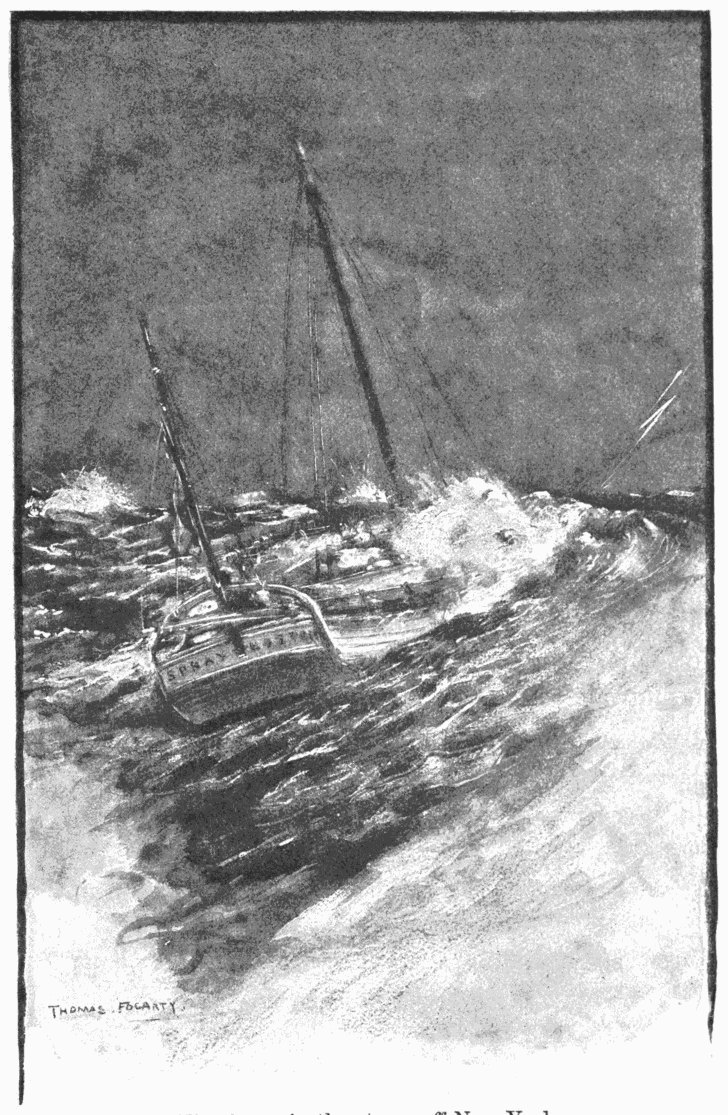
On the 23d of June I was at last tired, tired, tired of baffling squalls and fretful cobble-seas. I had not seen a vessel for days and days, where I had expected the company of at least a schooner now and then. As to the whistling of the wind through the rigging, and the slopping of the sea against the sloop's sides, that was well enough in its way, and we could not have got on without it, the Spray and I; but there was so much of it now, and it lasted so long! At noon of that day a winterish storm was upon us from the nor'west. In the Gulf Stream, thus late in June, hailstones were pelting the Spray, and lightning was pouring down from the clouds, not in flashes alone, but in almost continuous streams. By slants, however, day and night I worked the sloop in toward the coast, where, on the 25th of June, off Fire Island, she fell into the tornado which, an hour earlier, had swept over New York city with lightning that wrecked buildings and sent trees flying about in splinters; even ships at docks had parted their moorings and smashed into other ships, doing great damage. It was the climax storm of the voyage, but I saw the unmistakable character of it in time to have all snug aboard and receive it under bare poles. Even so, the sloop shivered when it struck her, and she heeled over unwillingly on her beam ends; but rounding to, with a sea-anchor ahead, she righted and faced out the storm. In the midst of the gale I could do no more than look on, for what is a man in a storm like this? I had seen one electric storm on the voyage, off the coast of Madagascar, but it was unlike this one. Here the lightning kept on longer, and thunderbolts fell in the sea all about. Up to this time I was bound for New York; but when all was over I rose, made sail, and hove the sloop round from starboard to port tack, to make for a quiet harbor to think the matter over; and so, under short sail, she reached in for the coast of Long Island, while I sat thinking and watching the lights of coasting-vessels which now began to appear in sight. Reflections of the voyage so nearly finished stole in upon me now; many tunes I had hummed again and again came back once more. I found myself repeating fragments of a hymn often sung by a dear Christian woman of Fairhaven when I was rebuilding the Spray. I was to hear once more and only once, in profound solemnity, the metaphorical hymn:
On June 23, I was at last tired, tired, tired of frustrating squalls and choppy seas. I had not seen a vessel for days and days, though I had expected the company of at least a schooner now and then. The wind whistling through the rigging and the sea sloshing against the sloop's sides were well enough in their way. The Spray and I could not have got along without them. But there was so much of both now, and it went on for so long! At noon that day, a wintry storm came upon us from the northwest. There in the Gulf Stream, so late in June, hailstones were pelting the Spray. Lightning poured from the clouds, not only in flashes but in almost continuous streams. Even so, day and night I worked the sloop toward the coast whenever the wind allowed. On June 25, off Fire Island, she ran into a tornado. An hour earlier, it had swept over New York city. Its lightning had wrecked buildings and sent trees flying in splinters. Even ships at the docks had broken free of their moorings and smashed into other ships, doing great damage. It was the worst storm of the voyage. But I recognized its unmistakable character in time to secure everything aboard and meet it with all sails down. Even so, the sloop shuddered when the storm struck her. She heeled over reluctantly until her side was nearly in the water. But she turned into the wind and, with a sea anchor out ahead, righted herself and faced out the storm. In the middle of the gale, I could do no more than watch. For what is a man in a storm like this? I had seen one electrical storm on the voyage, off the coast of Madagascar, but it was unlike this one. Here the lightning lasted longer, and thunderbolts fell into the sea all around. Until then I had been bound for New York. But when the storm was over, I got up, raised sail, and turned the sloop from starboard to port tack. I wanted to make for a quiet harbor and think the matter over. Under reduced sail, she headed toward the coast of Long Island. I sat thinking and watching the lights of coastal vessels, which now began to appear. Thoughts of the voyage, now so nearly finished, came over me. Many tunes I had hummed again and again came back once more. I found myself repeating fragments of a hymn often sung by a dear Christian woman of Fairhaven while I was rebuilding the Spray. I was to hear that metaphorical hymn once more, and only once, in profound solemnity:
| By waves and wind I'm tossed and driven. |
And again:
And again:
| But still my little ship outbraves |
| The blust'ring winds and stormy waves. |
After this storm I saw the pilot of the Pinta no more.
After this storm, I never saw the pilot of the Pinta again.
The experiences of the voyage of the Spray, reaching over three years, had been to me like reading a book, and one that was more and more interesting as I turned the pages, till I had come now to the last page of all, and the one more interesting than any of the rest.
The Spray's voyage had lasted more than three years, and its experiences had been like reading a book. The book grew more interesting with each page I turned. Now I had come to the last page of all, and it was more interesting than any of the others.
When daylight came I saw that the sea had changed color from dark green to light. I threw the lead and got soundings in thirteen fathoms. I made the land soon after, some miles east of Fire Island, and sailing thence before a pleasant breeze along the coast, made for Newport. The weather after the furious gale was remarkably fine. The Spray rounded Montauk Point early in the afternoon; Point Judith was abeam at dark; she fetched in at Beavertail next. Sailing on, she had one more danger to pass—Newport harbor was mined. The Spray hugged the rocks along where neither friend nor foe could come if drawing much water, and where she would not disturb the guard-ship in the channel. It was close work, but it was safe enough so long as she hugged the rocks close, and not the mines. Flitting by a low point abreast of the guard-ship, the dear old Dexter, which I knew well, some one on board of her sang out, "There goes a craft!" I threw up a light at once and heard the hail, "Spray, ahoy!" It was the voice of a friend, and I knew that a friend would not fire on the Spray. I eased off the main-sheet now, and the Spray swung off for the beacon-lights of the inner harbor. At last she reached port in safety, and there at 1 a.m. on June 27, 1898, cast anchor, after the cruise of more than forty-six thousand miles round the world, during an absence of three years and two months, with two days over for coming up.
At daylight, I saw that the sea had changed from dark green to light green. I lowered the lead and found the water was thirteen fathoms deep. Soon afterward, I sighted land a few miles east of Fire Island. From there, I sailed along the coast toward Newport with a pleasant breeze behind me. After the furious gale, the weather was remarkably fine. The Spray rounded Montauk Point early in the afternoon. Point Judith was alongside at dark, and she reached Beavertail next. As she sailed on, she had one more danger to pass. Newport harbor was mined. The Spray stayed close to the rocks, where neither friend nor foe could come in a deep-draft vessel. There she would not disturb the guard-ship in the channel. It was a tight passage, but safe enough as long as she stayed close to the rocks, not the mines. She slipped past a low point opposite the guard-ship, the dear old Dexter, which I knew well. Someone aboard her called out, "There goes a craft!" I immediately held up a light and heard the call, "Spray, ahoy!" It was a friend’s voice, and I knew a friend would not fire on the Spray. I eased the mainsheet, and the Spray turned toward the beacon lights of the inner harbor. At last, she reached port safely. There, at 1 a.m. on June 27, 1898, she dropped anchor. She had sailed more than forty-six thousand miles around the world. She had been away for three years and two months, plus two days for coming up.
Was the crew well? Was I not? I had profited in many ways by the voyage. I had even gained flesh, and actually weighed a pound more than when I sailed from Boston. As for aging, why, the dial of my life was turned back till my friends all said, "Slocum is young again." And so I was, at least ten years younger than the day I felled the first tree for the construction of the Spray.
Was the crew well? Wasn't I? I had benefited from the voyage in many ways. I had even gained weight and actually weighed a pound more than when I sailed from Boston. As for aging, well, the clock of my life had turned back. All my friends said, "Slocum is young again." And so I was, at least ten years younger than the day I cut down the first tree to build the Spray.
My ship was also in better condition than when she sailed from Boston on her long voyage. She was still as sound as a nut, and as tight as the best ship afloat. She did not leak a drop—not one drop! The pump, which had been little used before reaching Australia, had not been rigged since that at all.
My ship was also in better condition than when she left Boston on her long voyage. She was still as solid as ever and as watertight as the best ship afloat. She did not leak a drop, not one drop! The pump had seen little use before we reached Australia. It had not been set up for use since then.
The first name on the Spray's visitors' book in the home port was written by the one who always said, "The Spray will come back." The Spray was not quite satisfied till I sailed her around to her birthplace, Fairhaven, Massachusetts, farther along. I had myself a desire to return to the place of the very beginning whence I had, as I have said, renewed my age. So on July 3, with a fair wind, she waltzed beautifully round the coast and up the Acushnet River to Fairhaven, where I secured her to the cedar spile driven in the bank to hold her when she was launched. I could bring her no nearer home.
The first name in the Spray's visitors' book in her home port was written by the one who always said, "The Spray will come back." The Spray was not quite satisfied until I sailed her farther along the coast to her birthplace, Fairhaven, Massachusetts. I, too, wanted to return to the place where it all began. As I have said, it was there that I felt young again. So on July 3, with a fair wind, she waltzed beautifully around the coast and up the Acushnet River to Fairhaven. There I tied her to the cedar post driven into the bank to hold her when she was launched. I could bring her no closer to home.
If the Spray discovered no continents on her voyage, it may be that there were no more continents to be discovered; she did not seek new worlds, or sail to powwow about the dangers of the seas. The sea has been much maligned. To find one's way to lands already discovered is a good thing, and the Spray made the discovery that even the worst sea is not so terrible to a well-appointed ship. No king, no country, no treasury at all, was taxed for the voyage of the Spray, and she accomplished all that she undertook to do.
If the Spray discovered no continents on her voyage, there may have been no more continents to discover. She did not seek new worlds or sail to talk about the dangers of the seas. The sea has been unfairly criticized. Finding one's way to lands already discovered is worthwhile. And the Spray discovered that even the worst sea is not so terrible for a well-equipped ship. No king, no country, and no treasury paid for the voyage of the Spray. She accomplished all she set out to do.
To succeed, however, in anything at all, one should go understandingly about his work and be prepared for every emergency. I see, as I look back over my own small achievement, a kit of not too elaborate carpenters' tools, a tin clock, and some carpet-tacks, not a great many, to facilitate the enterprise as already mentioned in the story. But above all to be taken into account were some years of schooling, where I studied with diligence Neptune's laws, and these laws I tried to obey when I sailed overseas; it was worth the while.
To succeed at anything, however, you should understand your work and be prepared for every emergency. Looking back on my own small achievement, I see a simple kit of carpenters' tools, a tin clock, and some carpet-tacks, though not many. As I have already mentioned in this story, these helped me on my voyage. But above all, I must count the years of schooling during which I studied Neptune's laws diligently. I tried to obey those laws when I sailed overseas, and it was worth the effort.
And now, without having wearied my friends, I hope, with detailed scientific accounts, theories, or deductions, I will only say that I have endeavored to tell just the story of the adventure itself. This, in my own poor way, having been done, I now moor ship, weather-bitt cables, and leave the sloop Spray, for the present, safe in port.
I hope I have not tired my friends with detailed scientific accounts, theories, or deductions. I have tried only to tell the story of the adventure itself. Having done that in my own humble way, I now moor the ship and secure her cables. For the present, I leave the sloop Spray safe in port.