Introduction
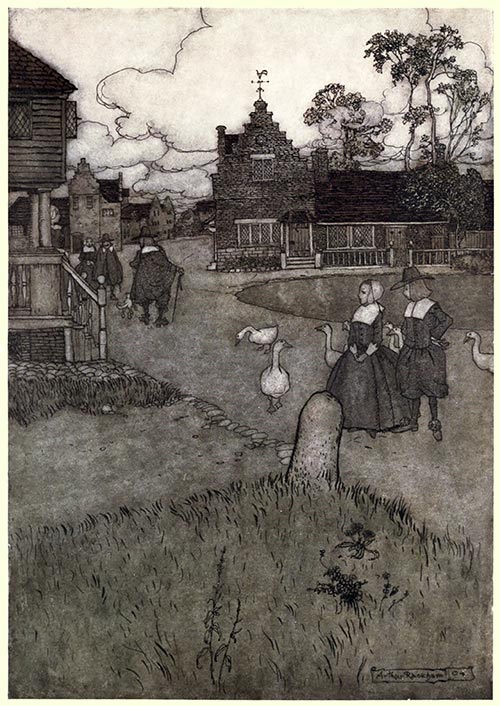
The following tale was found among the papers of the late Diedrich Knickerbocker, an old gentleman of New York, who was very curious in the Dutch history of the province, and the manners of the descendants from its primitive settlers. His historical researches, however, did not lie so much among books as among men; for the former are lamentably scanty on his favourite topics; whereas he found the old burghers, and still more their wives, rich in that legendary lore so invaluable to true history. Whenever, therefore, he happened upon a genuine Dutch family, snugly shut up in its low-roofed farmhouse, under a spreading sycamore, he looked upon it as a little clasped volume of black-letter, and studied it with the zeal of a book-worm.
The following tale was found among the papers of the late Diedrich Knickerbocker, an elderly gentleman from New York. He took a keen interest in the province’s Dutch history and the customs of its earliest settlers’ descendants. His historical research, however, focused less on books than on people. Sadly, books offered little on his favorite subjects. But he found the old Dutch townsmen, and especially their wives, full of legends so invaluable to true history. So whenever he came across a genuine Dutch family, he saw an opportunity for study. The family would be tucked snugly inside a low-roofed farmhouse beneath a spreading sycamore. He saw such a household as a little book of old Gothic print, held shut with a clasp. And he studied the family with all the enthusiasm of a bookworm.
The result of all these researches was a history of the province during the reign of the Dutch governors, which he published some years since. There have been various opinions as to the literary character of his work, and, to tell the truth, it is not a whit better than it should be. Its chief merit is its scrupulous accuracy, which indeed was a little questioned on its first appearance, but has since been completely established; and it is now admitted into all historical collections as a book of unquestionable authority.
All this research led to a history of the province under the Dutch governors, published some years ago. Opinions have differed about the book’s literary quality. And, to tell the truth, it is not a bit better than it should be. The book’s chief merit is its painstaking accuracy. That accuracy was questioned a little when the book first appeared, but has since been fully established. The book is now included in all historical collections as a source of unquestionable authority.
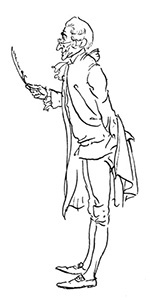
The old gentleman died shortly after the publication of his work; and now that he is dead and gone, it cannot do much harm to his memory to say that his time might have been much better employed in weightier labours. He, however, was apt to ride his hobby in his own way; and though it did now and then kick up the dust a little in the eyes of his neighbours, and grieve the spirit of some friends, for whom he felt the truest deference and affection, yet his errors and follies are remembered “more in sorrow than anger,” and it begins to be suspected that he never intended to injure or offend. But however his memory may be appreciated by critics, it is still held dear by many folks whose good opinion is well worth having; particularly by certain biscuit-bakers, who have gone so far as to imprint his likeness on their new-year cakes; and have thus given him a chance for immortality, almost equal to the being stamped on a Waterloo medal, or a Queen Anne’s farthing.
The old gentleman died shortly after his work was published. Now that he is dead and gone, saying he could have spent his time on more serious work cannot much harm his reputation. Still, he liked to pursue his favorite interest in his own way. Though his pursuits sometimes stirred up dust in his neighbors’ eyes and distressed some friends, his mistakes and follies are remembered “more in sorrow than anger,”. He felt the deepest respect and affection for those friends. And people are beginning to suspect that he never meant to hurt or offend anyone. But whatever critics may think of him, many people whose good opinion is well worth having still cherish his memory. Certain biscuit-bakers, in particular, have gone so far as to stamp his likeness on their New Year cakes. They have thus given him a chance at immortality almost equal to appearing on a Waterloo medal or a Queen Anne’s farthing.