Chapter 29
Observation as a Key to Success
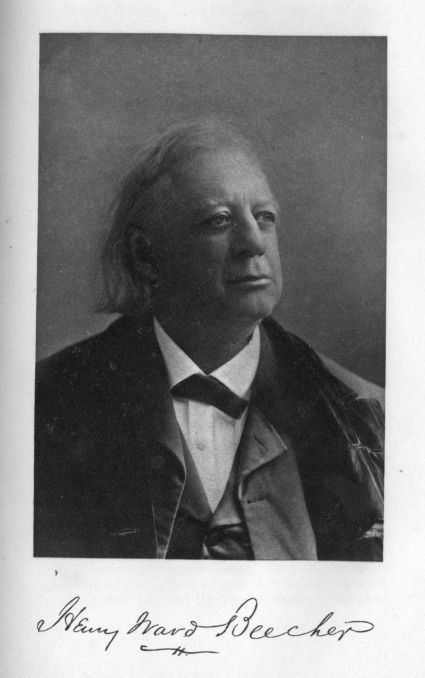
Henry Ward Beecher was not so foolish as to think that he could get on without systematic study, and a thorough-going knowledge of the world of books. "When I first went to Brooklyn," he said, "men doubted whether I could sustain myself. I replied, 'Give me uninterrupted time till nine o'clock every morning, and I do not care what comes after.'"
Henry Ward Beecher knew he could not succeed without regular study and a thorough knowledge of books. "When I first went to Brooklyn," he said, "people doubted whether I could keep going. I replied, 'Give me uninterrupted time until nine o'clock every morning, and I do not care what comes after.'"
He was a hard student during four hours every morning; those who saw him after that imagined that he picked up the material for his sermons on the street.
He studied hard for four hours every morning. Those who saw him afterward imagined he picked up material for his sermons on the street.
Yet having said so much, it is true that much that was most vital in his preaching he did pick up on the street.
Yet, having said that, it is true that he learned much of what was most vital to his preaching on the street.
"Where does Mr. Beecher get his sermons?" every ambitious young clergyman in the country was asking, and upon one occasion he answered: "I keep my eyes open and ask questions."
"Where does Mr. Beecher get his sermons?" Every ambitious young clergyman in the country was asking that question. On one occasion, he answered: "I keep my eyes open and ask questions."
This is the secret of many a man's success,—keeping his eyes open and asking questions. Although Beecher was an omnivorous reader he did not care much for the writings of the theologians; the Christ was his great model, and he knew that He did not search the writings of the Sanhedrin for His sermons, but picked them up as He walked along the banks of the Jordan and over the hills and through the meadows and villages of Galilee. He saw that the strength of this great Master's sermons was in their utter simplicity, their naturalness.
The secret of many a man's success is keeping his eyes open and asking questions. Although Beecher read widely, he cared little for the writings of theologians. Christ was his great model. Beecher knew that Christ did not search the writings of the Sanhedrin for his sermons. Instead, he found them as he walked along the banks of the Jordan and through Galilee's hills, meadows, and villages. Beecher saw that the strength of this great Master's sermons lay in their complete simplicity and naturalness.
Beecher's sermons were very simple, healthy, and strong. They pulsated with life; they had the vigor of bright red blood in them, because, like Christ's, they grew out of doors. He got them everywhere from life and nature. He picked them up in the marketplace, on Wall Street, in the stores. He got them from the brakeman, the mechanic, the blacksmith, the day laborer, the newsboy, the train conductor, the clerk, the lawyer, the physician, and the business man.
Beecher's sermons were simple, healthy, and strong. They pulsed with life and had the vigor of bright red blood. That was because, like Christ's sermons, they grew out of doors. He drew them from life and nature everywhere. He found them in the marketplace, on Wall Street, and in stores. He found them in the lives of brakemen, mechanics, blacksmiths, day laborers, and newsboys. He also found them in the lives of train conductors, clerks, lawyers, doctors, and businesspeople.
He did not watch the progress of the great human battle from his study, as many did. He went into the thick of the fight himself. He was in the smoke and din. Where the battle of life raged fiercest, there he was studying its great problems. Now it was the problem of slavery; again the problem of government, or commerce, or education,—whatever touched the lives of men. He kept his hand upon the pulse of events. He was in the swim of things. The great, busy, ambitious world was everywhere throbbing for him.
He did not watch the great human struggle unfold from his study, as many did. He went into the thick of the fight himself. He was in the smoke and noise. Wherever the battle of life raged most fiercely, he was there, studying its great problems. Sometimes it was the problem of slavery. At other times it was government, commerce, education, or anything else that touched people's lives. He kept his finger on the pulse of events. He was in the middle of things. Everywhere he looked, the great, busy, ambitious world was alive with activity.
When he once got a taste of the power and helpfulness which comes from the study of real life, when he saw how much more forceful and interesting actual life stories were as they were being lived than anything he could get out of any book except the Bible, he was never again satisfied without illustrations fresh from the lives of the people he met every day.
He discovered the power and help that came from studying real life. He saw how much more compelling and interesting people’s lives were as they unfolded than anything he could read, except the Bible. After that, he was never satisfied without fresh examples from the lives of people he met every day.
Beecher believed a sermon a failure when it does not make a great mass of hearers go away with a new determination to make a little more of themselves, to do their work a little better, to be a little more conscientious, a little more helpful, a little more determined to do their share in the world.
Beecher believed a sermon was a failure if it did not inspire many listeners to improve themselves a little. They should leave determined to do their work a little better, be a little more conscientious and helpful, and do their share in the world.
This great observer was not only a student of human nature, but of all nature as well. I watched him, many a time, completely absorbed in drinking in the beauties of the marvelous landscape, gathering grandeur and sublimity from the great White Mountains, which he loved so well, and where he spent many summers.
This keen observer studied not only human nature but all of nature. Many times, I watched him absorbed in the beauty of the remarkable landscape. He drew a sense of grandeur and majesty from the great White Mountains. He loved them dearly and spent many summers there.
He always preached on Sunday at the hotel where he stayed, and great crowds came from every direction to hear him. There was something in his sermons that appealed to the best in everyone who heard him. They were full of pictures of beautiful landscapes, seascapes, and entrancing sunsets. The clouds, the rain, the sunshine, and the storm were reflected in them. The flowers, the fields, the brooks, the record of creation imprinted in the rocks and the mountains were intermingled with the ferryboats, the steam-cars, orphans, calamities, accidents, all sorts of experiences and bits of life. Happiness and sunshine, birds and trees alternated with the direst poverty in the slums, people on sick beds and death beds, in hospitals and in funeral processions; life pictures of successes and failures, of the discouraged, the despondent, the cheerful, the optimist and the pessimist, passed in quick succession and stamped themselves on the brains of his eager hearers.
He always preached on Sundays at the hotel where he stayed, and large crowds came from every direction to hear him. His sermons appealed to the best in everyone who heard him. They were full of pictures of beautiful landscapes, seascapes, and captivating sunsets. Clouds, rain, sunshine, and storms appeared in them. Flowers, fields, and streams mingled with the story of creation recorded in rocks and mountains. These images appeared alongside ferryboats, trains, orphans, disasters, accidents, and all kinds of experiences and glimpses of life. Happiness, sunshine, birds, and trees alternated with scenes of the deepest poverty in the slums. There were people in sickbeds and on their deathbeds, in hospitals and in funeral processions. Vivid pictures of successes and failures passed quickly before his eager listeners. So did pictures of the discouraged, the despondent, the cheerful, the optimist, and the pessimist. All of them made a lasting impression on their minds.
Wherever he went, Beecher continued his study of life through observation. Nothing else was half so interesting. To him man was the greatest study in the world. To place the right values upon men, to emphasize the right thing in them, to be able to discriminate between the genuine and the false, to be able to pierce their masks and read the real man or woman behind them, he regarded as one of a clergyman's greatest accomplishments.
Wherever he went, Beecher continued to study life by observing it. Nothing else was half as interesting to him. He believed that people were the greatest subject of study in the world. He considered understanding people one of a clergyman's greatest accomplishments. This meant judging people fairly, recognizing what mattered most in them, and distinguishing the genuine from the false. It also meant seeing through their masks to the real man or woman beneath.
Like Professor Agassiz, who could see wonders in the scale of a fish or a grain of sand, Beecher had an eye like the glass of a microscope, which reveals marvels of beauty in common things. He could see beauty and harmony where others saw only ugliness and discord, because he read the hidden meaning in things. Like Ruskin, he could see the marvelous philosophy, the Divine plan, in the lowliest object. He could feel the Divine presence in all created things.
Professor Agassiz could see wonders in a fish scale or a grain of sand. Like him, Beecher had an eye like a microscope, revealing marvels of beauty in ordinary things. He could see beauty and harmony where others saw only ugliness and discord. He saw them because he understood the hidden meaning in things. Like Ruskin, he could see the marvelous philosophy, the Divine plan, in the humblest object. He could feel the Divine presence in all created things.
"An exhaustive observation," says Herbert Spencer, "is an element of all great success." There is no position in life where a trained eye can not be made a great success asset.
"Thorough observation," says Herbert Spencer, "is a part of every great success." In any position in life, a trained eye can be a great asset for success.
"Let's leave it to Osler," said the physicians at a consultation where a precious life hung by a thread. Then the great Johns Hopkins professor examined the patient. He did not ask questions. His experienced eye drew a conclusion from the slightest evidence. He watched the patient closely; his manner of breathing, the appearance of the eye,—everything was a telltale of the patient's condition, which he read as an open book. He saw symptoms which others could not see. He recommended a certain operation, which was performed, and the patient recovered. The majority of those present disagreed with him, but such was their confidence in his power to diagnose a case through symptoms and indications which escape most physicians, that they were willing to leave the whole decision to him. Professor Osler was called a living X-ray machine, with additional eyes in finger tips so familiar with the anatomy that they could detect a growth or displacement so small that it would escape ordinary notice.
"Let's leave it to Osler," said the doctors consulting on a case where a precious life hung by a thread. The great Johns Hopkins professor then examined the patient. He asked no questions. His experienced eye drew conclusions from the slightest evidence. He watched the patient closely. His breathing, the appearance of his eyes, everything revealed his condition. Osler read it like an open book. He saw symptoms that others could not see. He recommended an operation, which was performed, and the patient recovered. Most of the doctors present disagreed with him. But they were willing to leave the whole decision to him. They trusted his ability to diagnose a case from symptoms and signs that most doctors missed. Professor Osler was called a living X-ray machine. His fingertips were like extra eyes. They were so familiar with the body's structure that they could detect a growth or displacement too small for ordinary notice.
The power which inheres in a trained faculty of observation is priceless. The education which Beecher got through observation, by keeping his eyes, his ears, and his mind open, meant a great deal more to him and to the world than his college education. He was not a great scholar; he did not stand nearly as high in college as some of his classmates whom he far outstripped in life, but his mind penetrated to the heart of things.
The power of a trained ability to observe is priceless. Beecher learned by keeping his eyes, ears, and mind open. That education meant far more to him and to the world than his college education did. He was not a great scholar. In college, he did not rank nearly as high as some classmates he later surpassed in life. But his mind reached the heart of things.
Lincoln was another remarkable example of the possibilities of an education through reflection upon what he observed. His mind stopped and questioned, and extracted the meaning of everything that came within its range. Wherever he went, there was a great interrogation point before him. Everything he saw must give up its secret before he would let it go. He had a passion for knowledge; he yearned to know the meaning of things, the philosophy underlying the common, everyday occurrences.
Lincoln was another remarkable example of what someone can learn by reflecting on what they observe. He stopped to question everything that came to his attention and draw meaning from it. Wherever he went, a great question mark stood before him. He would not let anything he saw go until it had given up its secret. He had a passion for knowledge. He longed to understand what things meant and the ideas underlying ordinary, everyday events.
Ruskin says: "Hundreds of people can talk for one who can think; but thousands can think for one who can see."
Ruskin says: "For every person who can think, hundreds can talk. But for every person who can see, thousands can think."
I once traveled abroad with two young men, one of whom was all eyes,—nothing seemed to escape him,—and the other never saw anything. The day after leaving a city, the latter could scarcely recall anything of interest, while the former had a genius for absorbing knowledge of every kind through the eye. Things so trivial that his companion did not notice them at all, meant a great deal to him. He was a poor student, but he brought home rich treasures from over the sea. The other young man was comparatively rich, and brought home almost nothing of value.
I once traveled abroad with two young men. One noticed everything. Nothing seemed to escape him. The other never saw anything. The day after leaving a city, the second young man could hardly remember anything of interest. The first had a genius for taking in all kinds of knowledge through observation. Even things his companion did not notice at all meant a great deal to him. He was a poor student, but he brought home rich treasures from overseas. The other young man was comparatively rich and brought home almost nothing of value.
While visiting Luther Burbank, the wizard horticulturist, in his famous garden, recently, I was much impressed by his marvelous power of seeing things. He has observed the habits of fruits and flowers to such purpose that he has performed miracles in the fields of floriculture and horticulture. Stunted and ugly flowers and fruits, under the eye of this miracle worker, become marvels of beauty.
Recently, I visited Luther Burbank, the wizard horticulturist, in his famous garden. I was deeply impressed by his remarkable power of observation. He has studied the habits of fruits and flowers so closely that he has performed miracles in growing them. Under this miracle worker’s eye, stunted and ugly flowers and fruits become marvels of beauty.
George W. Cortelyou was a stenographer not long ago. Many people thought he would remain a stenographer, but he always kept his eyes open. He was after an opportunity. Promotion was always staring him in the face. He was always looking for the next step above him. He was a shrewd observer. But for this power of seeing things quickly, of absorbing knowledge, he would never have advanced.
Not long ago, George W. Cortelyou was a stenographer. Many people thought he would remain one, but he always kept his eyes open. He was looking for an opportunity. Promotion was always right in front of him. He was always looking for the next step up. He was a sharp observer. Without his ability to notice things quickly and absorb knowledge, he would never have advanced.
The youth who would get on must keep his eyes open, his ears open, his mind open. He must be quick, alert, ready.
A young person who wants to get ahead must keep his eyes, ears, and mind open. He must be quick, alert, and ready.
I know a young Turk, who has been in this country only a year, yet he speaks our language fluently. He has studied the map of our country. He knows its geography, and a great deal of our history, and much about our resources and opportunities. He said that when he landed in New York it seemed to him that he saw more opportunities in walking every block of our streets than he had ever seen in the whole of Turkey. And he could not understand the lethargy, the lack of ambition, the indifference of our young men to our marvelous possibilities.
I know a young Turk who has been in this country for only a year, yet he speaks our language fluently. He has studied a map of our country. He knows its geography, a great deal of its history, and much about its resources and opportunities. He said that when he arrived in New York, each block he walked seemed to offer more opportunities than he had ever seen in all of Turkey. He could not understand why our young men were so inactive, unambitious, and indifferent to our wonderful possibilities.
The efficient man is always growing. He is always accumulating knowledge of every kind. He does not merely look with his eyes. He sees with them. He keeps his ears open. He keeps his mind open to all that is new and fresh and helpful.
An effective man is always growing. He is always gaining knowledge of every kind. He does not just look. He truly sees. He keeps his ears open. He keeps his mind open to everything new, fresh, and helpful.
The majority of people do not see things; they just look at them. The power of keen observation is indicative of a superior mentality; for it is the mind, not the optic nerve, that really sees.
Most people do not see things. They just look at them. The ability to observe keenly is a sign of a superior mind. For it is the mind, not the optic nerve, that really sees.
Most people are too lazy, mentally, to see things carefully. Close observation is a powerful mental process. The mind is all the time working over the material which the eye brings it, considering, forming opinions, estimating, weighing, balancing, calculating.
Most people are too mentally lazy to look at things carefully. Close observation is a powerful mental process. The mind is always working with what the eye sees. It considers, forms opinions, estimates, weighs, balances, and calculates.
Careless, indifferent observation does not go back of the eye. If the mind is not focused, the image is not clean-cut, and is not carried with force and distinctness enough to the brain to enable it to get at the truth and draw accurate conclusions.
Careless, indifferent observation goes no further than the eye. If the mind is not focused, the image is not clear. It does not reach the brain with enough force and clarity to enable it to find the truth and draw accurate conclusions.
The observing faculty is particularly susceptible to culture, and is capable of becoming a mighty power. Few people realize what a tremendous success and happiness is possible through the medium of the eye.
The ability to observe can be developed and can become a powerful force. Few people realize how much success and happiness are possible through the use of their eyes.
The telegraph, the sewing machine, the telephone, the telescope, the miracles of electricity, in fact, every great invention of the past or present, every triumph of modern labor-saving machinery, every discovery in science and art, is due to the trained power of seeing things.
The telegraph, the sewing machine, the telephone, the telescope, and the wonders of electricity all come from a trained ability to observe. In fact, every great invention, past or present, comes from that ability. So does every triumph of modern labor-saving machinery and every discovery in science and art.
The whole secret of a richly stored mind is alertness, sharp, keen attention, and thoughtfulness. Indifference, apathy, mental lassitude and laziness are fatal to all effective observation.
The whole secret to a well-stocked mind is alertness, keen attention, and thoughtfulness. Indifference, apathy, mental fatigue, and laziness make all effective observation impossible.
It does not take long to develop a habit of attention that seizes the salient points of things.
It doesn't take long to develop the habit of noticing the most important points.
It is a splendid drill for children to send them out on the street, or out of doors anywhere, just for the purpose of finding out how many things they can see in a certain given time, and how closely they can observe them. Just the effort to try to see how much they can remember and bring back is a splendid drill. Children often become passionately fond of this exercise, and it becomes of inestimable value in their lives.
A great exercise for children is to send them outside, on the street or anywhere outdoors. Ask them to see how many things they can notice in a set time and how closely they can observe them. Simply trying to remember as much as they can and report it back is excellent practice. Children often grow to love this exercise, and it can be of immeasurable value in their lives.
Other things equal, it is the keen observer who gets ahead. Go into a place of business with the eye of an eagle. Let nothing escape you. Ask yourself why it is that the proprietor at fifty or sixty years of age is conducting a business which a boy of eighteen or twenty ought to be able to handle better. Study his employees; analyze the situation. You will find perhaps that he never knew the value of good manners in clerks. He thought a boy, if honest, would make a good salesman; but, perhaps, by gruff, uncouth manners, he is driving out of the door customers the proprietor is trying to bring in by advertisements. You will see by his show windows, perhaps, before you go into his store, that there is no business insight, no detection of the wants of possible buyers. If you keep your eyes open, you can, in a little while, find out why this man is not a greater success. You can see that a little more knowledge of human nature would have revolutionized his whole business, multiplied the receipts tenfold in a few years. You will see that this man has not studied men. He does not know them.
All else being equal, the keen observer gets ahead. Enter a business with the eye of an eagle. Let nothing escape you. Ask why the owner, at fifty or sixty, is running a business that a boy of eighteen or twenty should handle better. Study the employees and analyze the situation. Perhaps you will find that the owner never understood the value of good manners in clerks. He thought an honest boy would make a good salesman. But perhaps the boy's rude, rough manners are driving away customers the owner is trying to attract through advertising. Perhaps you can see from the window displays, before entering the store, that the owner lacks business sense. He has failed to recognize what potential customers want. If you keep your eyes open, you can soon discover why this man is not more successful. You can see that a little more knowledge of human nature would have transformed his business. It would have multiplied his income tenfold in a few years. You will see that this man has not studied people. He does not understand them.
No matter where you go, study the situation. Think why the man does not do better if he is not doing well, why he remains in mediocrity all his life. If he is making a remarkable success, try to find out why. Keep your eyes open, your ears open. Make deductions from what you see and hear. Trace difficulties; look up evidences of success or failure everywhere. It will be one of the greatest factors in your own success.
Wherever you go, study the situation. If a man is not doing well, think about why he does not do better. Think about why he remains mediocre all his life. If he is remarkably successful, try to find out why. Keep your eyes and ears open. Draw conclusions from what you see and hear. Investigate difficulties. Look everywhere for evidence of success or failure. Doing this will be one of the greatest factors in your own success.