Chapter 45
Stand for Something
The greatest thing that can be said of a man, no matter how much he has achieved, is that he has kept his record clean.
The greatest thing that can be said about a man, no matter how much he has achieved, is that he has kept his record clean.
Why is it that, in spite of the ravages of time, the reputation of Lincoln grows larger and his character means more to the world every year? It is because he kept his record clean, and never prostituted his ability nor gambled with his reputation.
Why does Lincoln's reputation continue to grow, despite the passage of time? Why does his character mean more to the world each year? It is because he kept his record clean. He never misused his abilities or gambled with his reputation.
Where, in all history, is there an example of a man who was merely rich, no matter how great his wealth, who exerted such a power for good, who was such a living force in civilization, as was this poor backwoods boy? What a powerful illustration of the fact that character is the greatest force in the world!
Where in all history can we find a man who was merely rich, no matter how wealthy, who did as much good as this poor backwoods boy? Who was as powerful a force in civilization? What a powerful illustration of the fact that character is the greatest force in the world!
A man assumes importance and becomes a power in the world just as soon as it is found that he stands for something; that he is not for sale; that he will not lease his manhood for salary, for any amount of money or for any influence or position; that he will not lend his name to anything which he can not indorse.
A man becomes important and a force in the world as soon as people discover that he stands for something. They see that he is not for sale. He will not compromise his integrity for a salary, any amount of money, or any influence or position. He will not lend his name to anything he cannot support.
The trouble with so many men to-day is that they do not stand for anything outside their vocation. They may be well educated, well up in their specialties, may have a lot of expert knowledge, but they can not be depended upon. There is some flaw in them which takes the edge off their virtue. They may be fairly honest, but you cannot bank on them.
The trouble with so many men today is that they stand for nothing outside their work. They may be well educated and highly skilled in their specialties. They may have a great deal of expert knowledge, but they cannot be depended on. Some flaw weakens their character. They may be fairly honest, but you cannot count on them.
It is not difficult to find a lawyer or a physician who knows a good deal, who is eminent in his profession; but it is not so easy to find one who is a man before he is a lawyer or a physician; whose name is a synonym for all that is clean, reliable, solid, substantial. It is not difficult to find a good preacher; but it is not so easy to find a real man, sterling manhood, back of the sermon. It is easy to find successful merchants, but not so easy to find men who put character above merchandise. What the world wants is men who have principle underlying their expertness—principle under their law, their medicine, their business; men who stand for something outside of their offices and stores; who stand for something in their community; whose very presence carries weight.
It is not hard to find a knowledgeable lawyer or doctor who is respected in his profession. But it is harder to find one who is a man first and a lawyer or doctor second. His name stands for everything that is honest, reliable, solid, and dependable. It is not hard to find a good preacher. But it is harder to find a man of genuine, solid character behind the sermon. It is easy to find successful merchants, but harder to find men who value character above merchandise. What the world wants is men whose skill rests on principle, whether in law, medicine, or business. The world wants men who stand for something beyond their offices and stores. They stand for something in their communities, and their very presence carries weight.
Everywhere we see smart, clever, longheaded, shrewd men, but how comparatively rare it is to find one whose record is as clean as a hound's tooth; who will not swerve from the right; who would rather fail than be a party to a questionable transaction!
Everywhere we see smart, clever, far-sighted, shrewd men. But how rare it is to find one with a spotless record, who never strays from what is right, and who would rather fail than take part in a questionable deal!
Everywhere we see business men putting the stumbling-blocks of deception and dishonest methods right across their own pathway, tripping themselves up while trying to deceive others.
Everywhere we see businesspeople putting obstacles in their own path through deception and dishonest methods. While trying to deceive others, they trip themselves up.
We see men worth millions of dollars filled with terror; trembling lest investigations may uncover things which will damn them in the public estimation! We see them cowed before the law like whipped spaniels; catching at any straw that will save them from public disgrace!
We see men worth millions of dollars filled with terror. They tremble at the thought that investigations may reveal things that will ruin their reputations! We see them cowering before the law like whipped spaniels. They grasp at any chance to save themselves from public disgrace!
What a terrible thing to live in the limelight of popular favor, to be envied as rich and powerful, to be esteemed as honorable and straightforward, and yet to be conscious all the time of not being what the world thinks we are; to live in constant terror of discovery, in fear that something may happen to unmask us and show us up in our true light! But nothing can happen to injure seriously the man who lives four-square to the world; who has nothing to cover up, nothing to hide from his fellows; who lives a transparent, clean life, with never a fear of disclosures. If all of his material possessions are swept away from him, he knows that he has a monument in the hearts of his countrymen, in the affection and admiration of the people, and that nothing can happen to harm his real self because he has kept his record clean.
What a terrible thing it is to live in the spotlight of public approval, envied for being rich and powerful. People believe we are honorable and honest, yet all the while we know we are not what they think. We live in constant fear that something will expose us and show everyone who we really are! But nothing can seriously hurt a man who lives honestly and openly before the world. He has nothing to cover up, nothing to hide from others. He lives a transparent, clean life, never fearing what might be revealed. Even if all his material possessions are taken away, he knows he has a monument in his fellow citizens' hearts. He has earned the people's affection and admiration. Nothing can harm his true self because he has kept his record clean.
Mr. Roosevelt early resolved that, let what would come, whether he succeeded in what he undertook or failed, whether he made friends or enemies, he would not take chances with his good name—he would part with everything else first; that he would never gamble with his reputation; that he would keep his record clean. His first ambition was to stand for something, to be a man. Before he was a politician or anything else the man must come first.
Early in life, Mr. Roosevelt made a resolution. Whatever happened, whether he succeeded or failed, and whether he made friends or enemies, he would not risk his good name. He would give up everything else first. He would never gamble with his reputation, and he would keep his record clean. His first ambition was to stand for something, to be a man. Before he was a politician or anything else, he had to be a man first.
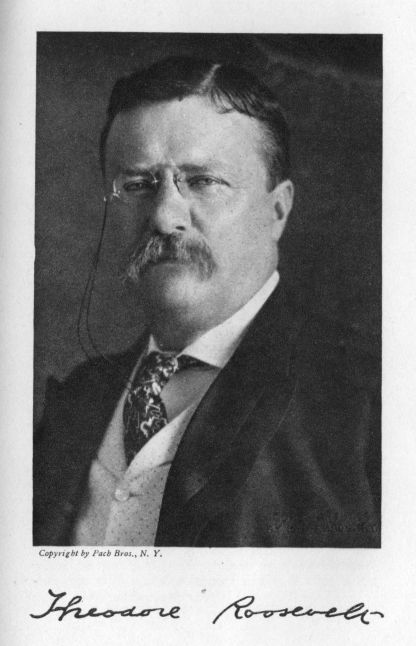
In his early career he had many opportunities to make a great deal of money by allying himself with crooked, sneaking, unscrupulous politicians. He had all sorts of opportunities for political graft. But crookedness never had any attraction for him. He refused to be a party to any political jobbery, any underhand business. He preferred to lose any position he was seeking, to let somebody else have it, if he must get smirched in the getting it. He would not touch a dollar, place, or preferment unless it came to him clean, with no trace of jobbery on it. Politicians who had an "ax to grind" knew it was no use to try to bribe him, or to influence him with promises of patronage, money, position, or power. Mr. Roosevelt knew perfectly well that he would make many mistakes and many enemies, but he resolved to carry himself in such a way that even his enemies should at least respect him for his honesty of purpose, and for his straightforward, "square-deal" methods. He resolved to keep his record clean, his name white, at all hazards. Everything else seemed unimportant in comparison.
Early in his career, he had many chances to make a great deal of money by joining with dishonest, sneaky, unscrupulous politicians. He had all sorts of opportunities to profit from political corruption. But dishonesty never appealed to him. He refused to take part in any political scheming or underhanded business. He preferred to lose any position he sought and let someone else have it if getting it would tarnish his reputation. He would not accept money, a position, or a promotion unless it came to him honestly, with no trace of corruption. Politicians who had an "ax to grind" knew there was no use trying to bribe him. Nor could they influence him with promises of patronage, money, position, or power. Mr. Roosevelt knew perfectly well that he would make many mistakes and many enemies. But he resolved to conduct himself so that even his enemies would at least respect his honest intentions and his straightforward, "square-deal" methods. He resolved to keep his record clean and his name untarnished, whatever the cost. Everything else seemed unimportant in comparison.
In times like these the world especially needs such men as Mr. Roosevelt—men who hew close to the chalk-line of right and hold the line plumb to truth; men who do not pander to public favor; men who make duty and truth their goal and go straight to their mark, turning neither to the right nor to the left, though a paradise tempt them.
In times like these, the world especially needs men like Mr. Roosevelt. They stay true to what is right and uphold the truth. They do not try to win public favor. They make duty and truth their goal and pursue it without wavering, even if paradise tempts them.
Who can ever estimate how much his influence has done toward purging politics and elevating the American ideal. He has changed the view-point of many statesmen and politicians. He has shown them a new and a better way. He has made many of them ashamed of the old methods of grafting and selfish greed. He has held up a new ideal, shown them that unselfish service to their country is infinitely nobler than an ambition for self-aggrandizement. American patriotism has a higher meaning to-day, because of the example of this great American. Many young politicians and statesmen have adopted cleaner methods and higher aims because of his influence. There is no doubt that tens of thousands of young men in this country are cleaner in their lives, and more honest and ambitious to be good citizens, because here is a man who always stands for the "square deal," for civic righteousness, for American manhood.
Who can ever measure how much his influence has done to clean up politics and raise American ideals? He has changed the outlook of many statesmen and politicians. He has shown them a new and better way. He has made many of them ashamed of the old ways of corruption and selfish greed. He has offered a new ideal. He has shown them that serving their country selflessly is far nobler than seeking personal advancement. American patriotism has a higher meaning today because of this great American's example. Many young politicians and statesmen have adopted cleaner methods and higher goals because of his influence. There is no doubt that tens of thousands of young men in this country live cleaner lives because of him. They are more honest and more eager to be good citizens. That is because here is a man who always stands for the "square deal," for civic virtue, for American manhood.
Every man ought to feel that there is something in him that bribery can not touch, that influence can not buy; something that is not for sale; something he would not sacrifice or tamper with for any price; something he would give his life for if necessary.
Every man should feel that there is something in him that no bribe or influence can buy. It is not for sale. He would not sacrifice it or tamper with it for any price. He would give his life for it if necessary.
If a man stands for something worth while, compels recognition for himself alone, on account of his real worth, he is not dependent upon recommendations; upon fine clothes, a fine house, or a pull. He is his own best recommendation.
If a man stands for something worthwhile and earns recognition through his own merit, he does not need recommendations. He does not need fine clothes, a fine house, or influential connections. He is his own best recommendation.
The young man who starts out with the resolution to make his character his capital, and to pledge his whole manhood for every obligation he enters into, will not be a failure, though he wins neither fame nor fortune. No man ever really does a great thing who loses his character in the process.
A young man may start out determined to make his character his capital. He may pledge his whole integrity to every obligation he takes on. If he does, he will not be a failure, even if he wins neither fame nor fortune. No man ever truly does a great thing if he loses his character in the process.
No substitute has ever yet been discovered for honesty. Multitudes of people have gone to the wall trying to find one. Our prisons are full of people who have attempted to substitute something else for it.
No one has ever found a substitute for honesty. Countless people have failed trying to find one. Our prisons are full of people who have tried to replace honesty with something else.
No man can really believe in himself when he is occupying a false position and wearing a mask; when the little monitor within him is constantly saying, "You know you are a fraud; you are not the man you pretend to be." The consciousness of not being genuine, not being what others think him to be, robs a man of power, honeycombs the character, and destroys self-respect and self-confidence.
No man can truly believe in himself when he is living a lie and wearing a mask. A little voice inside him keeps saying, "You know you are a fraud. You are not the man you pretend to be." Knowing he is not genuine, that he is not what others think he is, robs him of power. It eats away at his character and destroys his self-respect and self-confidence.
When Lincoln was asked to take the wrong side of a case he said, "I could not do it. All the time while talking to that jury I should be thinking, 'Lincoln, you're a liar, you're a liar,' and I believe I should forget myself and say it out loud."
When Lincoln was asked to argue the wrong side of a case, he said, "I couldn't do it. The whole time I was talking to the jury, I'd be thinking, 'Lincoln, you're a liar, you're a liar.' I believe I'd forget myself and say it out loud."
Character as capital is very much underestimated by a great number of young men. They seem to put more emphasis upon smartness, shrewdness, long-headedness, cunning, influence, a pull, than upon downright honesty and integrity of character. Yet why do scores of concerns pay enormous sums for the use of the name of a man who, perhaps, has been dead for half a century or more? It is because there is power in that name; because there is character in it; because it stands for something; because it represents reliability and square dealing. Think of what the name of Tiffany, of Park and Tilford, or any of the great names which stand in the commercial world as solid and immovable as the rock of Gibraltar, are worth!
Many young men greatly underestimate the value of character as capital. They seem to value cleverness, shrewdness, foresight, cunning, influence, and connections more than plain honesty and integrity. Yet why do so many companies pay enormous sums to use the name of a man who may have died more than fifty years ago? It is because his name has power and character. It stands for something: reliability and fair dealing. Think of what the names of Tiffany, Park and Tilford, and other great businesses are worth! In the commercial world, they stand as solid and immovable as the rock of Gibraltar.
Does it not seem strange that young men who know these facts should try to build up a business on a foundation of cunning, scheming, and trickery, instead of building on the solid rock of character, reliability, and manhood? Is it not remarkable that so many men should work so hard to establish a business on an unreliable, flimsy foundation, instead of building upon the solid masonry of honest goods, square dealing, reliability?
Isn't it strange that young men who know these facts try to build a business on cunning, scheming, and trickery? Why not build on the solid rock of character, reliability, and manhood? Isn't it remarkable that so many men work so hard to build a business on an unreliable, flimsy foundation? Instead, they could build on the solid foundation of honest goods, fair dealing, and reliability.
A name is worth everything until it is questioned; but when suspicion clings to it, it is worth nothing. There is nothing in this world that will take the place of character. There is no policy in the world, to say nothing of the right or wrong of it, that compares with honesty and square dealing.
A good name is worth everything until it is questioned. But when suspicion clings to a name, it is worth nothing. Nothing in this world can take the place of character. No approach compares with honesty and fair dealing, regardless of whether it is right or wrong.
In spite of, or because of, all the crookedness and dishonesty that is being uncovered, of all the scoundrels that are being unmasked, integrity is the biggest word in the business world to-day. There never was a time in all history when it was so big, and it is growing bigger. There never was a time when character meant so much in business; when it stood for so much everywhere as it does to-day.
Despite, or perhaps because of, all the corruption and dishonesty being exposed and all the scoundrels being unmasked, integrity is the biggest word in business today. It has never been more important in all of history, and it is growing even more important. Character has never meant so much in business or mattered so much everywhere as it does today.
There was a time when the man who was the shrewdest and sharpest and cunningest in taking advantage of others got the biggest salary; but to-day the man at the other end of the bargain is looming up as never before.
There was a time when the man who was shrewdest and most cunning at taking advantage of others earned the highest salary. But today, the man on the other side of the bargain is becoming more important than ever.
Nathan Straus, when asked the secret of the great success of his firm, said it was their treatment of the man at the other end of the bargain. He said they could not afford to make enemies; they could not afford to displease or to take advantage of customers, or to give them reason to think that they had been unfairly dealt with,—that, in the long run, the man who gave the squarest deal to the man at the other end of the bargain would get ahead fastest.
When asked the secret of his firm’s great success, Nathan Straus said it was how they treated the person on the other side of a deal. He said they could not afford to make enemies. They could not afford to displease customers, take advantage of them, or give them reason to think they had been treated unfairly. In the long run, he said, the person who treated the other party most fairly would get ahead fastest.
There are merchants who have made great fortunes, but who do not carry weight among their fellow men because they have dealt all their lives with inferiority. They have lived with shoddy and shams so long that the suggestion has been held in their minds until their whole standards of life have been lowered; their ideals have shrunken; their characters have partaken of the quality of their business.
Some merchants have made great fortunes, but they have little influence among their peers. That is because they have dealt in inferior goods all their lives. They have spent so long dealing in shoddy goods and frauds that these have shaped their thinking. As a result, their standards of living have declined, their ideals have shrunk, and their characters have taken on the quality of their business.
Contrast these men with the men who stood for half a century or more at the head of solid houses, substantial institutions; men who have always stood for quality in everything; who have surrounded themselves not only with ability but with men and women of character.
Contrast these men with those who led solid businesses and institutions for half a century or more. Those men have always stood for quality in everything. They have surrounded themselves with people who have not only ability but also character.
We instinctively believe in character. We admire people who stand for something; who are centered in truth and honesty. It is not necessary that they agree with us. We admire them for their strength, the honesty of their opinions, the inflexibility of their principles.
We instinctively believe in character. We admire people who stand for something and are guided by truth and honesty. They do not have to agree with us. We admire their strength, their honest opinions, and their unwavering principles.
The late Carl Schurz was a strong man and antagonized many people. He changed his political views very often; but even his worst enemies knew there was one thing he would never go back on, friends or no friends, party or no party—and that was his devotion to principle as he saw it. There was no parleying with his convictions. He could stand alone, if necessary, with all the world against him. His inconsistencies, his many changes in parties and politics, could not destroy the universal admiration for the man who stood for his convictions. Although he escaped from a German prison and fled his country, where he had been arrested on account of his revolutionary principles when but a mere youth, Emperor William the First had such a profound respect for his honesty of purpose and his strength of character that he invited him to return to Germany and visit him, gave him a public dinner, and paid him great tribute.
The late Carl Schurz was a strong man who made many enemies. He changed his political views often. But even his worst enemies knew there was one thing he would never give up: his devotion to principle as he saw it. He remained true to his principles, with or without friends or a party. He would not compromise his convictions. If necessary, he could stand alone against the whole world. He was inconsistent and changed parties and political positions many times. Yet none of that could destroy the universal admiration for a man who stood by his convictions. As a young man, he had been arrested in Germany for his revolutionary principles. He escaped from prison and fled the country. Yet Emperor William the First deeply respected his honesty of purpose and strength of character. The emperor invited him to return to Germany for a visit, gave him a public dinner, and paid him great tribute.
Who can estimate the influence of President Eliot in enriching and uplifting our national ideas and standards through the thousands of students who go out from Harvard University? The tremendous force and nobility of character of Phillips Brooks raised everyone who came within his influence to higher levels. His great earnestness in trying to lead people up to his lofty ideals swept everything before it. One could not help feeling while listening to him and watching him that there was a mighty triumph of character, a grand expression of superb manhood. Such men as these increase our faith in the race; in the possibilities of the grandeur of the coming man. We are prouder of our country because of such standards.
Who can measure President Eliot's influence on our national ideas and standards? Through the thousands of students who leave Harvard University, he enriches and elevates them. The tremendous strength and nobility of Phillips Brooks's character lifted everyone he influenced to a higher level. His deep commitment to leading people toward his lofty ideals swept everything before it. Listening to him and watching him, one could not help feeling that there was a mighty triumph of character, a magnificent example of manhood. Men like these strengthen our faith in humanity and in the possibility of greatness in future generations. We are prouder of our country because of the standards they set.
It is the ideal that determines the direction of the life. And what a grand sight, what an inspiration, are those men who sacrifice the dollar to the ideal!
An ideal determines the direction of a person's life. What a grand sight and an inspiration are those men who put their ideals before money!
The principles by which the problem of success is solved are right and justice, honesty and integrity; and just in proportion as a man deviates from these principles he falls short of solving his problem.
The principles that lead to success are fairness, justice, honesty, and integrity. The more a man strays from these principles, the further he falls short of success.
It is true that he may reach something. He may get money, but is that success? The thief gets money, but does he succeed? Is it any honester to steal by means of a long head than by means of a long arm? It is very much more dishonest, because the victim is deceived and then robbed—a double crime.
It is true that he may achieve something. He may get money, but is that success? A thief gets money, but does he succeed? Is it any more honest to steal through cleverness than by reaching out and taking something? It is much more dishonest, because the victim is deceived and then robbed. That is a double crime.
We often receive letters which read like this:
We often receive letters like this:
"I am getting a good salary; but I do not feel right about it, somehow. I can not still the voice within me that says, 'Wrong, wrong,' to what I am doing."
"I'm earning a good salary, but somehow I don't feel right about it. I can't silence the voice inside me that says, 'Wrong, wrong,' about what I'm doing."
"Leave it, leave it," we always say to the writers of these letters. "Do not stay in a questionable occupation, no matter what inducement it offers. Its false light will land you on the rocks if you follow it. It is demoralizing to the mental faculties, paralyzing to the character, to do a thing which one's conscience forbids."
"Leave it, leave it," we always say to the people who write these letters. "Do not stay in a questionable job, no matter what it offers you. If you follow its false light, it will land you on the rocks. Doing something your conscience forbids weakens your mind and paralyzes your character."
Tell the employer who expects you to do questionable things that you can not work for him unless you can put the trade-mark of your manhood, the stamp of your integrity, upon everything you do. Tell him that if the highest thing in you can not bring success, surely the lowest can not. You can not afford to sell the best thing in you, your honor, your manhood, to a dishonest man or a lying institution. You should regard even the suggestion that you might sell out for a consideration as an insult.
Tell an employer who expects you to do questionable things that you cannot work for him unless everything you do bears the mark of your integrity and character. Tell him that if your best qualities cannot bring success, surely your worst qualities cannot. You cannot afford to sell your best qualities, your honor and character, to a dishonest man or a dishonest institution. You should consider it an insult even if someone suggests you might sell out for a reward.
Resolve that you will not be paid for being something less than a man; that you will not lease your ability, your education, your inventiveness, your self-respect, for salary, to do a man's lying for him; either in writing advertisements, selling goods, or in any other capacity.
Resolve not to accept pay for being less than a man. Do not sell your ability, education, inventiveness, or self-respect for a salary to lie for another man. Do not do it in advertising, selling goods, or any other work.
Resolve that, whatever your vocation, you are going to stand for something; that you are not going to be merely a lawyer, a physician, a merchant, a clerk, a farmer, a congressman, or a man who carries a big money-bag; but that you are going to be a man first, last, and all the time.
Decide that, whatever your occupation, you will stand for something. You will not be merely a lawyer, a doctor, a merchant, a clerk, a farmer, a congressman, or a man with a lot of money. You will be a man first, last, and all the time.