Chapter 11
Choosing a Career
Be what nature intended you for, and you will succeed; be anything else, and you will be ten thousand times worse than nothing.—SYDNEY SMITH.
Be what nature intended you to be, and you will succeed. Be anything else, and you will be ten thousand times worse than nothing. Sydney Smith.
"Many a man pays for his success with a slice of his constitution."
"Many men pay for their success with some of their health."
No man struggles perpetually and victoriously against his own character; and one of the first principles of success in life is so to regulate our career as rather to turn our physical constitution and natural inclinations to good account than to endeavor to counteract the one or oppose the other.—BULWER.
No one can continually struggle against their own character and win. One of the first principles of success in life is to plan our careers around our physical makeup and natural inclinations. We should make good use of them rather than try to counteract our physical makeup or oppose our natural inclinations. BULWER.
He that hath a trade hath an estate.—FRANKLIN.
A person who has a trade has an estate. Franklin.
Nature fits all her children with something to do.—LOWELL.
Nature equips all her children with something to do. LOWELL.
As occupations and professions have a powerful influence upon the length of human life, the youth should first ascertain whether the vocation he thinks of choosing is a healthy one. Statesmen, judges, and clergymen are noted for their longevity. They are not swept into the great business vortex, where the friction and raspings of sharp competition whittle life away at a fearful rate. Astronomers, who contemplate vast systems, moving through enormous distances, are exceptionally long lived,—as Herschel and Humboldt. Philosophers, scientists, and mathematicians, as Galileo, Bacon, Newton, Euler, Dalton, in fact, those who have dwelt upon the exact sciences, seem to have escaped many of the ills from which humanity suffers. Great students of natural history have also, as a rule, lived long and happy lives. Of fourteen members of a noted historical society in England, who died in 1870, two were over ninety, five over eighty, and two over seventy.
Because occupations and professions strongly affect life expectancy, young people should first ask whether their chosen career is healthy. Statesmen, judges, and clergy are known for their long lives. They are not swept into the great whirl of business, where the strain and friction of fierce competition wear life away at a frightening rate. Astronomers, who study vast systems moving across enormous distances, live exceptionally long lives. Herschel and Humboldt are examples. Philosophers, scientists, and mathematicians such as Galileo, Bacon, Newton, Euler, and Dalton seem to have escaped many of humanity’s ills. In fact, the same seems true of those who have devoted themselves to the exact sciences. Great students of natural history have also generally lived long and happy lives. In 1870, fourteen members of a noted historical society in England died. Two were over ninety, five were over eighty, and two were over seventy.
The occupation of the mind has a great influence upon the health of the body.
What occupies the mind has a great influence on the health of the body.
There is no employment so dangerous and destructive to life but plenty of human beings can be found to engage in it. Of all the instances that can be given of recklessness of life, there is none which exceeds that of the workmen employed in what is called dry-pointing—the grinding of needles and of table forks. The fine steel dust which they breathe brings on a painful disease, of which they are almost sure to die before they are forty. Yet not only are men tempted by high wages to engage in this employment, but they resist to the utmost all contrivances devised for diminishing the danger, through fear that such things would cause more workmen to offer themselves and thus lower wages. Many physicians have investigated the effects of work in the numerous match factories in France upon the health of the employees, and all agree that rapid destruction of the teeth, decay or necrosis of the jawbone, bronchitis, and other diseases result.
No job is so dangerous or deadly that plenty of people cannot be found to do it. No example of recklessness with human life exceeds that of the workers employed in dry-pointing, the grinding of needles and table forks. The fine steel dust they breathe causes a painful disease that almost certainly kills them before they turn forty. Yet high wages tempt men to take this work. They also resist every device designed to reduce the danger. They fear such devices would attract more workers and lower wages. Many physicians have studied the effects of work in France's numerous match factories on employees' health. All agree that the work causes rapid destruction of the teeth, decay or necrosis of the jawbone, bronchitis, and other diseases.
We will probably find more old men on farms than elsewhere. There are many reasons why farmers should live longer than persons residing in cities or than those engaged in other occupations. Aside from the purer air, the outdoor exercise, both conducive to a good appetite and sound sleep, which comparatively few in cities enjoy, they are free from the friction, harassing cares, anxieties, and the keen competition incident to city life. On the other hand, there are some great drawbacks and some enemies to longevity, even on the farm. Man does not live by bread alone. The mind is by far the greatest factor in maintaining the body in a healthy condition. The social life of the city, the great opportunities afforded the mind for feeding upon libraries and lectures, great sermons, and constant association with other minds, the great variety of amusements compensate largely for the loss of many of the advantages of farm life. In spite of the great temperance and immunity from things which corrode, whittle, and rasp away life in the cities, farmers in many places do not live so long as scientists and some other professional men.
We will probably find more old men on farms than anywhere else. There are many reasons why farmers should live longer than city dwellers or people in other occupations. Farmers enjoy cleaner air and exercise outdoors, which promote a good appetite and sound sleep. Comparatively few city dwellers enjoy these advantages. Farmers are also free from the conflicts, troubling cares, anxieties, and intense competition that come with city life. On the other hand, even farm life has some serious drawbacks and threats to longevity. Man does not live by bread alone. The mind is by far the most important factor in keeping the body healthy. City life offers social interaction and many opportunities to nourish the mind through libraries, lectures, great sermons, and constant contact with other minds. Its wide variety of entertainment also helps make up for the loss of many advantages of farm life. Farmers are often temperate and free from the things that wear away life in cities. Yet in many places they do not live as long as scientists and some other professionals.
There is no doubt that aspiration and success tend to prolong life. Prosperity tends to longevity, if we do not wear life away or burn it out in the feverish pursuit of wealth. Thomas W. Higginson made a list of thirty of the most noted preachers of the last century, and found that their average length of life was sixty-nine years.
There is no doubt that ambition and success tend to lengthen life. Prosperity also tends to lead to a longer life, if we do not wear ourselves down or burn out in a frantic pursuit of wealth. Thomas W. Higginson made a list of thirty of the most famous preachers of the last century. He found that they lived an average of sixty-nine years.
Among miners in some sections over six hundred out of a thousand die from consumption. In the prisons of Europe, where the fatal effects of bad air and filth are shown, over sixty-one per cent. of the deaths are from tuberculosis. In Bavarian monasteries, fifty per cent. of those who enter in good health die of consumption, and in the Prussian prisons it is almost the same. The effect of bad air, filth, and bad food is shown by the fact that the death-rate among these classes, between the ages of twenty and forty, is five times that of the general population of the same age. In New York City, over one-fifth of all the deaths of persons over twenty are from this cause. In large cities in Europe the percentage is often still greater. Of one thousand deaths from all causes, on the average, one hundred and three farmers die of pulmonary tuberculosis, one hundred and eight fishermen, one hundred and twenty-one gardeners, one hundred and twenty-two farm laborers, one hundred and sixty-seven grocers, two hundred and nine tailors, three hundred and one dry-goods dealers, and four hundred and sixty-one compositors,—nearly one-half.
In some mining areas, more than 600 out of every 1,000 miners die of tuberculosis. European prisons show the deadly effects of bad air and filth. There, more than 61 percent of deaths are caused by tuberculosis. In Bavarian monasteries, 50 percent of those who enter in good health die of tuberculosis. The figure is almost the same in Prussian prisons. The death rate among these groups shows the effects of bad air, filth, and poor food. Between ages 20 and 40, their death rate is five times that of the general population of the same age. In New York City, tuberculosis causes more than one-fifth of all deaths among people over 20. In large European cities, the percentage is often even higher. On average, out of every 1,000 deaths from all causes in each occupation, pulmonary tuberculosis accounts for 103 farmers, 108 fishermen, 121 gardeners, and 122 farm laborers. It accounts for 167 grocers, 209 tailors, 301 dry-goods dealers, and 461 compositors, nearly half.
According to a long series of investigations by Drs. Benoysten and Lombard into occupations or trades where workers must inhale dust, it appears that mineral dust is the most detrimental to health, animal dust ranking next, and vegetable dust third.
Drs. Benoysten and Lombard conducted a long series of studies on jobs where workers must breathe in dust. Their findings suggest that mineral dust is the most harmful to health, followed by animal dust and then vegetable dust.
In choosing an occupation, cleanliness, pure air, sunlight, and freedom from corroding dust and poisonous gases are of the greatest importance. A man who would sell a year of his life for any amount of money would be considered insane, and yet we deliberately choose occupations and vocations which statistics and physicians tell us will be practically sure to cut off from five to twenty-five, thirty, or even forty years of our lives, and are seemingly perfectly indifferent to our fate.
When choosing an occupation, cleanliness, fresh air, sunlight, and freedom from corrosive dust and poisonous gases are extremely important. A man who sold a year of his life for any amount of money would be considered insane. Yet we deliberately choose jobs that statistics and doctors tell us will almost certainly shorten our lives. They may cut off five to twenty-five, thirty, or even forty years. We seem perfectly indifferent to our fate.
There is danger in a calling which requires great expenditure of vitality at long, irregular intervals. He who is not regularly, or systematically employed incurs perpetual risk. "Of the thirty-two all-round athletes in a New York club not long ago," said a physician, "three are dead of consumption, five have to wear trusses, four or five are lop-shouldered, and three have catarrh and partial deafness." Dr. Patten, chief surgeon at the National Soldiers' Home at Dayton, Ohio, says that "of the five thousand soldiers in that institution fully eighty per cent. are suffering from heart disease in one form or another, due to the forced physical exertions of the campaigns."
There is danger in a job that requires great exertion at long, irregular intervals. Anyone who is not employed regularly or systematically faces constant risk. A physician said, "Not long ago, a New York club had thirty-two all-around athletes. Three have died of tuberculosis, five have to wear trusses, four or five have uneven shoulders, and three have catarrh and partial deafness." Dr. Patten, chief surgeon at the National Soldiers' Home in Dayton, Ohio, says: "Of the five thousand soldiers at the institution, a full eighty percent suffer from some form of heart disease. Their heart disease is due to the forced physical exertion of military campaigns."
Man's faculties and functions are so interrelated that whatever affects one affects all. Athletes who over-develop the muscular system do so at the expense of the physical, mental, and moral well-being. It is a law of nature that the overdevelopment of any function or faculty, forcing or straining it, tends not only to ruin it, but also to cause injurious reactions on every other faculty and function.
Our abilities and bodily functions are so closely connected that whatever affects one affects them all. Athletes who overdevelop their muscles do so at the expense of their physical, mental, and moral well-being. It is a law of nature that overdeveloping, forcing, or straining any ability or function tends to ruin it. It also tends to harm every other ability and function.
Vigorous thought must come from a fresh brain. We cannot expect nerve, snap, robustness and vigor, sprightliness and elasticity, in the speech, in the book, or in the essay, from an exhausted, jaded brain. The brain is one of the last organs of the body to reach maturity (at about the age of twenty-eight), and should never be overworked, especially in youth. The whole future of a man is often ruined by over-straining the brain in school.
Vigorous thought requires a fresh brain. An exhausted, worn-out brain cannot produce a speech, book, or essay with energy, vitality, liveliness, and flexibility. The brain is one of the last organs in the body to mature, at about age twenty-eight. It should never be overworked, especially in youth. A man's entire future is often ruined by overworking his brain in school.
Brain-workers cannot do good, effective work in one line many hours a day. When the brain is weary, when it begins to lose its elasticity and freshness, there will be the same lack of tonicity and strength in the brain product. Some men often do a vast amount of literary work in entirely different lines during their spare hours.
People who work with their minds cannot do good, effective work in one field for many hours a day. When the brain grows tired and loses its flexibility and freshness, its work also loses vigor and strength. Some men often do a great deal of writing in entirely different fields during their spare hours.
Cessation of brain activity does not necessarily constitute brain rest, as most great thinkers know. The men who accomplish the most brain-work, sooner or later—usually later, unfortunately—learn to give rest to one set of faculties and use another, as interest begins to flag and a sense of weariness comes. In this way they have been enabled to astonish the world by their mental achievements, which is very largely a matter of skill in exercising alternate sets of faculties, allowing rest to some while giving healthy exercise to others. The continual use of one set of faculties by an ambitious worker will soon bring him to grief. No set of brain cells can possibly set free more brain force in the combustion of thought than is stored up in them. The tired brain must have rest, or nervous exhaustion, brain fever, or even softening of the brain is liable to follow.
Stopping mental activity does not necessarily mean the brain is resting, as most great thinkers know. People who do the most mental work learn to rest one set of mental faculties and use another. Sooner or later, they make this change as their interest fades and they begin to feel tired. Unfortunately, they usually learn to do so later rather than sooner. In this way, they have been able to astonish the world with their mental achievements. Such achievements depend largely on skill in alternating between sets of faculties. They rest some while giving others healthy exercise. An ambitious worker who constantly uses one set of faculties will soon come to grief. No set of brain cells can release more mental energy through the combustion of thought than it has stored. The tired brain must rest, or nervous exhaustion, brain fever, or even softening of the brain may follow.
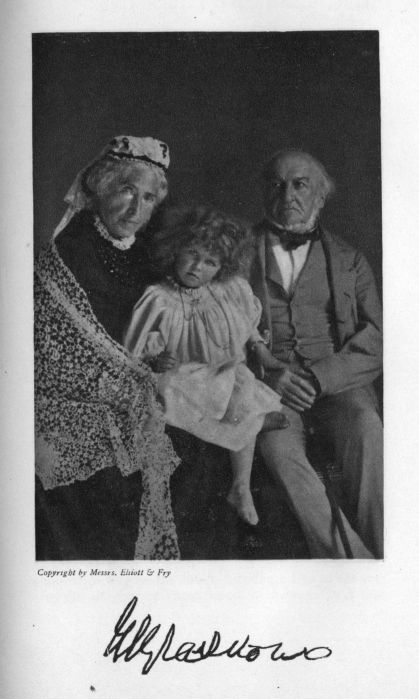
As a rule, physical vigor is the condition of a great career. What would Gladstone have accomplished with a weak, puny physique? He addresses an audience at Corfu in Greek, and another at Florence in Italian. A little later he converses at ease with Bismarck in German, or talks fluent French in Paris, or piles up argument on argument in English for hours in Parliament. There are families that have "clutched success and kept it through generations from the simple fact of a splendid physical organization handed down from one generation to another."
As a rule, physical strength is necessary for a great career. What would Gladstone have accomplished with a weak, frail body? He speaks to an audience in Corfu in Greek and another in Florence in Italian. A little later, he talks easily with Bismarck in German or speaks fluent French in Paris. Or he builds argument upon argument in English for hours in Parliament. Some families have "seized success and held on to it for generations simply because excellent physical health was passed down from one generation to the next."
All occupations that enervate, paralyze, or destroy body or soul should be avoided. Our manufacturing interests too often give little thought to the employed; the article to be made is generally the only object considered. They do not care if a man spends the whole of his life upon the head of a pin, or in making a screw in a watch factory. They take no notice of the occupations that ruin, or the phosphorus, the dust, the arsenic that destroys the health, that shortens the lives of many workers; of the cramped condition of the body which creates deformity.
All jobs that weaken, cripple, or destroy the body or soul should be avoided. Manufacturers too often give little thought to their workers. Usually, the product is all that matters. They do not care if a man spends his whole life making pinheads or screws in a watch factory. They pay no attention to jobs that ruin workers. Nor do they notice the phosphorus, dust, and arsenic that destroy the health and shorten the lives of many workers. They also ignore cramped working positions that cause deformity.
The moment we compel those we employ to do work that demoralizes them or does not tend to elevate or lift them, we are forcing them into service worse than useless. "If we induce painters to work in fading colors, or architects with rotten stone, or contractors to construct buildings with imperfect materials, we are forcing our Michael Angelos to carve in snow."
The moment we force employees to do work that demoralizes them or does not help them grow, we force them into service that is worse than useless. "If we persuade painters to use fading colors, architects to use rotten stone, or contractors to build with imperfect materials, we are forcing our Michael Angelos to carve in snow."
Ruskin says that the tendency of the age is to expend its genius in perishable art, as if it were a triumph to burn its thoughts away in bonfires. Is the work you compel others to do useful to yourself and to society? If you employ a seamstress to make four or five or six beautiful flounces for your ball dress, flounces which will only clothe yourself, and which you will wear at only one ball, you are employing your money selfishly. Do not confuse covetousness with benevolence, nor cheat yourself into thinking that all the finery you can wear is so much put into the hungry mouths of those beneath you. It is what those who stand shivering on the street, forming a line to see you step out of your carriage, know it to be. These fine dresses do not mean that so much has been put into their mouths, but that so much has been taken out of their mouths.
Ruskin says that people today tend to spend their genius on art that will not last, as if burning their thoughts in bonfires were a triumph. Is the work you make others do useful to you and to society? Suppose you hire a seamstress to make four or five or six beautiful ruffles for your ball gown. The ruffles will clothe only you, and you will wear them to only one ball. If you do this, you are spending your money selfishly. Do not confuse greed with generosity. Do not fool yourself into thinking that all the finery you can wear feeds the hungry people below you. The people shivering on the street, lined up to watch you step out of your carriage, know better. These fine dresses do not mean that food has been put into their mouths, but that food has been taken out of their mouths.
Select a clean, useful, honorable occupation. If there is any doubt on this point, abandon it at once, for familiarity with a bad business will make it seem good. Choose a business that has expansiveness in it. Some kinds of business not even a J. Pierpont Morgan could make respectable. Choose an occupation which will develop you; which will elevate you; which will give you a chance for self-improvement and promotion. You may not make quite so much money, but you will be more of a man, and manhood is above all riches, overtops all titles, and character is greater than any career. If possible avoid occupations which compel you to work in a cramped position, or where you must work at night and on Sundays. Don't try to justify yourself on the ground that somebody must do this kind of work. Let "somebody," not yourself, take the responsibility. Aside from the right and wrong of the thing, it is injurious to the health to work seven days in the week, to work at night when Nature intended you to sleep, or to sleep in the daytime when she intended you to work.
Choose a clean, useful, honorable occupation. If you have any doubt that an occupation meets these standards, abandon it at once. For familiarity with a bad business will make it seem good. Choose a business with room to grow. Some kinds of business could not be made respectable even by J. Pierpont Morgan. Choose an occupation that will help you grow and uplift you. It should give you a chance to improve yourself and advance. You may not make quite as much money, but you will be more of a man. And manhood is above all riches and ranks higher than all titles, and character is greater than any career. If possible, avoid occupations that force you to work in a cramped position or to work at night and on Sundays. Don't justify your choice by saying that somebody must do this kind of work. Let "somebody," not yourself, take responsibility for it. Aside from whether it is right or wrong, working seven days a week is bad for your health. So is working at night when Nature intended you to sleep, or sleeping during the day when she intended you to work.
Many a man has dwarfed his manhood, cramped his intellect, crushed his aspiration, blunted his finer sensibilities, in some mean, narrow occupation just because there was money in it.
Many men have stunted their character and intellect, crushed their ambitions, and dulled their finer feelings. They did this in a petty, narrow occupation just because it paid well.
"Study yourself," says Longfellow, "and most of all, note well wherein kind nature meant you to excel."
"Study yourself," says Longfellow, "and above all, notice where kind nature intended you to excel."
Dr. Matthews says that "to no other cause, perhaps, is failure in life so frequently to be traced as to a mistaken calling." We can often find out by hard knocks and repeated failures what we can not do before what we can do. This negative process of eliminating the doubtful chances is often the only way of attaining to the positive conclusion.
Dr. Matthews says that "perhaps no other cause leads to failure in life as often as choosing the wrong calling." Through hard knocks and repeated failures, we often discover what we cannot do before we discover what we can do. Ruling out doubtful possibilities is often the only way to reach a definite conclusion.
How many men have been made ridiculous for life by choosing law or medicine or theology, simply because they are "honorable professions"! These men might have been respectable farmers or merchants, but are "nobodies" in such vocations. The very glory of the profession which they thought would make them shining lights simply renders more conspicuous their incapacity.
How many men have made themselves ridiculous for life by choosing law, medicine, or theology simply because they are "honorable professions"! These men might have been respectable farmers or merchants, but they are "nobodies" in those professions. They thought the prestige of their profession would make them shining lights. Instead, it only makes their incompetence more obvious.
Thousands of youths receive an education that fits them for a profession which they have not the means or inclination to follow, and that unfits them for the conditions of life to which they were born. Unsuccessful students with a smattering of everything are raised as much above their original condition as if they were successful. A large portion of Paris cabmen are unsuccessful students in theology and other professions and also unfrocked priests. They are very bad cabmen.
Thousands of young people receive an education that prepares them for a profession they cannot afford or do not want to pursue. It also leaves them unsuited to the conditions of life into which they were born. Unsuccessful students who know a little about everything are raised just as far above their original station as successful students. Many Paris cab drivers are failed students of theology and other professions, as well as priests stripped of their office. They are very bad cab drivers.
"Tompkins forsakes his last and awl For literary squabbles; Styles himself poet; but his trade Remains the same,—he cobbles."
"Tompkins leaves his shoemaking tools For literary quarrels. He calls himself a poet, but his trade Remains the same. He cobbles."
Don't choose a profession or occupation because your father, or uncle, or brother is in it. Don't choose a business because you inherit it, or because parents or friends want you to follow it. Don't choose it because others have made fortunes in it. Don't choose it because it is considered the "proper thing" and a "genteel" business. The mania for a "genteel" occupation, for a "soft job" which eliminates drudgery, thorns, hardships, and all disagreeable things, and one which can be learned with very little effort, ruins many a youth.
Don't choose a profession or job because your father, uncle, or brother works in it. Don't choose a business because you inherit it, or because your parents or friends want you to pursue it. Don't choose it because others have made fortunes in it. Don't choose it because it is thought to be the "proper thing" and a "respectable" business. Many young people are ruined by the obsession with finding a "respectable" occupation or a "soft job." They want work that involves no drudgery, difficulties, hardships, or anything unpleasant, and that takes little effort to learn.
When we try to do that for which we are unfitted we are not working along the line of our strength, but of our weakness; our will power and enthusiasm become demoralized; we do half work, botched work, lose confidence in ourselves, and conclude that we are dunces because we cannot accomplish what others do; the whole tone of life is demoralized and lowered because we are out of place.
When we try to do work we are not suited for, we rely on our weaknesses rather than our strengths. Our willpower and enthusiasm suffer. We do halfhearted, botched work and lose confidence in ourselves. We conclude that we are fools because we cannot accomplish what others do. Our whole outlook on life suffers because we are in the wrong place.
How it shortens the road to success to make a wise choice of one's occupation early, to be started on the road of a proper career while young, full of hope, while the animal spirits are high, and enthusiasm is vigorous; to feel that every step we take, that every day's work we do, that every blow we strike helps to broaden, deepen, and enrich life!
Choosing your occupation wisely and early can shorten the road to success! You can begin the right career while you are young, hopeful, energetic, and enthusiastic. And you can feel that every step you take, every day's work you do, and every blow you strike helps broaden, deepen, and enrich your life!
Those who fail are, as a rule, those who are out of their places. A man out of his place is but half a man; his very nature is perverted. He is working against his nature, rowing against the current. When his strength is exhausted he will float down the stream. A man can not succeed when his whole nature is entering its perpetual protest against his occupation. To succeed, his vocation must have the consent of all his faculties; they must be in harmony with his purpose.
Those who fail are usually in the wrong place. A man in the wrong place is only half a man. His very nature is distorted. He is working against his nature, rowing against the current. When his strength runs out, he will float downstream. A man cannot succeed when his whole nature constantly protests against his work. To succeed, all his abilities must agree with his chosen work. They must be in harmony with his purpose.
Has a young man a right to choose an occupation which will only call into play his lower and inferior qualities, as cunning, deceit, letting all his nobler qualities shrivel and die? Has he a right to select a vocation that will develop only the beast within him instead of the man? which will call out the bulldog qualities only, the qualities which overreach and grasp, the qualities which get and never give, which develop long-headedness only, while his higher self atrophies?
Does a young man have the right to choose a job that uses only his lower, inferior qualities, such as cunning and deceit? Does he have the right to let all his nobler qualities shrivel and die? Does he have the right to choose a career that develops only the beast in him instead of the man? Such a career brings out only his bulldog qualities: the qualities that take advantage of others and grab what they can. These are the qualities that get and never give. They develop only shrewdness, while his higher self wastes away.
The best way to choose an occupation is to ask yourself the question, "What would my government do with me if it were to consider scientifically my qualifications and adaptations, and place me to the best possible advantage for all the people?" The Norwegian precept is a good one: "Give thyself wholly to thy fellow-men; they will give thee back soon enough." We can do the most possible for ourselves when we are in a position where we can do the most possible for others. We are doing the most for ourselves and for others when we are in a position which calls into play in the highest possible way the greatest number of our best faculties; in other words, we are succeeding best for ourselves when we are succeeding best for others.
The best way to choose a career is to ask yourself a question: "What would my government do with me if it scientifically assessed my qualifications and aptitudes? Where would it place me to benefit all people as much as possible?" The Norwegian saying offers good advice: "Give yourself wholly to your fellow people, and they will give back to you soon enough." We can do the most for ourselves when we are in a position to do the most for others. We do the most for ourselves and others when our position makes the fullest use of our greatest number of strengths. In other words, we succeed best for ourselves when we succeed best for others.
The time will come when there will be institutions for determining the natural bent of the boy and girl; where men of large experience and close observation will study the natural inclination of the youth, help him to find where his greatest strength lies and how to use it to the best advantage. Even if we take for granted what is not true, that every youth will sooner or later discover the line of his greatest strength so that he may get his living by his strong points rather than by his weak ones, the discovery is often made so late in life that great success is practically impossible. Such institutions would help boys and girls to start in their proper careers early in life; and an early choice shortens the way. Can anything be more important to human beings than a start in life in the right direction, where even small effort will count for more in the race than the greatest effort—and a life of drudgery—in the wrong direction? A man is seldom unsuccessful, unhappy, or vicious when he is in his place.
The time will come when institutions will help determine the natural talents of boys and girls. Experienced, observant people will study each young person’s natural inclinations. They will help young people find their greatest strengths and use them to the best advantage. Suppose we assume that every young person will eventually discover their greatest strength. They can then earn a living using their strengths rather than their weaknesses. But that assumption is not true. Even when people do make this discovery, it often comes so late in life that great success is practically impossible. Such institutions would help boys and girls begin the careers suited to them early in life. And an early choice shortens the way. What could be more important than starting life in the right direction? On the right path, even a small effort counts for more in the race than the greatest effort on the wrong path. The wrong path also means a life of drudgery. A person is seldom unsuccessful, unhappy, or vicious when in the right place.
After once choosing your occupation, however, never look backward; stick to it with all the tenacity you can muster. Let nothing tempt you or swerve you a hair's breadth from your aim, and you will win. Do not let the thorns which appear in every vocation, or temporary despondency or disappointment, shake your purpose. You will never succeed while smarting under the drudgery of your occupation, if you are constantly haunted with the idea that you could succeed better in something else. Great tenacity of purpose is the only thing that will carry you over the hard places which appear in every career to ultimate triumph. This determination, or fixity of purpose, has a great moral bearing upon our success, for it leads others to feel confidence in us, and this is everything. It gives credit and moral support in a thousand ways. People always believe in a man with a fixed purpose, and will help him twice as quickly as one who is loosely or indifferently attached to his vocation, and liable at any time to make a change, or to fail. Everybody knows that determined men are not likely to fail. They carry in their very pluck, grit, and determination the conviction and assurance of success.
Once you have chosen your occupation, however, never look back. Stick to it with all the determination you can muster. Let nothing tempt you or turn you even slightly from your aim, and you will win. Every occupation has its difficulties, but do not let them shake your purpose. Do not let temporary discouragement or disappointment shake it, either. You will never succeed if you resent the hard work your occupation requires and constantly think you could do better at something else. Only great persistence will carry you through the hard times that come in every career and bring you ultimate triumph. This determination, or firmness of purpose, has a great moral effect on our success. It inspires confidence in us, and that is everything. It brings us credit and moral support in countless ways. People always believe in a man with a firm purpose. They will help him twice as readily as someone who is loosely or indifferently committed to his work and might change or fail at any time. Everyone knows that determined men are unlikely to fail. Their courage, grit, and determination carry the conviction and assurance of success.
The world does not dictate what you shall do, but it does demand that you do something, and that you shall be a king in your line. There is no grander sight than that of a young man or woman in the right place struggling with might and main to make the most of the stuff at command, determined that not a faculty or power shall run to waste. Not money, not position, but power is what we want; and character is greater than any occupation or profession.
The world does not dictate what you should do. But it does demand that you do something and be a king in your field. There is no greater sight than a young man or woman in the right place, striving to make the most of what they have. They are determined not to waste a single ability or talent. What we want is not money or position, but power. And character is greater than any occupation or profession.
"Do not, I beseech you," said Garfield, "be content to enter on any business that does not require and compel constant intellectual growth." Choose an occupation that is refining and elevating; an occupation that you will be proud of; an occupation that will give you time for self-culture and self-elevation; an occupation that will enlarge and expand your manhood and make you a better citizen, a better man.
"Please," Garfield said, "do not settle for work that does not require and compel you to keep growing intellectually." Choose work that refines and elevates you and that you can be proud of. Choose work that gives you time to develop and improve yourself. Choose work that expands your character and makes you a better citizen and a better man.
Power and constant growth toward a higher life are the great end of human existence. Your calling should be the great school of life, the great man-developer, character-builder, that which should broaden, deepen, and round out into symmetry, harmony, and beauty, all the God-given faculties within you.
The great purpose of human life is to gain strength and keep growing toward a higher life. Your calling should be your great school of life. It should develop you as a person and build your character. It should broaden and deepen all your God-given abilities and bring them into balance, harmony, and beauty.
But whatever you do be greater than your calling; let your manhood overtop your position, your wealth, your occupation, your title. A man must work hard and study hard to counteract the narrowing, hardening tendency of his occupation. Said Goldsmith,—
But whatever you do, be greater than your work. Let your character rise above your position, wealth, occupation, and title. A man must work and study hard to resist the tendency of his occupation to narrow and harden him. As Goldsmith said:
Burke, born for the universe, narrowed his mind, And to party gave up what was meant for mankind.
Burke, born for the whole world, narrowed his mind, And gave to a political party what was meant for humanity.
"Constant engagement in traffic and barter has no elevating influence," says Lyndall. "The endeavor to obtain the upper hand of those with whom we have to deal, to make good bargains, the higgling and scheming, and the thousand petty artifices, which in these days of stern competition are unscrupulously resorted to, tend to narrow the sphere and to lessen the strength of the intellect, and, at the same time, the delicacy of the moral sense."
“Constant involvement in trade and bargaining has no uplifting influence,” says Lyndall. “People try to gain an advantage over those they deal with and strike good bargains. They haggle, scheme, and resort unscrupulously to countless petty tricks in these days of fierce competition. All this tends to narrow and weaken the mind while dulling the moral sense.”
Choose upward, study the men in the vocation you think of adopting. Does it elevate those who follow it? Are they broad, liberal, intelligent men? Or have they become mere appendages of their profession, living in a rut with no standing in the community, and of no use to it? Don't think you will be the great exception, and can enter a questionable vocation without becoming a creature of it. In spite of all your determination and will power to the contrary, your occupation, from the very law of association and habit, will seize you as in a vise, will mold you, shape you, fashion you, and stamp its inevitable impress upon you. How frequently do we see bright, open-hearted, generous young men come out of college with high hopes and lofty aims, enter a doubtful vocation, and in a few years return to college commencement so changed that they are scarcely recognized. The once broad, noble features have become contracted and narrowed. The man has become grasping, avaricious, stingy, mean, hard. Is it possible, we ask, that a few years could so change a magnanimous and generous youth?
Choose a path that lifts you up. Study the men in the occupation you are considering. Does it lift up those who pursue it? Are they broad-minded, open-minded, and intelligent? Or have they become mere extensions of their profession, stuck in a rut, with no standing or usefulness in their community? Do not think you will be the great exception, able to enter a questionable occupation without being shaped by it. Despite all your determination and willpower, association and habit will cause your work to seize you like a vise. It will mold and shape you, inevitably leaving its mark on you. How often we see bright, openhearted, generous young men leave college with high hopes and lofty aims, only to enter a questionable occupation. A few years later, they return to a college graduation so changed that they are barely recognizable. Their once broad, noble features have become tight and narrow. The man has become greedy, miserly, stingy, mean, and hard. Is it possible, we ask, that a few years could so change a generous, bighearted young man?
Go to the bottom if you would get to the top. Be master of your calling in all its details. Nothing is small which concerns your business.
If you want to reach the top, start by learning the fundamentals. Master every detail of your work. Nothing that concerns your business is too small to matter.
Thousands of men who have been failures in life have done drudgery enough in half a dozen different occupations to have enabled them to reach great success, if their efforts had all been expended in one direction. That mechanic is a failure who starts out to build an engine, but does not quite accomplish it, and shifts into some other occupation where perhaps he will almost succeed, but stops just short of the point of proficiency in his acquisition and so fails again. The world is full of people who are "almost a success." They stop just this side of success. Their courage oozes out just before they become expert. How many of us have acquisitions which remain permanently unavailable because not carried quite to the point of skill? How many people "almost know a language or two," which they can neither write nor speak; a science or two whose elements they have not quite acquired; an art or two partially mastered, but which they can not practice with satisfaction or profit! The habit of desultoriness, which has been acquired by allowing yourself to abandon a half-finished work, more than balances any little skill gained in one vocation which might possibly be of use later.
Thousands of men who have failed in life have done enough hard work across half a dozen occupations to achieve great success. They could have succeeded if they had put all their efforts in one direction. A mechanic is a failure if he starts to build an engine but does not quite finish it. He then moves to another occupation, where he may almost succeed. But he stops just short of becoming skilled and fails again. The world is full of people who are "almost a success." They stop just short of success. Their courage gives out just before they become experts. How many of us have learned things we can never use because we stopped just short of mastering them? How many people "almost know a language or two," but can neither write nor speak them? How many have studied a science or two without quite learning the basics? How many have partly mastered an art or two but cannot practice them with satisfaction or profit? When you abandon work halfway through, you develop a habit of jumping from one thing to another. That habit more than outweighs any small skill you gain in one occupation that might be useful later.
Beware of that frequently fatal gift, versatility. Many a person misses being a great man by splitting into two middling ones. Universality is the ignis fatuus which has deluded to ruin many a promising mind. In attempting to gain a knowledge of half a hundred subjects it has mastered none. "The jack-of-all-trades," says one of the foremost manufacturers of this country, "had a chance in my generation. In this he has none."
Beware of versatility, a gift that is often fatal. Many people miss becoming great by dividing themselves into two mediocre people. Trying to know everything is an illusion that has led many promising minds to ruin. In trying to learn about fifty subjects, they have mastered none. As one of the country’s leading manufacturers says, "The jack-of-all-trades had a chance in my generation. In this generation, he has none."
"The measure of a man's learning will be the amount of his voluntary ignorance," said Thoreau. If we go into a factory where the mariner's compass is made we can see the needles before they are magnetized, they will point in any direction. But when they have been applied to the magnet and received its peculiar power, from that moment they point to the north, and are true to the pole ever after. So man never points steadily in any direction until he has been polarized by a great master purpose.
"The measure of a man's learning is how much he chooses not to know," said Thoreau. If we visit a factory that makes mariner's compasses, we can see the needles before they are magnetized. They point in any direction. But once the needles touch a magnet, they gain its special power. From that moment on, they point north and remain true to the pole. In the same way, a man never points steadily in any direction until a great purpose has polarized him.
Give your life, your energy, your enthusiasm, all to the highest work of which you are capable. Canon Farrar said, "There is only one real failure in life possible, and that is, not to be true to the best one knows."
Give your life, your energy, and your enthusiasm to the best work you can do. Canon Farrar said, "There is only one real failure in life: not being true to the best you know."
"'What must I do to be forever known?' Thy duty ever."
"'What must I do to be remembered forever?' Always do your duty."
Who does the best his circumstance allows, Does well, acts nobly, angels could do no more. YOUNG.
Anyone who does the best their circumstances allow Does well and acts nobly. Angels could do no more. YOUNG.
"Whoever can make two ears of corn, two blades of grass to grow upon a spot of ground where only one grew before," says Swift, "would deserve better of mankind and do more essential service to his country than the whole race of politicians put together."
“Whoever can make two ears of corn or two blades of grass grow where only one grew before,” says Swift, “would deserve more credit from humanity and do more essential service to his country than all politicians put together.”