Chapter 4
The Country Boy
The Napoleonic wars so drained the flower of French manhood that even to-day the physical stature of the average Frenchman is nearly half an inch below what it was at the beginning of Napoleon's reign.
The Napoleonic wars claimed so many of France’s finest young men that their loss is still felt today. The average Frenchman is nearly half an inch shorter than he was at the start of Napoleon’s reign.
The country in America to-day is constantly paying a similar tribute to the city in the sacrifice of its best blood, its best brain, the finest physical and mental fiber in the world. This great stream of superb country manhood, which is ever flowing cityward, is rapidly deteriorated by the softening, emasculating influences of the city, until the superior virility, stamina and sturdy qualities entirely disappear in two or three generations of city life. Our city civilization is always in a process of decay, and would, in a few generations, become emasculated and effeminate were it not for the pure, crystal stream of country youth flowing steadily into and purifying the muddy, devitalized stream of city life. It would soon become so foul and degenerate as to threaten the physical and moral health of city dwellers.
Today, rural America constantly pays a similar tribute to the city, sacrificing its best blood and brains. It gives up the finest physical and mental strength in the world. This great stream of outstanding country men flows constantly toward the city. There, they quickly deteriorate under the city's weakening, emasculating influences. Their superior manliness, stamina, and toughness disappear entirely after two or three generations of city life. Our city civilization is always decaying. In a few generations, it would become emasculated and effeminate without the pure, crystal stream of country youth. They flow steadily into city life, purifying its muddy, weakened stream. Without them, city life would soon become so foul and degenerate that it would threaten the physical and moral health of city dwellers.
One of our great men says that one of the most unfortunate phases of modern civilization is the drift away from the farm, the drift of country youth to the city which has an indescribable fascination for him. His vivid imagination clothes it with Arabian Nights possibilities and joys. The country seems tame and commonplace after his first dream of the city. To him it is synonymous with opportunity, with power, with pleasure. He can not rid himself of its fascination until he tastes its emptiness. He can not know the worth of the country and how to appreciate the glory of its disadvantages and opportunities until he has seen the sham and shallowness of the city.
One of our great men says that one of the saddest trends in modern civilization is the movement away from farms. Young people leave the country for the city, which has an indescribable fascination for them. A young man's vivid imagination fills the city with the possibilities and pleasures of the Arabian Nights. After his first dream of the city, the country seems dull and ordinary. To him, the city means opportunity, power, and pleasure. He cannot escape its fascination until he experiences its emptiness. Only after seeing the city's pretense and shallowness can he know the country's worth. Only then can he appreciate the glory of its disadvantages and opportunities.
One of the greatest boons that can ever come to a human being is to be born on a farm and reared in the country. Self-reliance and grit are oftenest country-bred. The country boy is constantly thrown upon his own resources, forced to think for himself, and this calls out his ingenuity and inventiveness. He develops better all-round judgment and a more level head than the city boy. His muscles are harder, his flesh firmer, and his brain-fiber partakes of the same superior quality.
One of the greatest blessings anyone can have is to be born on a farm and raised in the country. Self-reliance and grit are most often developed in the country. A country boy must constantly rely on his own resources and think for himself. This brings out his ingenuity and inventiveness. He develops better judgment in all areas and a more level head than a city boy. His muscles are harder, his flesh firmer, and his brain fibers share the same superior quality.
The very granite hills, the mountains, the valleys, the brooks, the miracle of the growing crops are every moment registering their mighty potencies in his constitution, putting iron into his blood and stamina into his character, all of which will help to make him a giant when he comes to compete with the city-bred youth.
The granite hills, mountains, valleys, brooks, and miracle of growing crops constantly fill his body with their great power. They put iron in his blood and strength in his character. All this will help make him a giant when he competes with a city-bred youth.
The sturdy, vigorous, hardy qualities, the stamina, the brawn, the grit which characterize men who do great things in this world, are, as a rule, country bred. If power is not absorbed from the soil, it certainly comes from very near it. There seems to be a close connection between robust character and the soil, the hills, mountains and valleys, the pure air and sunshine. There is a very appreciable difference between the physical stamina, the brain vigor, the solidity and the reliability of country-bred men and that of those in the city.
The strength, energy, toughness, stamina, muscle, and grit of men who do great things usually develop in the country. If power is not drawn from the soil, it certainly comes from somewhere close to it. There seems to be a close connection between strong character and the soil, hills, mountains, valleys, fresh air, and sunshine. Men raised in the country differ noticeably from city men in physical stamina, mental vigor, solidity, and reliability.
The average country-bred youth has a better foundation for success-building, has greater courage, more moral stamina. He has not become weakened and softened by the superficial ornamental, decorative influences of city life. And there is a reason for all this. We are largely copies of our environment. We are under the perpetual influence of the suggestion of our surroundings. The city-bred youth sees and hears almost nothing that is natural, aside from the faces and forms of human beings. Nearly everything that confronts him from morning till night is artificial, man-made. He sees hardly anything that God made, that imparts solidity, strength and power, as do the natural objects in the country. How can a man build up a solid, substantial character when his eyes and ears bring him only sights and sounds of artificial things? A vast sea of business blocks, sky-scrapers and asphalt pavements does not generate character-building material.
The average young person raised in the country has a better foundation for success, greater courage, and more moral strength. He has not been weakened and softened by the superficial, decorative influences of city life. There is a reason for all this. We are largely shaped by our environment. Our surroundings constantly influence us. A young person raised in the city sees and hears almost nothing natural, apart from human faces and bodies. Nearly everything he encounters from morning to night is artificial, made by people. He sees hardly anything God made that gives him solidity, strength, and power, as natural objects in the country do. How can a man build a solid, substantial character when his eyes and ears bring him only artificial sights and sounds? A vast sea of business buildings, skyscrapers, and asphalt pavements does not provide the material for building character.
Just as sculpture was once carried to such an extreme that pillars and beams were often so weakened by the extravagant carvings as to threaten the safety of the structure, so the timber in country boys and girls, when brought to the city, is often overcarved and adorned at the cost of strength, robustness and vigor.
Sculpture was once taken to an extreme. Pillars and beams were often so weakened by excessive carving that they threatened the safety of the building. In the same way, country boys and girls brought to the city are often overcarved and adorned, losing strength, robustness, and vigor.
In other words, virility, forcefulness, physical and mental stamina reach their maximum in those who live close to the soil. The moment a man becomes artificial in his living, takes on artificial conditions, he begins to deteriorate, to soften.
In other words, people who live close to the land have the greatest vigor, strength, and physical and mental stamina. As soon as a man adopts an artificial way of life, he begins to weaken and grow soft.
Much of what we call the best society in our cities is often in an advanced process of decay. The muscles may be a little more delicate but they are softer; the skin may be a little fairer, but it is not so healthy; the thought a little more supple, but less vigorous. The whole tendency of life in big cities is toward deterioration. City people rarely live really normal lives. It is not natural for human beings to live far from the soil. It is Mother Earth and country life that give vitality, stamina, courage and all the qualities which make for manhood and womanhood. What we get from the country is solid, substantial, enduring, reliable. What comes from the artificial conditions of the city is weakening, enervating, softening.
Much of what we call the best society in our cities is often in an advanced state of decline. People’s muscles may be a little more delicate, but they are softer. Their skin may be a little fairer, but it is less healthy. Their thinking may be a little more flexible, but it is less vigorous. Everything about life in big cities tends toward decline. City people rarely live truly normal lives. It is not natural for human beings to live far from the soil. Mother Earth and country life give us vitality, stamina, courage, and all the qualities that make us men and women. What we get from the country is solid, substantial, lasting, and reliable. What comes from the artificial conditions of the city makes us weaker, drains our energy, and makes us softer.
The country youth, on the other hand, is in the midst of a perpetual miracle. He can not open his eyes without seeing a more magnificent painting than a Raphael or a Michael Angelo could have created in a lifetime. And this magnificent panorama is changing every instant.
The country youth, on the other hand, lives amid a constant miracle. He cannot open his eyes without seeing a painting more magnificent than Raphael or Michael Angelo could have created in a lifetime. And this magnificent scene changes every instant.
There is a miracle going on in every growing blade of grass and flower. Is it not wonderful to watch the chemical processes in nature's laboratory, mixing and flinging out to the world the gorgeous colorings and marvelous perfumes of the rose and wild flower! No city youth was ever in such a marvelous kindergarten, where perpetual creation is going on in such a vast multitude of forms.
A miracle is happening in every growing blade of grass and every flower. How wonderful it is to watch the chemical processes in nature's laboratory! They mix and send out into the world the gorgeous colors and marvelous scents of roses and wildflowers. No city child ever attended such a marvelous kindergarten, where creation goes on constantly in so many forms.
The city youth has too many things to divert his attention. Such a multiplicity of objects appeals to him that he is often superficial; he lacks depth; his mind is perpetually drawn away from his subject, and he lacks continuity of thought and application. His reading is comparatively superficial. He glances through many papers; magazines and periodicals and gives no real thought to any. His evenings are much more broken up than those of the country boy, who, having very little diversion after supper, can read continuously for an entire evening on one subject. The country boy does not read as many books as the city boy, but, as a rule, he reads them with much better results.
The city boy has too many distractions. So many things compete for his attention that he is often superficial and lacks depth. His mind is constantly pulled away from his subject, and he cannot sustain his thoughts or focus on his work. His reading is comparatively superficial. He skims many newspapers, magazines, and periodicals without giving any of them real thought. His evenings are more often interrupted than those of the country boy. With little to distract him after supper, the country boy can spend a whole evening reading about one subject. The country boy does not read as many books as the city boy, but he generally gets much more from them.
The dearth of great libraries, books and periodicals is one reason why the country boy makes the most of good books and articles, often reading them over and over again, while the city youth, in the midst of newspapers and libraries, sees so many books that in most instances he cares very little for them, and will often read the best literature without absorbing any of it.
The lack of large libraries, books, and periodicals is one reason country boys make the most of good books and articles. They often read them over and over. City youths, surrounded by newspapers and libraries, see so many books that most care very little about them. They often read the best literature without absorbing any of it.
The fact is that there is such a diversity of attractions and distractions, of temptation and amusement in the city, that unless a youth is made of unusual stuff he will yield to the persuasion of the moment and follow the line of least resistance. It is hard for the city-bred youth to resist the multiplicity of allurements and pleasures that bid for his attention, to deny himself and turn a deaf ear to the appeals of his associates and tie himself down to self-improvement while those around him are having a good time.
The city offers so many attractions, distractions, temptations, and amusements that a young person must be unusually strong to resist them. Otherwise, he will give in to the impulse of the moment and follow the path of least resistance. It is hard for a young person raised in the city to resist the many pleasures competing for his attention. It is hard to deny himself, ignore his friends’ appeals, and devote himself to self-improvement while those around him are having fun.
These exciting, diverting, tempting conditions of city life are not conducive to generating the great master purpose, the one unwavering life aim, which we often see so marked in the young man from the country. Nor do city-bred youths store up anything like the reserve power, the cumulative force, the stamina, which are developed in the simple life of the soil.
The excitement, distractions, and temptations of city life do not encourage a great, unwavering purpose in life. We often see such a purpose clearly in young men from the country. Nor do young people raised in cities build up anything like the reserves of power, growing strength, and stamina developed through the simple life of working the soil.
For one thing, the country boy is constantly developing his muscular system. His health is better. He gets more exercise, more time to think and to reflect; hence, he is not so superficial as the city boy. His perceptions are not so quick, he is not so rapid in his movements, his thought action is slower and he does not have as much polish, it is true, but he is better balanced generally. He has been forced to do a great variety of work and this has developed corresponding mental qualities.
For one thing, the country boy is constantly building his muscles. He has better health. He gets more exercise and has more time to think and reflect. As a result, he is not as superficial as the city boy. It is true that he is not as quick to notice things or as fast in his movements. His thinking is slower, and he is not as polished, but he is generally better balanced. He has had to do many different kinds of work, and this has developed corresponding mental qualities.
The drudgery of the farm, the chores which we hated as boys, the rocks which we despised, we have found were the very things which educated us, which developed our power and made us practical. The farm is a great gymnasium, a superb manual training school, nature's kindergarten, constantly calling upon the youth's self-reliance and inventiveness. He must make the implements and toys which he can not afford to buy or procure. He must run, adjust and repair all sorts of machinery and farm utensils. His ingenuity and inventiveness are constantly exercised. If the wagon or plow breaks down it must be repaired on the spot, often without the proper tools. This training develops instinctive courage, strong success qualities, and makes him a resourceful man.
We have found that farm drudgery educated us, developed our abilities, and made us practical. So did the chores we hated as boys and the rocks we despised. The farm is a great gymnasium, a superb school for hands-on training, and nature's kindergarten. It constantly calls on a young person's self-reliance and inventiveness. He must make the tools and toys he cannot afford to buy or otherwise obtain. He must operate, adjust, and repair all kinds of machinery and farm equipment. He is constantly using his ingenuity and inventiveness. If a wagon or plow breaks down, he must repair it on the spot, often without the right tools. This training develops natural courage and strong qualities for success. It makes him a resourceful man.
Is it any wonder that the boy so trained in self-reliance, so superbly equipped with physical and mental stamina, should take such pre-eminence, should be in such demand when he comes to the city? Is it any wonder that he is always in evidence in great emergencies and crises? Just stand a stamina-filled, self-reliant country boy beside a pale, soft, stamina-less, washed-out city youth. Is it any wonder that the country-bred boy is nearly always the leader; that he heads the banks, the great mercantile houses? It is this peculiar, indescribable something; this superior stamina and mental caliber, that makes the stuff that rises to the top in all vocations.
Is it any wonder that a boy trained to rely on himself and equipped with exceptional physical and mental stamina stands out? Is it any wonder that he is in such demand when he comes to the city? Is it any wonder that he is always there in great emergencies and crises? Just stand a strong, self-reliant country boy beside a pale, soft, worn-out city youth with no stamina. Is it any wonder that the country boy is nearly always the leader, heading banks and great trading companies? This special, indescribable something, this superior stamina and mental ability, is what makes people rise to the top in every occupation.
There is a peculiar quality of superiority which comes from dealing with realities that we do not find in the superficial city conditions. The life-giving oxygen, breathed in great inspirations through constant muscular effort, develops in the country boy much greater lung power than is developed in the city youth, and his outdoor work tends to build up a robust constitution. Plowing, hoeing, mowing, everything he does on the farm gives him vigor and strength. His muscles are harder, his flesh firmer, and his brain-fiber partakes of the same superior quality. He is constantly bottling up forces, storing up energy in his brain and muscles which later may be powerful factors in shaping the nation's destiny or which may furnish backbone to keep the ship of state from floundering on the rocks. This marvelous reserve power which he stores up in the country will come out in the successful banker, statesman, lawyer, merchant, or business man.
Dealing with realities gives a person a special kind of superiority that we do not find in superficial city life. A country boy constantly uses his muscles and takes deep breaths of life-giving oxygen. This gives him much greater lung power than a city boy develops. His outdoor work also helps him build a strong constitution. Plowing, hoeing, mowing, and everything else he does on the farm give him vigor and strength. His muscles are harder, his flesh is firmer, and his brain has the same superior quality. He is constantly storing up strength and energy in his brain and muscles. Later, these may be powerful forces in shaping the nation's destiny. Or they may provide the backbone needed to keep the ship of state from crashing on the rocks. This marvelous reserve of power, stored up in the country, will show itself in the successful banker, statesman, lawyer, merchant, or businessperson.
Self-reliance and grit are oftenest country-bred. The country boy is constantly thrown upon his own resources; he is forced to think for himself, and this calls out his ingenuity and makes him self-reliant and strong. It has been found that the use of tools in our manual training schools develops the brain, strengthens the deficient faculties and brings out latent powers. The farm-reared boy is in the best manual training school in the world and is constantly forced to plan things, make things; he is always using tools. This is one of the reasons why he usually develops better all-round judgment and a more level head than the city boy.
Self-reliance and grit are most often developed in the country. A country boy must constantly rely on his own resources. He is forced to think for himself. This brings out his ingenuity and makes him self-reliant and strong. Using tools in manual training schools has been found to develop the brain, strengthen weak abilities, and bring out hidden talents. A boy raised on a farm attends the best manual training school in the world. He is constantly forced to plan and make things, and he is always using tools. This is one reason he usually develops better all-round judgment and a more level head than a city boy.
It is human nature to exaggerate the value of things beyond our reach. People save money for years in order to go to Europe to visit the great art centers and see the famous masterpieces, when they have really never seen the marvelous pictures painted by the Divine Artist and spread in the landscape, in the sunset, in the glory of flowers and plant life, right at their very doors.
It is human nature to overvalue things beyond our reach. People save money for years to visit Europe’s great art centers and see famous masterpieces. Yet they have never really seen the marvelous pictures painted by the Divine Artist right outside their doors. These pictures appear in the landscape, in the sunset, and in the glory of flowers and plants.
What a perpetual inspiration, what marvels of beauty, what miracles of coloring are spread everywhere in nature, confronting us on every hand! We see them almost every day of our lives and they become so common that they make no impression upon us. Think of the difference between what a Ruskin sees in a landscape and the impression conveyed to his brain, and what is seen by the ordinary mind, the ordinary person who has little or no imagination and whose esthetic faculties have scarcely been developed!
Nature offers us constant inspiration, wonders of beauty, and miracles of color everywhere we look! We see them almost every day of our lives. They become so familiar that they make no impression on us. Think of what Ruskin sees in a landscape and the impression it makes on his mind. Now compare that with what an ordinary person sees, someone with little or no imagination and a scarcely developed sense of beauty!
We are immersed in a wilderness of mysteries and marvelous beauties. Miracles innumerable in grass and flower and fruit are performed right before our eyes. How marvelous is Nature's growing of fruit, for example! How she packs the concentrated sunshine and delicious juices into the cans that she makes as she goes along, cans exactly the right size, without a particle of waste, leakage or evaporation, with no noise of factories, no hammering of tins! The miracles are wrought in a silent laboratory; not a sound is heard, and yet what marvels of skill, deliciousness and beauty?
We are surrounded by a wilderness of mysteries and marvelous beauty. Countless miracles happen in grass, flowers, and fruit, right before our eyes. How marvelous it is, for example, that Nature grows fruit! She packs concentrated sunshine and delicious juices into cans that she makes as she goes. The cans are exactly the right size, with no waste, leakage, or evaporation. There is no factory noise, no hammering of tins! These miracles happen in a silent laboratory. Not a sound is heard, yet what wonders of skill, deliciousness, and beauty come from it!
What interrogation points, what wonderful mysteries, what wit-sharpeners are ever before the farmer boy, whichever way he turns! Where does all this tremendous increase of corn, wheat, fruit and vegetables come from? There seems to be no loss to the soil, and yet, what a marvelous growth in everything! Life, life, more life on every hand! Wherever he goes he treads on chemical forces which produce greater marvels than are described in the Arabian Nights. The trees, the brooks, the mountains, the hills, the valleys, the sunsets, the growing animals on the farm, are all mysteries that set him thinking and to wondering at the creative processes which are working on every hand.
What questions, wonderful mysteries, and challenges to his mind confront the farm boy wherever he turns! Where do all these abundant crops of corn, wheat, fruit, and vegetables come from? The soil seems to lose nothing, yet everything grows so wonderfully! Life, life, more life everywhere! Wherever he goes, he walks on chemical forces that produce greater marvels than those described in the Arabian Nights. The trees, brooks, mountains, hills, valleys, and sunsets are all mysteries. So are the growing animals on the farm. They make him think and wonder at the creative processes at work all around him.
Then again, the delicious freedom of it all, as contrasted with the cramped, artificial life in the city! Everything in the country tends to set the boy thinking, to call out his dormant powers and develop his latent forces. And what health there is in it all! How hearty and natural he is in comparison with the city boy, who is tempted to turn night into day, to live an artificial, purposeless life.
Then there is the wonderful freedom of country life, compared with the cramped, artificial life of the city! Everything in the country encourages a boy to think and develop his hidden abilities and strengths. And how healthy country life is! The country boy is so much more robust and natural than the city boy. The city boy is tempted to stay up all night and live an artificial, aimless life.
The very temptation in the city to turn night into day is of itself health-undermining, stamina-dissipating and character-weakening.
In the city, the temptation to turn night into day is itself harmful to health, stamina, and character.
While the city youth is wasting his precious energy capital in late hours, pleasure seeking, and often dissipation, the country youth is storing up power and vitality; he is being recharged with physical force by natural, refreshing sleep, away from the distracting influence and enervating excitement of city life. The country youth does not learn to judge people by the false standards of wealth and social standing. He is not inculcated with snobbish ideas. Everything in the great farm kindergarten teaches him sincerity, simplicity and honesty.
While the city youth wastes his precious energy staying up late, seeking pleasure, and often overindulging, the country youth builds strength and vitality. Restful, natural sleep restores his physical strength, away from the distractions and draining excitement of city life. The country youth does not learn to judge people by the false standards of wealth and social standing. He is not taught snobbish ideas. Everything in the great farm kindergarten teaches him sincerity, simplicity, and honesty.
The time was when the boy who gave no signs of genius or unusual ability was consigned to the farm, and the brilliant boy was sent to college or to the city to make a career for himself. But we are now beginning to see that man has made a botch of farming only because he looked upon it as a sort of humdrum occupation; as a means provided by nature for living-getting for those who were not good for much else. Farming was considered by many people as a sort of degrading occupation desirable only for those who lacked the brains and education to go into a profession or some of the more refined callings. But the searchlight of science has revealed in it possibilities hitherto undreamed of. We are commencing to realize that it takes a high order of ability and education to bring out the fullest possibilities of the soil; that it requires fine-grained sympathetic talent. We are now finding that agriculture is as great a science as astronomy, and that ignorant men have been getting an indifferent living from their farms simply because they did not know how to mix brains with the soil.
There was a time when a boy who showed no signs of genius or unusual ability was sent to the farm. The brilliant boy was sent to college or to the city to make a career for himself. But we are now beginning to see why people have made such a mess of farming. They saw it as dull work, a way nature provided for those who were not good for much else to earn a living. Many people thought farming was beneath them. They believed it was suitable only for those who lacked the brains and education to enter a profession or a more refined occupation. But the light of science has revealed possibilities in farming that were never dreamed of before. We are beginning to realize that drawing out the soil’s full potential takes considerable ability and education. It also requires a sensitive, sympathetic talent. We are now finding that agriculture is as great a science as astronomy. Ignorant men have made only a modest living from their farms because they did not know how to use their brains when working the soil.
The science of agriculture is fast becoming appreciated and is more and more regarded as a high and noble calling, a dignified profession. Think of what it means to go into partnership with the Creator in bringing out larger, grander products from the soil; to be able to co-operate with that divine creative force, and even to vary the size, the beauty, the perfume of flowers; to enlarge, modify and change the flavor of fruits and vegetables to our liking!
The science of agriculture is quickly gaining appreciation and is increasingly seen as a noble calling and a respected profession. Think of what it means to partner with the Creator to bring forth larger, grander products from the soil. Imagine working with that divine creative force to change the size, beauty, and scent of flowers. Think of enlarging fruits and vegetables and changing their flavors to suit our tastes!
Think what it must mean to be a magician in the whole vegetable kingdom, like Luther Burbank, changing colors, flavors, perfumes, species! Almost anything is possible when one knows enough and has heart and sympathy enough to enter into partnership with the great creative force in nature. Mr. Burbank says that the time will come when man will be able to do almost anything he wishes in the vegetable kingdom; will be able to produce at will any shade or color he wishes, and almost any flavor in any fruit; that the size of all fruits and vegetables and flowers is just a matter of sufficient understanding, and that Nature will give us almost anything when we know enough to treat her intelligently, wisely and sympathetically.
Imagine what it must be like to be a magician in the whole plant kingdom, like Luther Burbank, changing colors, flavors, scents, and species! Almost anything is possible when someone knows enough and has enough heart and sympathy to work in partnership with nature’s great creative force. Mr. Burbank says that the time will come when people can do almost anything they wish in the plant kingdom. They will be able to produce any shade or color they wish, and almost any flavor in any fruit. The size of all fruits, vegetables, and flowers is simply a matter of having enough understanding. Nature will give us almost anything when we know enough to treat her intelligently, wisely, and sympathetically.
The history of most great men shows that there is a disadvantage in having too many advantages.
The lives of most great men show that having too many advantages can be a disadvantage.
Who can tell what the consequences would have been had Lincoln been born in New York and educated at Harvard? If he had been reared in the midst of great libraries, brought up in an atmosphere of books, of only a small fraction of which he could get even a superficial knowledge, would he have had that insatiable hunger which prompted him to walk twenty miles in order to borrow Blackstone's "Commentaries" and to read one hundred pages on the way home?
Who can say what might have happened if Lincoln had been born in New York and educated at Harvard? Suppose he had grown up surrounded by great libraries and books, knowing even a little about only a small fraction of them. Would he still have had the hunger that drove him to walk twenty miles to borrow Blackstone's "Commentaries"? Would he have read one hundred pages on the way home?
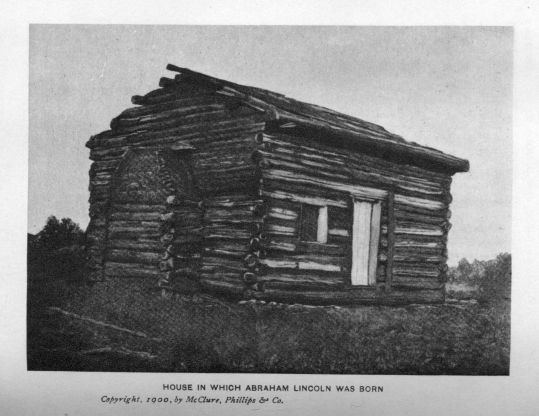
What was there in that rude frontier forest, where this poor boy scarcely ever saw any one who knew anything of books, to rouse his ambition and to stimulate him to self-education? Whence came that yearning to know the history of men and women who had made a nation; to know the history of his country? Whence came that passion to devour the dry statutes of Indiana, as a young girl would devour a love story? Whence came that all-absorbing ambition to be somebody in the world; to serve his country with no selfish ambition? Had his father been rich and well-educated instead of a poor man who could neither read nor write and who was generally of a shiftless and roving disposition, there is no likelihood that Lincoln would ever have become the powerful man he was.
What was there in that rough frontier forest to awaken this poor boy's ambition and inspire him to educate himself? He hardly ever met anyone there who knew anything about books. Where did his longing come from to learn about the men and women who had built a nation? Where did his longing to know his country's history come from? Where did his passion for devouring the dry laws of Indiana come from? He read them as eagerly as a young girl would read a love story. Where did his consuming ambition come from to make something of himself and serve his country without selfish ambition? If his father had been rich and well-educated, Lincoln would probably never have become the powerful man he was. Instead, his father was a poor man who could neither read nor write and was generally idle and restless.
Had he not felt that imperious "must" calling him, the prod of necessity spurring him on, whence would have come the motive which led him to struggle for self-development, self-unfoldment? If he had been born and educated in luxury, his character would probably have been soft and flabby in comparison with what it was.
If he had not felt that urgent "must" calling him, and necessity pushing him forward, what would have motivated him to strive for personal growth and fulfillment? If he had been born and educated in luxury, his character would probably have been weak and soft by comparison.
Where in all the annals of history is there another record of one born of such poor parentage and reared in such a wretched environment, who ever rose to such eminence? Imagine a boy of to-day, so hungry for an education that he would walk nine miles a day to attend a rude frontier school in a log cabin! What would the city boys of to-day, who do not want to walk even a few blocks to school, think of a youth who would do what Lincoln did to overcome his handicap?
Where in all of history is there another person who rose so high from such poor parents and such miserable surroundings? Imagine a boy today so eager to learn that he would walk nine miles a day to attend a rough frontier school in a log cabin! What would today's city boys, who do not want to walk even a few blocks to school, think of a young man who would do what Lincoln did to overcome his disadvantage?