Chapter 48
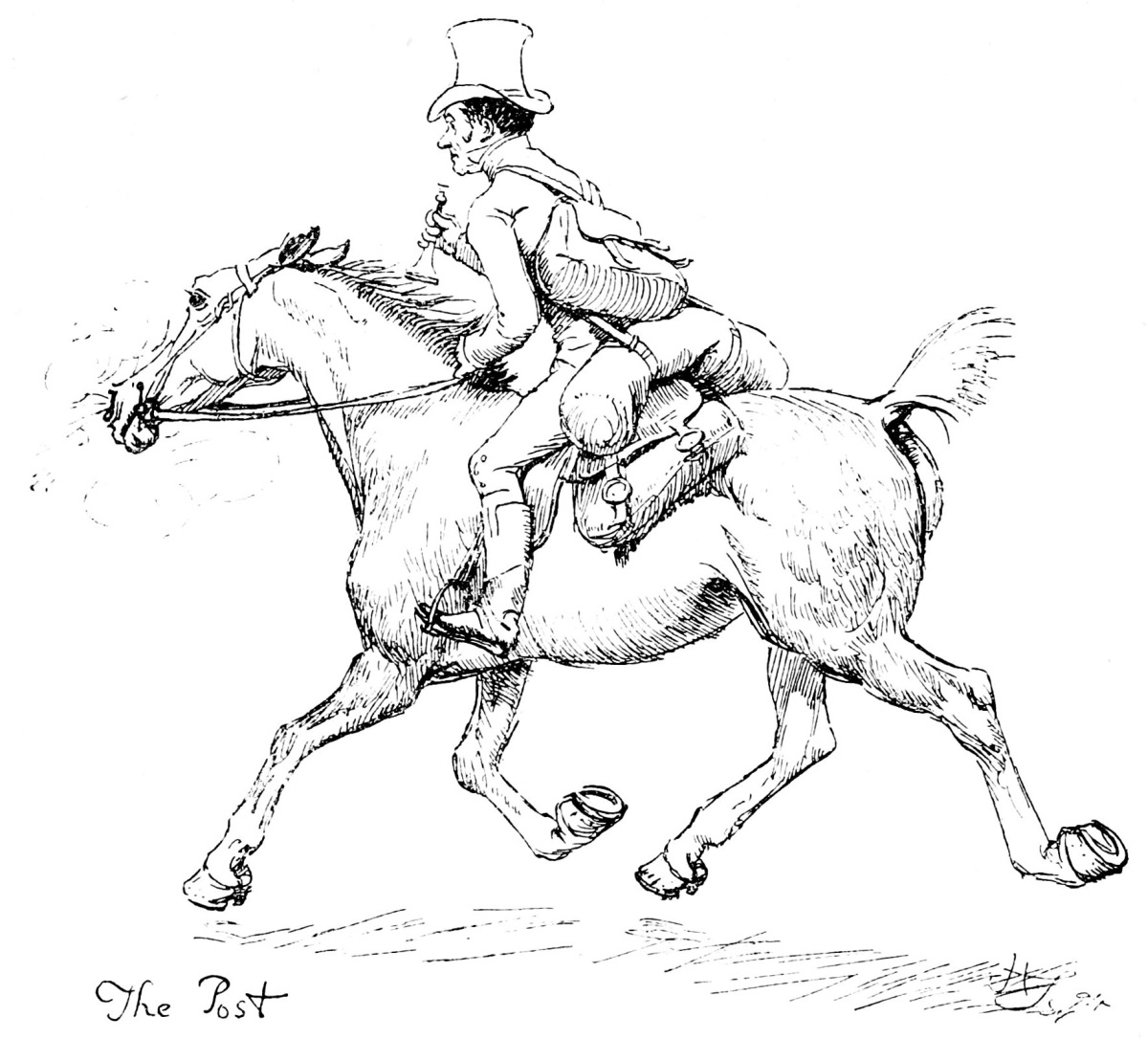
THE whole party were in hopes of a letter from Mr. Bennet the next morning, but the post came in without bringing a single line from him. His family knew him to be, on all common occasions, a most negligent and dilatory correspondent; but at such a time they had hoped for exertion. They were forced to conclude, that he had no pleasing intelligence to send; but even of that they would have been glad to be certain. Mr. Gardiner had waited only for the letters before he set off.
Everyone hoped for a letter from Mr. Bennet the next morning, but the mail arrived without a single line from him. His family knew that, under ordinary circumstances, he was very careless and slow about writing letters. But at a time like this, they had hoped he would make an effort. They had to conclude that he had no good news to send. But they would have been glad to know even that for certain. Mr. Gardiner had been waiting only for the letters to arrive before setting off.
When he was gone, they were certain at least of receiving constant information of what was going on; and their uncle promised, at parting, to prevail on Mr. Bennet to return to Longbourn as soon as he could, to the great consolation of his sister, who considered it as the only security for her husband’s not being killed in a duel.
Once their uncle had left, they were at least sure of getting regular updates on what was happening. As he said goodbye, their uncle promised to persuade Mr. Bennet to return to Longbourn as soon as possible. This promise greatly comforted his sister. She thought her husband’s return was the only way to keep him from being killed in a duel.
Mrs. Gardiner and the children were to remain in Hertfordshire a few days longer, as the former thought her presence might be serviceable to her nieces. She shared in their attendance on Mrs. Bennet, and was a great comfort to them in their hours of freedom. Their other aunt also visited them frequently, and always, as she said, with the design of cheering and heartening them up—though, as she never came without reporting some fresh instance of Wickham’s extravagance or irregularity, she seldom went away without leaving them more dispirited than she found them.
Mrs. Gardiner and the children were to stay in Hertfordshire a few days longer. She thought her presence might help her nieces. She helped them care for Mrs. Bennet and was a great comfort when they had time to themselves. Their other aunt also visited often, always, she said, to cheer them up and lift their spirits. Yet she never came without reporting some new example of Wickham’s extravagance or bad behavior. As a result, she seldom left them without making them feel more discouraged than before.
All Meryton seemed striving to blacken the man who, but three months before, had been almost an angel of light. He was declared to be in debt to every tradesman in the place, and his intrigues, all honoured with the title of seduction, had been extended into every tradesman’s family. Everybody declared that he was the wickedest young man in the world; and everybody began to find out that they had always distrusted the appearance of his goodness. Elizabeth, though she did not credit above half of what was said, believed enough to make her former assurance of her sister’s ruin still more certain; and even Jane, who believed still less of it, became almost hopeless, more especially as the time was now come, when, if they had gone to Scotland, which she had never before entirely despaired of, they must in all probability have gained some news of them.
All Meryton seemed determined to ruin the reputation of a man who, just three months earlier, had seemed almost angelic. People claimed he owed money to every shopkeeper in town. His affairs, all dignified with the name of seduction, were said to have reached into every shopkeeper’s family. Everyone declared him the wickedest young man in the world. And everyone began to discover that they had always distrusted his apparent goodness. Although Elizabeth believed no more than half these stories, she believed enough to feel even more certain of her sister’s ruin. Even Jane, who believed still fewer of the stories, had almost lost hope. This was especially true now that enough time had passed for news to arrive if the couple had gone to Scotland. Jane had never entirely given up hope that they had gone there. But if they had, the family would most likely have heard something about them by now.
Mr. Gardiner left Longbourn on Sunday; on Tuesday, his wife received a letter from him: it told them, that on his arrival he had immediately found out his brother, and persuaded him to come to Gracechurch Street. That Mr. Bennet had been to Epsom and Clapham, before his arrival, but without gaining any satisfactory information; and that he was now determined to inquire at all the principal hotels in town, as Mr. Bennet thought it possible they might have gone to one of them, on their first coming to London, before they procured lodgings. Mr. Gardiner himself did not expect any success from this measure; but as his brother was eager in it, he meant to assist him in pursuing it. He added, that Mr. Bennet seemed wholly disinclined at present to leave London, and promised to write again very soon. There was also a postscript to this effect:—
Mr. Gardiner left Longbourn on Sunday. On Tuesday, his wife received a letter from him. He wrote that, on arriving, he had immediately found Mr. Bennet and persuaded him to come to Gracechurch Street. Before Mr. Gardiner’s arrival, Mr. Bennet had been to Epsom and Clapham, but had found no satisfactory information. Mr. Bennet was now determined to ask at all the main hotels in London. He thought the couple might have stayed at one when they first arrived, before finding lodgings. Mr. Gardiner himself did not expect the search to succeed. But as Mr. Bennet was eager to pursue it, Mr. Gardiner intended to help him. He added that Mr. Bennet seemed entirely unwilling to leave London for now, and promised to write again very soon. There was also a postscript along these lines:
“I have written to Colonel Forster to desire him to find out, if possible, from some of the young man’s intimates in the regiment, whether Wickham has any relations or connections who would be likely to know in what part of the town he has now concealed himself. If there were anyone that one could apply to, with a probability of gaining such a clue as that, it might be of essential consequence. At present we have nothing to guide us. Colonel Forster will, I dare say, do everything in his power to satisfy us on this head. But, on second thoughts, perhaps Lizzy could tell us what relations he has now living better than any other person.”
“I have written to Colonel Forster, asking him to find out what he can from some of Wickham’s close friends in the regiment. They may know whether Wickham has any relatives or connections who might know where in town he is now hiding. If there were anyone we could ask with a reasonable chance of finding such a clue, that could be crucial. At present, we have nothing to guide us. I’m sure Colonel Forster will do everything in his power to find out what we need to know. But on second thought, perhaps Lizzy could tell us better than anyone else which of his relatives are still living.”
Elizabeth was at no loss to understand from whence this deference for her authority proceeded; but it was not in her power to give any information of so satisfactory a nature as the compliment deserved.
Elizabeth easily understood why her judgment was being treated with such respect. But she could not offer information as satisfying as the compliment deserved.
She had never heard of his having had any relations, except a father and mother, both of whom had been dead many years. It was possible, however, that some of his companions in the ——shire might be able to give more information; and though she was not very sanguine in expecting it, the application was a something to look forward to.
She had never heard of him having any relatives except his father and mother. Both had been dead for many years. However, some of his companions in the ____shire regiment might be able to provide more information. Although she had little hope of learning more, asking them gave her something to look forward to.
Every day at Longbourn was now a day of anxiety; but the most anxious part of each was when the post was expected. The arrival of letters was the first grand object of every morning’s impatience. Through letters, whatever of good or bad was to be told would be communicated; and every succeeding day was expected to bring some news of importance.
Every day at Longbourn was now filled with anxiety, but the most anxious time was when the mail was expected. Each morning, everyone waited impatiently above all for letters to arrive. Whatever news there was, good or bad, would come by letter. And each new day was expected to bring some important news.
But before they heard again from Mr. Gardiner, a letter arrived for their father, from a different quarter, from Mr. Collins; which, as Jane had received directions to open all that came for him in his absence, she accordingly read; and Elizabeth, who knew what curiosities his letters always were, looked over her, and read it likewise. It was as follows:—
But before they heard again from Mr. Gardiner, a letter for their father arrived from another source, Mr. Collins. Jane had been told to open all their father’s letters while he was away, so she read it. Elizabeth knew how odd Mr. Collins’s letters always were, so she looked over Jane’s shoulder and read it too. The letter read as follows:
“My dear Sir,
“Dear Sir,
“I feel myself called upon, by our relationship, and my situation in life, to condole with you on the grievous affliction you are now suffering under, of which we were yesterday informed by a letter from Hertfordshire. Be assured, my dear sir, that Mrs. Collins and myself sincerely sympathize with you, and all your respectable family, in your present distress, which must be of the bitterest kind, because proceeding from a cause which no time can remove. No arguments shall be wanting on my part, that can alleviate so severe a misfortune; or that may comfort you, under a circumstance that must be, of all others, most afflicting to a parent’s mind. The death of your daughter would have been a blessing in comparison of this. And it is the more to be lamented, because there is reason to suppose, as my dear Charlotte informs me, that this licentiousness of behaviour in your
“Our family relationship and my position in life make me feel obliged to offer sympathy for your terrible suffering. We learned of your suffering yesterday through a letter from Hertfordshire. Be assured, my dear sir, that Mrs. Collins and I sincerely sympathize with you and all your respectable family. Your present distress must be of the bitterest kind, because its cause can never be erased by time. I will offer every argument I can to ease so severe a misfortune. I will also offer whatever comfort I can in circumstances that must distress a parent more than any other. Your daughter’s death would have been a blessing compared with this. And her behavior is all the more regrettable because there is reason to suppose, as my dear Charlotte tells me, that this sexual misconduct in your
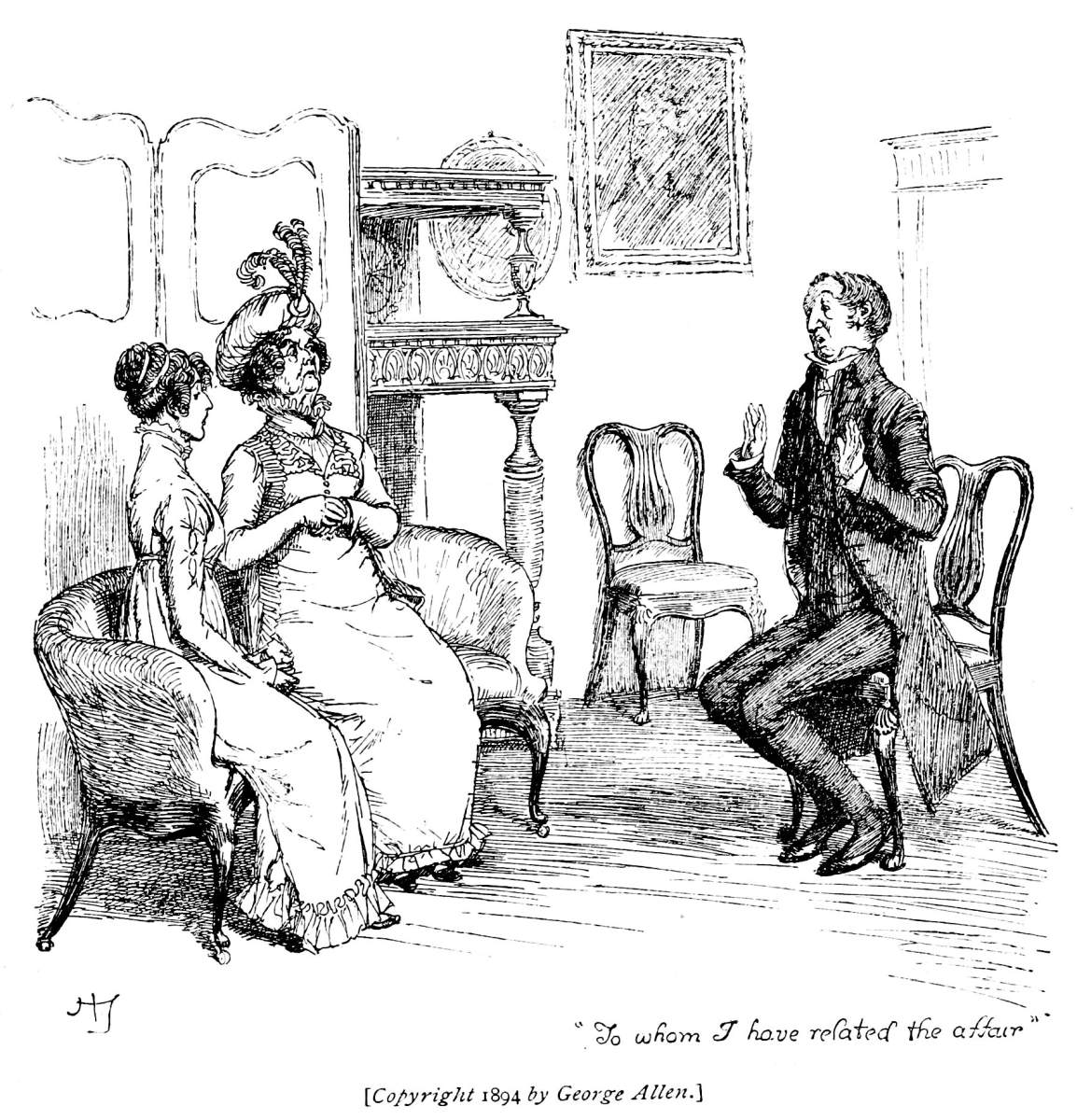
daughter has proceeded from a faulty degree of indulgence; though, at the same time, for the consolation of yourself and Mrs. Bennet, I am inclined to think that her own disposition must be naturally bad, or she could not be guilty of such an enormity, at so early an age. Howsoever that may be, you are grievously to be pitied; in which opinion I am not only joined by Mrs. Collins, but likewise by Lady Catherine and her daughter, to whom I have related the affair. They agree with me in apprehending that this false step in one daughter will be injurious to the fortunes of all the others: for who, as Lady Catherine herself condescendingly says, will connect themselves with such a family? And this consideration leads me, moreover, to reflect, with augmented satisfaction, on a certain event of last November; for had it been otherwise, I must have been involved in all your sorrow and disgrace. Let me advise you, then, my dear sir, to console yourself as much as possible, to throw off your unworthy child from your affection for ever, and leave her to reap the fruits of her own heinous offence.
daughter’s behavior results from being indulged too much. Still, to comfort you and Mrs. Bennet, I am inclined to think her character must be naturally bad. Otherwise, she could not have committed such a terrible offense at so young an age. Whatever the cause, you deserve the deepest pity. Mrs. Collins shares my opinion, as do Lady Catherine and her daughter, whom I have told about the affair. They agree with me in fearing that one daughter’s disgrace will harm all the others’ prospects. For who, as Lady Catherine herself graciously remarks, would marry into such a family? This concern also makes me reflect with even greater satisfaction on a certain event last November. For if things had turned out differently, I would have shared in all your sorrow and disgrace. Let me advise you, then, my dear sir, to take what comfort you can. Remove your unworthy child from your affections forever, and leave her to suffer the consequences of her own dreadful offense.
“I am, dear sir,” etc., etc.
“I am, dear sir,” etc., etc.
Mr. Gardiner did not write again, till he had received an answer from Colonel Forster; and then he had nothing of a pleasant nature to send. It was not known that Wickham had a single relation with whom he kept up any connection, and it was certain that he had no near one living. His former acquaintance had been numerous; but since he had been in the militia, it did not appear that he was on terms of particular friendship with any of them. There was no one, therefore, who could be pointed out as likely to give any news of him. And in the wretched state of his own finances, there was a very powerful motive for secrecy, in addition to his fear of discovery by Lydia’s relations; for it had just transpired that he had left gaming debts behind him to a very considerable amount. Colonel Forster believed that more than a thousand pounds would be necessary to clear his expenses at Brighton. He owed a good deal in the town, but his debts of honour were still more formidable. Mr. Gardiner did not attempt to conceal these particulars from the Longbourn family; Jane heard them with horror. “A gamester!” she cried. “This is wholly unexpected; I had not an idea of it.”
Mr. Gardiner did not write again until he had received an answer from Colonel Forster. Even then, he had no good news to send. Wickham was not known to keep in touch with any relatives, and he certainly had no close relatives still living. He had once had many acquaintances. But since joining the militia, he did not seem to be particularly close to any of them. So no one could be suggested as a likely source of news about him. Besides his fear of being discovered by Lydia’s relatives, his desperate financial situation gave him a powerful reason to hide. It had just come to light that he had left behind very large gambling debts. Colonel Forster believed that more than a thousand pounds would be needed to settle his bills in Brighton. He owed a great deal in the town, but his gambling debts were even larger. Mr. Gardiner did not try to hide these details from the Longbourn family. Jane was horrified to hear them. “A gambler!” she cried. “This is completely unexpected. I had no idea.”
Mr. Gardiner added, in his letter, that they might expect to see their father at home on the following day, which was Saturday. Rendered spiritless by the ill success of all their endeavours, he had yielded to his brother-in-law’s entreaty that he would return to his family and leave it to him to do whatever occasion might suggest to be advisable for continuing their pursuit. When Mrs. Bennet was told of this, she did not express so much satisfaction as her children expected, considering what her anxiety for his life had been before.
Mr. Gardiner added in his letter that they could expect their father home the next day, Saturday. Discouraged by the failure of all their efforts, their father had agreed to his brother-in-law’s plea to return home. He would leave Mr. Gardiner to continue the search in whatever way seemed best as events unfolded. When Mrs. Bennet heard the news, she showed less satisfaction than her children expected. This was surprising, considering how worried she had been about her husband’s life.
“What! is he coming home, and without poor Lydia?” she cried. “Sure he will not leave London before he has found them. Who is to fight Wickham, and make him marry her, if he comes away?”
“What! Is he coming home without poor Lydia?” she cried. “Surely he won’t leave London before he has found them. Who will fight Wickham and make him marry her if he leaves?”
As Mrs. Gardiner began to wish to be at home, it was settled that she and her children should go to London at the same time that Mr. Bennet came from it. The coach, therefore, took them the first stage of their journey, and brought its master back to Longbourn.
As Mrs. Gardiner began to want to go home, plans were made for her and her children to return to London. They would leave at the same time that Mr. Bennet returned from London. So the coach took them on the first leg of their journey, then brought its owner back to Longbourn.
Mrs. Gardiner went away in all the perplexity about Elizabeth and her Derbyshire friend, that had attended her from that part of the world. His name had never been voluntarily mentioned before them by her niece; and the kind of half-expectation which Mrs. Gardiner had formed, of their being followed by a letter from him, had ended in nothing. Elizabeth had received none since her return, that could come from Pemberley.
Mrs. Gardiner left just as puzzled about Elizabeth and her Derbyshire friend as she had been since leaving Derbyshire. Her niece had never brought up his name in front of them without being prompted. Mrs. Gardiner had half expected a letter from him to arrive after their return, but none had come. Since returning, Elizabeth had received no letter that could have come from Pemberley.
The present unhappy state of the family rendered any other excuse for the lowness of her spirits unnecessary; nothing, therefore, could be fairly conjectured from that,—though Elizabeth, who was by this time tolerably well acquainted with her own feelings, was perfectly aware that, had she known nothing of Darcy, she could have borne the dread of Lydia’s infamy somewhat better. It would have spared her, she thought, one sleepless night out of two.
The family’s current troubles were enough to explain her low spirits. So no one could fairly draw any other conclusions from that. Yet Elizabeth, who now understood her own feelings fairly well, knew something with complete certainty. If she had known nothing of Darcy, she could have faced the fear of Lydia’s disgrace somewhat better. She thought she would have been spared one sleepless night out of two.
When Mr. Bennet arrived, he had all the appearance of his usual philosophic composure. He said as little as he had ever been in the habit of saying; made no mention of the business that had taken him away; and it was some time before his daughters had courage to speak of it.
When Mr. Bennet arrived, he seemed as calm and untroubled as usual. He spoke as little as he always had. He made no mention of the matter that had taken him away. And some time passed before his daughters found the courage to bring up that matter.
It was not till the afternoon, when he joined them at tea, that Elizabeth ventured to introduce the subject; and then, on her briefly expressing her sorrow for what he must have endured, he replied, “Say nothing of that. Who should suffer but myself? It has been my own doing, and I ought to feel it.”
Elizabeth did not dare bring up the subject until that afternoon, when he joined them for tea. She briefly said how sorry she was for what he must have suffered. He replied, “Don’t say anything about that. Who should suffer but me? I brought it on myself, and I ought to feel the consequences.”
“You must not be too severe upon yourself,” replied Elizabeth.
“You must not be too hard on yourself,” Elizabeth replied.
“You may well warn me against such an evil. Human nature is so prone to fall into it! No, Lizzy, let me once in my life feel how much I have been to blame. I am not afraid of being overpowered by the impression. It will pass away soon enough.”
“You’re right to warn me against such an evil. Human nature makes us so likely to fall into it! No, Lizzy, let me feel for once in my life how much I’ve been to blame. I’m not afraid of being overwhelmed by that feeling. It will pass soon enough.”
“Do you suppose them to be in London?”
“Do you think they’re in London?”
“Yes; where else can they be so well concealed?”
“Yes. Where else can they be so well hidden?”
“And Lydia used to want to go to London,” added Kitty.
“And Lydia used to want to go to London,” Kitty added.
“She is happy, then,” said her father, drily; “and her residence there will probably be of some duration.”
“So she’s happy,” her father said dryly. “And she’ll probably stay there for quite a while.”
Then, after a short silence, he continued, “Lizzy, I bear you no ill-will for being justified in your advice to me last May, which, considering the event, shows some greatness of mind.”
Then, after a short silence, he continued, “Lizzy, I don’t resent you for being right in the advice you gave me last May. Considering how things turned out, my lack of resentment shows some generosity of spirit.”
They were interrupted by Miss Bennet, who came to fetch her mother’s tea.
They were interrupted by Miss Bennet, who came to get her mother’s tea.
“This is a parade,” cried he, “which does one good; it gives such an elegance to misfortune! Another day I will do the same; I will sit in my library, in my nightcap and powdering gown, and give as much trouble as I can,—or perhaps I may defer it till Kitty runs away.”
“What a show!” he cried. “It does you good to see it. It makes misfortune look so elegant! One day I’ll do the same. I’ll sit in my library in my nightcap and dressing gown, and cause as much trouble as I can. Or perhaps I’ll put it off until Kitty runs away.”
“I am not going to run away, papa,” said Kitty, fretfully. “If I should ever go to Brighton, I would behave better than Lydia.”
“I’m not going to run away, papa,” said Kitty, irritably. “If I ever went to Brighton, I would behave better than Lydia.”
“You go to Brighton! I would not trust you so near it as Eastbourne, for fifty pounds! No, Kitty, I have at least learnt to be cautious, and you will feel the effects of it. No officer is ever to enter my house again, nor even to pass through the village. Balls will be absolutely prohibited, unless you stand up with one of your sisters. And you are never to stir out of doors, till you can prove that you have spent ten minutes of every day in a rational manner.”
“You go to Brighton! I wouldn’t trust you even as close to Brighton as Eastbourne, not for fifty pounds! No, Kitty, I’ve at least learned to be cautious, and you’ll feel the effects of my caution. No officer will ever enter my house again, or even pass through the village. Balls will be strictly forbidden unless you dance with one of your sisters. And you must never go outside until you can prove you’ve spent ten minutes of every day doing something sensible.”
Kitty, who took all these threats in a serious light, began to cry.
Kitty took all these threats seriously and began to cry.
“Well, well,” said he, “do not make yourself unhappy. If you are a good girl for the next ten years, I will take you to a review at the end of them.”
“Well, well,” he said, “don't be upset. If you're a good girl for the next ten years, I'll take you to a military parade when they're over.”