Chapter 4
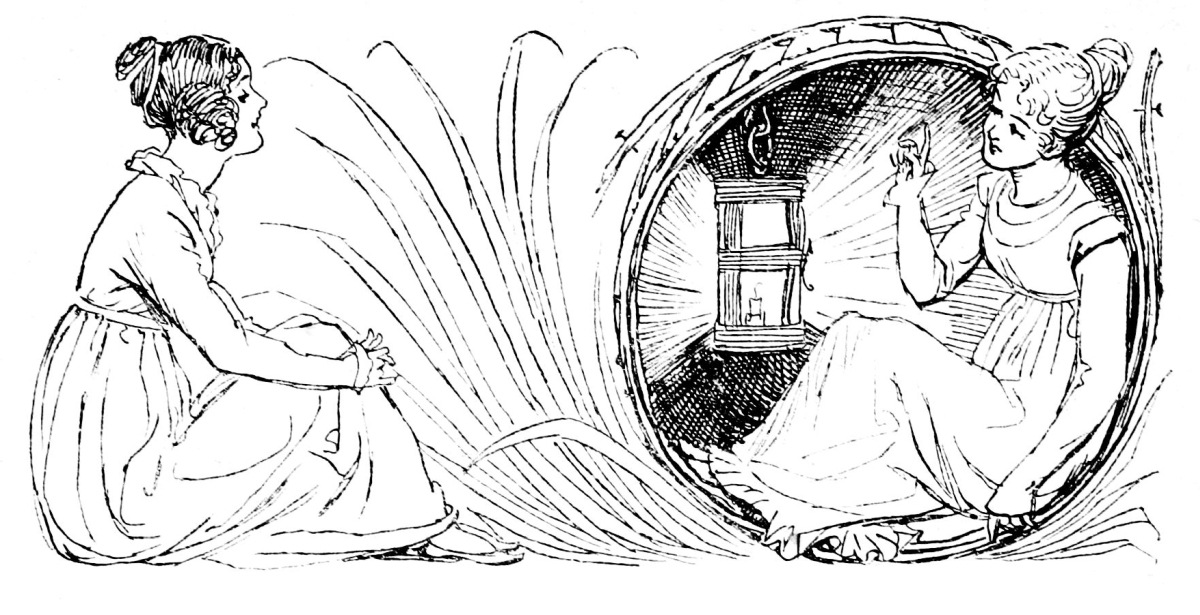
WHEN Jane and Elizabeth were alone, the former, who had been cautious in her praise of Mr. Bingley before, expressed to her sister how very much she admired him.
When Jane and Elizabeth were alone, Jane spoke more openly than she had before about Mr. Bingley. She had been careful in her praise, but now she told her sister how very much she admired him.
“He is just what a young man ought to be,” said she, “sensible, good-humoured, lively; and I never saw such happy manners! so much ease, with such perfect good breeding!”
“He is just what a young man should be,” she said, “sensible, cheerful, and lively. And I’ve never seen such charming manners! He’s so relaxed, yet so perfectly polite!”
“He is also handsome,” replied Elizabeth, “which a young man ought likewise to be if he possibly can. His character is thereby complete.”
“He is also handsome,” Elizabeth replied. “A young man ought to be handsome too, if he possibly can. His good looks complete his character.”
“I was very much flattered by his asking me to dance a second time. I did not expect such a compliment.”
“I was very flattered when he asked me to dance a second time. I hadn’t expected such a compliment.”
“Did not you? I did for you. But that is one great difference between us. Compliments always take you by surprise, and me never. What could be more natural than his asking you again? He could not help seeing that you were about five times as pretty as every other woman in the room. No thanks to his gallantry for that. Well, he certainly is very agreeable, and I give you leave to like him. You have liked many a stupider person.”
“Didn't you? I did for you. But that's one big difference between us. Compliments always take you by surprise, and me never. What could be more natural than his asking you again? He couldn't help noticing you were about five times as pretty as every other woman in the room. He deserves no credit for being gallant when your beauty was so obvious. Well, he certainly is very pleasant, and you have my permission to like him. You've liked plenty of stupider people.”
“Dear Lizzy!”
“Dear Lizzy!”
“Oh, you are a great deal too apt, you know, to like people in general. You never see a fault in anybody. All the world are good and agreeable in your eyes. I never heard you speak ill of a human being in my life.”
“Oh, you know, you’re far too inclined to like people in general. You never see a fault in anyone. Everyone is good and pleasant in your eyes. I’ve never heard you say a bad word about anyone in my life.”
“I would wish not to be hasty in censuring anyone; but I always speak what I think.”
“I don’t want to be too quick to criticize anyone. But I always say what I think.”
“I know you do: and it is that which makes the wonder. With your good sense, to be so honestly blind to the follies and nonsense of others! Affectation of candour is common enough; one meets with it everywhere. But to be candid without ostentation or design,—to take the good of everybody’s character and make it still better, and say nothing of the bad,—belongs to you alone. And so, you like this man’s sisters, too, do you? Their manners are not equal to his.”
“I know you do, and that is what makes it so surprising. With your good sense, how can you be so genuinely blind to other people’s foolishness and nonsense! Pretending to see the best in people is common enough. You see it everywhere. But you alone do so sincerely, without showing off or trying to gain anything. You take the good in everyone’s character and make it even better, and say nothing about the bad. And so, you like this man’s sisters too, do you? Their manners are not as good as his.”
“Certainly not, at first; but they are very pleasing women when you converse with them. Miss Bingley is to live with her brother, and keep his house; and I am much mistaken if we shall not find a very charming neighbour in her.”
“Certainly not at first. But they are very pleasant women when you talk to them. Miss Bingley will live with her brother and manage his household. And unless I’m very much mistaken, we’ll find her a very charming neighbour.”
Elizabeth listened in silence, but was not convinced: their behaviour at the assembly had not been calculated to please in general; and with more quickness of observation and less pliancy of temper than her sister, and with a judgment, too, unassailed by any attention to herself, she was very little disposed to approve them. They were, in fact, very fine ladies; not deficient in good-humour when they were pleased, nor in the power of being agreeable where they chose it; but proud and conceited. They were rather handsome; had been educated in one of the first private seminaries in town; had a fortune of twenty thousand pounds; were in the habit of spending more than they ought, and of associating with people of rank; and were, therefore, in every respect entitled to think well of themselves and meanly of others. They were of a respectable family in the north of England; a circumstance more deeply impressed on their memories than that their brother’s fortune and their own had been acquired by trade.
Elizabeth listened in silence, but she was not convinced. Their behavior at the ball had done little to please people in general. She noticed things more quickly than her sister and was less inclined to give way. Nor had any attention to herself clouded her judgment, so she felt little desire to approve of them. They were, in fact, very fashionable ladies. They could be good-humored when pleased and pleasant when they chose, but they were proud and conceited. They were fairly good-looking and had attended one of the best private schools in London. They had a fortune of twenty thousand pounds. They regularly spent more than they should and mixed with people of high rank. So they had every right, in every respect, to think highly of themselves and look down on others. They came from a respectable family in the north of England. This fact stayed far more firmly in their minds than the source of their brother’s fortune and their own: trade.
Mr. Bingley inherited property to the amount of nearly a hundred thousand pounds from his father, who had intended to purchase an estate, but did not live to do it. Mr. Bingley intended it likewise, and sometimes made choice of his county; but, as he was now provided with a good house and the liberty of a manor, it was doubtful to many of those who best knew the easiness of his temper, whether he might not spend the remainder of his days at Netherfield, and leave the next generation to purchase.
Mr. Bingley inherited nearly a hundred thousand pounds from his father. His father had planned to buy an estate but died before he could. Mr. Bingley also intended to buy an estate and sometimes even chose the county where he would settle. But he now had a good house and the right to hunt on the surrounding estate. Many who knew his easygoing nature best doubted whether he would ever move. He might spend the rest of his life at Netherfield and leave the next generation to buy an estate.
His sisters were very anxious for his having an estate of his own; but though he was now established only as a tenant, Miss Bingley was by no means unwilling to preside at his table; nor was Mrs. Hurst, who had married a man of more fashion than fortune, less disposed to consider his house as her home when it suited her. Mr. Bingley had not been of age two years when he was tempted, by an accidental recommendation, to look at Netherfield House. He did look at it, and into it, for half an hour; was pleased with the situation and the principal rooms, satisfied with what the owner said in its praise, and took it immediately.
His sisters were very eager for him to own an estate. But although he was only renting his home, Miss Bingley was by no means unwilling to act as his hostess. Mrs. Hurst was just as willing to treat his house as her home whenever it suited her. She had married a man with more social standing than money. Mr. Bingley had been a legal adult for less than two years when a chance recommendation tempted him to visit Netherfield House. He spent half an hour looking at the house, outside and in. He liked its location and main rooms, and was satisfied with the owner's praise of the property. He rented it immediately.
Between him and Darcy there was a very steady friendship, in spite of a great opposition of character. Bingley was endeared to Darcy by the easiness, openness, and ductility of his temper, though no disposition could offer a greater contrast to his own, and though with his own he never appeared dissatisfied. On the strength of Darcy’s regard, Bingley had the firmest reliance, and of his judgment the highest opinion. In understanding, Darcy was the superior. Bingley was by no means deficient; but Darcy was clever. He was at the same time haughty, reserved, and fastidious; and his manners, though well bred, were not inviting. In that respect his friend had greatly the advantage. Bingley was sure of being liked wherever he appeared; Darcy was continually giving offence.
Bingley and Darcy had a very solid friendship, despite their very different personalities. Darcy liked Bingley for his easygoing, open nature and his willingness to be guided. Yet no personality could have been more different from Darcy’s own, though Darcy never seemed dissatisfied with his own nature. Bingley trusted Darcy’s affection completely and had the highest opinion of his judgment. Darcy was the more intelligent of the two. Bingley was by no means lacking in intelligence, but Darcy was especially bright. Darcy was also proud, reserved, and hard to please. His manners were polished but not welcoming. In that respect, Bingley had a great advantage over him. Bingley was certain to be liked wherever he went. Darcy was constantly offending people.
The manner in which they spoke of the Meryton assembly was sufficiently characteristic. Bingley had never met with pleasanter people or prettier girls in his life; everybody had been most kind and attentive to him; there had been no formality, no stiffness; he had soon felt acquainted with all the room; and as to Miss Bennet, he could not conceive an angel more beautiful. Darcy, on the contrary, had seen a collection of people in whom there was little beauty and no fashion, for none of whom he had felt the smallest interest, and from none received either attention or pleasure. Miss Bennet he acknowledged to be pretty; but she smiled too much.
The way they spoke about the Meryton ball was typical of each man. Bingley had never met nicer people or prettier girls in his life. Everyone had been very kind and attentive to him. There had been no formality or stiffness. He had soon felt he knew everyone in the room. As for Miss Bennet, he could not imagine a more beautiful angel. Darcy, on the other hand, had seen a group of people with little beauty and no sense of fashion. He had felt no interest in any of them, and none had given him either attention or pleasure. He admitted that Miss Bennet was pretty, but she smiled too much.
Mrs. Hurst and her sister allowed it to be so; but still they admired her and liked her, and pronounced her to be a sweet girl, and one whom they should not object to know more of. Miss Bennet was therefore established as a sweet girl; and their brother felt authorized by such commendation to think of her as he chose.
Mrs. Hurst and her sister agreed that this was so. But they still admired and liked Miss Bennet, and declared her a sweet girl. They would not object to getting to know her better. Miss Bennet was therefore established as a sweet girl. With his sisters’ approval, their brother felt free to think of her however he pleased.