Chapter 31
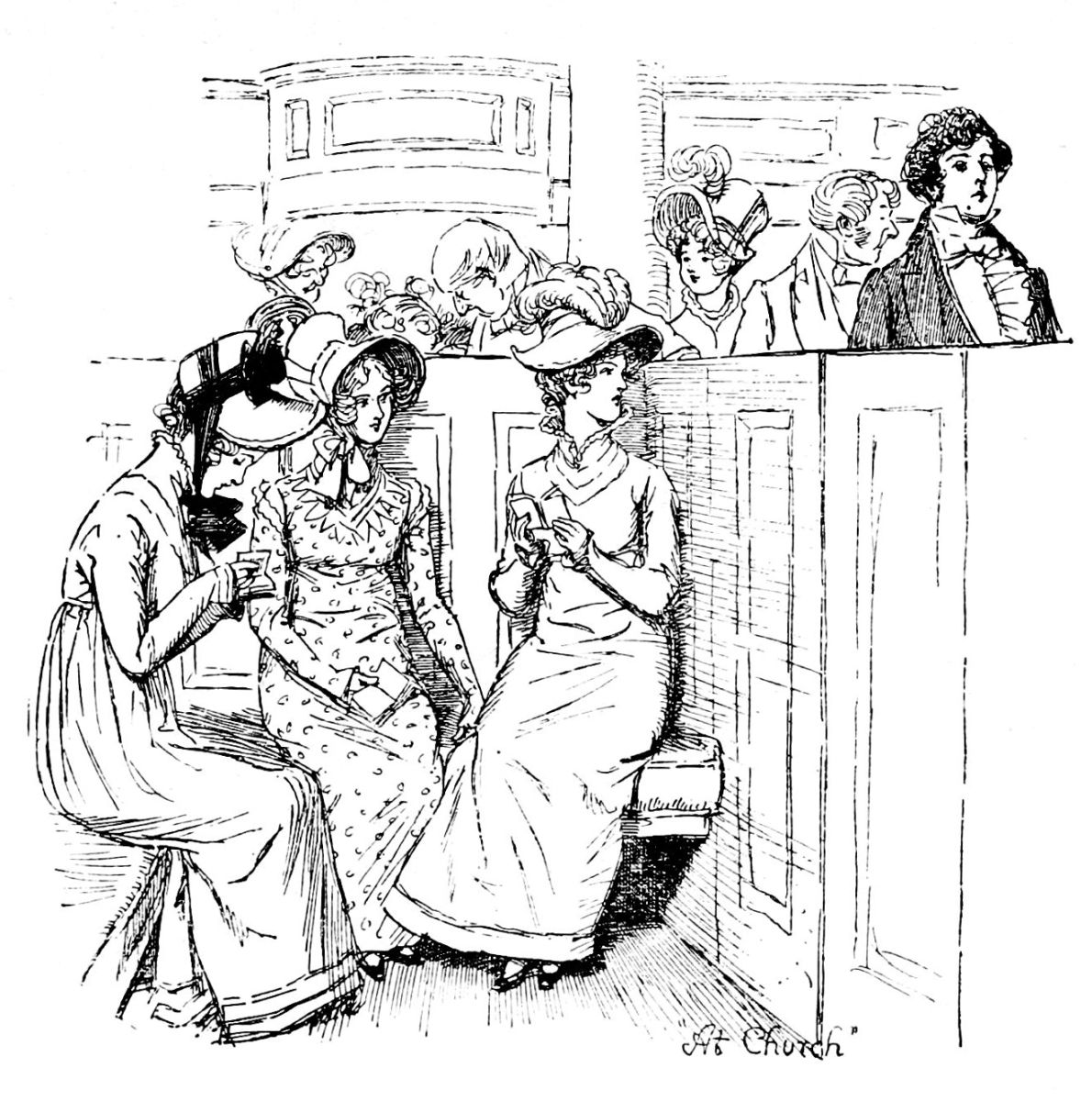
COLONEL FITZWILLIAM’S manners were very much admired at the Parsonage, and the ladies all felt that he must add considerably to the pleasure of their engagements at Rosings. It was some days, however, before they received any invitation thither, for while there were visitors in the house they could not be necessary; and it was not till Easter-day, almost a week after the gentlemen’s arrival, that they were honoured by such an attention, and then they were merely asked on leaving church to come there in the evening. For the last week they had seen very little of either Lady Catherine or her daughter. Colonel Fitzwilliam had called at the Parsonage more than once during the time, but Mr. Darcy they had only seen at church.
Colonel Fitzwilliam’s manners were much admired at the Parsonage. The ladies all felt he would make their visits to Rosings considerably more enjoyable. However, several days passed before they received an invitation. While Rosings had other visitors, their company could not be needed. It was not until Easter Sunday, almost a week after the gentlemen’s arrival, that they were honoured with an invitation. Even then, they were simply asked as they left church to come that evening. Over the past week, they had seen very little of either Lady Catherine or her daughter. Colonel Fitzwilliam had visited the Parsonage more than once during that time, but they had seen Mr. Darcy only at church.
The invitation was accepted, of course, and at a proper hour they joined the party in Lady Catherine’s drawing-room. Her Ladyship received them civilly, but it was plain that their company was by no means so acceptable as when she could get nobody else; and she was, in fact, almost engrossed by her nephews, speaking to them, especially to Darcy, much more than to any other person in the room.
The invitation was accepted, of course, and at the appropriate hour they joined the gathering in Lady Catherine’s drawing room. Lady Catherine greeted them politely. But she clearly welcomed their company far less than when she could find no other guests. In fact, her nephews took up almost all her attention. She spoke to them, especially Darcy, much more than to anyone else in the room.
Colonel Fitzwilliam seemed really glad to see them: anything was a welcome relief to him at Rosings; and Mrs. Collins’s pretty friend had, moreover, caught his fancy very much. He now seated himself by her, and talked so agreeably of Kent and Hertfordshire, of travelling and staying at home, of new books and music, that Elizabeth had never been half so well entertained in that room before; and they conversed with so much spirit and flow as to draw the attention of Lady Catherine herself, as well as of Mr. Darcy. His eyes had been soon and repeatedly turned towards them with a look of curiosity; and that her Ladyship, after a while, shared the feeling, was more openly acknowledged, for she did not scruple to call out,—
Colonel Fitzwilliam seemed genuinely glad to see them. Anything was a welcome relief to him at Rosings. Besides, he had taken quite a liking to Mrs. Collins’s pretty friend. He now sat beside her and talked about Kent and Hertfordshire, travelling and staying home, new books and music. He was so engaging that Elizabeth had never enjoyed herself half so much in that room before. Their conversation was so lively and easy that even Lady Catherine noticed, as did Mr. Darcy. His eyes had soon turned towards them, and he repeatedly watched them with curiosity. After a while, her Ladyship showed more openly that she shared his curiosity, for she called out without hesitation:
“What is that you are saying, Fitzwilliam? What is it you are talking of? What are you telling Miss Bennet? Let me hear what it is.”
“What are you saying, Fitzwilliam? What are you talking about? What are you telling Miss Bennet? Let me hear what you’re saying.”
“We were talking of music, madam,” said he, when no longer able to avoid a reply.
“We were talking about music, madam,” he said when he could no longer avoid answering.
“Of music! Then pray speak aloud. It is of all subjects my delight. I must have my share in the conversation, if you are speaking of music. There are few people in England, I suppose, who have more true enjoyment of music than myself, or a better natural taste. If I had ever learnt, I should have been a great proficient. And so would Anne, if her health had allowed her to apply. I am confident that she would have performed delightfully. How does Georgiana get on, Darcy?”
“Music! Then please speak up. Of all subjects, music is my greatest delight. I must have my share in the conversation if you are talking about music. Few people in England, I suppose, enjoy music more than I do or have a better natural taste for it. If I had ever learned to play, I would have become very skilled. And so would Anne, if her health had allowed her to practice. I am certain she would have played beautifully. How is Georgiana getting on, Darcy?”
Mr. Darcy spoke with affectionate praise of his sister’s proficiency.
Mr. Darcy affectionately praised his sister’s skill.
“I am very glad to hear such a good account of her,” said Lady Catherine; “and pray tell her from me, that she cannot expect to excel, if she does not practise a great deal.”
“I’m very glad to hear such good things about her,” said Lady Catherine. “And please tell her from me that she cannot expect to excel if she doesn’t practice a great deal.”
“I assure you, madam,” he replied, “that she does not need such advice. She practises very constantly.”
“I assure you, ma’am,” he replied, “she doesn’t need that advice. She practices very regularly.”
“So much the better. It cannot be done too much; and when I next write to her, I shall charge her not to neglect it on any account. I often tell young ladies, that no excellence in music is to be acquired without constant practice. I have told Miss Bennet several times, that she will never play really well, unless she practises more; and though Mrs. Collins has no instrument, she is very welcome, as I have often told her, to come to Rosings every day, and play on the pianoforte in Mrs. Jenkinson’s room. She would be in nobody’s way, you know, in that part of the house.”
“So much the better. One cannot practise too much. And when I next write to her, I shall insist that she never neglect her practice for any reason. I often tell young ladies that they cannot become excellent musicians without constant practice. I have told Miss Bennet several times that she will never play really well unless she practises more. And although Mrs. Collins has no instrument, she is very welcome to come to Rosings every day. As I have often told her, she can play the piano in Mrs. Jenkinson’s room. She would not be in anyone’s way in that part of the house, you know.”
Mr. Darcy looked a little ashamed of his aunt’s ill-breeding, and made no answer.
Mr. Darcy looked a little ashamed of his aunt’s bad manners and said nothing.
When coffee was over, Colonel Fitzwilliam reminded Elizabeth of having promised to play to him; and she sat down directly to the instrument. He drew a chair near her. Lady Catherine listened to half a song, and then talked, as before, to her other nephew; till the latter walked away from her, and moving with his usual deliberation towards the pianoforte, stationed himself so as to command a full view of the fair performer’s countenance. Elizabeth saw what he was doing, and at the first convenient pause turned to him with an arch smile, and said,—
After coffee, Colonel Fitzwilliam reminded Elizabeth that she had promised to play for him. She immediately sat down at the piano, and he pulled a chair close to her. Lady Catherine listened to half a song, then resumed talking to her other nephew. Eventually, he walked away from her and approached the piano at his usual unhurried pace. He positioned himself where he could see the pretty performer’s face clearly. Elizabeth noticed what he was doing. At the first convenient pause, she turned to him with a mischievous smile and said:
“You mean to frighten me, Mr. Darcy, by coming in all this state to hear me. But I will not be alarmed, though your sister does play so well. There is a stubbornness about me that never can bear to be frightened at the will of others. My courage always rises with every attempt to intimidate me.”
“You mean to frighten me, Mr. Darcy, by coming with such ceremony to hear me play. But I won’t be frightened, though your sister does play so well. I’m too stubborn to bear being frightened just because someone else wants to frighten me. Every attempt to intimidate me only makes me braver.”
“I shall not say that you are mistaken,” he replied, “because you could not really believe me to entertain any design of alarming you; and I have had the pleasure of your acquaintance long enough to know, that you find great enjoyment in occasionally professing opinions which, in fact, are not your own.”
“I won’t say you’re mistaken,” he replied, “because you couldn’t really believe I meant to frighten you. And I’ve had the pleasure of knowing you long enough to know how much you enjoy occasionally expressing opinions you don’t actually hold.”
Elizabeth laughed heartily at this picture of herself, and said to Colonel Fitzwilliam, “Your cousin will give you a very pretty notion of me, and teach you not to believe a word I say. I am particularly unlucky in meeting with a person so well able to expose my real character, in a part of the world where I had hoped to pass myself off with some degree of credit. Indeed, Mr. Darcy, it is very ungenerous in you to mention all that you knew to my disadvantage in Hertfordshire—and, give me leave to say, very impolitic too—for it is provoking me to retaliate, and such things may come out as will shock your relations to hear.”
Elizabeth laughed heartily at this description of herself and said to Colonel Fitzwilliam, “Your cousin will give you quite an impression of me and teach you not to believe a word I say. I’m especially unlucky to meet someone so capable of exposing my true character here. I had hoped to make a reasonably good impression in this part of the world. Really, Mr. Darcy, it’s very unkind of you to mention all you learned against me in Hertfordshire. And let me say, it’s very unwise too, because you’re provoking me to strike back. Things may come out that will shock your relatives.”
“I am not afraid of you,” said he, smilingly.
“I’m not afraid of you,” he said with a smile.
“Pray let me hear what you have to accuse him of,” cried Colonel Fitzwilliam. “I should like to know how he behaves among strangers.”
“Please tell me what you accuse him of,” exclaimed Colonel Fitzwilliam. “I’d like to know how he behaves around strangers.”
“You shall hear, then—but prepare for something very dreadful. The first time of my ever seeing him in Hertfordshire, you must know, was at a ball—and at this ball, what do you think he did? He danced only four dances! I am sorry to pain you, but so it was. He danced only four dances, though gentlemen were scarce; and, to my certain knowledge, more than one young lady was sitting down in want of a partner. Mr. Darcy, you cannot deny the fact.”
“You’ll hear the story, then, but prepare for something truly dreadful. You should know that I first saw him in Hertfordshire at a ball. And what do you think he did at this ball? He danced only four dances! I’m sorry to upset you, but that’s what happened. He danced only four dances, though there were few gentlemen there. And I know for certain that more than one young lady sat without a partner. Mr. Darcy, you cannot deny the fact.”
“I had not at that time the honour of knowing any lady in the assembly beyond my own party.”
“At the time, I hadn't had the pleasure of meeting any ladies at the ball except those in my own group.”
“True; and nobody can ever be introduced in a ball-room. Well, Colonel Fitzwilliam, what do I play next? My fingers wait your orders.”
“True, and no one can ever be introduced at a ball. Well, Colonel Fitzwilliam, what should I play next? My fingers are waiting for your orders.”
“Perhaps,” said Darcy, “I should have judged better had I sought an introduction, but I am ill-qualified to recommend myself to strangers.”
“Perhaps,” said Darcy, “I should have asked to be introduced. But I’m not good at making a favorable impression on strangers.”
“Shall we ask your cousin the reason of this?” said Elizabeth, still addressing Colonel Fitzwilliam. “Shall we ask him why a man of sense and education, and who has lived in the world, is ill-qualified to recommend himself to strangers?”
“Shall we ask your cousin why?” said Elizabeth, still speaking to Colonel Fitzwilliam. “Shall we ask him why a sensible, educated man with experience of the world is so bad at making a good impression on strangers?”
“I can answer your question,” said Fitzwilliam, “without applying to him. It is because he will not give himself the trouble.”
“I can answer your question,” said Fitzwilliam, “without asking him. It’s because he won’t make the effort.”
“I certainly have not the talent which some people possess,” said Darcy, “of conversing easily with those I have never seen before. I cannot catch their tone of conversation, or appear interested in their concerns, as I often see done.”
“I certainly don’t have the talent some people have,” said Darcy, “for talking easily with people I’ve never met before. I can’t pick up on their conversational style or seem interested in their concerns, as I often see others do.”
“My fingers,” said Elizabeth, “do not move over this instrument in the masterly manner which I see so many women’s do. They have not the same force or rapidity, and do not produce the same expression. But then I have always supposed it to be my own fault—because I would not take the trouble of practising. It is not that I do not believe my fingers as capable as any other woman’s of superior execution.”
“My fingers,” said Elizabeth, “do not move over this instrument as skillfully as I see so many women’s do. My fingers lack the same strength and speed, and my playing lacks the same expression. But I have always thought the fault was mine, because I would not take the trouble to practice. It is not that I doubt my fingers are as capable as any other woman’s of playing exceptionally well.”
Darcy smiled and said, “You are perfectly right. You have employed your time much better. No one admitted to the privilege of hearing you can think anything wanting. We neither of us perform to strangers.”
Darcy smiled and said, “You are completely right. You have spent your time much better. No one privileged to hear you play could think anything was missing. Neither of us performs for strangers.”
Here they were interrupted by Lady Catherine, who called out to know what they were talking of. Elizabeth immediately began playing again. Lady Catherine approached, and, after listening for a few minutes, said to Darcy,—
Lady Catherine interrupted them, calling out to ask what they were talking about. Elizabeth immediately began playing again. Lady Catherine came closer and listened for a few minutes. Then she said to Darcy:
“Miss Bennet would not play at all amiss if she practised more, and could have the advantage of a London master. She has a very good notion of fingering, though her taste is not equal to Anne’s. Anne would have been a delightful performer, had her health allowed her to learn.”
“Miss Bennet would play quite well if she practised more and had the benefit of a London teacher. She has a very good grasp of fingering, though her musical taste is not as good as Anne’s. Anne would have been a delightful performer if her health had allowed her to learn.”
Elizabeth looked at Darcy, to see how cordially he assented to his cousin’s praise: but neither at that moment nor at any other could she discern any symptom of love; and from the whole of his behaviour to Miss De Bourgh she derived this comfort for Miss Bingley, that he might have been just as likely to marry her, had she been his relation.
Elizabeth looked at Darcy to see how warmly he agreed with his cousin’s praise. But neither then nor at any other time could she detect any sign of love. His overall behavior toward Miss De Bourgh offered Elizabeth this comfort for Miss Bingley: he might have been just as likely to marry her if she had been his relative.
Lady Catherine continued her remarks on Elizabeth’s performance, mixing with them many instructions on execution and taste. Elizabeth received them with all the forbearance of civility; and at the request of the gentlemen remained at the instrument till her Ladyship’s carriage was ready to take them all home.
Lady Catherine continued commenting on Elizabeth’s playing, offering many instructions on technique and musical taste. Elizabeth listened with all the patience that politeness required. At the gentlemen’s request, she stayed at the instrument until Lady Catherine’s carriage was ready to take them all home.