A collection of notes on faith, doubt, and the human condition, left unfinished when Pascal died. Here he calls humans thinking reeds, and writes that the heart has reasons that reason does not know.
370 pages 7h 11m reading time
A classic of French prose and Christian thought.
Proposes Pascal's Wager: belief in God is the wise bet, since if God exists you gain everything, and if not you lose little.
Portrays humans as both wretched and great, "thinking reeds" who distract themselves to avoid facing death and their own emptiness.
Pascal's Wager became one of the most debated arguments in the philosophy of religion.
Its picture of humans adrift in an infinite universe anticipated existentialism and influenced Kierkegaard.
Found as loose scraps
After Pascal died, his family found the notes on scraps of paper, some tied into bundles with string.
A defense never finished
Pascal planned a full defense of Christianity, but illness kept him to notes, and he died at 39.
Softened by careful friends
His friends at Port-Royal edited the first printing heavily, smoothing passages they feared would cause trouble.
A note sewn inside
A servant found Pascal's account of an intense religious night sewn into his coat, and it is often printed here.


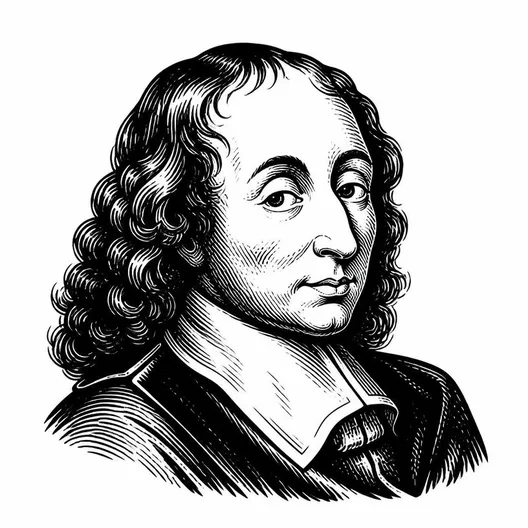 Blaise Pascal 1670