A bitter former clerk tells his story through angry reflections and memories of life in Saint Petersburg. A farewell dinner with old schoolmates becomes a painful contest for respect.
161 pages 3h 7m reading time
Often called the first existentialist novel (existentialism is the idea that each person must find meaning and make choices without fixed answers), and one of the most important short works of Russian literature.
Argues that people do not always act in their own best interest, and that we will sometimes choose what harms us just to prove we are free.
Rejects the hopeful belief of its time that science and reason could plan a perfect society, mocking it through the image of a "Crystal Palace" where everyone would be happy.
Gave literature the "underground man," a lonely, spiteful narrator who studies his own mind without mercy, a type later echoed in works like Ralph Ellison's "Invisible Man."
Shaped thinkers such as Friedrich Nietzsche, who praised Dostoyevsky as a writer who taught him about the human mind, and later existentialist writers like Jean-Paul Sartre and Albert Camus.
Cut by the censors
Censors removed a passage about the need for faith in Christ, and Dostoyevsky angrily called them "swine" in a letter.
A reply to another novel
It answered Nikolai Chernyshevsky's popular novel "What Is to Be Done?", which dreamed of a perfect future society.
Written beside a deathbed
Dostoyevsky wrote much of it while caring for his first wife, Maria, who was dying of tuberculosis.
Launched in a family magazine
It first appeared in Epoch, a struggling magazine run by Dostoyevsky and his older brother, Mikhail.


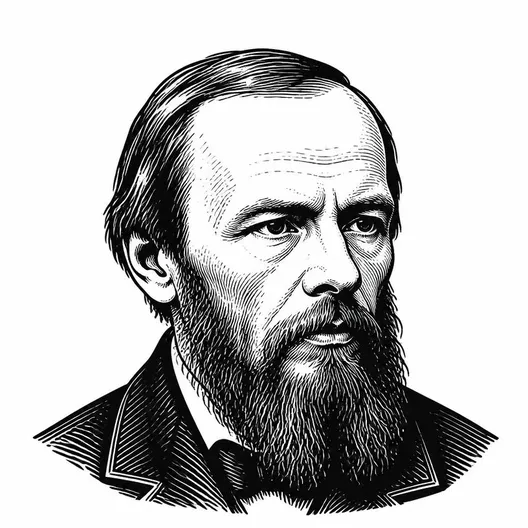 Fyodor Dostoyevsky 1864